 Bellingham
 Why Birch Bay's Waterfront Climate Wears Out Siding Faster
Birch Bay sits right on the water, and that location cuts both ways. The views are part of why people live there, but the same exposure that makes the shoreline desirable also makes it one of the harder places in Whatcom County to keep siding intact. Homes here take a steady diet of salt-laden air, wind-driven rain coming straight off the bay, and a long, damp moss season that starts early and doesn't let up until well into spring. Siding that would hold up fine a few miles inland can start failing years ahead of schedule on a Birch Bay lot facing open water.
None of this means siding replacement in Birch Bay has to be a losing battle. It means the material and the installation both have to be chosen with this specific exposure in mind, not treated the same as a job in a sheltered inland neighborhood.
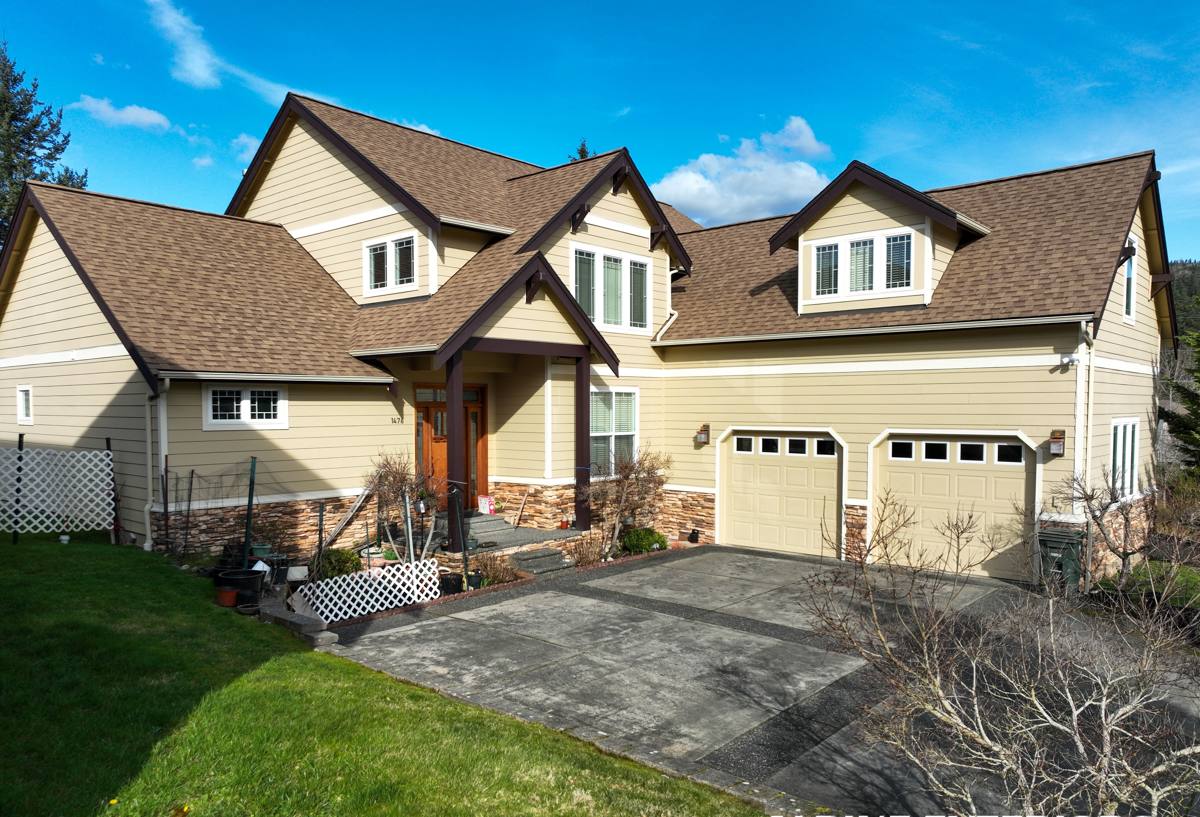
What Birch Bay Homes Actually Need From Their Siding
Salt Air and Material Corrosion
Airborne salt accelerates corrosion on fasteners, trim, and any siding material that isn't built to resist it. Over time it also degrades certain paints and finishes faster than manufacturers' standard testing assumes, especially on the water-facing sides of a house. A siding system for Birch Bay needs a factory finish and fastening approach that's rated for this kind of exposure, not just "exterior grade" in a generic sense.
Driving Rain and Wind Load
Open shoreline lots get less wind buffering than homes tucked into trees or hillsides. That means more wind-driven rain forced sideways into seams, laps, and trim joints, and more pressure on fastening and flashing details that might never get tested on a more sheltered property. A siding job that looks fine on day one can fail at the seams within a few winters if those details are rushed.
Moss, Algae, and Prolonged Dampness
Whatcom County's long wet season is hard enough on siding inland; on shaded or north-facing walls near the water, that dampness lingers even longer. Moss and algae growth on siding isn't just cosmetic — trapped moisture under organic growth keeps the substrate wet longer than it should be, which is exactly the condition that rots wood-based products and delaminates poor-quality composites.
Why We Standardized on James Hardie Fiber Cement
We install James Hardie fiber cement siding exclusively. We don't install vinyl, LP SmartSide, primed spruce, cedar, or other fiber cement brands like Cemplank or Allura. That's a deliberate standard, not a lack of options, and it matters more in a place like Birch Bay than almost anywhere else in our service area.
Fiber cement is non-combustible and dimensionally stable in a way wood-based and vinyl products aren't — it doesn't expand and contract with moisture the way wood does, and it doesn't soften or warp in sustained heat and sun exposure the way vinyl can. James Hardie's ColorPlus factory finish is baked on under controlled conditions and backed by a specific finish warranty, which matters when a wall is going to spend years facing salt air and sun reflecting off open water. Hardie's HZ5 product line is engineered specifically for the freeze-thaw, moisture-cycling climate of the Pacific Northwest, which is the right specification for a shoreline property in Whatcom County.
We're not going to tell you every other product on the market is junk — vinyl and engineered wood sidings have real uses and reasonable price points, and plenty of installers do capable work with them. Our position is narrower and more practical: given what we've seen happen to lower-spec siding on exposed coastal homes, and given that we only want to stand behind one installation standard, Hardie fiber cement is what we put on houses. It's the product we're willing to warranty our workmanship against in an environment like Birch Bay's.
What a Correct Siding Replacement Actually Involves
Siding replacement is not just stripping old material off and nailing new material on. On a coastal property especially, most of the work that determines whether a job lasts happens underneath the siding, where you'll never see it again once the job is done.
- Full removal of existing siding and trim, not overlay installation
- Inspection of the wall sheathing for rot, delamination, or hidden moisture damage before anything new goes up
- Repair or replacement of any compromised sheathing or framing found underneath
- Installation of a continuous weather-resistive barrier, correctly lapped shingle-style so water sheds outward
- Properly integrated flashing at every window, door, and penetration — not caulk used as a substitute for flashing
- Correct fastener type, spacing, and penetration depth per the manufacturer's installation specification
- Rain-screen or drainage gap detailing where the wall assembly calls for it
- Factory-finished siding and trim installed to the specified reveal and gap tolerances
Skipping or rushing any one of these steps is how a siding job ends up looking fine for a season or two and then failing early — usually starting at the exact seams and penetrations that take the most direct hit from wind-driven rain.
How We Approach a Birch Bay Job Specifically
Assessing Exposure Before We Quote
Not every wall on a Birch Bay home faces the same conditions. The side facing open water takes a different beating than a side tucked behind a garage or shaded by neighboring structures. We look at orientation, prevailing wind and rain direction, and existing moisture or moss patterns on the current siding before recommending a scope of work, rather than quoting a one-size-fits-all tear-off.
Building the Drainage Plane Right
On exposed coastal walls, we pay particular attention to the weather-resistive barrier and flashing sequencing, since this is the layer that actually keeps driving rain out of the wall assembly once wind pushes water past the siding face itself. This is also the step that's easiest for a less careful crew to shortcut, because it's invisible once the siding goes back on.
Choosing the Right Hardie Profile and Finish
James Hardie offers multiple siding profiles — lap, panel, shingle-style — and a range of ColorPlus finishes. For a shoreline property, we factor in glare, heat gain on water-facing walls, and how a given color and sheen will actually read against salt haze over time, not just how it looks on a sample chip.
What Drives Cost on a Birch Bay Siding Replacement
Every siding replacement quote is specific to the house, but a few factors consistently move the price up or down on Birch Bay projects in particular.
| Cost Factor | Why It Matters Here |
|---|---|
| Extent of hidden sheathing damage | Long-term moisture exposure near the water increases the odds of rot found once old siding comes off |
| Wall orientation and exposure | Water-facing walls often need more careful flashing and drainage detailing than sheltered elevations |
| Existing trim and window flashing condition | Salt air and driving rain shorten the life of trim and flashing, which often need replacement alongside the siding |
| Siding profile and finish selected | Panel, lap, and shingle-style Hardie products carry different material and labor costs |
| Home access and site conditions | Waterfront lots can have tighter access, slopes, or landscaping that affect staging and labor time |
We won't quote a firm number without seeing the house, but these are the variables that typically explain why two similarly sized Birch Bay homes can land at different price points.
Signs Your Birch Bay Home's Siding Needs Attention
Because moisture damage often starts behind the siding before it's visible on the surface, it's worth watching for these signs rather than waiting for obvious failure.
- Persistent moss or algae growth that returns quickly after cleaning
- Soft or spongy spots when you press on siding, especially near the bottom courses
- Visible warping, cupping, or gaps opening at seams and corners
- Peeling or bubbling paint, particularly on water-facing walls
- Rust streaking from fasteners or trim
- Rising energy bills that suggest the wall assembly is no longer performing as insulation
- Interior signs like musty odors or discoloration on walls that back onto exterior siding
Any one of these on its own might be minor. Several together, especially on a home with direct water exposure, usually means it's time for a real inspection rather than another round of patching.
Why Local Experience in Birch Bay Matters
A crew that's worked shoreline properties in Whatcom County knows what to check for before the first piece of siding comes off — where moss tends to hide moisture, which wall orientations take the worst of the wind-driven rain, and how a wall assembly here behaves differently than one fifty miles inland. That experience shows up in the details: how flashing gets sequenced, how much attention gets paid to the drainage plane, and which finish choices actually hold up against salt air over years, not just on paper. It's also why we stand behind our work with a single product standard we trust in this environment, rather than offering whatever's cheapest and hoping the coastal climate is forgiving. It generally isn't.
If your Birch Bay home is due for a siding replacement, or you're seeing early signs of moisture or moss trouble, we're happy to take a look and walk you through what we find. Reach out for a free, no-pressure estimate using the form below.