 Bellingham
 What Primed Spruce Siding Is
Primed spruce siding is solid wood — usually finger-jointed spruce boards, milled into lap or panel profiles and coated at the factory with a primer coat before it ever reaches the job site. It's been a staple in the Pacific Northwest for decades because it's real wood: it looks like wood, it takes paint like wood, and it can be repaired with basic carpentry tools. For a lot of older Bellingham neighborhoods, it's also what's already on the house, so replacing like-for-like feels like the simple choice.
We get why homeowners ask about it. It's a familiar material, it's often less expensive up front than fiber cement, and a well-maintained spruce board siding job can look sharp for years. This page isn't about telling you spruce is a bad product — it's about explaining why, after years of installing and repairing siding in Whatcom County, our crews made the call to stop installing it.
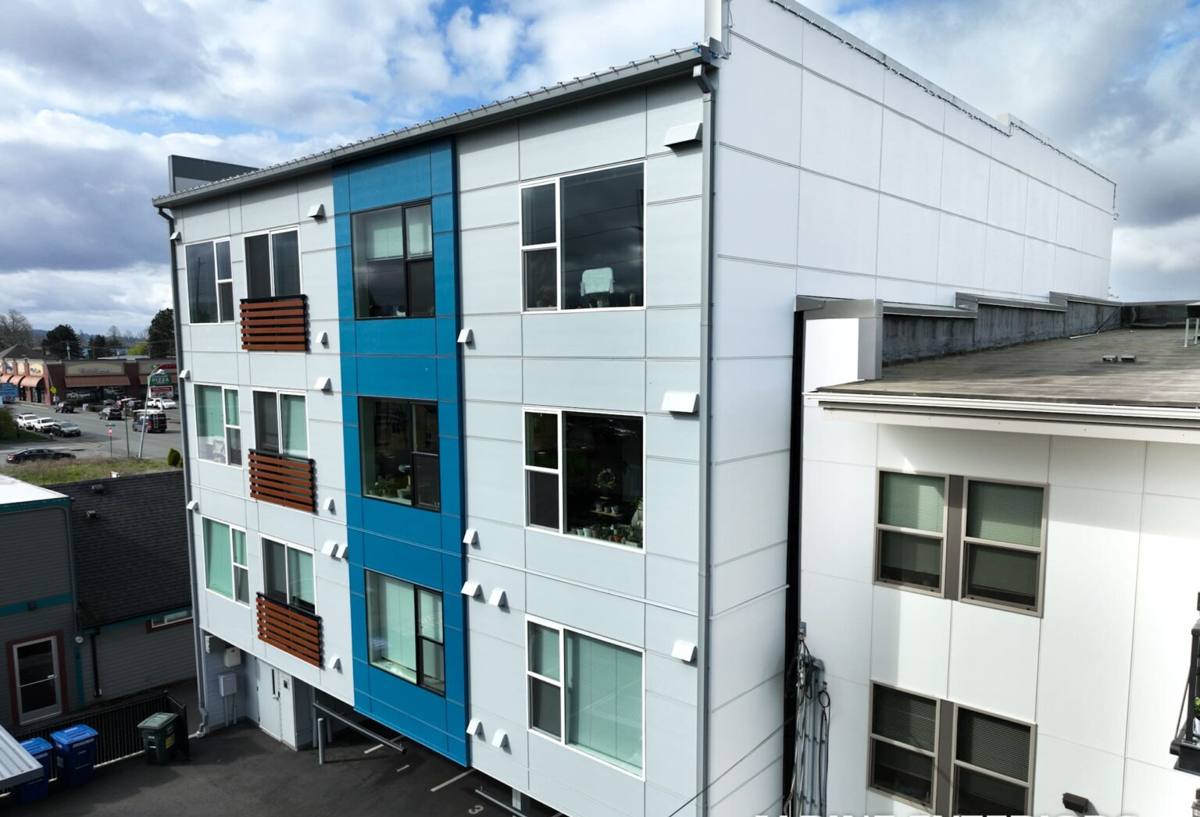
What Primed Spruce Gets Right
Fair is fair. Spruce siding has real advantages, and any honest contractor should say so before explaining the trade-offs:
- It's a natural wood grain, and some homeowners simply prefer the look and feel of real wood over a manufactured product.
- Individual boards are easy to cut, notch, and patch on site with standard tools — no specialty blades or fasteners required.
- It's typically cheaper per square foot to purchase and install than fiber cement, which matters on tight budgets.
- It takes a wide range of paint colors and finishes without the constraints of a factory color system.
Where it runs into trouble isn't the product's basic quality — it's what happens to it once it's on a house in this climate, year after year, decade after decade.
Why Whatcom County's Climate Is Rough on Primed Wood
Bellingham sits close enough to the water that salt air is a real factor on exterior materials, and the region's weather pattern is built to punish any siding with a weak point at the seams. We get long stretches of driving rain, and — maybe more than most homeowners realize until they've dealt with it — a moss season that can run most of the year on north-facing and shaded walls. Add in the region's humidity and the fact that many lots here are ringed with mature trees holding moisture close to the house, and you have conditions that are genuinely tough on any wood-based siding, primed or not.
Primer is a base coat, not a shield. It's designed to help a topcoat adhere and to slow moisture absorption temporarily — it was never engineered to be the long-term weather barrier on its own. Once that primer coat is breached (by a nail hole, a cut end, a hairline crack from expansion and contraction, or just UV and moisture breakdown over time), the wood underneath is exposed, and spruce is not a naturally rot-resistant species the way cedar or redwood is.
The End-Grain Problem
Every butt joint, every corner cut, every mitered edge on a spruce board is exposed end grain — and end grain drinks up water far faster than the face of the board. Factory priming rarely fully seals cut ends made on site during installation, which means the most vulnerable part of every board is often the least protected. In a climate with Bellingham's rainfall pattern, that adds up fast.
The Maintenance Reality
The number one thing we hear from homeowners who've lived with primed spruce for ten-plus years in this area is that the maintenance schedule turned out to be more demanding than they expected. Paint film on wood siding in a wet, moss-prone climate doesn't last as long as it does in drier regions. Practically speaking, that means:
| Task | Typical Frequency, Wet PNW Climate |
|---|---|
| Repaint / recoat | Every 5-8 years, sooner on sun/rain-exposed elevations |
| Caulk and joint inspection | Annually |
| Moss and algae treatment | 1-2 times per year on shaded walls |
| Board replacement (rot, splits) | Ongoing, as issues appear |
None of that is unusual for wood siding — it's simply the honest cost of keeping a wood product performing well in a climate like ours. The issue is that many homeowners choose spruce siding expecting a "paint it and forget it" product, and the maintenance bill doesn't show up until years later, often as rot repair rather than routine upkeep.
Moisture, Rot, and What We See in the Field
When our crews are called out to look at aging spruce siding, the pattern is usually the same: the trouble starts small — a hairline crack at a butt joint, a nail head that's backed out and let water track in, a spot where two boards weren't given room to move — and it stays invisible from the ground for years. By the time paint is visibly peeling or a board feels soft to the touch, moisture has often been working behind the surface for a while. Because spruce doesn't have natural rot resistance, once moisture gets past the primer and paint film, decay can spread along the board and into adjacent boards before it's obvious from the street.
This is a maintenance-sensitivity issue more than a defect. Spruce siding installed and maintained meticulously — full six-sided priming and painting before installation, careful caulking, prompt repainting, moss kept off the walls — can last a long time. The trade-off is that it demands that level of attention consistently, on every wall, for the life of the siding. That's a lot to ask of a busy homeowner, and it's a lot to guarantee as a contractor.
Why We Standardized on James Hardie Fiber Cement
We made the decision to only install James Hardie fiber cement siding because it removes the two biggest risk factors we see with primed spruce in this climate: it's non-combustible, and it's engineered specifically to resist moisture damage rather than relying on a surface coating to keep water out. Hardie's HZ5 product line is formulated for regions with harsh, wet weather patterns — which describes Whatcom County well, between the marine air, the rain, and the moss.
A few specifics that matter for a Bellingham home:
- ColorPlus factory finish — baked-on color and sealant applied under controlled conditions, not brushed on at the job site, which means better long-term adhesion than field-applied paint on primed lumber.
- Fiber cement composition — doesn't support rot the way wood fiber does, so a moisture intrusion event doesn't carry the same risk of structural decay in the siding itself.
- Climate-engineered HZ lines — Hardie makes different formulations for different climate zones; the HZ5 product is built for wet Pacific Northwest conditions specifically, not a one-size-fits-all national product.
- Transferable warranty — backed by the manufacturer, and it transfers to a new owner if the home sells, which matters for resale in a market where buyers ask about siding condition and age.
None of that means Hardie is maintenance-free — it isn't, no siding is. But the maintenance it does need (occasional washing, repainting on a much longer cycle if using non-ColorPlus color, caulk checks) is lighter and less urgent than what primed wood needs to avoid rot.
What Correct Installation Actually Requires
Part of why we don't install multiple product lines is that fiber cement has its own installation discipline — proper fastener spacing, correct clearances at grade and roofline, factory-cut and sealed joints, and manufacturer-specified overlaps — and getting good long-term performance depends on a crew that installs it the same correct way on every home, every time. Spreading a crew across spruce, fiber cement, vinyl, and other systems means more room for the small installation mistakes that cause problems ten years down the road, regardless of which product is on the wall.
A Quick Checklist If You're Deciding Between Options
- Ask what maintenance schedule the product actually requires in a wet coastal climate, not a national average.
- Ask how end grain and cut edges are sealed during installation, not just at the factory.
- Ask whether the warranty is transferable if you sell the home.
- Ask whether the color/finish is factory-applied or field-painted, and how that affects touch-up down the road.
- Ask how the contractor's crew is trained on that specific product — one system installed consistently beats several installed occasionally.
Our Honest Bottom Line
Primed spruce siding isn't a scam material or a bad product — it's a wood product that needs a level of ongoing care that's genuinely difficult to sustain through Bellingham's salt air, driving rain, and long moss season without eventually seeing rot at joints and cut ends. We'd rather tell homeowners that up front than install something we know will likely need real repair work in a decade. That's why we put James Hardie fiber cement on every home we side — it's engineered for exactly this climate, backed by a manufacturer warranty that follows the house, and it's the one system our crews install to spec every time.
If you're weighing your siding options for a Whatcom County home, we're happy to walk your property, look at what's there now, and give you a straight answer on what we'd recommend — no pressure, no obligation. Fill out the form below for a free estimate.