 Bellingham
 Siding Built for Sudden Valley's Wooded, Lakeside Setting
Sudden Valley sits on the south shore of Lake Whatcom, a heavily wooded, hilly community where homes live under a lot of tree canopy and close to open water. That combination is beautiful to live in and hard on exterior materials. Between the shade from mature conifers, the moisture coming off the lake, and Whatcom County's long wet season, siding in this neighborhood works harder than siding on a home out in the open. We've been doing exterior work around Bellingham long enough to know what that combination does to a house over ten or twenty years, and we build our recommendations around it rather than a one-size-fits-all approach.
This page covers what Sudden Valley homes typically face, how we approach siding, roofing, windows, and decks for properties in this kind of setting, and why we install James Hardie fiber cement exclusively rather than offering a menu of siding brands.
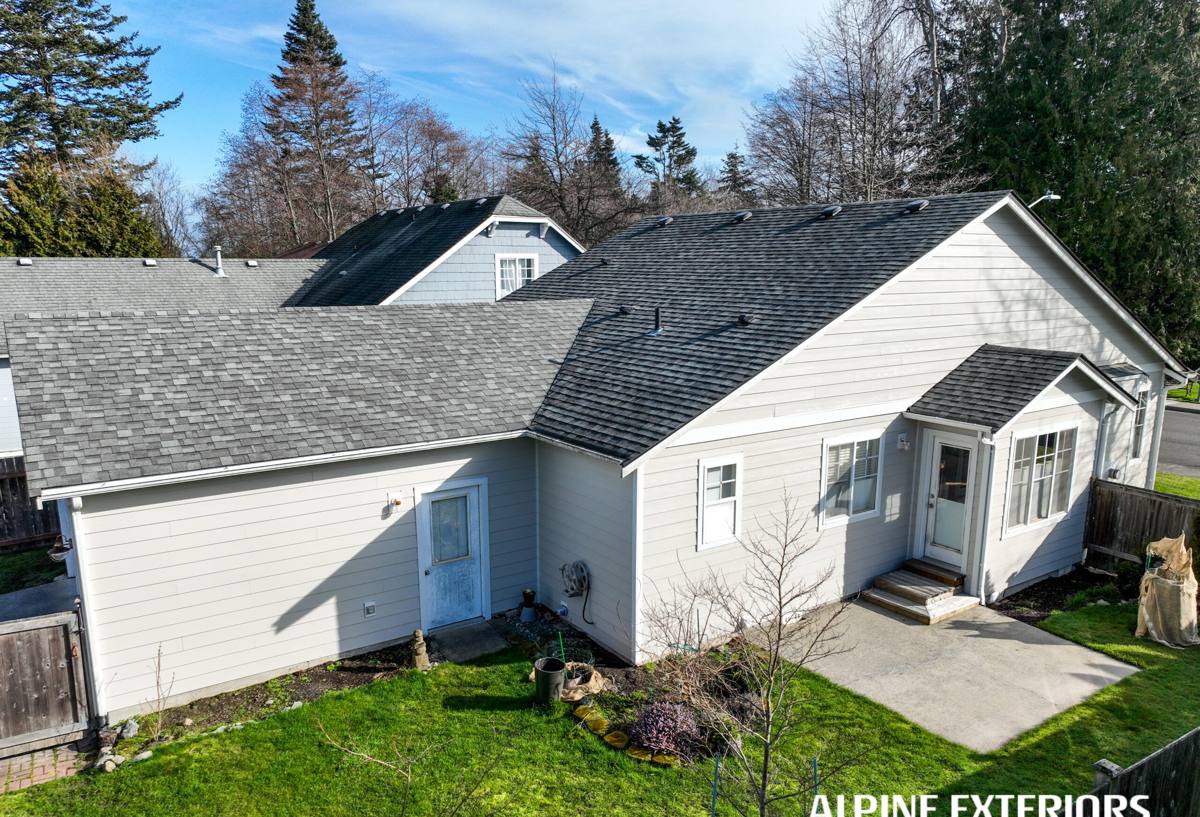
What the Local Climate Does to a House Here
Tree Shade Slows Everything Down
A siding panel in full sun dries out within an hour or two of a rain event. A siding panel under a stand of Douglas fir or cedar can stay damp for a day or more, especially on north-facing walls or sections tucked behind landscaping. Moss doesn't need standing water to take hold — it just needs consistent dampness and shade, both of which are the default condition on a lot of Sudden Valley lots. Wood-based sidings and their painted or primed surfaces are the most vulnerable here, because moss and algae growth accelerates coating breakdown and traps moisture against the substrate.
Lake-Adjacent Moisture and Driving Rain
Proximity to Lake Whatcom means higher ambient humidity than you'd get further inland, and Whatcom County's weather pattern brings plenty of driving, wind-pushed rain off the water and through the valley. Driving rain finds every weak seam, every gap in flashing, and every spot where caulking has started to fail. It's not the rain itself that causes rot — it's rain that gets behind the siding and can't dry out because the wall assembly or the material itself holds onto moisture.
Elevation Changes and Microclimates
Sudden Valley's terrain is hilly, and different elevations and orientations on the same street can see noticeably different exposure. A home tucked into a low, shaded pocket near the trees will hold moisture longer than a home on a more open, elevated lot nearby. When we walk a property here, we're looking at each elevation separately rather than assuming the whole house faces the same conditions.
Why Moss Season Matters More Than People Expect
Western Washington's moss season effectively runs from fall through spring — anywhere from six to eight months of the year where surfaces stay damp enough for moss and algae to establish and spread. On a shaded, lake-adjacent lot like the ones common in Sudden Valley, that season can run even longer than it does for homes closer to open Bellingham streets. Over years, moss holds moisture against the siding surface, degrades paint and coatings faster, and can work into seams and butt joints. It's a maintenance issue as much as a material issue — but some materials handle it far better than others.
Siding: Why We Only Install James Hardie
We install James Hardie fiber cement siding exclusively. We don't install vinyl, LP SmartSide, Cemplank, Allura, primed spruce, or cedar. That's a deliberate standard, not a lack of options, and it comes directly from what we see happen to exterior materials in exactly this kind of climate — wet, shaded, and close to water.
What Makes Fiber Cement the Right Fit Here
- Non-combustible material — fiber cement doesn't feed a fire the way wood-based products can, which matters given the wooded lots common in Sudden Valley.
- Dimensionally stable — Hardie panels don't swell, cup, or warp with repeated wet-dry cycling the way engineered wood and solid wood products can under sustained shade and moisture.
- ColorPlus factory finish — a baked-on finish applied under controlled conditions holds up to moss, algae, and UV exposure far longer than field-applied paint, and it means fewer repaint cycles over the life of the siding.
- HZ5 product engineering — Hardie's HZ5 line is engineered for colder, wetter climate zones like ours, with moisture and freeze-thaw performance built into the product rather than added after the fact.
- Long, transferable warranty — when installed to spec, Hardie backs the product with a warranty that can transfer to a new owner, which matters for resale in a community where homes tend to be long-term holds.
We're upfront that Hardie isn't the cheapest material on the market and it isn't the lightest to install — it takes more careful handling, correct fastening, and proper joint treatment than vinyl or engineered wood. That installation sensitivity is exactly why we stayed narrow instead of broad: doing one product system correctly, on every job, produces a better long-term result than doing five products adequately.
What We Deliberately Don't Install, and Why
| Material | What it does well | Trade-off in a shaded, lake-adjacent setting |
|---|---|---|
| Vinyl siding | Low upfront cost, minimal maintenance in dry climates | Can warp or become brittle with temperature swings; seams and moisture management are less forgiving than fiber cement |
| LP SmartSide | Engineered wood, lighter and faster to install than fiber cement | Wood-based core is more vulnerable to sustained moisture exposure if any coating or seam fails |
| Cedar / primed spruce | Natural appearance, traditional look | Needs regular refinishing and is the most susceptible to moss, rot, and insect damage in constant shade |
| Cemplank / Allura | Also fiber cement, similar base material | We standardized on one manufacturer's engineering, finish process, and warranty structure rather than mixing systems |
Roofing for Heavy Tree Cover
Roofs under conifer canopy accumulate needles, debris, and moss faster than roofs in the open, and that debris holds water against the roofing material and clogs valleys and gutters. When we're on a roof in a setting like Sudden Valley, we're paying close attention to flashing details around chimneys and penetrations, ventilation that lets the attic and roof deck dry out between wet spells, and material choices that resist moss growth rather than just tolerating it. A roof that can't shed water and dry out efficiently under shade will show algae staining and granule loss well before its expected lifespan.
Windows: Sealing Out Driving Rain
Older or poorly flashed windows are one of the most common points where wind-driven rain gets behind the exterior wall, regardless of what siding is on the house. In a setting with regular driving rain off the lake, window flashing and sealant condition matter as much as the window unit itself. When we replace or reinstall windows, we treat the flashing and integration with the wall assembly as the real work — the window unit is only half the job.
Decks: Built to Handle Shade and Moisture
Decks in shaded, lake-proximate settings face the same moss and slow-drying issues as siding, plus the added factor of foot traffic and standing water on horizontal surfaces. Proper board spacing, ledger flashing, and joist protection all matter more here than they would on a deck in full sun. We build decking systems around drainage and airflow underneath the structure, not just the surface material, because trapped moisture under a deck causes problems long before it's visible from above.
Our Process for Sudden Valley Properties
- On-site walk of every elevation, noting shade exposure, existing moss or moisture damage, and any trouble spots around trim, flashing, or penetrations.
- Honest assessment of what's driving any current siding, roofing, or deck issues — moisture source first, cosmetic concerns second.
- A written scope and estimate that separates what needs to happen now from what can be planned for later.
- Installation to manufacturer spec, with attention to the details — fastening patterns, joint treatment, flashing integration — that determine whether a material performs for twenty years or five.
Simple Maintenance Checklist for Shaded, Lake-Adjacent Homes
- Trim back tree limbs and vegetation that keep siding, roof, or deck surfaces in constant shade where practical.
- Clean gutters and roof valleys at least twice a year, more often under heavy conifer cover.
- Check north-facing and shaded wall sections for moss or discoloration each spring.
- Inspect caulking and sealant around windows and trim annually, before the wet season sets in.
- Look underneath decks periodically for standing water or debris buildup against ledgers and joists.
Why a Local Crew Matters
A crew that works around Bellingham and Whatcom County regularly has already seen how a shaded, lake-adjacent lot in Sudden Valley behaves differently than a home out on open ground closer to town. That's not something you get from a general knowledge of siding installation — it comes from doing this work, on homes with this kind of exposure, season after season. We bring that local read to every estimate: what's actually causing a problem on your house, and what will actually hold up given where your home sits.
If you're weighing a siding, roofing, window, or deck project on a Sudden Valley property, we're happy to walk the site and give you a straightforward, no-pressure estimate — just fill out the form below.