 Bellingham
 What ColorPlus Technology Actually Is
Before you fall in love with a color, it helps to understand what you're actually buying. James Hardie ColorPlus Technology is not paint applied on a job site — it's a factory-baked finish applied in a controlled environment, cured in multiple coats, and backed by its own product warranty separate from the siding substrate warranty. That distinction matters more in Whatcom County than almost anywhere else in the state, because our climate is brutal on field-applied finishes.
Standard fiber cement siding can be ordered primed, meaning it still needs a field coat of paint after installation. ColorPlus siding arrives ready to install, with color already locked into the board. There's no waiting on a dry, mild weather window to paint — which, if you've lived in Bellingham through a typical fall or spring, you know can be in short supply.
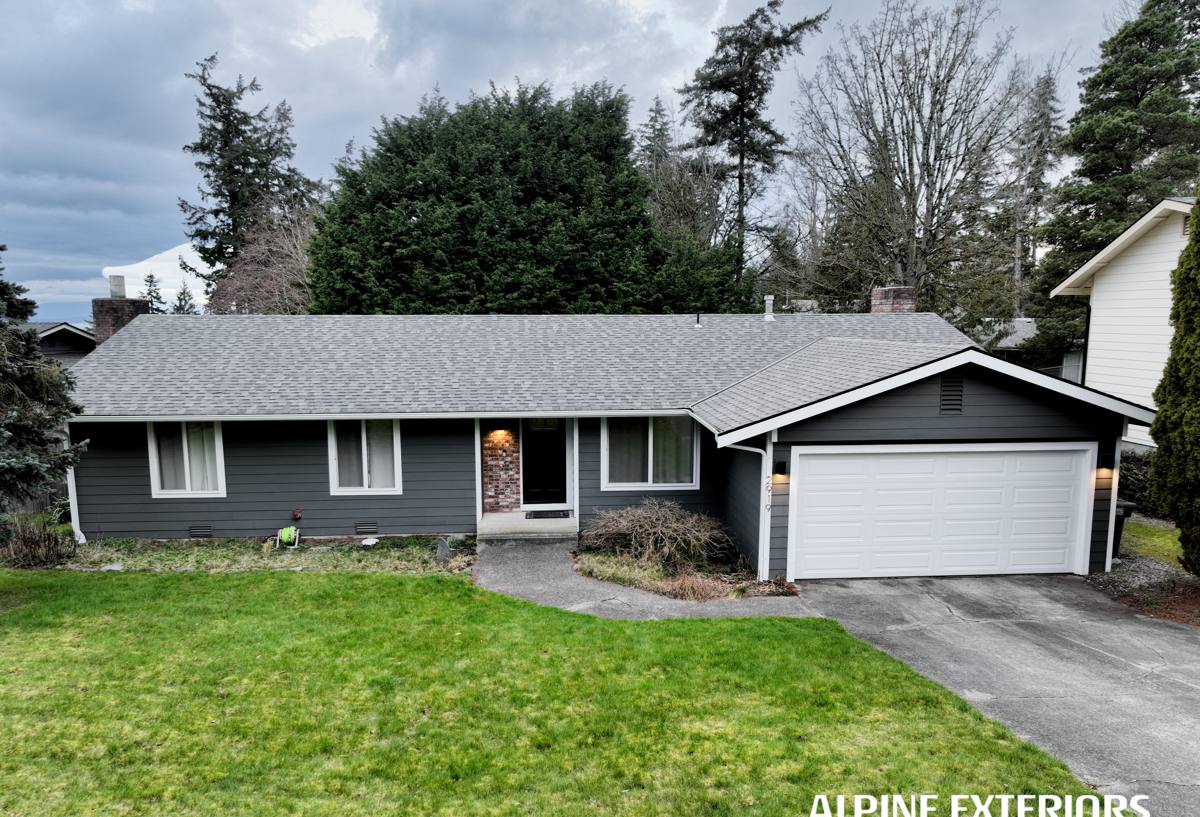
Why Color Choice Matters More Here Than Most Places
Bellingham sits in a spot where marine air off the Salish Sea, persistent rain, and shaded, moss-friendly conditions all interact with your siding finish over years, not months. A few realities specific to our region shape how we talk to homeowners about color:
- Salt-laden air along the waterfront and in neighborhoods facing Bellingham Bay accelerates finish breakdown on lower-quality coatings.
- Driving rain off the water pushes moisture into seams and joints, so finish consistency at cut edges and laps matters as much as the color itself.
- Extended shade and dampness through fall and winter create ideal conditions for moss and algae, which show differently depending on the sheen and tone of your siding.
- UV exposure is lower here than in sunnier climates, so color fading from sun is a smaller concern than color fading from repeated moisture cycling and biological growth.
None of this means every color performs identically. It means the finish system behind the color is doing real work, and a factory-applied, baked-on finish holds up to that work better than a field coat that was rolled on between rain showers.
How the ColorPlus Palette Is Built
Curated, Not Unlimited
James Hardie offers a defined palette of ColorPlus colors — generally in the range of 20 or so standard options depending on the product line, plus a smaller set of Statement Collection colors for bolder choices. This is intentional. Each color in the ColorPlus lineup has been tested for how it performs as a baked finish, not just how it looks on a swatch. That's different from a full custom paint palette, where any color is technically possible but none of them come with the same finish warranty.
Reading Undertones in Northwest Light
Pacific Northwest daylight tends to be cooler and more diffuse than in sunnier regions, which shifts how colors read on a house. A warm greige that looks neutral in a showroom can lean cooler and grayer under Bellingham's overcast sky. We always recommend viewing large sample boards outdoors, on your own house, at different times of day — morning light, midday, and dusk all show a color differently, and Northwest weather adds its own filter on top of that.
ColorPlus vs. Field-Applied Paint: What Actually Differs
| Factor | ColorPlus Factory Finish | Field-Applied Paint on Primed Siding |
|---|---|---|
| Application environment | Controlled factory conditions, consistent cure | Weather-dependent, subject to job-site conditions |
| Coverage consistency | Uniform multi-coat application on every board | Depends on painter technique and number of coats applied |
| Warranty | Separate finish warranty from James Hardie | Typically only the paint manufacturer's product warranty, if any |
| Cut-edge treatment | Factory finish plus recommended edge sealing at install | Cut edges require careful field priming and painting |
| Repaint interval | Long interval before repainting is needed | Shorter interval; typical exterior repaint cycles apply |
| Upfront cost | Modest premium over primed siding | Lower material cost, added labor cost for painting |
The field-paint option isn't a bad product — plenty of homes are painted well and hold up fine. But it shifts the burden of getting a consistent, weather-resistant finish onto job-site conditions and the skill of whoever's holding the sprayer that week. In a climate where dry painting windows are unpredictable, that's a real variable we'd rather not gamble with on your home.
Matching HZ5 Product Engineering to Whatcom County Conditions
Color is only half the equation — the board underneath it matters just as much. James Hardie engineers its siding by climate zone, and homes in Bellingham fall under the HZ5 line, engineered specifically for regions with sustained moisture exposure like ours. HZ5 siding is formulated to resist moisture-related damage better than siding engineered for drier climates, which pairs directly with the ColorPlus finish to give you a system built for the specific way Whatcom County weather behaves — not a generic national product.
This is part of why we install James Hardie exclusively rather than mixing in other fiber cement brands or vinyl. The combination of climate-zoned substrate and factory-cured finish is a matched system, and that pairing is where the real performance comes from — not any single component on its own.
Trim, Soffit, and Accent Color Coordination
Most Bellingham homes end up with a three-part color decision: field color (the main siding), trim color, and an accent, whether that's shutters, a front door, or a feature wall. James Hardie's ColorPlus trim boards are formulated to coordinate with the field colors, so you're not guessing whether a white trim will read warm or cool against your chosen siding tone.
A Few Practical Notes
- Darker field colors show less visible streaking from moss and organic staining over time than very light, flat whites in shaded, damp locations.
- High-gloss finishes are not part of the ColorPlus system — the finishes are formulated with a low-sheen look that tends to hide minor surface texture and weathering better than a shiny finish would.
- If your lot has heavy tree cover or a north-facing wall that stays damp longer, factor that into which elevation gets which accent — a color that looks great on a sun-exposed south wall may show moss differently on a shaded side.
What the ColorPlus Warranty Actually Covers
James Hardie backs ColorPlus finishes with a warranty that covers the finish itself — chipping, peeling, and fading within its terms — separately from the substrate warranty on the siding material. This is transferable to a new owner if you sell the home within the warranty period, which is a detail worth mentioning to buyers if you're ever selling in a market where siding condition gets scrutinized during inspection.
Warranty coverage assumes installation to Hardie's specifications — correct fastening, proper clearances, and factory-recommended caulking and cut-edge treatment. This is one of the more common ways homeowners unintentionally void or weaken warranty coverage: an installer who doesn't follow spec on flashing or clearance details can undermine coverage even though the product itself is sound. It's worth asking any contractor bidding your siding job directly how they handle Hardie's installation requirements, not just whether they'll "install Hardie."
Living With Your Color Choice Through Bellingham's Seasons
Once your siding is up, a few habits keep any color looking like it did on day one:
- Rinse siding with a garden hose and soft brush once or twice a year, focusing on shaded north- and east-facing walls where moss and algae tend to establish first.
- Avoid pressure washers on siding — high-pressure spray can force water behind laps and joints, which works against the moisture resistance the whole system is designed for.
- Keep gutters clear and downspouts directed away from siding runs, since concentrated runoff is one of the more common causes of localized staining.
- Trim back vegetation and tree limbs that keep a section of wall in constant shade and dampness — airflow does more to prevent moss than any coating can.
None of this is unique to ColorPlus siding, but a factory-cured finish tolerates this kind of routine maintenance — including occasional gentle cleaning — better than a field-applied coat, which can be more sensitive to scrubbing in its early years.
Making the Final Decision
Choosing a color is partly aesthetic and partly practical. Before you sign off on a final selection, work through this checklist:
- Order full-size ColorPlus sample boards, not just small paint chips — color reads differently at scale.
- View samples against your actual roof, stone, brick, or existing hardscaping in daylight.
- Check the color at three different times of day, including overcast conditions typical of a Bellingham fall or winter.
- Confirm whether your neighborhood or HOA has any color restrictions before finalizing.
- Ask your contractor which elevations get the most shade and dampness, and factor that into lighter vs. darker choices.
- Confirm in writing which ColorPlus warranty terms apply and what installation steps are required to keep that warranty intact.
If you're weighing colors for a siding project in Bellingham or elsewhere in Whatcom County, we're happy to bring sample boards out to your property and walk the color options against your home in person. Reach out for a free, no-pressure estimate — there's no obligation, and it's the easiest way to see how a color actually looks on your house before committing.