 Bellingham
 Siding Built for Birchwood's Corner of Whatcom County
Birchwood sits inside Bellingham's patchwork of established residential neighborhoods, and like most of the city, it's close enough to Bellingham Bay and the Puget Sound air currents that homes here take on weather most of the country never has to think about. Salt-tinged moisture off the water, driving rain that comes sideways more often than straight down, and a moss season that can stretch from October clear through May are just part of owning a home in this part of Whatcom County. Siding that isn't built for that combination doesn't fail overnight — it fails slowly, in ways that are easy to miss until a contractor pulls off a piece of trim and finds soft wood or a stained sheathing layer underneath.
We're a local siding, roofing, window, and deck contractor, and Birchwood is inside our regular service footprint. That matters more than it sounds like it should. A crew that works this neighborhood regularly knows which streets sit low and hold moisture longer, which lots get heavier shade and slower drying times, and which exposures take the brunt of storms rolling in off the Sound. That local pattern recognition shapes real decisions — how we detail flashing, where we pay extra attention to caulking and gaps, and which siding material we're willing to put our name behind.
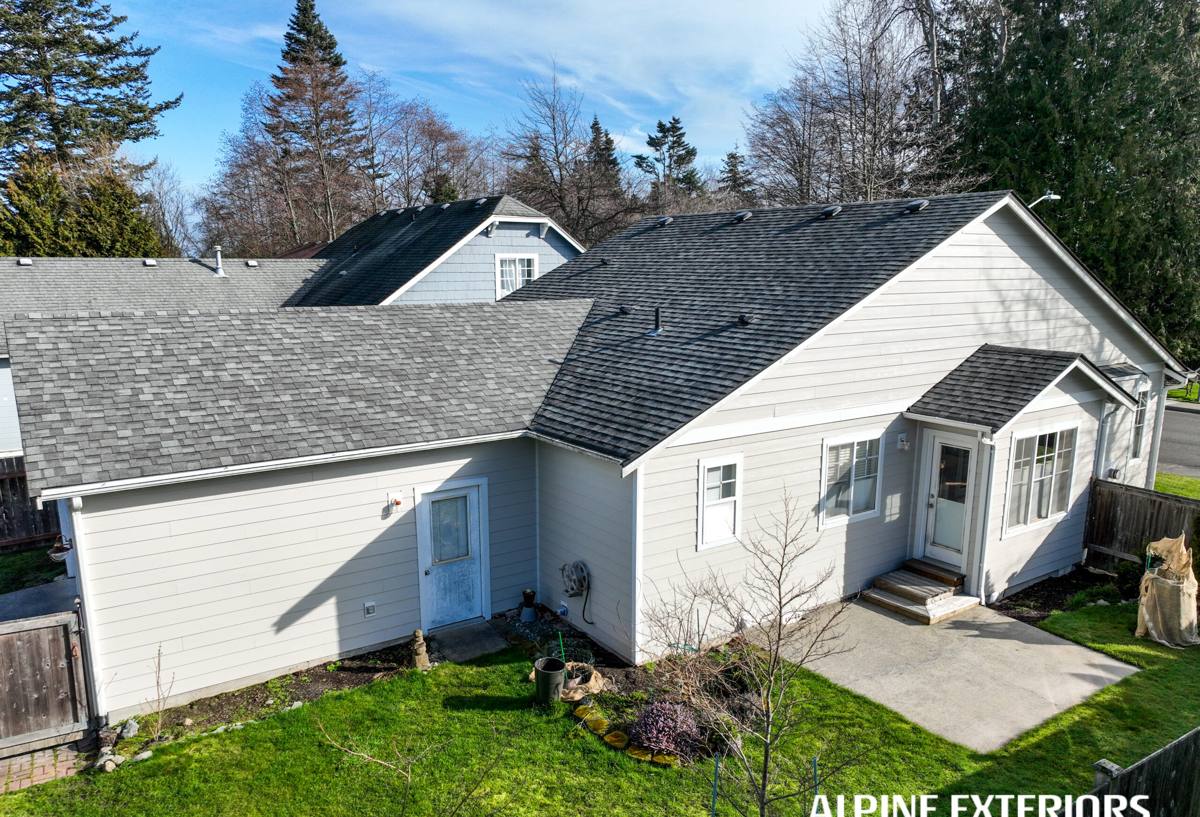
What Bellingham's Climate Actually Does to a House
Salt Air and Moisture
Bellingham isn't oceanfront, but Bellingham Bay is close enough that salt-laden moisture in the air is a real factor, especially on homes with west- or water-facing exposures. Salt air accelerates corrosion on fasteners and metal flashing, and it keeps painted and coated surfaces damp longer than drier inland climates would. Over years, that constant low-grade moisture exposure is one of the biggest reasons some siding materials age faster here than the manufacturer's marketing suggests they should.
Driving Rain
Whatcom County doesn't get the heaviest rainfall totals in Washington, but a lot of what falls here comes in on wind, which means it hits siding at an angle instead of running straight down and off. Driving rain finds every seam, lap joint, and butt joint that isn't detailed correctly. It's a slow, patient kind of water intrusion — the kind that shows up as a soft spot near a window trim board two or three years after a sloppy install, not two or three weeks.
Moss and Prolonged Dampness
Anyone who's scraped moss off a north-facing fence or roofline in this part of the state knows how persistent it is. Shaded, damp exteriors in Birchwood grow moss and algae readily, and on some siding materials that growth isn't just cosmetic — it holds moisture directly against the substrate for months at a stretch. That prolonged dampness is exactly the condition that causes swelling, delamination, and rot in moisture-sensitive materials, and it's a big part of why material choice matters as much as installation quality.
Why We Only Install James Hardie Fiber Cement
We get asked fairly often why we don't offer vinyl, LP SmartSide, primed spruce, cedar, or other fiber cement brands like Cemplank or Allura. It's a fair question, and the honest answer is that we made a standardization decision based on what holds up in this exact climate, not because every alternative is a bad product in every setting.
What We Ruled Out, and Why
- Vinyl siding is affordable and low-maintenance in the sense that it doesn't need repainting, but it's a petroleum-based product that expands and contracts significantly with temperature swings, can warp or crack in impact, and its seams and J-channels give wind-driven rain more opportunities to work behind the panel over time.
- LP SmartSide is an engineered wood product with real strengths, but it's still wood-based, which means it depends heavily on intact factory coating and correct field caulking to keep moisture out. In a climate with this much sustained dampness and moss pressure, wood-based products are less forgiving of the small installation gaps that inevitably happen on a real job site.
- Primed spruce and cedar are traditional, attractive options, but solid wood siding demands ongoing maintenance — repainting, caulk inspection, moisture monitoring — that most homeowners underestimate until they're a few years in. Cedar in particular is vulnerable to the exact moss and algae growth Bellingham is known for.
- Other fiber cement brands like Cemplank and Allura are legitimate fiber cement products, but we standardized on one manufacturer so our crews install one system to one spec, every time, with one warranty structure behind it. James Hardie's HZ5 product line is also specifically engineered for the Pacific Northwest's moisture and temperature profile, which lines up with what Birchwood homes actually need.
What James Hardie Gets Right
Fiber cement is non-combustible, dimensionally stable across temperature and humidity swings, and resistant to moisture-driven rot and insect damage in a way wood-based products structurally can't match. James Hardie's ColorPlus factory-baked finish holds color and resists fading and chipping better than field-applied paint, which matters in a climate where repainting isn't a fun weekend project six months out of the year. And the HZ5 line specifically is engineered for climates that see the freeze-thaw and moisture patterns Whatcom County gets. It's also backed by a strong transferable limited warranty, which carries real weight if the home sells down the line.
Comparing the Common Options
| Material | Moisture Resistance | Maintenance | Typical Lifespan |
|---|---|---|---|
| Vinyl | Moderate — seams are vulnerable | Low, but limited repair options | 20-30 years |
| Cedar / Primed Spruce | Low without diligent upkeep | High — repainting, caulk checks | 15-25 years with maintenance |
| LP SmartSide | Moderate — coating-dependent | Moderate | 20-30 years |
| James Hardie Fiber Cement | High — engineered for PNW moisture | Low — factory finish, occasional wash | 30-50+ years when installed to spec |
How We Handle a Siding Project in Birchwood
Assessment First
Every project starts with a real look at the house — not just the siding surface, but what's underneath it. We check for existing moisture damage, evaluate the current water-management details around windows, doors, and rooflines, and talk through what's actually driving the need for new siding, whether that's age, storm damage, or a full exterior update.
Installation Discipline
James Hardie siding performs the way it's rated to perform only when it's installed to the manufacturer's specification — correct fastener placement, proper clearances, correctly lapped and sealed joints, and flashing details that account for driving rain rather than just vertical rainfall. That's where a lot of the real-world performance gap between a good and a mediocre siding job actually comes from, and it's where a crew's experience with this specific climate pays off.
Beyond Siding
Because we also handle roofing, windows, and decks, we can look at a Birchwood home's exterior as a full system rather than one component in isolation. Flashing at a roofline, sealing around a window, and siding termination at a deck ledger all interact with each other. Addressing them together, when it makes sense for the project, closes gaps that get missed when each trade is handled separately by different contractors on different timelines.
Signs a Birchwood Home May Need Siding Attention
- Soft or spongy spots when you press on siding, especially near window and door trim
- Persistent moss, algae, or dark streaking that doesn't clean off and returns quickly
- Visible warping, cupping, or gaps opening up between boards or panels
- Peeling or bubbling paint, or chalky, faded color that keeps returning after repainting
- Rising energy bills that may point to compromised insulation behind failing siding
- Visible rot, especially at the bottom courses near grade or around ground-level trim
What Drives Cost on a Project Like This
Every home is different, but a few factors consistently move the number on a siding project in this area: the size and complexity of the home's exterior (dormers, gables, and multiple stories all add labor), how much of the existing siding and sheathing needs to be removed and possibly repaired before new siding goes on, the specific James Hardie product line and color selected, and whether trim, flashing, or window details need attention alongside the siding itself. We'll walk through those specifics for your home directly rather than quote a number that doesn't reflect your actual project.
Why a Local Crew Matters Here
Bellingham's neighborhoods aren't uniform — a home a few blocks from the water deals with different exposure than one set back and shaded by mature trees, and Birchwood has its own mix of both. A crew that works Whatcom County regularly has already seen how these conditions play out on real homes, not just in a manufacturer's install manual. That local experience shows up in the small decisions — where to add extra flashing, how tight to run a caulk joint, which details to double-check on a shaded, damp lot — that determine whether siding performs for thirty years or needs attention in eight.
If you're weighing your options for a siding, roofing, window, or deck project in Birchwood, we're happy to take a look and talk through what your home actually needs. Reach out for a free, no-pressure estimate using the form below.