 Bellingham
 Blaine Sits Where the Weather Gets Serious
Blaine is about as far northwest as you can build a house in Washington State — tucked against Semiahmoo Bay and Drayton Harbor, right at the Canadian border. That location is beautiful, and it's also exactly why exterior materials wear out faster here than they do twenty miles inland in Bellingham proper. Homes in Blaine take on a combination of salt-laden air, near-constant winter rain, and wind off the water that most product warranties simply weren't written to handle gracefully. We've worked on enough homes along this stretch of Whatcom County to know that "it looked fine when it went up" is not the same as "it will still look fine in fifteen years."
This page covers what Blaine's climate actually does to exterior materials, how we approach siding, roofing, windows, and decks for homes in this area, and why we standardized on one siding product instead of offering a menu of options.
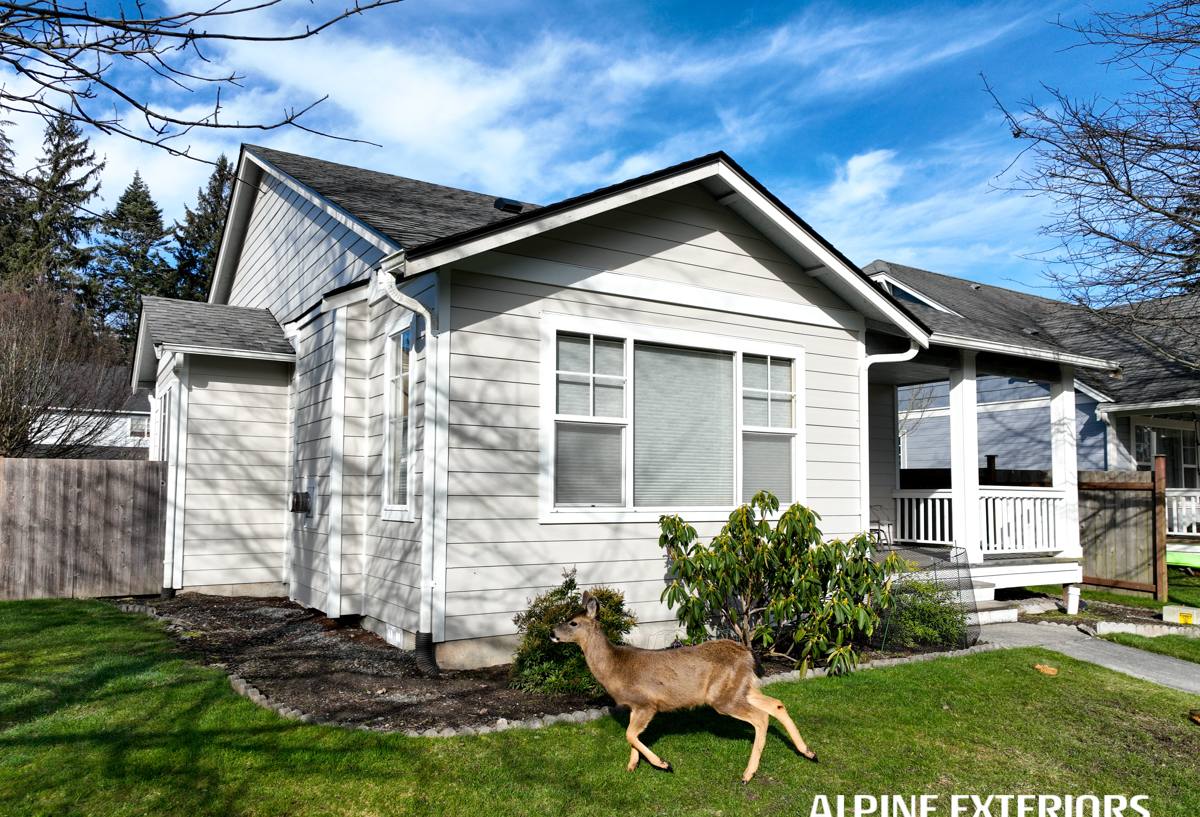
What Salt Air Actually Does to a House
Salt air isn't just a smell that rolls in off the bay — it's airborne sodium chloride that settles on every exterior surface and speeds up corrosion and material breakdown. On a house near the water, that shows up in a few predictable ways:
- Metal fasteners, flashing, and hardware corrode faster than the same components on an inland home
- Painted wood and composite trim can chalk, fade, and lose adhesion sooner than their rated lifespan suggests
- Caulking and sealants around windows and trim break down faster under repeated salt and moisture cycling
- Any material with exposed, unprotected wood fiber is more vulnerable to moisture wicking once the surface finish is compromised
None of this means a house near Blaine's waterfront is doomed to fall apart — it means the materials and installation details matter more here than they do somewhere drier and further from salt water. A product that's marginal in Spokane can be a real liability a few blocks from Drayton Harbor.
Driving Rain and a Long Moss Season
Whatcom County's wet season runs long, and Blaine gets its share of driving rain that comes in sideways off the water rather than falling straight down. That matters for siding performance in a way a lot of homeowners don't think about until it's a problem: wind-driven rain finds its way into laps, seams, and butt joints that would stay dry in a calmer climate. Combine that with mild temperatures and shade from mature trees on many lots, and you get ideal conditions for moss and algae growth on north- and west-facing walls, rooflines, and anywhere water sits instead of shedding.
Moss isn't just cosmetic. It holds moisture against the surface underneath it, and over time that trapped moisture is what causes real damage — soft trim, rot at butt joints, and finish failure on wood-based products. The fix isn't a heavier moss treatment schedule; it's building the exterior so moisture doesn't have anywhere to sit in the first place, and using a base material that doesn't feed the problem the way wood fiber does.
Where Moisture Problems Typically Start
| Area | Why It's Vulnerable | What Helps |
|---|---|---|
| North/shaded walls | Slow drying, more moss and algae buildup | Non-organic siding face, proper ventilation gap |
| Window and door trim | Caulk joints break down under salt and UV cycling | Correct flashing details, quality sealants, regular inspection |
| Butt joints and seams | Primary entry point for wind-driven rain | Factory-primed or factory-finished edges, proper overlap |
| Deck ledger and rim joist | Constant rain exposure plus ground moisture | Proper flashing, drainage gap, decay-resistant materials |
| Roof valleys and eaves | Water and debris concentrate here | Correct underlayment, clean gutters, adequate overhangs |
Why We Only Install James Hardie Fiber Cement Siding
We get asked fairly often why we don't offer vinyl, LP SmartSide, or a cheaper fiber cement alternative alongside Hardie. The honest answer is that in a climate like Blaine's, the material choice isn't a minor style preference — it's the single biggest factor in whether a homeowner is looking at touch-up maintenance or a full re-side in fifteen years.
Vinyl siding can look fine going in, but it's a thin material that expands and contracts significantly with temperature swings, and wind-driven rain can work its way behind panels at seams over time. LP SmartSide and other wood-strand products rely on an engineered wood core with a factory treatment and finish — that treatment has to stay intact for the life of the product, and any breach (a nail pop, a cut edge left unsealed, a damaged corner) exposes wood fiber to exactly the moisture conditions Blaine specializes in. We're not saying these products fail on every house; we're saying we've made a professional judgment that in a coastal, high-moisture climate, we'd rather install one product we trust completely than several we'd have to caveat.
James Hardie fiber cement is cement, sand, and cellulose fiber — there's no wood core to rot and no organic material for moss and algae to feed on the way they can on painted wood surfaces. It's non-combustible, which matters increasingly for insurance conversations across the state. Hardie's ColorPlus factory finish is baked on under controlled conditions rather than field-painted, which gives more consistent coverage and a longer service life than site-applied paint, and it comes backed by a real transferable warranty. For a house that's going to spend the next several decades taking on salt air and driving rain, that combination is what we're willing to put our name behind.
Full Exterior Protection: Siding, Roofing, Windows, and Decks
Siding doesn't work in isolation. A house's exterior is a system, and in a climate like Blaine's, weak points in one component put pressure on the others. A leaking roof valley can saturate the wall assembly behind good siding. A failed window seal can rot the trim around it regardless of how the siding performs. A deck ledger with no drainage gap can rot the rim joist it's attached to. We handle all four — siding, roofing, windows, and decks — because addressing them together, with consistent flashing and moisture-management details at every transition, is what actually keeps a house dry.
Where the Trades Overlap
- Siding meets roofing at every eave, rake, and step-flashing detail — done wrong, this is a chronic leak point
- Siding meets windows at every opening — proper flashing and sealant sequencing here prevents the majority of wall moisture intrusion
- Decks attach to the house at the ledger board, which needs its own flashing and drainage plane independent of the siding above it
- Gutters and drainage tie all of it together — undersized or clogged gutters push more water onto walls and siding than the assembly is designed to handle
What a Blaine Siding Project Typically Involves
Every house is different, but the general sequence for a full siding replacement in this area follows the same logic: get the wall assembly right before the finish material goes on, because that's what determines how the house performs over time, not just how it looks the day we finish.
- Removal of existing siding and inspection of the sheathing and framing underneath for hidden moisture damage
- Repair or replacement of any compromised sheathing, framing, or trim found during tear-off
- Installation of a code-compliant weather-resistive barrier, with attention to proper lapping and sealing at every seam
- Installation of James Hardie panels or planks per manufacturer specifications, including correct fastener type, spacing, and clearance from grade and roofing
- Careful flashing and sealant work at every window, door, and penetration
- Final inspection of butt joints, corners, and trim for consistent, weather-tight finish
Installation quality matters as much as the product itself. Hardie's warranty coverage assumes installation to manufacturer specification — gaps, missing clearances, or improper fastening are the most common reasons a good product underperforms on a real house.
Cost Factors for a Blaine Home
We don't publish flat pricing because every home's size, existing condition, and complexity are different, but these are the main factors that move the number:
| Factor | Why It Matters |
|---|---|
| House size and wall complexity | More corners, gables, and dormers mean more cutting, flashing, and labor time |
| Condition of existing sheathing | Hidden rot or moisture damage found during tear-off adds repair scope |
| Siding profile chosen | Lap, panel, and shingle-style Hardie products vary in material and labor cost |
| Trim and accessory work | Fascia, soffit, and trim replacement alongside siding adds to the scope |
| Access and site conditions | Waterfront lots, slopes, and limited access can affect equipment and labor time |
Why a Local Crew Matters Here
A crew that mainly works drier, inland jobs can install siding correctly by the book and still miss the details that matter specifically in a marine climate — the extra attention to butt-joint sealing, the flashing sequence that accounts for wind-driven rain instead of just straight-down rain, the fastener and hardware choices that hold up against salt air. We work throughout Whatcom County, including Blaine and the rest of the coastal areas near Bellingham, and that regular exposure to the same conditions is what shapes how we detail a job here versus a job further inland.
It also means we're around after the job is done. A local company has a stake in how the house performs five and ten years down the road, not just how it looks at final walkthrough.
A Practical Checklist Before You Replace Your Siding
- Have your current siding and trim inspected for hidden moisture damage, not just surface appearance
- Ask any contractor what moisture-barrier and flashing details they use, not just what siding brand they install
- Check whether your roofing, gutters, and window flashing need attention at the same time as your siding
- Get clarity on warranty coverage — both the manufacturer's product warranty and the contractor's workmanship warranty
- Ask how the contractor handles butt joints and seams, since that's where most coastal siding failures start
If you're weighing a siding, roofing, window, or deck project on a home in Blaine, we're glad to take a look and give you an honest, no-pressure estimate — including what we find on inspection, not just what a quote form assumes.