 Bellingham
 Why Birch Bay Is a Different Kind of Job Than Inland Bellingham
Birch Bay sits right on the water along the Strait of Georgia, and that changes what a house has to deal with year-round. A home five miles inland in Whatcom County still gets plenty of rain, but it isn't taking on salt-laden wind off open water, and it usually isn't as exposed to the steady onshore breeze that pushes moisture into every seam, corner, and fastener on a building's exterior. When we work on a home in Birch Bay, we're planning for a harsher exposure than a typical Bellingham lot, even though the two are only a short drive apart.
That exposure shows up in specific, predictable ways: faster fading and chalking on lower-grade paint finishes, corrosion on unprotected metal trim and fasteners, and siding materials that were never engineered for salt air breaking down years ahead of schedule. None of this is exotic knowledge — it's just what happens to buildings on the Washington coast, and it's why the approach to siding, roofing, windows, and decks in Birch Bay needs to account for the water from day one, not as an afterthought.
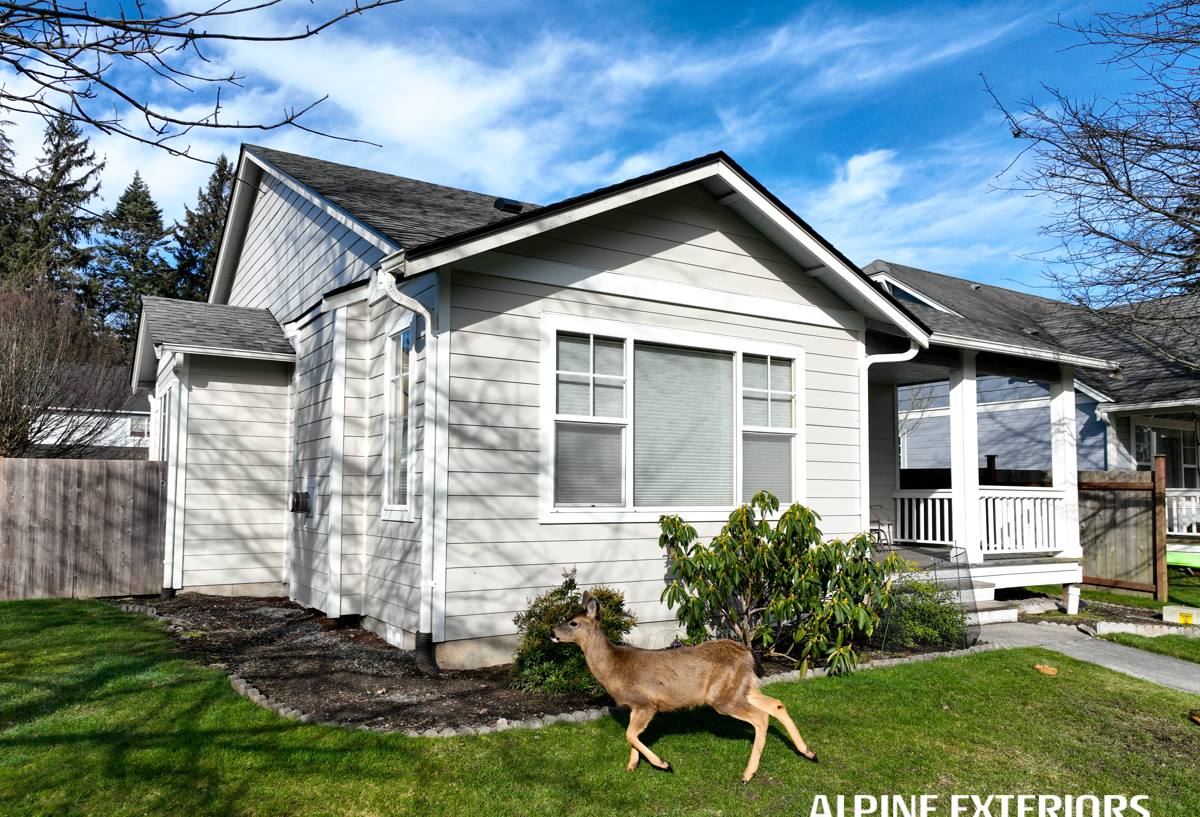
What Salt Air Actually Does to a House
Salt air isn't just "extra humid air." Airborne salt is hygroscopic, meaning it pulls moisture out of the atmosphere and holds it against surfaces longer than plain rainwater would. On a home near Birch Bay's shoreline, that means:
- Fasteners, flashing, and hardware corrode faster unless they're rated for coastal or marine exposure.
- Paint and factory finishes that aren't formulated for salt exposure chalk, fade, and lose adhesion sooner than the same product would inland.
- Wood trim and untreated cladding absorb and release moisture more aggressively, accelerating swelling, cracking, and rot cycles.
- Caulk and sealant joints break down faster, which matters a lot if the siding behind them depends on that seal to stay watertight.
None of this means a house near the water is doomed to look bad in a few years. It means the materials and details have to be chosen with that exposure in mind, rather than defaulting to whatever is standard for a subdivision twenty miles inland.
Add in the Rain and the Moss, and You Get a Long Wet Season
Whatcom County doesn't get the heaviest rainfall totals in Western Washington, but Birch Bay gets a long stretch of the year where surfaces simply don't fully dry out between weather systems — cool temperatures, overcast skies, and onshore moisture keep things damp for extended periods. That's ideal growing conditions for moss and algae on roofs, siding, decks, and anywhere water sits or drains slowly.
Moss isn't just cosmetic. On roofing, it lifts shingles and holds moisture against the roof deck. On siding, it holds water against the surface far longer than open air would, which is a problem for any product that isn't dimensionally stable when wet. On decking, it makes surfaces slick and traps moisture against fasteners and structural framing. A coastal, moss-prone climate rewards materials and details that shed water quickly and don't hold onto it — and it punishes anything that does.
Why We Install Only James Hardie Fiber Cement Siding
We install James Hardie fiber cement siding exclusively — we don't offer vinyl, LP SmartSide, Cemplank, Allura, primed spruce, or cedar. That's a deliberate standard, not a lack of options, and in a coastal Whatcom County market it matters more than it would somewhere drier and calmer.
Fiber cement is non-combustible and dimensionally stable — it doesn't expand and contract with moisture the way wood-based products do, which matters directly in a climate where surfaces stay damp for long stretches. James Hardie's HZ5 product line is engineered specifically for wetter, harsher climates, and their ColorPlus factory-applied finish is baked on under controlled conditions rather than field-applied, which gives it better long-term color retention and adhesion than a job-site paint job exposed to salt air before it's fully cured. Hardie also backs its siding with a strong transferable limited warranty, which carries real weight for buyers if a home in Birch Bay changes hands down the road.
We're not going to tell you other products are worthless — vinyl is inexpensive and low-maintenance in mild conditions, cedar has real curb appeal, and engineered wood products have improved over the years. But each of those comes with a trade-off that gets worse, not better, in a coastal environment: vinyl can warp and become brittle with UV and temperature swings and it's not a fire-rated cladding; wood and wood-based composite siding depend on an intact factory or field finish to keep moisture out, and once that finish is compromised near salt air, deterioration accelerates. Fiber cement's core material doesn't rot, and it doesn't feed the kind of moisture-driven decay that coastal homes are most exposed to. That's the honest reasoning behind why we standardized on it and stopped installing the alternatives.
How Coastal-Grade Materials Compare
| Material | Behavior in Salt Air / Long Wet Season | Typical Maintenance Burden |
|---|---|---|
| James Hardie fiber cement | Dimensionally stable, non-combustible, factory finish engineered for climate exposure | Occasional wash, repaint only when the homeowner chooses to change color |
| Vinyl siding | Can warp, fade, or become brittle with UV and temperature cycling; not fire-rated | Low, but limited repair options if damaged or discolored |
| Cedar / wood siding | Absorbs and releases moisture readily; salt air accelerates finish breakdown | Regular refinishing, more frequent caulking and spot repair |
| Engineered wood (e.g. LP SmartSide) | Performance depends heavily on intact finish and correct field flashing at every cut edge | Moderate to high, especially at joints and cut edges near moisture |
How We Approach a Siding Job Near the Water
Installation detail matters more in Birch Bay than it does on a sheltered inland lot, because there's less margin for error before a shortcut turns into a moisture problem. A few things we pay close attention to on coastal jobs:
- Correct fastener spacing and fastener material — corrosion-resistant fasteners rated for the exposure, driven per Hardie's specifications rather than "close enough."
- Proper flashing and water-resistive barrier detailing at windows, doors, and every penetration, since these are the spots where wind-driven rain finds its way in first.
- Rainscreen or ventilation gap detailing where appropriate, so any moisture that does get behind the cladding has a way to dry out instead of sitting against the sheathing.
- Caulking and sealant choices suited to a salt-air environment, not a generic inland product.
James Hardie siding is a strong product on its own, but its long-term performance depends on installation to spec. A rushed or generic install can undercut even the best material, which is part of why we treat the installation process itself as seriously as the product choice.
Roofing, Windows, and Decks Face the Same Exposure
Siding doesn't work in isolation — it's one piece of a building envelope that has to work together, and the same salt air, driving rain, and moss pressure that affects siding affects the rest of the exterior too. Roofing in a coastal Whatcom County setting needs attention to moss resistance and proper ventilation to avoid trapped moisture under the roof deck. Windows need weather-sealing and flashing details that account for wind-driven rain hitting the building at an angle, not just falling straight down. Decking exposed to salt air and standing moss needs materials and fastener choices that won't corrode or rot prematurely underfoot.
Because we handle siding, roofing, windows, and decks, we look at a Birch Bay property as one connected system rather than four separate projects, which matters when the goal is a building envelope that actually keeps water out over the long run.
Why a Local Crew Matters Here
A crew that mostly works drier, more sheltered jobs elsewhere in the region doesn't always carry the same instinct for coastal exposure that a Whatcom County crew working Birch Bay and similar shoreline areas regularly does. Knowing to spec corrosion-resistant fasteners without being asked, to double-check flashing at every window on a west-facing wall, or to recognize where moss buildup signals a drainage problem rather than just a cosmetic one — that comes from doing this kind of work in this kind of climate repeatedly, not from a general contracting background applied to a coastal job as an exception.
What to Ask a Contractor Before Hiring for a Birch Bay Home
- Are they licensed and insured to work in Washington, and can they provide proof?
- Do they have experience specifically with coastal or shoreline properties, not just general siding work?
- What fastener and flashing materials do they use, and are those choices suited to salt-air exposure?
- Will the installation follow the manufacturer's written specifications, including fastener spacing and clearances?
- What does the warranty actually cover — material only, or labor too — and is it transferable if the home is sold?
What to Expect After Installation
One of the practical benefits of James Hardie fiber cement in a climate like Birch Bay's is how little ongoing maintenance it asks for. An occasional rinse to keep salt residue and grime from building up is reasonable, and keeping gutters and any vegetation trimmed back so moisture and debris don't sit against the siding helps any exterior perform better. Beyond that, homeowners aren't looking at the recurring refinishing or crack-and-caulk maintenance cycle that wood and some engineered products require in this environment. That lower maintenance burden is part of why the upfront cost of fiber cement tends to make sense over the life of the siding, especially on a home taking the kind of exposure Birch Bay properties see.
If you own a home in Birch Bay and want a straight answer on what your siding, roofing, windows, or decks need for this climate, we're glad to take a look and put together a free, no-pressure estimate.