 Bellingham
 Fairhaven's Exterior Sits Between the Bay and the Weather Coming Off It
Fairhaven's position near Bellingham Bay gives the neighborhood some of the best views in Whatcom County — and some of the toughest conditions for exterior building materials anywhere in the region. Homes here take on a combination that inland Bellingham properties don't deal with in the same way: salt-laden air moving off the water, driving rain that comes in sideways during winter storms, and long stretches of damp, shaded weather that keep north- and west-facing walls wet for days at a time. Add in the tree cover that gives many Fairhaven streets their character, and you've got a climate that's genuinely rough on siding, trim, roofing, and anything else exposed to the outside.
We're a Bellingham-based exterior contractor, and Fairhaven is a neighborhood we work in regularly. That matters for reasons beyond convenience — a crew that knows how salt air behaves on painted trim, how moss actually establishes itself on a north slope, and which parts of a house take the worst of a southwesterly storm is going to make better decisions on your project than a crew driving in from outside the area for the first time.
What Salt Air Actually Does to a House
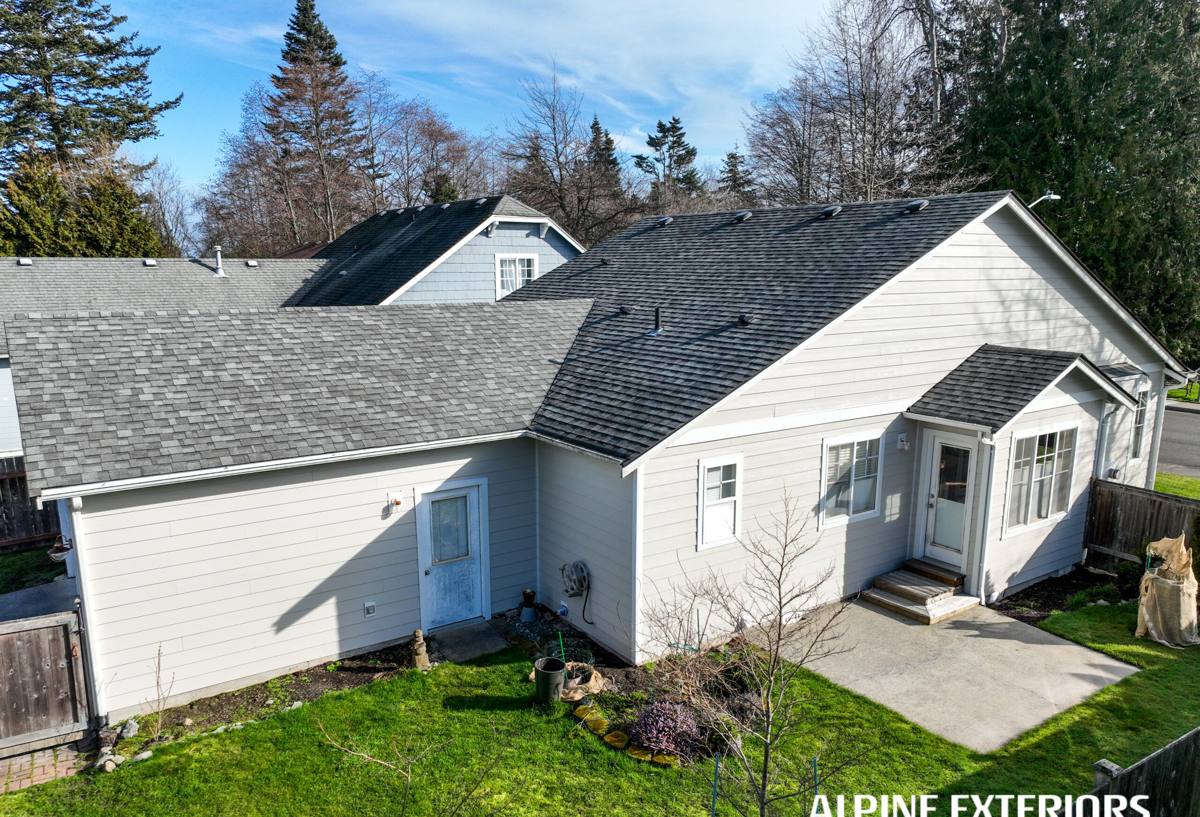
Proximity to saltwater doesn't just mean a little extra moisture. Airborne salt is corrosive to metal fasteners, flashing, and hardware, and it accelerates the breakdown of many paint and coating systems faster than plain rain does. Homes closer to the water tend to show this first: fasteners bleeding rust through paint, caulk failing early, and finishes chalking or fading well ahead of their expected lifespan.
Where It Shows Up First
- Nail heads and fastener lines telegraphing through paint on wood or composite siding
- Metal flashing and trim corroding at joints and cut edges
- Caulked joints around windows and doors drying out and cracking sooner than inland homes
- Painted wood trim losing adhesion and peeling at the most exposed elevations
None of this means a house near the water is doomed to constant repairs — it means the materials and fasteners need to be chosen with that exposure in mind, not treated as an afterthought.
Driving Rain and the West-Facing Wall Problem
Whatcom County storms frequently come in off the Pacific with real wind behind them, and Fairhaven's exposure to the bay means wind-driven rain isn't a rare event — it's a normal part of the wet season. Driving rain behaves differently than a straight vertical downpour. It gets pushed up under laps, forced into gaps around trim and penetrations, and driven into any joint that isn't properly sealed or shingled correctly. Walls facing southwest, which catch the brunt of most storm systems here, typically show wear years before the more sheltered sides of the same house.
This is one of the biggest reasons installation quality matters as much as material choice. A siding product with excellent water-resistance can still fail early if it's installed with the wrong flashing details, insufficient overlap, or gaps at butt joints and corners. We pay particular attention to water management — flashing, house wrap integration, and joint treatment — on every wall, but especially the ones taking the weather head-on.
Moss, Shade, and a Long Wet Season
Fairhaven's mature tree canopy is one of the things people love about the neighborhood, but it also means a lot of homes sit in partial shade for much of the year. Combined with a wet season that can stretch from fall well into spring, that shade creates ideal conditions for moss and algae growth on roofs, siding, decking, and even fences. Once established, moss holds moisture against the surface it's growing on, which speeds up decay in wood products and can work its way into seams and joints over time.
Where Moss Tends to Take Hold
- North- and east-facing roof slopes that get little direct sun
- Siding under overhanging trees or in the shadow of neighboring structures
- Deck boards and railings, especially horizontal surfaces that hold standing moisture
- Ground-level trim and skirting where splashback keeps material consistently damp
Regular cleaning helps, but the bigger factor is material choice. Some products simply tolerate sustained moisture and organic growth better than others, and that's a real consideration for a Fairhaven property, not a generic sales pitch.
Why We Install Only James Hardie Fiber Cement Siding
We don't install LP SmartSide, vinyl siding, Cemplank, Allura, primed spruce, or cedar. That's a deliberate standard, not a limitation on what we're capable of installing — and it's especially relevant in a neighborhood like Fairhaven, where salt exposure, driving rain, and moss all compound the weaknesses of moisture-sensitive materials.
The Trade-Offs of the Alternatives
Vinyl siding is affordable and low-maintenance in mild climates, but it can warp or become brittle over time with UV and temperature swings, and it relies heavily on the wall behind it to manage water since vinyl itself isn't a fully sealed water barrier. Wood products — cedar and primed spruce — have real aesthetic appeal, but they're organic material, and organic material in a shaded, wet, salt-air environment is exactly the combination that invites rot, moss, and repeated repainting. Engineered wood composites like LP SmartSide have improved wood's moisture resistance significantly, but the product still depends on unbroken factory sealing and careful field cutting and caulking to keep water out at every cut edge — a demanding standard to maintain consistently over decades of Pacific Northwest weather. Other fiber cement brands, like Cemplank and Allura, are legitimate fiber cement products, but we've standardized on one manufacturer so we can guarantee consistent installation training, factory finish quality, and warranty support across every job.
Why James Hardie
James Hardie fiber cement is non-combustible, dimensionally stable, and doesn't rot, swell, or attract insects the way wood-based products can. Its ColorPlus factory finish is baked on under controlled conditions rather than field-painted, which means better UV and moisture resistance at the surface — the same surface that's taking the brunt of Fairhaven's salt air and rain. Hardie also engineers specific product lines (their HZ5 line, for example) for wetter, harsher climates, which is a meaningful distinction in a marine-influenced area like this one. The backing of a strong, transferable manufacturer warranty on both the substrate and the finish gives homeowners a level of long-term assurance that field-painted or moisture-sensitive materials simply can't match.
Comparing Siding Options for a Fairhaven Exterior
| Material | Moisture/Salt Air Performance | Maintenance Over Time | Fire Resistance |
|---|---|---|---|
| James Hardie Fiber Cement | Engineered for wet/marine climates; factory-sealed finish | Low — no repainting cycle for the finish under warranty | Non-combustible |
| Cedar / Primed Spruce | Vulnerable to moisture, rot, and moss in shaded, wet conditions | High — regular painting/sealing and rot inspection | Combustible |
| Vinyl | Water-shedding depends on wall assembly; can warp with heat/cold cycles | Low, but limited repair options if damaged | Can soften/deform near heat sources |
| LP SmartSide / Other Composites | Good if every cut edge stays sealed; sensitive to field errors | Moderate — depends on installation and caulk upkeep | Combustible (treated wood strand) |
Roofing, Windows, and Decks Face the Same Climate
Siding isn't the only part of a Fairhaven exterior dealing with this environment. Roofing takes the direct brunt of driving rain and is the most common spot for moss to establish itself, especially on shaded slopes — moss growth on a roof isn't just cosmetic, it can lift shingles and hold moisture against the roofing material over time. Windows near the water benefit from good seals and corrosion-resistant hardware, since failed seals let both moisture and salt air work into the frame. Decks, especially those with horizontal wood surfaces under tree cover, are prone to the same moss and moisture retention issues as shaded siding, and material choice matters just as much there. We handle all four of these systems, which means we can look at a Fairhaven property as a whole exterior rather than treating each component in isolation — a leaking flashing detail at the roof-to-wall transition, for example, affects both the roofing and siding scope, and it should be diagnosed and fixed as one problem.
What to Look For When Choosing a Contractor Near the Water
Not every exterior contractor pays close attention to marine-exposure details, and it's worth asking direct questions before hiring one for a Fairhaven property.
- Do they specify corrosion-resistant fasteners and hardware for coastal-exposure work?
- Can they explain their flashing and water-management approach at windows, doors, and roof transitions?
- Do they have experience with the specific moss and moisture patterns of shaded, wet properties?
- Are they manufacturer-certified for the siding system they're installing, not just generally experienced?
- Will they walk you through why they recommend one material over another for your specific exposure, rather than a one-size-fits-all pitch?
Our Process for Fairhaven Projects
We start with an on-site look at the actual exposure your home faces — which walls take the worst weather, where shade and moss are already a problem, and where water is currently getting in or collecting. From there we put together a plan for the siding, roofing, windows, or deck work involved, using materials suited to the site rather than a default package. Installation follows manufacturer specifications closely, particularly around flashing, fastening, and joint treatment, since those details are what determine how well the work holds up against the kind of weather Fairhaven sees every winter.
A Neighborhood That Rewards Getting the Details Right
Fairhaven isn't a place where a generic exterior approach holds up well for long. Between the salt air, the driving rain off the bay, and the shade that keeps moss coming back season after season, this is a neighborhood where material choice and installation quality make a visible difference within a few years, not a few decades. We've built our approach — and our decision to install James Hardie exclusively — around exactly this kind of environment.
If you're planning siding, roofing, window, or deck work on a Fairhaven property, we're glad to take a look and walk you through what we'd recommend and why. Reach out for a free, no-pressure estimate using the form below.