 Bellingham
 South Hill sits above downtown Bellingham on a wooded slope that looks out over Bellingham Bay and the Salish Sea, and that elevation and tree cover come with a trade-off. The same views that make the neighborhood desirable also mean homes here take a steady beating from salt-laden air off the water, long stretches of driving rain blowing in off the Sound, and shade from mature trees that keeps north- and east-facing walls damp for days after a storm passes. Add in Whatcom County's mild, wet winters and you get a moss season that can run from October well into spring. We've worked on enough exteriors in this part of Bellingham to know exactly what that combination does to siding, trim, roofing, and window seals over time — and what it takes to build an exterior that actually holds up to it.
What South Hill's Climate Does to a House
Whatcom County doesn't get the extreme temperature swings that stress siding in other parts of the country, but it makes up for that with sheer duration of moisture exposure. On South Hill specifically, three things compound the problem:
- Salt air: Proximity to Bellingham Bay means airborne salt settles on exterior surfaces, accelerating corrosion on fasteners, flashing, and any metal trim that isn't rated for coastal exposure.
- Driving rain: Storms coming off the water don't just fall straight down — wind-driven rain gets pushed sideways into wall assemblies, which is exactly the condition that exposes weak caulking, poor flashing details, and gapped siding joints.
- Shade and moss: Mature trees on many South Hill lots keep siding and roofing damp longer after rain, which is prime conditions for moss, algae, and mildew to take hold, especially on north-facing walls and roof planes that see little direct sun.
None of this makes a house here impossible to protect. It just means the materials and installation details matter more than they would on a drier, more exposed lot inland.
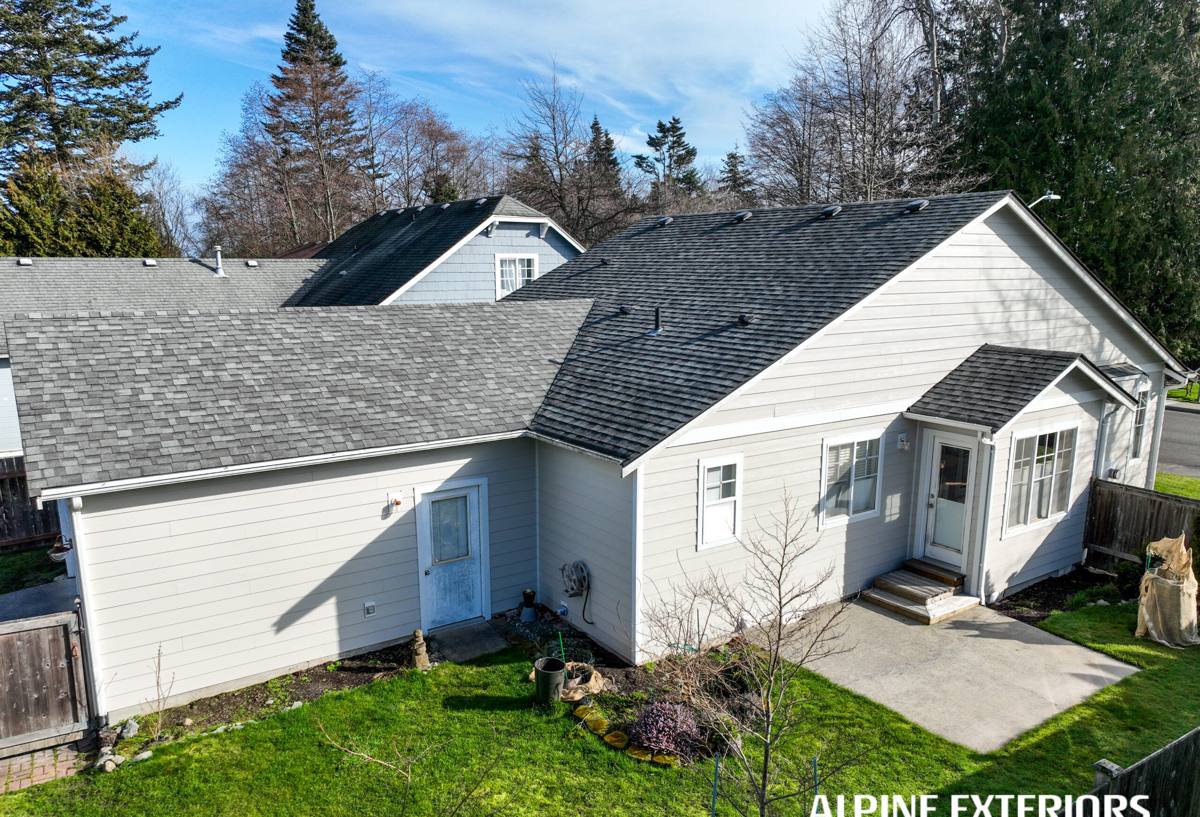
Siding, Roofing, Windows, and Decks — One Crew, One Standard
We handle the full exterior envelope, not just siding, because on a lot like a typical South Hill property, these systems all depend on each other to keep water out.
Siding
Siding is the largest surface area on most homes and the first line of defense against wind-driven rain. We install James Hardie fiber cement exclusively — more on why below.
Roofing
A roof that's shedding moss, holding moisture under the shingles, or has aging flashing at valleys and penetrations will eventually push water into the wall assembly below it, no matter how good the siding is. We address roofing as part of the same envelope, not a separate problem.
Windows
Window flashing and integration with the siding plane is one of the most common failure points we find on older Bellingham homes. Replacing windows without re-flashing correctly into new siding just relocates the leak.
Decks
Decks attached to the house need proper ledger flashing where they meet the wall — a detail that's easy to get wrong and expensive to fix once water has been getting behind it for a few seasons.
Why We Only Install James Hardie
We made a deliberate decision years ago to stop installing several common siding products — vinyl, LP SmartSide, and other fiber cement alternatives — and install James Hardie exclusively. That's not a marketing position, it's a practical one based on what holds up in exactly the conditions South Hill homes face.
Moisture behavior
Wood-based composite siding relies on factory sealing and careful field cutting to keep water out of its wood fiber core. In a climate with as much sustained moisture exposure as Whatcom County, any gap in that protection — a cut edge left unsealed, a fastener driven wrong — becomes a place for water to get in and swell the material. James Hardie fiber cement is made from cement, sand, and cellulose fiber. It doesn't have a wood core to swell, rot, or feed moss growth the way organic materials can.
Non-combustible
Hardie siding is non-combustible, which matters increasingly to insurers and homeowners across Washington, even on the wetter west side of the state.
Factory finish
Hardie's ColorPlus finish is baked on at the factory under controlled conditions, rather than field-painted. That gives more consistent coverage and better resistance to fading from UV exposure than a job-site paint application, and it holds up better against the freeze-thaw cycling and constant damp that eventually breaks down field-applied coatings.
Warranty structure
James Hardie backs its siding with a strong, transferable limited warranty on the product itself, plus a separate finish warranty on ColorPlus color. That combination gives homeowners real protection over decades, not just the first few years.
We're upfront that vinyl and engineered wood products have their place and their advocates — they're less expensive up front and plenty of homes are sided with them successfully. Our standard is simply that, for the moisture load and salt exposure this area sees, fiber cement installed correctly is what we're willing to put our name on.
What Correct Installation Actually Involves
Material choice only matters if the installation is right. A lot of siding failures we see on older homes in this area aren't a material problem at all — they're installation shortcuts that let water in regardless of what the siding is made of.
Flashing and water management
Every penetration — windows, doors, hose bibs, light fixtures, deck ledgers — needs proper flashing integrated with a water-resistive barrier behind the siding. This is the single most common place we find deficiencies on re-siding jobs.
Clearances
Hardie's own installation instructions call for specific clearances from grade, roof lines, and decks to keep the bottom edge of the siding from sitting in standing water or constant splash-back. On a shaded, damp lot, skipping this is how you get premature deterioration at the bottom courses.
Fastening
Correct fastener type, spacing, and depth affect both the finish appearance and the siding's ability to handle the region's temperature and moisture cycling without cracking or popping.
Caulking and joints
Factory-primed cut edges need to be sealed in the field, and joint caulking needs to be a product rated for this climate, not just whatever's on the shelf.
What Drives Cost on a South Hill Home
| Factor | Why It Matters Here |
|---|---|
| Home size and wall complexity | More corners, dormers, and roof lines mean more flashing detail and labor, common on South Hill's older, architecturally varied housing stock. |
| Existing siding removal | Tear-off of old siding, especially if there's hidden moisture damage to sheathing, adds time and sometimes structural repair. |
| Access and lot slope | Hillside lots with limited driveway access or steep grades can affect staging and scaffolding costs. |
| Trim and accessory selection | Hardie trim boards, soffit, and accessory pieces vary in cost depending on profile and finish. |
| Combined scope | Bundling siding with roofing, window, or deck work in one project can reduce redundant setup and staging costs versus doing each separately. |
Hiring a Contractor for South Hill Work
Whatcom County has plenty of contractors who'll quote a siding job. Not all of them are set up to handle the flashing and detail work this climate demands, and not all of them are actually licensed and insured to do it. Before hiring anyone for exterior work here, it's worth checking a few things:
- Washington contractor license number, verifiable through the state's public lookup
- Current liability insurance and bonding, not just a claim that they have it
- Manufacturer certification or documented training on the specific siding product being installed
- A written scope that spells out flashing details, not just "install siding"
- References or completed work you can actually see, ideally in a similar coastal or shaded setting
- A clear warranty structure — both on materials and on the installer's own labor
A crew that's used to working on shaded, moisture-heavy hillside lots in Bellingham will make different decisions than one used to drier, more exposed sites — everything from where they add extra flashing to how they sequence work around wet weather windows.
Ongoing Maintenance in a Moss-Prone Neighborhood
Even the right siding, installed correctly, benefits from some basic upkeep on a lot like this. A periodic soft wash to remove algae and moss buildup, keeping gutters clear so water isn't overflowing onto wall sections below, and trimming back vegetation that's holding moisture against the house all go a long way. None of this requires special equipment or a large time investment — it's mostly about staying ahead of the moisture rather than reacting after it's caused a problem.
Let's Take a Look at Your Home
If you're in South Hill and dealing with siding that's showing its age, moss that keeps coming back, or you're planning a roofing, window, or deck project alongside it, we're happy to come take a look and give you a straightforward, no-pressure estimate. Use the form below to get started.