 Bellingham
 York is one of Bellingham's older established neighborhoods, and that shows in its housing stock — a mix of early-to-mid-century homes alongside newer infill construction, many within a short walk of downtown and Western Washington University. Older neighborhoods like York carry a particular exterior maintenance challenge: siding installed decades ago, sometimes replaced once already with a product that wasn't built for the long haul, now facing another round of decisions about what goes back up. If you're a homeowner in York looking at your siding and wondering whether it's time, this page walks through what your home is up against and how we approach the job.
What York-Area Homes Deal With
Bellingham sits close enough to Bellingham Bay and the Salish Sea that salt-laden air is a real factor for exterior materials, even a few miles inland. Combine that with Whatcom County's long, wet fall-through-spring stretch — steady driving rain more than dramatic storms — and you get conditions that are hard on anything that isn't dimensionally stable or properly sealed. Add a moss and algae season that can run eight months or more in shaded, north-facing, or tree-covered lots (common in a leafy, established neighborhood like York), and siding here needs to resist both moisture intrusion and surface growth without constant upkeep.
Homes tucked under mature trees get less direct sun to dry out after rain, which extends the window that siding stays damp. That's the exact condition where wood-based products swell, delaminate at seams, or develop soft spots behind paint that still looks fine from the street. It's also where cementitious siding earns its keep — fiber cement doesn't absorb moisture the way wood-based substrates do, so it holds its shape and paint line even in a shaded, damp yard.
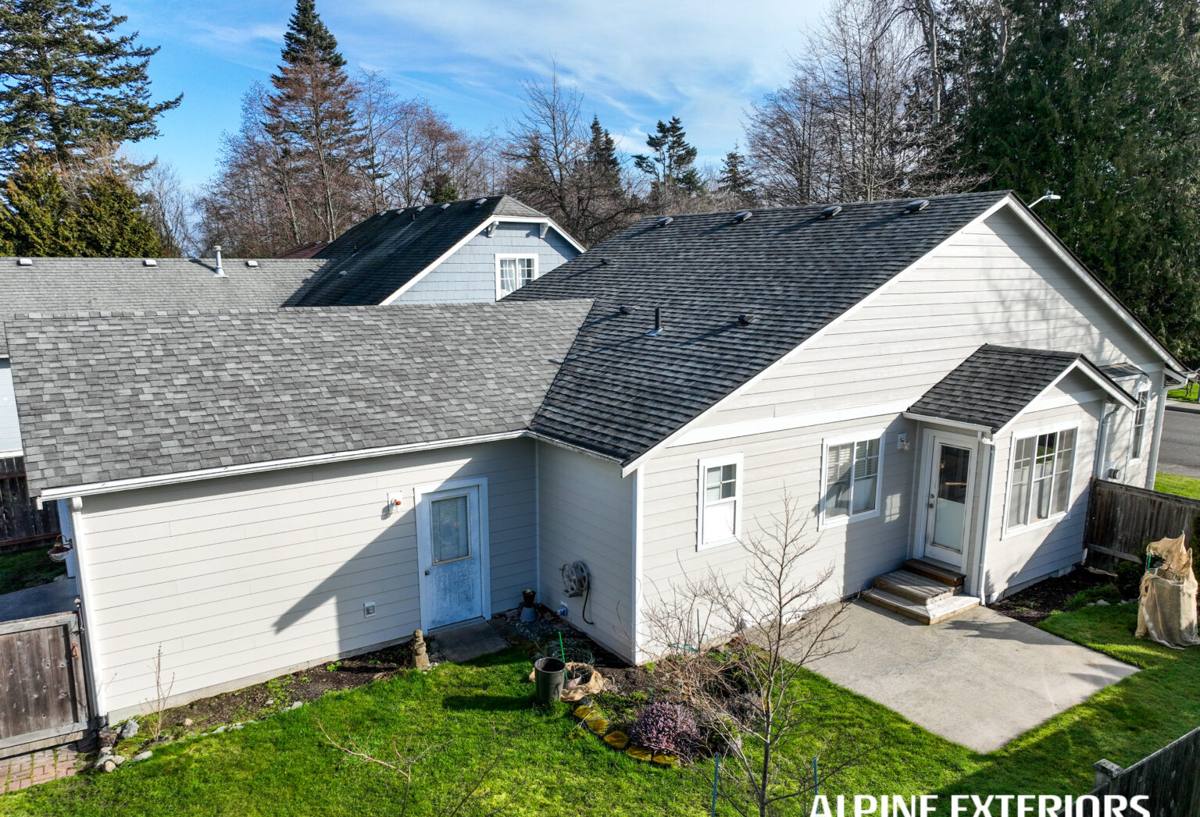
Why We Install Only James Hardie
We made a deliberate call a while back to stop installing vinyl, LP SmartSide, primed spruce, cedar, and composite panel products like Cemplank or Allura, and to install James Hardie fiber cement exclusively. That's not a marketing position — it's a maintenance and durability position, and it's worth explaining honestly.
The trade-offs with common alternatives
- Vinyl siding is inexpensive and low-maintenance in mild climates, but it expands and contracts with temperature swings, can crack in impact events, and doesn't hold paint — you're stuck with the color you bought. In a marine climate with wind-driven rain, vinyl's seams and J-channels are also a common water-entry point if installation isn't precise.
- LP SmartSide and other engineered wood products use a wood-strand substrate with a resin coating. When that coating is compromised — a nail hole, a cut edge left unsealed, a scuff from a ladder or trimmer — moisture can wick into the substrate and cause swelling or edge deterioration, especially in a climate that rarely gives siding a long dry stretch to recover.
- Primed spruce and cedar are real wood and look the part, but real wood needs a maintenance schedule: repainting on a cycle, caulking joints, and watching for rot at end grain and ground contact. In a shaded, damp neighborhood, that cycle tightens up considerably.
- Cemplank and Allura are also fiber cement, and fiber cement as a category is the right call for this climate. Where we draw the line is the factory finish and warranty structure — we standardized on James Hardie's ColorPlus system and its manufacturer backing rather than mixing substrates across jobs.
James Hardie's fiber cement is non-combustible, dimensionally stable in wet-dry cycling, and available in HZ5 formulations engineered for climates with sustained moisture exposure — which describes Whatcom County well. The ColorPlus factory finish is baked on under controlled conditions, which holds color and resists fade and moisture better than field-applied paint, and it comes with a meaningful transferable warranty. When it's installed to Hardie's spec — correct clearances, fastening, and joint treatment — it's a siding system built for exactly the conditions York homes see.
Siding Options for York Homes
| Product | Look | Best fit |
|---|---|---|
| HardiePlank lap siding | Traditional horizontal lap, smooth or woodgrain | Most common choice for standard homes and remodels in older neighborhoods |
| HardiePanel vertical siding | Clean vertical lines, often paired with trim boards | Modern updates, accent walls, gable ends |
| HardieShingle | Staggered or straight-edge shingle profile | Craftsman and cottage-style homes common in and around York |
| HardieTrim | Fascia, corner boards, window/door trim | Finishing detail on any of the above |
How We Handle a Siding Job
Assessment
We start by looking at what's actually there now — what condition the existing siding and sheathing are in, whether there's hidden moisture damage behind the current material, and what the trim, flashing, and window details look like. This matters more in older neighborhoods like York, where a home may have layers of past repairs or a siding type that's since been discontinued.
Moisture management first
Siding is only as good as what's behind it. We check house wrap or building paper condition, flashing at windows, doors, and roof intersections, and make sure the water management plan is sound before the new siding goes up. This is the step that determines whether siding lasts 10 years or 40, and it's the step that gets skipped most often on rushed jobs.
Installation to spec
James Hardie publishes specific fastening patterns, clearances from grade and roof lines, and joint treatment requirements. Following them isn't optional if you want the warranty to mean anything — a lot of "fiber cement problems" homeowners hear about trace back to installation shortcuts, not the material itself.
Beyond siding
We also handle roofing, windows, and decks, which matters when a siding project uncovers a related issue — a flashing detail at the roofline, a window that's past its service life, or a deck ledger board that needs attention. One crew, one point of contact, instead of coordinating separate contractors for work that touches the same parts of the house.
Why a Local Crew Matters
Whatcom County building conditions aren't the same as inland Washington or a drier region — the wind-driven rain patterns, the moss and algae exposure, the salt air proximity to the bay all factor into product choice and installation detail. A crew that works this specific area regularly knows which details actually matter here, versus what's fine somewhere with a dry summer season and calls it good. That local familiarity shows up in things like flashing choices around window and door openings and how aggressively we address moss-prone shaded elevations.
What Affects Your Siding Cost
| Factor | Why it matters |
|---|---|
| Home size and complexity | More corners, gables, and dormers mean more cutting, trim, and labor time |
| Current siding removal | Tear-off and disposal of old material adds cost versus a bare-sheathing new build |
| Substrate repair | Rotted sheathing or framing found during tear-off needs to be replaced before new siding goes up |
| Siding profile | Lap, panel, and shingle styles carry different material and labor costs |
| Trim and detail work | Corner boards, window trim, and fascia detail add finish cost but improve durability and looks |
| Access and site conditions | Tight lots, mature landscaping, or multi-story sections affect staging and labor time |
We don't quote a job without seeing the house — anything else is a guess. What we can say honestly is that fiber cement typically costs more upfront than vinyl but less over its lifetime once you account for repainting cycles that wood and engineered wood products require and vinyl's shorter practical lifespan in this climate.
Signs Your Siding May Need Attention
- Paint that's peeling, bubbling, or chalking heavily, especially on shaded or north-facing walls
- Soft spots or visible swelling when you press on the siding near the bottom courses or seams
- Persistent moss, algae, or dark streaking that comes back quickly after cleaning
- Visible gaps, warping, or cupping in individual boards or panels
- Rising energy bills alongside drafts near exterior walls
- Cracked or missing caulking at trim, window, and corner joints
Roofing, Windows, and Decks in York
The same moisture and moss pressure that affects siding affects everything else on the exterior of a home in this area. A roof with compromised flashing feeds water into wall assemblies behind otherwise sound siding. Older single-pane or early double-pane windows lose efficiency and can let moisture into the surrounding wall cavity if seals have failed. Decks exposed to the same wet-dry cycling need attention to ledger connections, fasteners, and surface material. We look at the whole exterior envelope, not just the siding, because these systems interact.
If your York home's siding is showing its age, or you're planning ahead before it becomes an urgent repair, we're happy to take a look and give you a straightforward, no-pressure estimate — just fill out the form below.