 Bellingham
 Exterior Work Built for the Puget Area's Climate
Homes near Puget sit close enough to the water and the weather patterns coming off Bellingham Bay that the exterior takes a different kind of beating than homes further inland in Whatcom County. Salt-laden air, driving rain that comes in sideways during winter storms, and a moss season that can stretch from October through May all work on a home's siding, trim, roofline, and window seals year-round. We've built our whole approach around that reality, not around what happens to be cheapest to install.
This page covers how we approach siding, roofing, windows, and decks for homes in and around the Puget area, why we standardized on one siding product instead of offering a menu of them, and what to actually expect from a project here — from the first look at your home to the final walk-through.
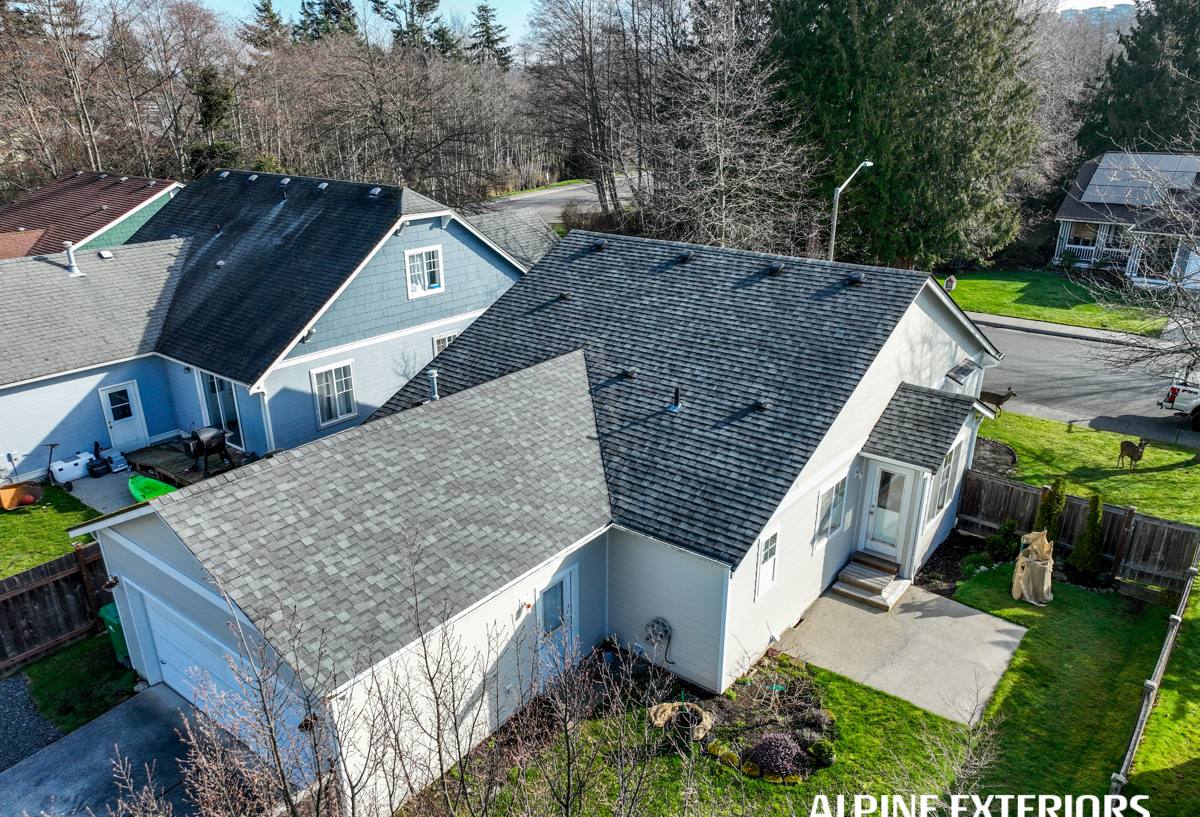
What the Local Climate Does to a House Over Time
Salt Air and Metal Fatigue
Proximity to Puget Sound means airborne salt is a constant, low-grade presence on exterior surfaces. It's not dramatic — nobody notices it happening — but it accelerates corrosion on fasteners, flashing, and any metal trim that isn't rated for coastal exposure. Over years, that shows up as rust streaks below nail heads, pitted flashing, and hardware that fails before the siding around it does.
Driving Rain and Wind-Driven Moisture
Whatcom County storms don't always come straight down. Wind off the Sound can push rain sideways into wall assemblies, which is a different problem than simple vertical rainfall. It tests seams, laps, caulk joints, and window flashing in ways that fair-weather installation work often doesn't account for. A siding job that looks fine on a dry day can leak within a few winters if the water management details underneath weren't done right.
Moss, Algae, and Prolonged Dampness
Long stretches of overcast, damp weather give moss and algae a real foothold — on roofs first, but also on north-facing siding and anywhere sun doesn't reach for weeks at a time. Beyond the cosmetic issue, sustained moisture against a wall surface is what eventually finds its way into seams, fastener holes, and any spot where a coating has worn thin.
Why We Install Only James Hardie Fiber Cement
We don't offer vinyl, LP SmartSide, Cemplank, Allura, primed spruce, or cedar as options. That's a deliberate standard, not a limitation of what we're capable of installing. Here's the honest reasoning behind it, product by product.
Vinyl
Vinyl is inexpensive and easy to install fast, and in drier climates it can hold up reasonably well. In a wet, wind-exposed environment like this one, vinyl's weak points show up faster: it can warp or buckle with heat and cold cycling, its seams and J-channels are where water intrusion tends to start, and it doesn't hold paint if you ever want to change the color. It's also a petroleum-based product, which some homeowners weigh against a fiber cement alternative on longevity grounds alone.
LP SmartSide, Primed Spruce, and Cedar
These are all wood-based products at their core (engineered strand or solid lumber), and wood-based siding's biggest long-term vulnerability is moisture. In a climate with this much sustained dampness and moss pressure, any breach in the factory coating or field-applied paint — a nail pop, a caulk failure, a scuff during a ladder job — gives water a path into a material that can swell, rot, or delaminate. Cedar in particular is beautiful and has real traditional appeal, but it demands a maintenance commitment (staining or sealing on a recurring cycle) that most homeowners underestimate until the first shingles start cupping.
Cemplank and Allura
These are other fiber cement manufacturers, and fiber cement as a category is the right call for this climate — it's non-combustible, dimensionally stable, and doesn't rot. Our decision to standardize on James Hardie specifically comes down to their factory-applied ColorPlus finish system, the climate-specific engineering in their HZ5 product line (built for exactly this kind of wet Pacific Northwest exposure), and a warranty structure we're comfortable standing behind on every job. Running one product line also means our crews install it constantly rather than occasionally, which matters more than it sounds like it should.
What James Hardie Gets You Specifically
| Feature | What It Means for a Puget-Area Home |
|---|---|
| Fiber cement composition | Non-combustible, resists rot, and doesn't attract pests the way wood-based products can |
| HZ5 engineered line | Formulated for higher-moisture, freeze-thaw climates rather than a one-size-fits-all national product |
| ColorPlus factory finish | Baked-on finish applied under controlled conditions, more consistent and fade-resistant than field-applied paint |
| Dimensional stability | Doesn't expand and contract with moisture the way wood products do, which keeps seams and caulk lines intact longer |
| Transferable warranty | A real, documented warranty that can transfer to a new owner if you sell, which matters for resale |
How We Approach a Siding Project Here
Assessment First
Before we talk product colors or timelines, we look at what's actually happening on your home now — where moisture has been getting in, whether there's damage to sheathing or framing behind existing siding, how the roofline and gutters are managing water, and where flashing and trim details need attention. On a home near Puget, we're specifically checking north- and west-facing walls, areas shaded from sun for long stretches, and anywhere metal flashing meets siding.
Water Management Before Cladding
The siding itself is the last layer, not the only layer. Correct installation means a weather-resistive barrier, properly lapped and taped seams, correctly flashed windows and doors, and rainscreen or drainage detailing where it's called for. This is the part of a job that's invisible once it's done and is also the part that determines whether you have a leak in five years.
Installation to Hardie's Spec
James Hardie's product performs the way it's engineered to only when it's installed to their specifications — correct fastener type and placement, proper clearances from grade and roofing, correct caulking at joints, and factory-recommended overlaps. Shortcuts here are exactly what turns a 30-plus-year product into one with problems in year eight.
Final Walk-Through
We go through the finished work with you, point out anything you should know for future maintenance, and make sure everything matches what was discussed before the first board went up.
Roofing, Windows, and Decks — The Rest of the Envelope
Siding doesn't work in isolation. A roof that's shedding water poorly onto a wall, windows with failing flashing, or a deck ledger board that's trapping moisture against the house can undermine even a well-installed siding job. Because we handle all four — siding, roofing, windows, and decks — we can look at a home's exterior as one connected system instead of treating each component as somebody else's problem.
Roofing
In a moss-prone climate, roof condition affects more than the roof. Poor drainage and moss buildup send extra moisture down onto walls below. We look at roof-to-wall transitions and gutter performance as part of any siding conversation, not as a separate afterthought.
Windows
Window flashing is one of the most common sources of hidden water intrusion in older homes here. If we're already opening up a wall for siding work, it's the right time to check and correct window flashing rather than re-siding around a problem that's still there underneath.
Decks
Deck ledger connections and any point where a deck attaches to the house are high-risk spots for trapped moisture. We build and repair decks with that in mind, especially where they tie into a wall we're also re-siding.
What a Project Timeline Generally Looks Like
- Initial walk-around and assessment of current siding, trim, flashing, and any visible damage
- Discussion of scope — full re-side, partial repair, or roofing/window work bundled in
- Written estimate with product, color, and general timeline
- Material order and lead time (James Hardie products are typically special-ordered to color and profile)
- Installation, including any necessary sheathing repair or water-barrier work discovered along the way
- Final walk-through and cleanup
Weather windows matter for scheduling exterior work in this region — we plan around the wetter months rather than fighting them, which sometimes means a project timeline shifts to protect the quality of the install.
Cost Factors Worth Understanding
| Factor | Why It Moves the Price |
|---|---|
| Home size and wall complexity | More corners, dormers, and trim details mean more labor and material cuts |
| Existing condition underneath | Rot or sheathing damage found during tear-off adds repair scope |
| Siding profile and color | Certain ColorPlus colors and profiles carry different material costs |
| Removal and disposal | Tear-off and haul-away of old siding is part of most re-side projects |
| Access and site conditions | Steep lots, limited access, or multi-story walls affect labor time |
We give a firm written estimate after seeing the home in person — not a phone-quote guess — because the condition behind the existing siding is often the biggest variable.
Why a Local Crew Matters for This Kind of Work
A crew that works Whatcom County homes regularly knows what to look for before it becomes a visible problem: the wall orientations that take the worst weather, the roof-to-wall details that tend to fail first in this climate, and the difference between cosmetic moss and moss sitting on top of a real moisture issue. That local pattern recognition is hard to replace with a generic national playbook, and it's part of why we keep our work concentrated in this region rather than spreading thin across unfamiliar climates.
Signs Your Current Siding May Be Struggling
- Soft or spongy spots when you press on siding, especially near the bottom courses or around windows
- Paint or finish that's peeling, bubbling, or chalking heavily in patches
- Persistent moss or dark staining that returns quickly after cleaning
- Visible warping, buckling, or gaps at seams and corners
- Rust streaking below nail heads or at metal trim and flashing
- Rooms that feel drafty or damp near exterior walls
Any one of these on its own isn't necessarily an emergency, but a few together are usually a sign it's worth having someone take a real look rather than waiting for the next wet season to make the decision for you.
Let's Take a Look at Your Home
If you're near Puget and dealing with tired siding, a leaky window, moss-covered roofing, or a deck that needs attention, we're happy to come out and give you an honest, no-pressure assessment. There's a form below — reach out and we'll set up a time to take a look.