 Bellingham
 Siding in Silver Beach
Silver Beach is one of those Bellingham neighborhoods where the setting is the whole appeal — mature tree canopy, proximity to water, and a quieter, more residential feel than the closer-in city grid. It's also a neighborhood where that same setting works against a house's exterior. Homes here spend a lot of the year shaded, damp, and exposed to wind-driven rain coming off the water and through the trees. Siding that isn't built for that combination tends to show it early, usually in the form of streaking, soft spots, and moss creeping up from the bottom courses.
We work throughout Bellingham and Whatcom County, and Silver Beach comes with its own version of the same core problem every neighborhood here deals with: a wet, mild, marine-influenced climate that never really dries out for long. What changes from street to street is the degree — how much tree cover shades a wall, how exposed a lot is to weather moving in off the water, how much afternoon sun a south wall actually gets. A crew that works this area regularly reads those differences on sight, instead of applying a one-size-fits-all install.
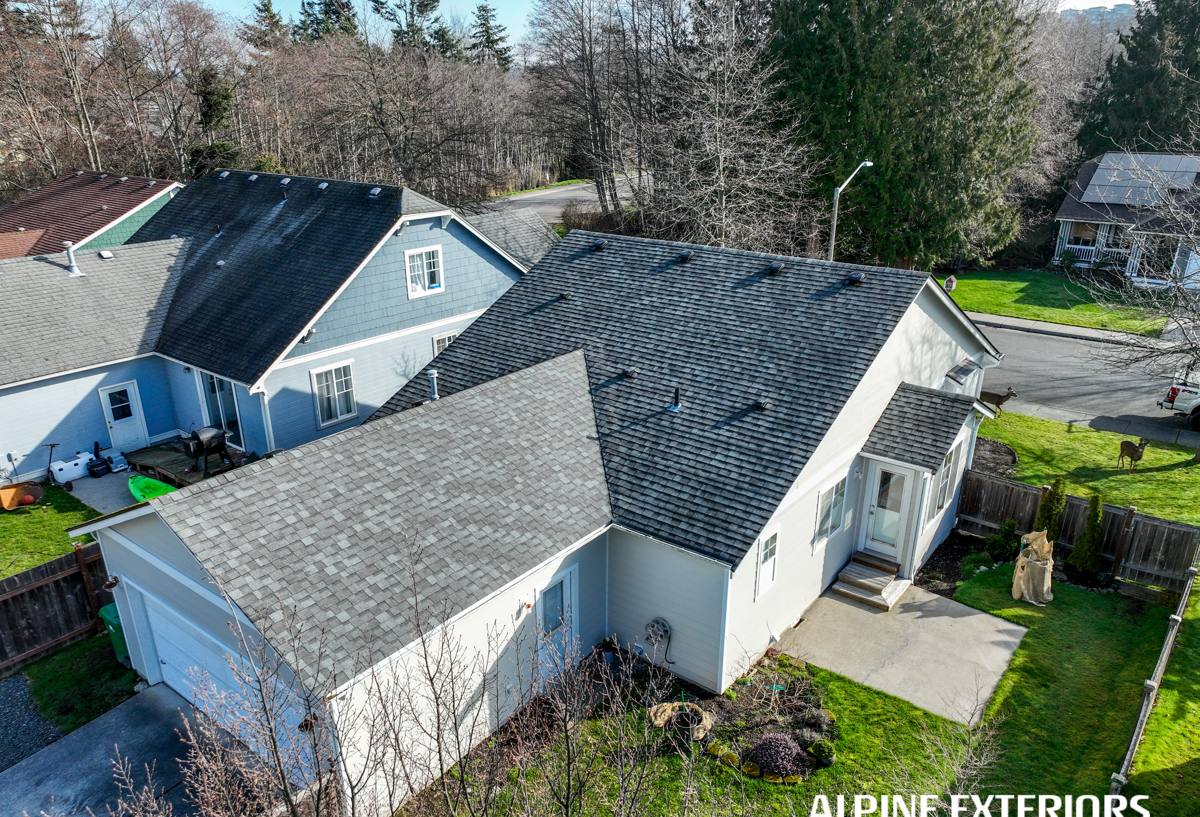
What Local Conditions Do to Siding
Salt Air and Moisture
Proximity to water means siding, trim, and fasteners are dealing with airborne moisture and salt exposure on top of ordinary rain. Over years, that combination accelerates corrosion in low-quality fasteners and flashing, and it speeds up the breakdown of paint films and wood substrates that aren't rated for it.
Driving Rain
Whatcom County doesn't just get rain — it gets sideways rain, pushed by wind off the water and funneled through gaps between trees and homes. That matters more than people expect, because driving rain finds every weak seam, gap, or under-flashed joint that vertical rain would never reach. Siding systems and installation details that only account for straight-down rain fall short here.
A Long Moss Season
Between the shade and the moisture, moss and algae have a long runway to establish themselves — often nine months out of the year on north-facing or heavily shaded walls. Moss holds water against the surface underneath it, which is a slow but steady way to degrade paint, wood, and even some engineered products if it's left to grow unchecked.
Why We Install James Hardie Fiber Cement — and Nothing Else
We made a deliberate decision to install only James Hardie fiber cement siding. We don't install vinyl, LP SmartSide, Cemplank, Allura, or primed spruce or cedar. That's not a marketing position — it's a standard we hold because of what we've seen happen to lower-performing products in exactly this kind of climate over a 15-to-30-year window.
Fiber cement is non-combustible, dimensionally stable, and doesn't absorb and swell with moisture the way wood-based products can. James Hardie's factory-applied ColorPlus finish is baked on under controlled conditions, which gives it better fade and adhesion performance over time than field-applied paint, and it holds up to pressure washing when it's time to knock moss and algae off the surface — something you have to be far more careful about with painted wood siding. Hardie's HZ5 product line is specifically engineered for climates like ours: freeze-thaw cycles, sustained damp, and high moisture exposure.
None of this means other siding products are junk. Vinyl and engineered wood have real advantages — vinyl is inexpensive and low-maintenance in mild climates, engineered wood gives a more traditional look at a lower cost than fiber cement. But when we weigh installation sensitivity, long-term moisture behavior, and how a product ages on a shaded, rain-exposed wall near the water, fiber cement is what we're willing to warranty and put our name on.
The Hardie Lines We Use Most in This Area
| Product | Best Use | Why It Fits This Neighborhood |
|---|---|---|
| HardiePlank lap siding | Full re-sides, most home styles | Traditional lap profile, strong moisture resistance, wide color range |
| HardiePanel vertical siding | Modern facades, accent walls | Clean lines for contemporary builds, pairs well with board-and-batten trim |
| HardieShingle | Craftsman and cottage-style homes | Shingle look without the moisture upkeep of cedar shakes |
| HardieTrim | Corners, window and door casing | Matches the siding's durability at the joints most exposed to driving rain |
All of these come with the ColorPlus factory finish option, which matters in a neighborhood with this much shade and moisture — a factory-baked finish resists the fading and peeling that field-painted surfaces are more prone to under constant damp conditions.
What a Proper Local Install Looks Like
Fiber cement performs the way it's supposed to only when it's installed to spec. That's a bigger deal in a wet climate than a dry one, because installation shortcuts that might go unnoticed for years somewhere arid tend to show up fast here.
- Correct water-resistive barrier and rainscreen or drainage plane behind the siding, not just a wrap stapled flat to the sheathing
- Flashing at every window, door, and horizontal trim break — the places driving rain actually gets in
- Proper fastener spacing and type, since undersized or wrong-material fasteners are one of the more common causes of early failure near water
- Correct clearance at the bottom of the siding from grade, decks, and roof lines, so moss and standing moisture don't sit against the bottom courses
- Caulking and sealant used only where Hardie's install spec calls for it — not as a substitute for proper flashing
We also walk the site before we quote anything, looking at tree cover, drainage, sun exposure, and how the existing siding failed, if it did. That's the difference between a generic bid and one that actually accounts for how this specific lot behaves.
Beyond Siding: The Rest of the Exterior
Siding rarely fails in isolation. A roof that's shedding water wrong, windows with failed seals, or a deck holding moisture against the house all put extra load on the siding around them. We handle roofing, windows, and decks alongside siding for that reason — not to upsell, but because an exterior in a climate like this works as one connected system. If your roofline is dumping water onto a wall section, or a window's flashing has failed and is feeding moisture into the wall cavity, replacing the siding alone won't fix the underlying problem.
When we're on site for a siding estimate in Silver Beach, we'll flag anything we see on the roof, windows, or decking that's contributing to the issue, even if it's outside the scope of what you asked about.
Cost Factors for a Silver Beach Siding Project
| Factor | Why It Affects Cost |
|---|---|
| Home size and wall area | Straightforward square-footage driver of material and labor |
| Story count and access | Two-story and steep-lot homes near the water often need more scaffolding or lift access |
| Trim and architectural detail | Corner boards, window casing, and multiple gables add labor time |
| Condition of existing sheathing | Moisture damage found once old siding comes off can add repair scope |
| Tear-off vs. overlay | We generally don't recommend overlaying fiber cement over failing siding — it traps existing moisture problems |
| Color and finish selection | Factory ColorPlus finishes cost more upfront than primed material you paint yourself, but last longer |
Signs It's Time to Replace
- Soft or spongy spots when you press on the siding, especially near the bottom courses or under windows
- Moss or algae that returns within a few months of cleaning it off
- Visible warping, buckling, or gaps at seams and corners
- Paint that's peeling or blistering rather than just fading
- Rising heating bills that track with drafts or cold spots along exterior walls
- Visible rot or staining on trim boards, fascia, or the bottom edge of siding panels
Choosing a Contractor for This Neighborhood
Local experience matters more than most homeowners assume. A crew that mostly works drier inland areas may not automatically account for the driving rain and moss exposure a shaded, water-adjacent lot deals with. Before hiring anyone for a siding project in this area, it's worth confirming a few basics.
- Washington State contractor license and current liability insurance
- Manufacturer training or certification for the specific siding product being installed
- A written scope that specifies flashing, drainage plane, and fastener details — not just "install siding"
- Willingness to walk the property and explain what they see before quoting
- A warranty that covers both material and workmanship, not just the product itself
If you're weighing a siding project for a home in Silver Beach, we're glad to come look at it, walk you through what we're seeing, and put together a straightforward estimate — no pressure, no upsell script. Reach out through the form below to get a free estimate scheduled.