 Bellingham
 Why Blaine Siding Takes a Different Kind of Beating
Blaine sits right on the water near the Canadian border, and that location shapes everything about how siding ages there. Homes close to the shoreline deal with salt-laden air that accelerates corrosion on fasteners, trim, and any exposed metal flashing. Add in Whatcom County's long stretch of driving winter rain — often blown sideways by wind off the water — and siding here takes on moisture from angles that inland homes rarely see. Then there's moss season, which in this part of Washington can run from fall through spring. Moss and algae don't just look bad; they hold moisture against the siding surface for months at a time, which is exactly the condition that causes rot, paint failure, and delamination in lesser materials.
None of this means Blaine homes need constant repair. It means repairs, when they're needed, have to account for a climate that doesn't give siding much of a break. A patch job that would hold up fine in a drier part of the state can fail fast on a Blaine home if it's not done with the right materials and the right technique.
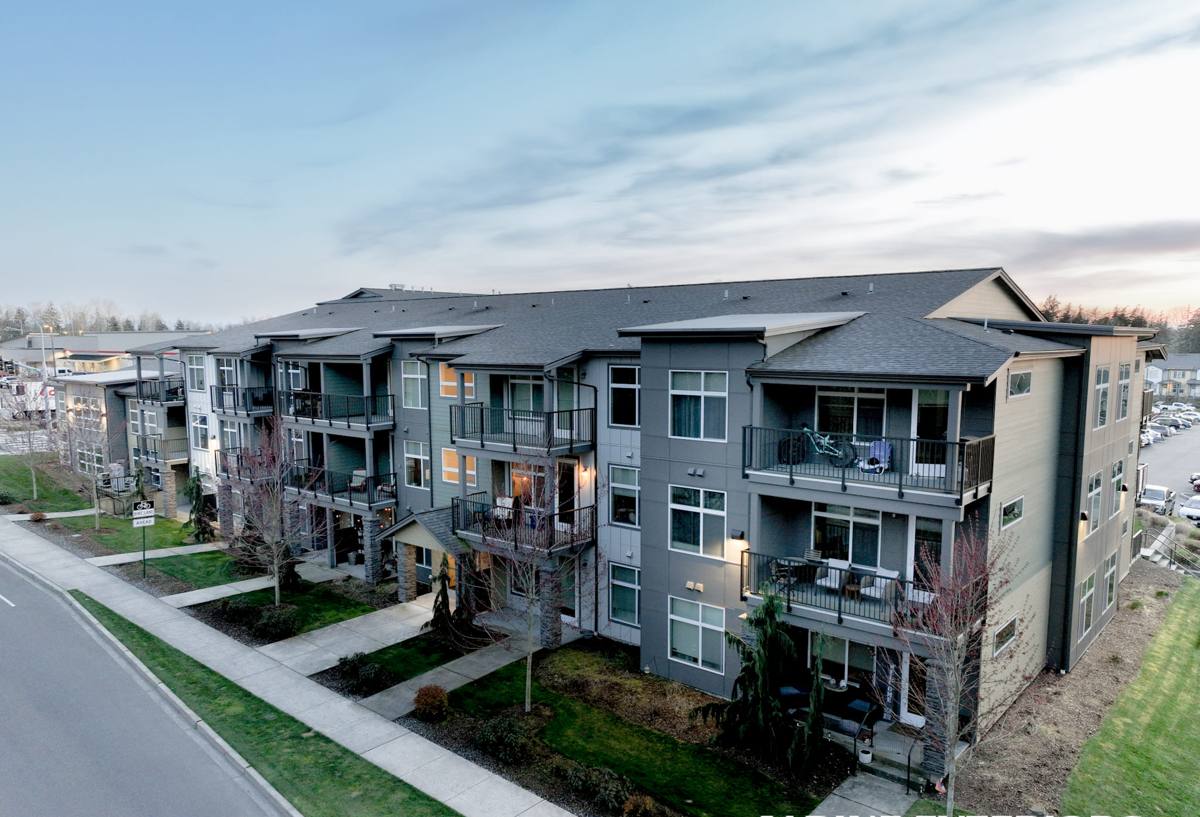
What We Typically Find on Blaine Repair Calls
Every house is different, but a few patterns show up often enough in this area to be worth knowing about before you call anyone out:
- Moisture wicking at butt joints and corners — places where two pieces of siding meet are the first spots to fail when caulk dries out or was never installed correctly.
- Moss and algae staining on north-facing walls and anywhere siding sits close to landscaping, shaded from sun and wind.
- Caulk failure around trim, windows, and penetrations — UV exposure and temperature swings break down sealant faster than most homeowners expect.
- Fastener corrosion, especially on older homes where nails or screws weren't rated for coastal exposure.
- Impact damage from storms, falling branches, or routine yard work that cracks or chips panels.
- Soft or delaminating boards on homes with wood-based or engineered wood siding that's absorbed moisture over multiple wet seasons.
Cosmetic Damage vs. Structural Damage
Not every stain or crack means trouble underneath. Surface moss and light staining are usually cosmetic and clean up without touching the siding itself. But soft spots, bubbling paint, or siding that flexes when pressed are signs moisture has gotten past the surface — and that's a different job. A repair that only addresses what's visible without checking what's happening behind the panel is a repair that's likely to come back.
Diagnosing Before We Repair
A siding repair is only as good as the diagnosis behind it. Before we recommend a fix, we look at what's actually causing the damage — not just where it shows up. That usually means checking a few things at the same location:
- Whether the damage is isolated or a symptom of a larger moisture path (a failed gutter, poor grading, or a flashing gap upstream of the visible damage).
- What condition the sheathing and weather barrier are in behind the siding, if the damage suggests water has been getting through.
- Whether the surrounding siding is sound enough to tie a repair into, or whether the damaged section has spread further than it looks from the outside.
- What caused the original failure, so the repair doesn't just replace the material and leave the same problem to happen again.
Skipping this step is how homeowners end up paying for the same repair twice. If the water intrusion point isn't fixed, new siding fails the same way the old siding did — usually within a season or two, right on schedule with Blaine's next wet stretch.
What a Correct Repair Actually Involves
A proper siding repair isn't just pulling a damaged board and nailing up a new one. It involves matching the existing reveal and profile so the repair doesn't stand out, restoring the weather barrier behind the panel if it was compromised, using fasteners and flashing details rated for coastal exposure, and sealing joints correctly for the product being repaired. With James Hardie fiber cement, that also means following Hardie's own installation specifications — proper clearances, correct fastener spacing, and factory-finished ColorPlus panels and trim so the color match holds up instead of fading unevenly next to the original siding.
We don't patch Hardie siding with whatever material is on hand. Repairs get done with genuine Hardie components, installed to the same spec as new construction. That's the only way a repair blends in and performs like the rest of the wall instead of becoming the next weak point.
When Repair Makes Sense — and When It Doesn't
Repair is the right call when damage is localized, the underlying structure is sound, and the rest of the siding still has useful life left. Replacement becomes the more honest recommendation when damage is widespread, when the siding material itself is prone to repeat failure in this climate (as is common with untreated wood or aging engineered wood products), or when repair costs start approaching what a full re-side would run. We'll tell you plainly which situation you're in — we don't have an incentive to talk you into a bigger job than you need, and we don't want to sell you a patch that won't hold.
Repair vs. Replace: What to Weigh
| Factor | Favors Repair | Favors Replacement |
|---|---|---|
| Extent of damage | Isolated to one or two areas | Spread across multiple walls or elevations |
| Siding age and material | Newer Hardie siding, otherwise sound | Aging wood-based siding nearing end of service life |
| Underlying structure | Sheathing and framing dry and solid | Rot or moisture damage found behind the siding |
| Color and profile match | Current siding line still available or close match exists | Discontinued profile or heavily faded original finish |
| Root cause | Identifiable and fixable (flashing, caulk, impact) | Systemic issue tied to the material itself |
Our Process for Blaine Repair Jobs
We run repairs the same careful way we run full installs, just scaled to the size of the job:
- Inspection first. We look at the damage, the cause, and the condition behind the siding before quoting anything.
- Honest scope. You get a clear explanation of what needs to happen, why, and what it costs — no upsell to a full replacement unless that's genuinely the better value.
- Matched materials. Repairs use genuine James Hardie panels, trim, and factory finish so the fix doesn't stand out.
- Correct detailing. Flashing, fasteners, and sealant are installed to spec for coastal exposure, not just whatever gets the panel back on the wall.
- Clean site. Debris and old material hauled off, work area left the way we found it.
Maintaining Siding After a Repair in a Climate Like This
A good repair holds up longer with a little basic upkeep, especially given how much moss and moisture Whatcom County winters bring. A short annual routine goes a long way:
- Rinse siding annually to knock down algae and moss buildup before it sets in, especially on shaded or north-facing walls.
- Keep gutters clear so overflow doesn't run down the siding face during heavy rain.
- Trim back landscaping that keeps siding shaded and damp for long stretches.
- Check caulking around windows, doors, and trim every year or two and re-seal where it's cracked or pulling away.
- Walk the exterior after major storms and note any new cracks, soft spots, or loose panels early, before moisture has time to work its way in.
Why a Crew That Already Works Blaine Matters
Siding repair isn't a one-size-fits-all job, and a crew that regularly works Blaine and the surrounding Whatcom County coastline already knows what tends to fail here and why. That familiarity means faster, more accurate diagnosis — recognizing salt-air fastener corrosion or moss-driven rot on sight instead of guessing — and repair details that are actually built for driving rain and a long wet season, not generic patchwork borrowed from a drier climate. Being based out of Bellingham also means we're not driving a long way to get to you, which matters when a repair needs to happen before the next storm rolls through.
If you've got a section of siding on your Blaine home that needs a look — whether it's moss staining, a soft spot, storm damage, or caulk that's given out — we're happy to come take a look and give you a straight answer about what it needs. The estimate is free, there's no pressure attached to it, and you can use the form below to get started.