 Bellingham
 Why Decks in Cordata Wear Out Faster Than Homeowners Expect
Cordata sits close enough to Bellingham Bay and the broader Puget Sound airflow that homes here deal with a steady mix of moisture: driving rain off the water, damp marine air carrying salt, and long stretches of gray, low-sun weather that never quite dries a deck out between storms. Add in Whatcom County's extended moss season — often eight or nine months out of the year where shade and moisture overlap — and you get conditions that are genuinely harder on an outdoor structure than what you'd see in a drier inland climate.
None of that is unique to any one yard in Cordata, but it's the reason decks here rarely fail because of one dramatic problem. They fail slowly, from the inside out: fasteners corroding under boards that look fine on top, ledger connections trapping water against the house, and framing lumber that stayed damp long enough for rot to take hold before anyone noticed. By the time a deck feels soft underfoot, the deterioration usually started a year or two earlier.
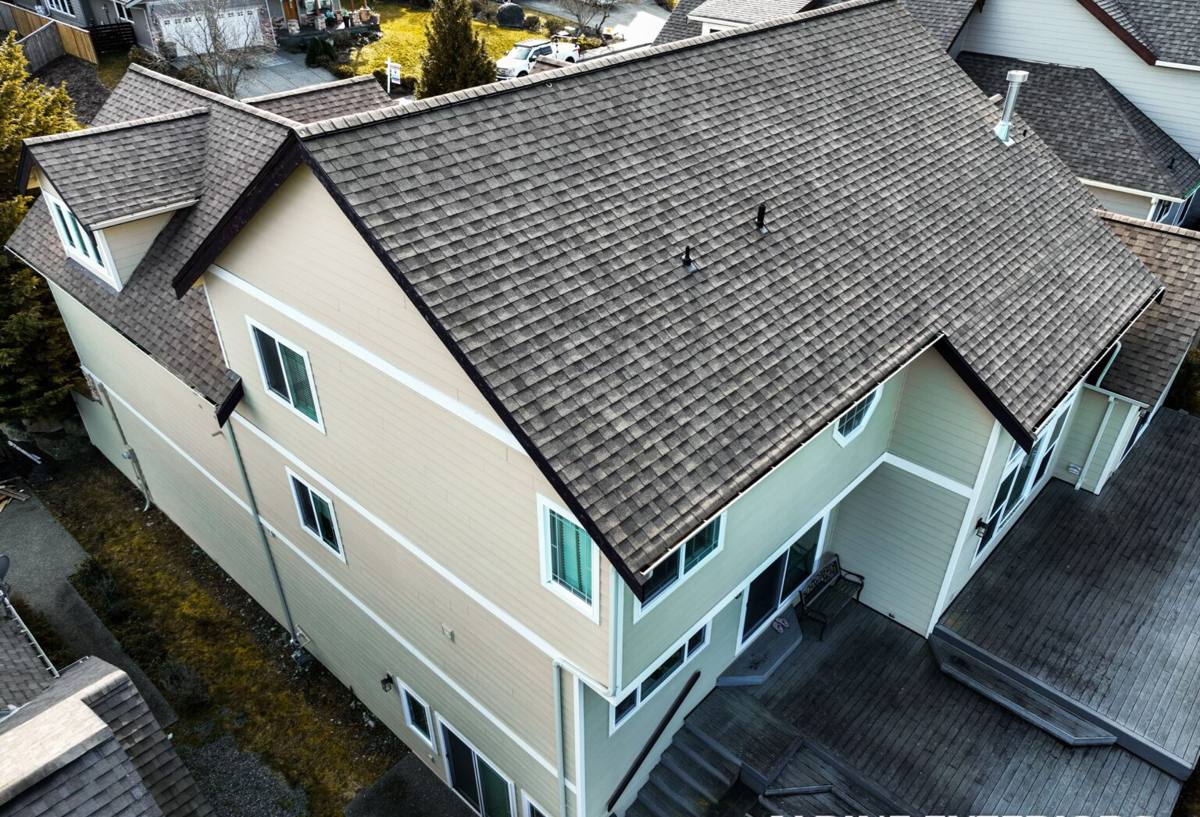
Signs a Deck Needs Replacement, Not Just Repair
A lot of aging decks can be patched — a few boards here, some new hardware there. But there's a point where patching stops being worth it, and pushing past that point usually means throwing money at a structure that isn't safe. Here's how we tell the difference on a typical visit.
Soft, Spongy, or Splintering Deck Boards
If boards flex noticeably when you walk on them, or the wood has gone soft and fibrous at the surface, moisture has been sitting in the material longer than it should. Isolated boards can sometimes be swapped, but if it's showing up across multiple areas, the whole deck has likely been absorbing water at the same rate.
Ledger Board and Rim Joist Rot
The ledger board — where the deck attaches to the house — is the single most common failure point we find on older decks in this area, and it's also the most dangerous one, because it's structural. If flashing was missing or installed wrong originally (extremely common on decks built before local code caught up on this), water has likely been draining behind the ledger for years.
Rusted, Corroded, or Undersized Hardware
Salt-tinged, humid air accelerates corrosion on fasteners, joist hangers, and post bases. Once you see rust bleeding through the wood around a connection point, the hardware underneath is usually further along than it looks.
Posts or Footings That Have Shifted or Settled
A deck that feels slightly uneven, bounces at one corner, or has visible gaps opening up between framing members is telling you the substructure has moved. That's not a cosmetic fix.
What a Correct Deck Replacement Actually Involves
"Deck replacement" gets used loosely — sometimes it means new boards over old framing, sometimes a full rebuild. We treat it as a full rebuild unless an inspection proves otherwise, because reusing framing that's already been exposed to years of Whatcom County weather is a gamble we won't ask a homeowner to take without knowing what's underneath first.
Full Tear-Off and Structural Inspection
We remove the decking, railings, and as much of the framing as needed to actually see the ledger connection, the posts, and the footings — not just the parts that are visible from above. This is where we find out whether the problem is cosmetic or structural.
Ledger Flashing and Waterproofing Done Right
This is the step that determines whether the next deck lasts 10 years or 25. Proper ledger flashing sheds water away from the house rather than trapping it against the rim joist, and it needs to integrate with the existing siding and house wrap correctly — not just get caulked and hoped for.
Framing Sized and Spaced for the Load and the Climate
Joist spacing, beam sizing, and post spacing all need to match the decking material you're choosing and the loads the deck will actually see (furniture, hot tubs, gatherings). In a wet climate, we also favor detailing that lets air move underneath the frame instead of trapping moisture against it.
Decking, Railing, and Fastener Selection
The visible finish is the last decision, not the first — it only makes sense once the structure underneath is solid and matches what the surface material needs.
Choosing a Decking Material for Whatcom County Weather
There's no single "right" material for every homeowner — budget, maintenance appetite, and how the deck gets used all matter. What matters most in this climate specifically is how a material handles standing moisture, shade-driven moss growth, and repeated wet-dry cycling.
| Material | Moisture Behavior | Moss & Mildew Resistance | Maintenance | Typical Lifespan |
|---|---|---|---|---|
| Pressure-treated wood | Absorbs and releases moisture; prone to cupping/checking over time | Low — needs regular cleaning and sealing to resist growth | Annual cleaning, periodic sealing/staining | 10–15 years |
| Cedar | Naturally moisture-resistant but still organic; will gray and soften without upkeep | Moderate — natural oils help, but fade over time | Sealing every 1–2 years to maintain resistance | 15–20 years |
| Capped composite | Doesn't absorb water into the core; surface sheds moisture | Higher — smooth cap resists moss anchoring, still needs occasional washing | Occasional washing, no sealing/staining | 25–30 years |
| PVC decking | Fully moisture-resistant, doesn't wick water at cut ends | Highest — least organic material for moss/mildew to grip | Lowest — soap and water as needed | 25–30+ years |
We'll install any of these correctly, but for homeowners specifically dealing with heavy shade or a moss-prone yard in Cordata, we usually steer the conversation toward capped composite or PVC — not because wood is a bad product, but because the maintenance schedule needed to keep wood looking good in this climate is more demanding than most people expect once they're a few years in.
Our Deck Replacement Process, Step by Step
- On-site assessment: We inspect the existing deck, ledger connection, and substructure, and talk through how you actually use the space.
- Honest scope and estimate: You get a clear picture of what's being replaced, what materials are being used, and what it costs — no surprise change orders for things we could have identified up front.
- Permit handling: We pull the required permits and schedule inspections so the job is done to code, not around it.
- Demolition and disposal: Full removal of the old structure, including proper disposal of old lumber and hardware.
- Framing and waterproofing: New ledger flashing, framing, and post/footing work built to handle this region's rain load.
- Decking, railing, and finish work: Installation of your chosen material with attention to fastening patterns and drainage gaps.
- Final walkthrough: We go over the finished deck with you and cover basic care specific to the material installed.
Permits and Code Considerations for Deck Replacement
Most jurisdictions in Washington require a permit for deck replacement once you're rebuilding structural elements rather than just swapping surface boards, and for good reason — the ledger connection and guardrail requirements are where most deck failures and injuries actually happen. Typical requirements homeowners should expect include:
- A permit for any deck involving new or replaced framing, footings, or ledger attachment
- Guardrails on any walking surface roughly 30 inches or more above grade, generally built to a minimum 36-inch height
- Proper footing depth to get below the frost line and onto stable soil
- Engineered or code-compliant ledger attachment, not just lag screws into siding
- Inspection sign-off before the deck is considered complete
We handle the permit process as part of the job rather than leaving it to the homeowner, since skipping it — or building to a lower standard than it requires — is exactly how you end up with the same ledger rot problem again in ten years.
Maintenance After Replacement: Staying Ahead of Moss and Rain
A properly built deck still needs some seasonal attention in this climate, especially if it sits under trees or on the shaded side of the house. A few habits go a long way:
- Sweep debris off the deck regularly through fall — trapped leaves hold moisture against the surface and feed moss growth
- Rinse or lightly scrub composite and PVC decking once or twice a year to remove surface grime before it sets in
- Reseal or restain wood decking on the schedule your material needs — don't wait until it's visibly gray and dry
- Keep gutters and downspouts near the deck clear so runoff isn't dumping directly onto or under the structure
- Check railing connections and stair hardware annually for early signs of corrosion
- Trim back overhanging branches where practical to reduce shade and speed up drying time after rain
Why Hiring a Crew That Already Works in Cordata Matters
A deck built by someone unfamiliar with this specific mix of coastal moisture, shade patterns, and moss pressure often looks fine for the first couple of years and then starts showing problems earlier than it should. Crews who work regularly in Cordata and the surrounding Bellingham area already know which details — flashing choices, fastener grades, framing gaps for airflow — actually matter here versus in a drier part of the state. That local pattern recognition is the difference between a deck that's built to a generic standard and one that's built for what this specific address is going to face every winter.
It also means a faster, more accurate estimate. Because the conditions here are familiar, we're not guessing at what the substructure will look like once we open it up — we've seen the same rot patterns, the same ledger issues, and the same moss buildup on enough Whatcom County decks to know what to look for before demolition even starts.
Get a Straight Answer on Your Deck
If your deck in Cordata is showing soft spots, rust stains, or just feels like it's on borrowed time, it's worth getting an honest look before another wet season adds to the damage. We offer free, no-pressure estimates — use the form below to schedule a visit and get a clear picture of what your deck actually needs.