 Bellingham
 Ferndale's Climate Is Harder on Siding Than Most Homeowners Realize
Ferndale sits close enough to the water and the Nooksack lowlands that its homes take a steady, year-round beating most inland siding products were never engineered for. Salt-laden air drifts in off the coast and settles into every seam and fastener line. Driving rain, pushed sideways by wind off the Strait, finds any gap in a wall system and works it wider over time. And because this corner of Whatcom County stays cool, shaded, and damp for months at a stretch, moss and algae get a long runway to establish themselves on north-facing walls and anything shielded from direct sun.
None of this is exotic weather. It's just persistent. A siding product that performs fine in a drier, sunnier climate can start showing real problems here inside a decade — swelling, delamination, paint failure, or soft spots where moisture got behind the cladding and stayed. Correct installation matters more in a climate like this, not less, because the margin for error is smaller.
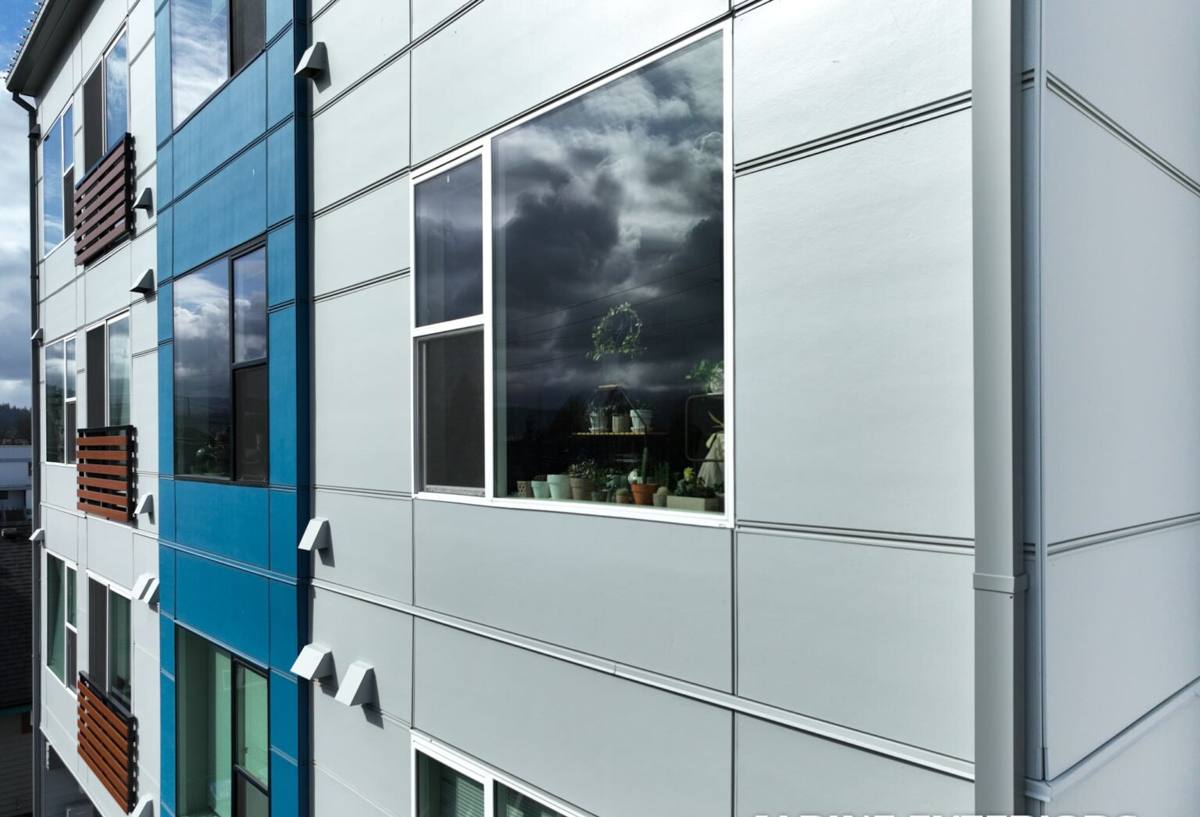
What Ferndale Homes Actually Need From a Siding System
Before we talk about product or process, it helps to be specific about what a Ferndale exterior wall is up against, because the requirements are different from a generic "siding installation" job description:
- Resistance to prolonged dampness without swelling, softening, or losing paint adhesion
- A finish that holds color and sheds moss/algae growth rather than feeding it
- Fastener and flashing details that account for wind-driven rain, not just vertical rainfall
- Material stability that doesn't rely on the sun to dry it out between storms, since Ferndale gets long stretches without much direct sun on shaded elevations
- A product and installation method with a track record in this exact climate, not just "coastal" in general
A siding product and installation approach that checks these boxes will outperform one that doesn't, regardless of what it costs up front. This is the standard we hold every Ferndale installation to.
Why We Install Only James Hardie Fiber Cement
We don't install vinyl, LP SmartSide, primed spruce, cedar, or fiber cement alternatives like Cemplank or Allura. That's a deliberate standard, not an oversight, and it comes directly out of what this climate does to siding over the long haul.
Wood-based products — cedar, primed spruce, and OSB-core engineered siding like LP SmartSide — depend on paint film and edge sealing staying intact to keep moisture out of a wood or wood-fiber substrate. In a climate with Ferndale's rainfall and humidity pattern, any breach in that seal (a nail pop, a caulk failure, a scuff at a corner) gives water a path into material that swells, softens, or rots once it's wet. It's manageable with vigilant maintenance, but it puts the burden on the homeowner to catch problems early, year after year.
Vinyl siding avoids the rot question entirely because it isn't organic, but it brings its own trade-offs: it expands and contracts significantly with temperature swings, it can crack in cold snaps, and it's not fire-resistant. In a region with wildfire smoke seasons and cold snaps both on the calendar, that's a real limitation.
James Hardie fiber cement is cement, sand, and cellulose fiber — it doesn't rot, it isn't a fuel source, and it holds up to damp cycling without swelling or delaminating the way wood-based products can. Hardie's factory-applied ColorPlus finish is baked on and warrantied against fading and peeling, which matters directly here: a finish that's holding up on a sunny east-side home is being asked something different on a shaded, damp Ferndale exterior, and Hardie's finish is engineered and tested for that range. Hardie also builds specific HZ5 product lines formulated for colder, wetter climate zones — this isn't a one-size-fits-all product being adapted to the Pacific Northwest, it's a version built for it.
We standardized on one product line because it lets us install to spec every time, back it with a real transferable warranty, and stop guessing at how a wall will perform in ten years. That's the trade we're making, and we think it's the right one for homes here.
Siding Options Compared for a Ferndale Climate
| Material | How it handles sustained damp/moss exposure | Maintenance burden | Fire resistance |
|---|---|---|---|
| James Hardie fiber cement | Does not rot or swell; factory finish resists moss staining and holds color | Low — periodic wash, no repainting cycle in most cases | Non-combustible |
| Vinyl | Doesn't rot, but seams and J-channels can trap moisture; can crack in cold snaps | Low, but limited repair options if damaged | Not fire-resistant |
| LP SmartSide (engineered wood) | Depends on paint/edge-seal integrity; wood fiber core can swell if compromised | Moderate — watch caulk lines, cut edges, fastener heads | Combustible |
| Cedar / primed spruce | Organic material; sustained damp climate shortens repaint and recaulk cycles | High — regular repainting, sealing, and inspection | Combustible |
What a Correct Installation Actually Involves
Hardie siding performs the way it's rated to perform only when it's installed to the manufacturer's specification, and in a climate like Ferndale's, the details that get skipped on a rushed job are exactly the ones that matter most:
Water management behind the siding
A weather-resistive barrier and properly lapped, sealed flashing at every window, door, and penetration is what actually keeps wind-driven rain from reaching your sheathing. The siding itself is the visible layer; the drainage plane behind it is what does the real work during a sideways rainstorm.
Clearance and gaps
Hardie specifies minimum clearances from grade, roof lines, decks, and other flatwork, plus gapping at butt joints and trim. Skipping these is one of the most common ways an otherwise good product fails early — water gets trapped where it was never supposed to sit.
Fastening
Correct nail type, spacing, and placement matter for wind resistance and for how the panel handles moisture cycling. Over-driven or under-driven fasteners are a common source of callbacks on jobs installed too fast.
Caulking and sealant at joints
Factory-finished panels still need the right sealant at trim and joints — the wrong product or a skipped joint reintroduces the exact moisture path fiber cement is supposed to eliminate.
Our Process for a Ferndale Installation
- On-site assessment — we look at your home's exposure (which walls take direct weather, existing moss or moisture staining, current siding condition) before recommending anything.
- Tear-off and sheathing check — we remove the existing siding and inspect the sheathing underneath for any moisture damage that needs addressing before new siding goes on. Covering up a problem is worse than finding it.
- Weather barrier and flashing — house wrap and flashing details are installed to manage water at every penetration, sized for wind-driven rain, not just vertical.
- Hardie panel installation — installed to manufacturer clearance, gapping, and fastening specifications, using the HZ5 product line suited to this climate zone.
- Trim, caulking, and final detailing — the finish details that determine how the wall performs in year eight, not just how it looks on day one.
- Walkthrough — we go over what was done and what warranty coverage applies, so you have it on record.
Signs a Ferndale Home May Need New Siding Soon
- Persistent moss or algae staining that returns quickly after cleaning, especially on shaded or north-facing walls
- Soft spots, bubbling paint, or a slightly spongy feel when pressed on wood-based siding
- Visible gaps, warping, or separation at panel joints and corners
- Paint that's peeling or chalking well ahead of when it should, a sign the substrate underneath may be compromised
- Rising energy bills that track with drafts or cold spots along exterior walls
Cost Factors for Ferndale Siding Projects
| Factor | Why it moves the price |
|---|---|
| Home size and wall complexity | More corners, dormers, and trim details mean more cutting, flashing, and labor time |
| Condition of existing sheathing | Rot or moisture damage found during tear-off needs repair before new siding goes on |
| Siding profile and trim package | Lap width, shingle-style panels, and trim complexity affect material and labor cost |
| Access and site conditions | Steep lots, tight setbacks, or landscaping that limits staging can add time |
| Color and finish selection | ColorPlus factory finishes vary slightly in cost by line and color depth |
We give a written, itemized estimate after seeing the home in person — general ranges without that context tend to be more misleading than helpful.
Why Hiring a Crew That Already Works in Ferndale Matters
Siding installation isn't just a national spec sheet applied identically everywhere. A crew that regularly works Whatcom County's coastal side already has a feel for which elevations on a given lot type take the worst weather, where moss tends to establish first, and how local wind patterns push rain sideways into details that a drier-climate crew might not think twice about. That local pattern recognition shows up in small decisions — flashing laps, sealant choice, where extra attention goes on a shaded wall — that add up to a wall system that actually holds up here.
It also means warranty and follow-up service aren't a phone call to somewhere far away. A crew based in and around Bellingham and Whatcom County is going to be around to stand behind the work.
Ready to Talk About Your Ferndale Home?
If your siding is showing moss staining, soft spots, or just isn't standing up to another Whatcom County winter, we're happy to take a look and give you a straight answer — no pressure, no upsell script. Fill out the form below for a free estimate on James Hardie siding installation for your Ferndale home.