 Bellingham
 Happy Valley's Climate and What It Asks of New Windows
Happy Valley sits close enough to Bellingham Bay that salt-laden air is a constant, low-grade factor in how every building material ages here. Add Whatcom County's long wet season — driving rain that comes in sideways off the water, months of low sun angle, and a moss season that can stretch from October well into spring — and you have a climate that is genuinely harder on window assemblies than most manufacturers' warranty literature assumes. New-construction windows are not just a product choice in this environment; they are a system that has to work with the framing, the weather-resistive barrier, and the siding to keep water moving in one direction: out.
For a new build or an addition in this neighborhood, the window install happens at a point in the schedule when the building envelope is still open. That is an advantage — there is no old flashing or rotten sheathing to work around — but it also means mistakes get sealed inside the wall for the life of the house. Getting it right the first time matters more here than in most parts of Washington, simply because the exposure is higher and the consequences of a bad seal show up faster.
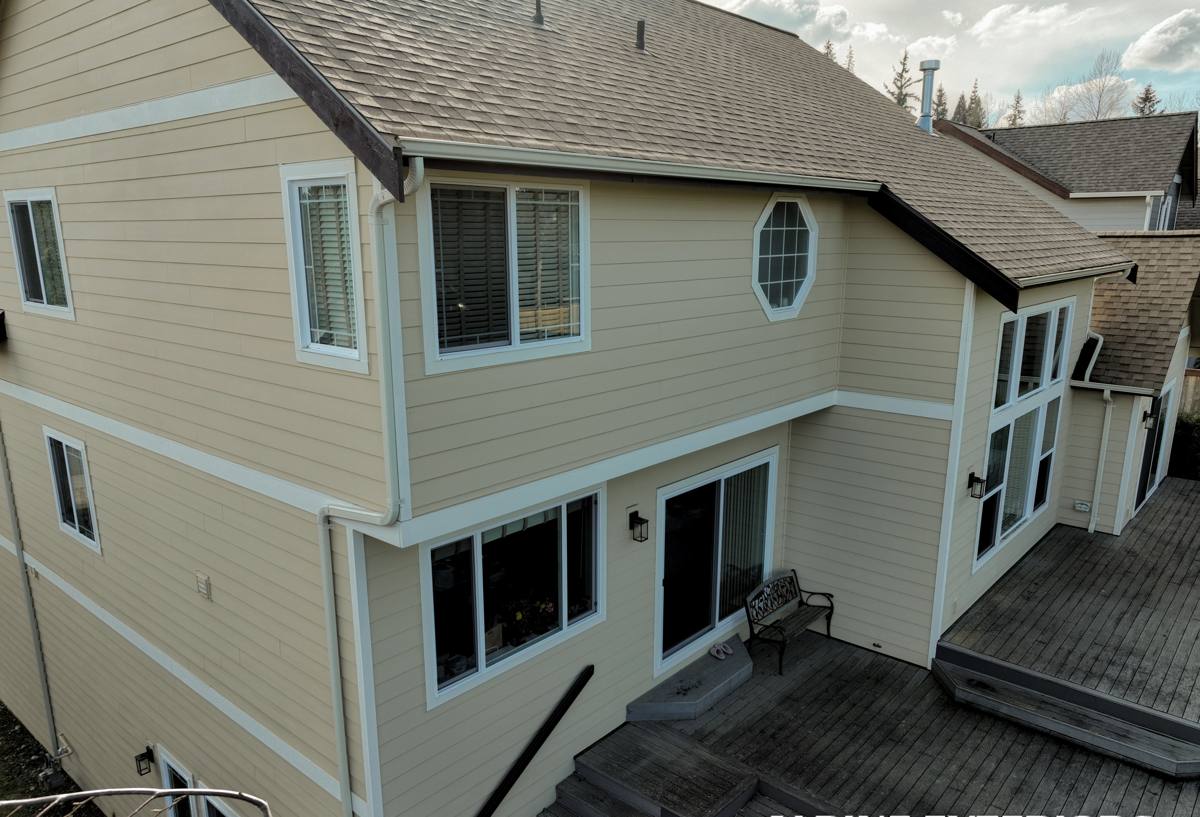
New-Construction vs. Retrofit Windows: Why the Method Matters
New-construction windows (sometimes called flange or nail-fin windows) have a flat mounting flange around the frame that gets fastened directly to the stud framing before the weather-resistive barrier and siding go on. That flange becomes part of the wall's drainage plane — it is taped, flashed, and lapped into the building paper or house wrap in a specific sequence so that any water reaching the wall runs down and out, never behind the window.
Retrofit or "insert" windows, by contrast, are built to slide into an existing frame during a remodel, without disturbing the surrounding siding. They are the right tool for a lot of replacement jobs, but they are a compromise: the old flashing and framing underneath stays in place, whatever condition it's in. On a true new build or addition, there's no reason to accept that compromise. New-construction windows installed correctly at the framing stage give you a continuous, purpose-built drainage path — which is exactly what you want in a neighborhood that sees this much wind-driven rain off the Sound.
Where This Trips Up an Inexperienced Crew
The most common mistake we see on new builds isn't the window itself — it's the sequencing. Housewrap installed in the wrong order relative to the window flange, flashing tape applied to damp or dusty sheathing, or a sill pan skipped because "the flange should handle it" are all ways a technically good window ends up performing like a cheap one. None of these mistakes are visible once siding goes on, which is exactly why they show up as interior water stains two or three winters later.
What a Correct Installation Involves
Sill Pan and Sloped Sill
Every rough opening should get a sloped sill pan before the window ever goes in — not caulk, not just tape, an actual pan that sheds bulk water to the exterior even if it gets past the window itself. This is the single most important detail on a coastal-exposure job, because it's the last line of defense if wind-driven rain ever finds a way past the glazing or frame seal.
Flashing Integration with the Weather-Resistive Barrier
Flashing tape at the sides and head of the window has to lap correctly with the housewrap above and below it — shingle-style, so water always drains over the next layer down. Done backward, the tape traps water against the sheathing instead of shedding it.
Fastening and Shimming
Windows need to be shimmed plumb, level, and square at every fastening point, not just tacked at the corners. An out-of-square frame stresses the sash and weatherstripping over time, which is often where operable windows start sticking or leaking after a few seasons of expansion and contraction.
Sealant Selection
Not every exterior sealant is rated for the temperature swings and UV exposure of a west-facing wall near open water. We use products matched to the substrate and exposure, not whatever's cheapest at the yard, because a sealant failure at the flange is one of the harder problems to diagnose once siding is finished.
Frame Material and Glass Package for This Site
There's no single "best" window frame material — the right choice depends on exposure, budget, and how much maintenance you want to take on. Here's how the common options stack up specifically against Bellingham's salt-air, high-moisture conditions:
| Frame Material | Moisture & Salt-Air Performance | Maintenance | Typical Cost Position |
|---|---|---|---|
| Vinyl | Good — won't corrode or rot; seams are the main watch point | Low | Entry to mid |
| Fiberglass | Very good — dimensionally stable through temperature and moisture swings | Low | Mid to upper |
| Wood-clad (exterior clad) | Good on the exterior face, but any breach in the cladding exposes wood to rot risk in this climate | Moderate — cladding needs to stay sealed at joints | Upper |
| Aluminum | Prone to condensation and, without a thermal break, corrosion near salt air | Moderate | Varies |
On glass, a dual-pane low-E package is the practical baseline for new construction here — it manages heat loss through Bellingham's long heating season and cuts down on interior condensation, which is a bigger issue in this climate than most homeowners expect given how much moisture is already in the outside air for much of the year.
Our Process for Happy Valley New Builds
- Rough opening verification against the window schedule and manufacturer specs before anything is set — catching a framing error here is far cheaper than after the window is installed.
- Sill pan and flashing installation, integrated with whatever weather-resistive barrier the general contractor has specified.
- Window setting, shimming, and fastening to plumb, level, and square, with fastening patterns matched to the window's design pressure rating.
- Exterior flashing and sealant completion, tied into the housewrap sequence so the drainage plane stays continuous.
- Interior air-sealing at the rough opening, separate from the exterior water management — these are two different jobs and both need to be done.
- Final walk-through and documentation, so the manufacturer's warranty and our own workmanship are both on record for the homeowner and the builder.
Coordinating Windows with Your Build Schedule
Timing matters more here than it does in drier parts of the state. Whatcom County's wettest stretch, and the season when moss and surface mildew take hold fastest on anything left exposed, generally runs from fall through early spring. On a new build, that means the window install ideally happens as close to "dry-in" as the schedule allows — the sooner the envelope is closed up and shedding water correctly, the less exposure the sheathing and framing get to open weather. We work directly with general contractors on sequencing so windows aren't sitting in an open rough opening any longer than necessary during a wet stretch.
Cost Factors to Plan For
New-construction window costs vary by project, but the drivers are consistent. This isn't a quote — it's what actually moves the number so you can plan a realistic budget conversation with your builder:
| Factor | Why It Matters |
|---|---|
| Number and size of openings | Larger units and more glass area increase both material and labor cost |
| Frame material | Vinyl is typically the most budget-friendly; fiberglass and wood-clad run higher |
| Glass package | Upgraded low-E coatings or triple-pane glass add cost but pay back in comfort and condensation control |
| Site access and staging | Sloped lots or tight access near the water add labor time for material handling |
| Coordination with other trades | Well-sequenced dry-in reduces exposure and rework risk, which keeps costs predictable |
Checklist Before Windows Go In
- Rough openings confirmed against final window schedule and sized correctly for the specified units
- Weather-resistive barrier installed and ready to integrate with window flashing
- Sill pans specified for every opening, not just the most exposed walls
- Frame material and glass package confirmed in writing, matched to each wall's exposure
- Installation timing coordinated with the broader dry-in schedule
- Warranty documentation plan agreed on before installation starts, not after
Why a Crew That Already Works Happy Valley Matters
A window installer who's worked this neighborhood before already knows how the local exposure to wind and rain off the water tends to stress a wall assembly, and adjusts flashing and sealant choices accordingly instead of defaulting to a generic spec sheet. That familiarity also shows up in smaller ways: knowing which local building department questions to expect at inspection, having an established working rhythm with Bellingham-area general contractors, and being close enough to come back quickly if a punch-list item comes up during the rest of construction. None of that replaces sound installation technique, but on a coastal-exposure job in Whatcom County, local experience is what keeps a technically correct install from becoming a theoretical one.
If you're planning a new build or addition in Happy Valley and want a window installation plan built around this area's climate rather than a one-size-fits-all spec, we're happy to walk the plans with you and put together a free, no-pressure estimate — just fill out the form below.