 Bellingham
 Roofing in Puget Means Building for Salt Air, Rain, and Moss — Not Just Shingles
Puget is a quieter corner of Bellingham, but the roofs here take the same beating as anywhere else in Whatcom County — arguably worse in a few specific ways. The combination of salt-laden air off the bay, long stretches of driving rain in fall and winter, and shaded, tree-covered lots that stay damp well into summer creates a roofing environment that punishes shortcuts. A shingle roof that's installed correctly for this climate can run its full service life without drama. One that's installed with generic, one-size-fits-all methods — the kind used in drier parts of the country — tends to show problems early: soft spots at the eaves, moss creeping up from the north slope, granule loss around valleys, and leaks that show up two or three winters in rather than fifteen.
This page is specifically about asphalt shingle roofing for homes in the Puget area of Bellingham. We're not going to give you a generic rundown of shingles in general — we want to walk through what actually matters for a roof in this specific pocket of Whatcom County, what a correct installation looks like here, and how we approach the work.
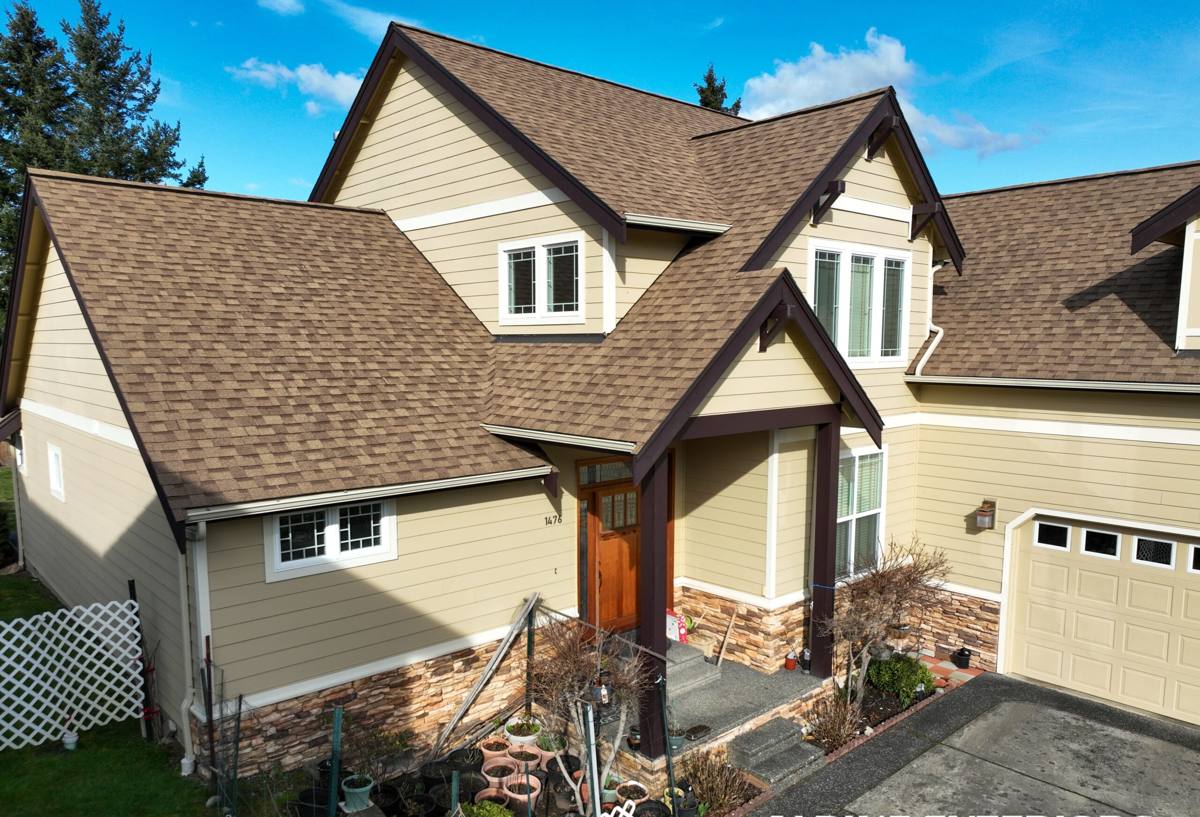
What the Local Climate Actually Does to a Roof
Salt Air and Metal Fatigue
Homes closer to the water deal with airborne salt that accelerates corrosion on exposed metal — flashing, nail heads, vent caps, and gutter hardware. It's slow and easy to ignore until a flashing seam starts leaking from the inside out. The fix isn't complicated: use corrosion-resistant fasteners and flashing metal rated for coastal exposure, and don't cut corners on the metal components just because the shingles themselves look fine.
Driving Rain and Wind-Driven Water
Puget gets the same wet-season weather pattern as the rest of Bellingham — rain that doesn't just fall straight down but gets pushed sideways under eaves, into valleys, and behind poorly lapped flashing. A roof here has to be detailed assuming water will try to travel uphill and sideways, not just downhill. That changes how underlayment, valleys, and penetrations get handled, which we'll cover below.
Moss and Shade
Whatcom County's tree cover and long damp season mean moss and algae growth is close to guaranteed on north-facing or shaded slopes if nothing is done to slow it down. Moss isn't just cosmetic — it holds moisture against the shingle surface, lifts tabs, and works its way under the shingle edge over a few seasons, which is exactly how granule loss and premature wear start.
What a Correct Asphalt Shingle Job Involves Here
Tear-Off vs. Overlay
We recommend a full tear-off for almost every re-roof in this area. Overlaying a new layer of shingles on top of an old, moisture-compromised roof traps the problem underneath instead of solving it — and in a climate this wet, that old layer is rarely dry or sound enough to build on top of. A tear-off also lets us inspect the decking underneath, which is the only way to know for certain whether there's hidden rot or soft spots before they turn into a bigger repair.
Deck Inspection and Repair
Once the old roofing is off, we check the sheathing for soft spots, delamination, and nail pull-through. Any section that doesn't hold a screw firmly gets replaced before anything new goes down. Skipping this step is one of the most common ways a "new roof" ends up with problems within a few years — the shingles are new, but they're fastened to compromised wood underneath.
Underlayment and Ice-and-Water Protection
Given the volume of rain this area sees, we use synthetic underlayment across the full roof and self-adhering ice-and-water membrane at the eaves, valleys, and around every penetration — chimneys, skylights, pipe boots, and any wall-to-roof transition. These are the spots where wind-driven rain finds its way in, and the membrane gives a second line of defense underneath the shingles themselves.
Ventilation
A shingle roof needs balanced intake and exhaust airflow to manage moisture from inside the house and to keep the deck from staying damp longer than it should. In a marine climate, poor attic ventilation shows up as premature shingle aging from the underside, mildew smells, and in cold snaps, ice damming at the eaves. We check existing ventilation on every project and correct it where it's undersized or blocked, rather than just replacing the roofing surface and leaving the underlying airflow problem in place.
Choosing the Right Shingle for This Area
Not every shingle product handles moss, wind, and moisture the same way. Here's how the common options compare for a home in Puget specifically:
| Shingle Type | Moss/Algae Resistance | Wind Rating | Typical Lifespan Here | Best For |
|---|---|---|---|---|
| Standard 3-Tab | Low without added treatment | Lower — more vulnerable in gusty exposure | 15–20 years, often less on shaded slopes | Budget-driven projects on sunnier, more exposed roofs |
| Architectural (Laminate) | Better mat structure sheds debris more easily | Higher — rated for stronger gusts | 25–30 years | Most Puget homes; the standard recommendation |
| Algae-Resistant (AR) Architectural | Copper or zinc granules actively resist growth | Same as standard architectural | 25–30 years, with slower moss return | Shaded, north-facing, or tree-covered lots |
| Impact-Rated (Class 4) | Comparable to architectural, varies by brand | Highest — denser mat resists wind uplift | 30+ years | Homes prioritizing durability and possible insurance credit |
For most homes in Puget, we steer people toward algae-resistant architectural shingles. The upfront cost difference over a standard architectural shingle is modest, and given the amount of shade and moisture this area gets, it's one of the better dollar-for-dollar upgrades available.
Managing Moss Instead of Letting It Manage Your Roof
Moss is close to unavoidable on a shaded roof in this part of Whatcom County, but it's manageable with the right approach — the goal is slowing regrowth and keeping it from establishing a foothold, not pretending it will never appear.
- Choose algae-resistant shingles for any slope with tree cover or north exposure
- Install zinc or copper strips near the ridge on moss-prone slopes — rainwater carries trace metal down the roof and inhibits regrowth
- Keep overhanging branches trimmed back to cut down on shade and debris buildup
- Clear gutters and valleys at least once a year so trapped organic debris doesn't hold moisture against the shingle edge
- Never pressure-wash a shingle roof — it strips protective granules and shortens the roof's life; soft washing or gentle rinsing is the safer approach
Flashing, Valleys, and Penetrations — Where Roofs Actually Leak
Almost every roof leak we're called out to investigate traces back to a flashing detail, not the shingles themselves. Shingles are a water-shedding surface; flashing is what actually seals the transitions — chimneys, sidewalls, valleys, and anything that pokes through the roof plane. In a climate that pushes rain sideways as often as straight down, these details have to be done right the first time.
Valleys
We use either a woven or metal open-valley approach depending on the roof design, always over ice-and-water membrane. Valleys carry a disproportionate amount of water off a roof, and it's a spot where cutting corners shows up fast.
Chimneys and Sidewalls
Step flashing and counter-flashing need to be layered correctly with each course of shingles, not caulked together as a shortcut. Caulk fails; properly lapped metal doesn't need to rely on a sealant bead to keep water out.
Pipe Boots and Vents
Rubber pipe boot collars are one of the most common failure points on any roof, typically cracking from UV and weather exposure well before the shingles around them wear out. We check these on every inspection and replace them proactively during a re-roof rather than leaving old boots in place under new shingles.
How Our Process Works, Start to Finish
1. On-Site Assessment
We walk the roof (or use a drone where pitch or access makes that safer) and check the decking, flashing, ventilation, and current shingle condition before writing up any recommendation. We're not guessing from the ground or from satellite photos.
2. Straightforward Estimate
You get a written estimate that spells out the shingle product, underlayment and ice-and-water plan, flashing scope, and ventilation work — not just a single lump-sum number with no detail behind it.
3. Material Delivery and Site Protection
Landscaping, siding, and gutters get protected before tear-off starts. We stage materials to minimize the time your roof deck is exposed to weather.
4. Tear-Off and Deck Inspection
Old roofing comes off, the deck gets inspected and repaired as needed, and any issues are flagged and discussed before we move forward — no surprise change orders after the fact for anything foreseeable.
5. Underlayment, Flashing, and Shingle Installation
Installed in the sequence outlined above, with attention to the details that matter most in this climate — ice-and-water at vulnerable areas, correctly lapped flashing, and manufacturer-spec nailing patterns for proper wind resistance.
6. Final Walkthrough and Cleanup
We do a magnetic sweep for stray nails, haul away debris, and walk the finished roof with you before calling the job complete.
What Drives the Cost of a Re-Roof in Puget
| Factor | Why It Matters Here |
|---|---|
| Roof size and pitch | Steeper pitches take longer and require more safety setup, affecting labor cost |
| Number of layers to remove | Tear-off of multiple old layers adds disposal and labor time |
| Deck condition | Rot or soft sheathing found during tear-off adds repair cost — this is why an honest inspection matters |
| Shingle tier chosen | Standard, algae-resistant, and impact-rated products carry different material costs |
| Flashing and ventilation scope | Homes with multiple chimneys, skylights, or poor existing ventilation need more detail work |
| Access and site conditions | Tree cover, tight lots, or difficult truck access can affect staging and labor time |
We don't publish blanket per-square pricing because these factors genuinely change the number from house to house — but we'll always walk you through exactly what's driving your specific estimate.
Simple Maintenance That Extends a Puget Roof's Life
- Have gutters and valleys cleared of debris at least once a year, more often under heavy tree cover
- Get a visual roof check after any major windstorm, especially checking ridge and hip shingles
- Watch for moss buildup on shaded slopes and address it before it spreads across the whole roof plane
- Keep an eye on flashing around chimneys and skylights for lifting or visible gaps
- Trim back overhanging branches that keep sections of the roof shaded and damp
- Address small leaks immediately — a small stain today is a cheap repair; left alone through another wet season, it often isn't
Why It Matters to Hire a Crew That Already Works This Area
A roofing crew that mostly works drier, less shaded climates will often install a technically fine roof that's simply not detailed for what Puget throws at it — under-spec ventilation, missed ice-and-water zones, or a shingle choice that wasn't picked with moss and shade in mind. A crew that works Bellingham and Whatcom County roofs regularly already knows which slopes need algae-resistant shingles, where wind-driven rain tends to find gaps, and how to sequence a tear-off around this region's weather windows instead of guessing and hoping it doesn't rain mid-project.
That local familiarity isn't a marketing line — it shows up in the small decisions made throughout the job, the ones that determine whether a roof performs well in year twelve, not just on installation day.
If you're weighing a repair versus a full re-roof, or just want an honest read on your current roof's condition, we're happy to take a look. Use the form below to request a free, no-pressure estimate for your Puget property.