 Bellingham
 Homes in the Puget area near Bellingham take a different kind of beating than roofs twenty miles inland. The combination of salt-laden air off the water, wind-driven rain that finds its way under poorly lapped shingles, and a moss season that runs longer here than almost anywhere else in Whatcom County means a roof replacement done for this neighborhood needs to be specified differently than a generic reroof. This page covers what that actually looks like — the failure patterns we see locally, what a correct replacement involves, and how our process works from first look to final walkthrough.
What This Climate Does to a Roof
Three things drive most of the roof failures we get called out for in the Puget area, and they compound each other.
Salt Air and Corrosion
Being close to the water means airborne salt settles on every exposed surface, including metal flashing, fasteners, and roof vents. Standard galvanized fasteners and unprotected flashing corrode faster here than they would twenty miles inland. Once a fastener head rusts through, the seal it was holding starts to fail long before the shingle itself is worn out.
Driving Rain
Bellingham gets rain that doesn't just fall straight down — wind off the Sound pushes it sideways, which means it can work its way under shingle laps, around chimneys, and through valleys that would stay dry in a calmer climate. A roof built to a minimum-code spec for a dry region will leak here even when every shingle looks intact, because the failure point is usually the underlayment and flashing detail, not the shingle itself.
Moss and Moisture Retention
Shade from mature trees, cool damp air, and a long wet season all favor moss growth. Moss holds moisture against the roof surface for weeks at a time, which accelerates granule loss on asphalt shingles and can lift shingle edges enough to let water in during the next storm. Left unaddressed for a few seasons, moss does more cumulative damage than most homeowners expect.
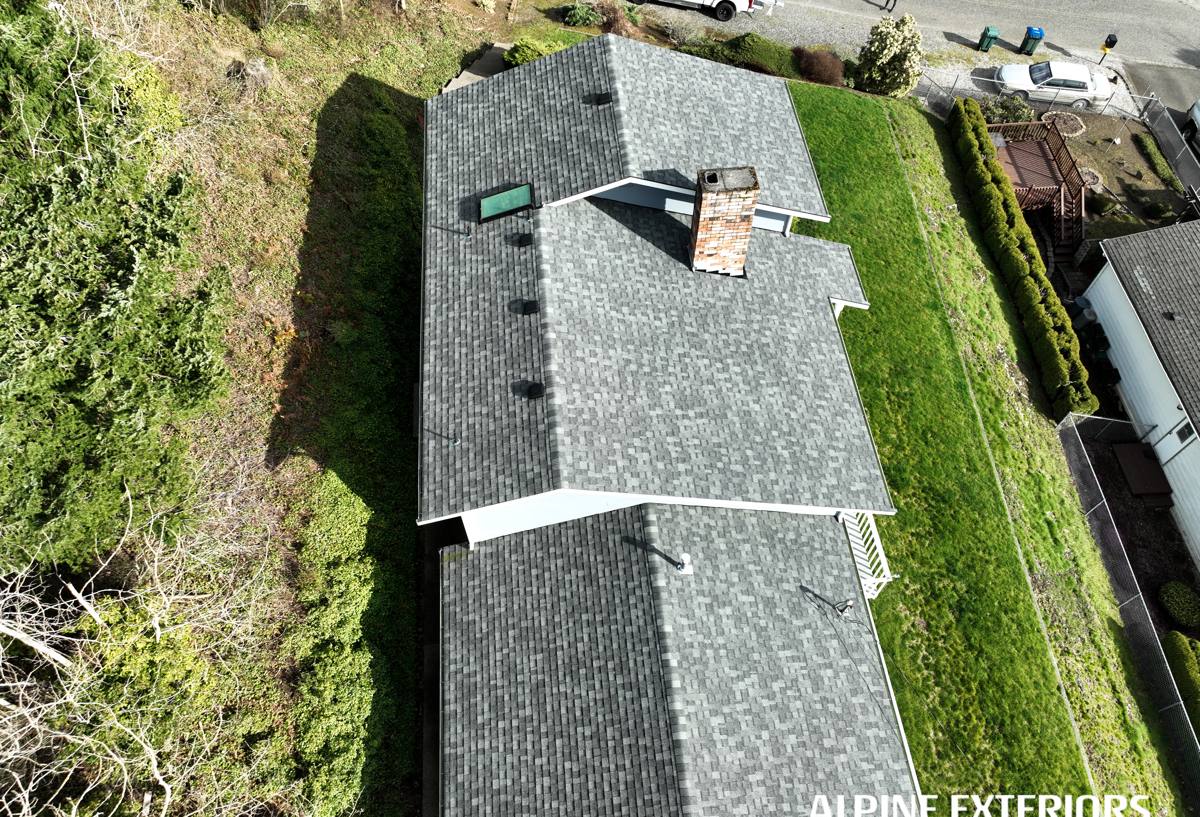
Signs a Puget-Area Roof Has Reached Replacement Stage
Not every issue means a full replacement — some are repairable. Here's how we tell the difference during an inspection:
- Granule loss heavy enough to see bare fiberglass mat on multiple slopes, not just one weathered spot
- Moss established at the ridge and working down past the first few courses, especially on north-facing slopes
- Soft spots in the decking when walked, usually near valleys, chimneys, or old skylight curbs
- Rusted or lifted flashing at any penetration — plumbing vents, chimneys, wall-to-roof transitions
- Daylight visible from the attic at eave lines or ridge, or insulation showing water staining
- Shingles that have lost their seal strip and lift in wind, common once a roof passes 15–18 years in this climate
- Multiple past patch repairs in different areas — a sign the roof is failing broadly, not in one spot
Choosing the Right Roofing System for This Climate
Material choice matters more here than in a drier, calmer region. Here's how the common options hold up against salt air, driving rain, and moss:
| Material | Salt Air Resistance | Moss Resistance | Typical Lifespan Here |
|---|---|---|---|
| Standard 3-tab asphalt | Fair with proper fasteners | Low — needs regular treatment | 15–18 years |
| Architectural (laminate) asphalt | Good with corrosion-resistant flashing | Moderate | 20–25 years |
| Metal (standing seam or panel) | Very good with coated fasteners | High — sheds moss more easily | 40+ years |
| Composite/synthetic shake or slate | Good | Moderate to high | 30–40 years |
We don't push one product on every home. A steeply pitched, tree-shaded roof benefits from a material that sheds moisture fast and resists moss; a simpler gable roof with good sun exposure has more flexibility. We'll walk you through the honest trade-offs — upfront cost, maintenance, and how each performs specifically in a salt-air, high-moisture environment — rather than defaulting to whatever's cheapest to install.
What a Correct Replacement Actually Involves
A roof replacement is more than swapping old shingles for new ones. Skipping any of these steps is where most premature failures start.
Full Tear-Off and Decking Inspection
We remove existing roofing down to the deck rather than layering over it. This lets us actually see the plywood or plank decking underneath — soft, delaminated, or water-stained sections get replaced before anything new goes down. Roofing over hidden decking damage just seals the problem in.
Ice and Water Shield at Vulnerable Points
Valleys, eaves, and roof-to-wall transitions get a self-adhering waterproof membrane underneath the primary underlayment. Given how often wind-driven rain gets pushed sideways here, this layer is what actually stops water at the points where shingles alone won't.
Synthetic Underlayment Across the Field
Over the rest of the deck, a synthetic underlayment provides a secondary water barrier and holds up better long-term than old-style felt, which degrades faster in persistently damp conditions.
Corrosion-Resistant Flashing and Fasteners
Given the salt air, we use flashing and fastener materials rated for coastal exposure rather than standard galvanized stock. This is a small cost difference at install time and a large difference in how long the flashing seals actually last.
Proper Ventilation
Intake at the eaves and exhaust at the ridge, balanced correctly for the attic volume. Poor ventilation traps moisture from inside the home against the underside of the new roof, which can cause deck rot and shorten shingle life regardless of how good the roofing material is.
Ventilation and Moisture: The Part Homeowners Don't See
This deserves its own section because it's the most commonly skipped step in cut-rate reroofs, and it's invisible once the job is done. In a climate this damp, an attic that can't breathe traps humidity from cooking, showers, and laundry venting, plus whatever moisture works its way in from the roof surface during long wet stretches. That trapped moisture condenses on the underside of the decking, and over a few years it can rot sheathing from the inside — a failure that has nothing to do with the shingles above it. Balanced intake and exhaust ventilation, sized to the attic, is one of the cheapest parts of a reroof and one of the most important for making the rest of the work last its full expected lifespan.
Our Process, Start to Finish
- Inspection and estimate. We walk the roof (or use a lift/drone where pitch or access requires it), check the attic for ventilation and moisture signs, and give you a written estimate with material options explained plainly.
- Material selection. We go over the trade-offs for your specific roof — pitch, shade, exposure to weather off the water — and help you land on a system that fits your budget and how long you want it to last.
- Scheduling around the weather. Given how much rain this area gets, we plan tear-off and dry-in carefully so your home isn't left exposed longer than necessary.
- Tear-off and deck inspection. Old roofing comes off, decking gets inspected and repaired as needed, with photos so you know exactly what was found.
- Underlayment, flashing, and ventilation installation. The waterproofing and airflow systems go in before a single new shingle or panel is installed.
- New roofing installation. Installed to manufacturer spec, with attention to nailing pattern and exposure — details that matter more in high-wind, driving-rain conditions than they would in a calmer climate.
- Cleanup and magnetic sweep. Full site cleanup, including a magnetic sweep for stray fasteners.
- Final walkthrough. We go over the finished roof with you, explain warranty coverage, and answer any maintenance questions before we consider the job done.
Cost Factors for a Puget-Area Roof Replacement
Every roof is priced individually, but these are the main variables that move the number up or down:
| Factor | Why It Matters Here |
|---|---|
| Roof size and pitch | Steeper pitches near the water need more safety setup and slower, careful work |
| Decking condition | Moss and moisture retention often mean more deck repair than a dry-climate roof of the same age |
| Material choice | Metal and composite systems cost more upfront but resist salt air and moss better long-term |
| Flashing and fastener grade | Coastal-rated materials cost more than standard galvanized but last significantly longer here |
| Ventilation upgrades | Older homes often need eave or ridge vent work added, not just replaced roofing |
| Access and tree cover | Overhanging trees common in this area can add setup time and cleanup |
We give a broad honest range during the estimate rather than a number pulled out of thin air — the real figure depends on what we find once we're actually on the roof and in the attic.
Why a Crew That Already Works Puget Matters
A contractor who works this specific area regularly already knows which slopes hold moss longest, which flashing details tend to fail first in this exposure, and how to sequence a tear-off around weather that can turn quickly. That local familiarity shows up in fewer surprises during the job and a roof that's actually built for the conditions it has to survive, not just built to a generic spec. It also means someone local to call if a question comes up after the job is done — not a crew that drove in from out of the area for one job and moved on.
Maintenance That Extends the Life of a New Roof
A correctly installed roof still benefits from basic upkeep, especially in a climate that grows moss year-round:
- Have moss treated or gently removed at the first sign of growth, rather than letting it establish
- Keep gutters clear so water isn't backing up under the eave line during heavy rain
- Trim back overhanging branches to reduce shade, debris, and abrasion on the roof surface
- Have flashing and fasteners checked periodically, since salt-air corrosion is gradual and easy to miss from the ground
- Schedule a quick inspection after any major windstorm to catch lifted shingles before they leak
If you're seeing moss buildup, granule loss, or just aren't sure how much life is left in your roof, we're happy to take a look. The estimate is free, there's no pressure attached to it, and you'll get a straight answer about whether you need a full replacement or just a repair — use the form below to get started.