 Bellingham
 Why Window Replacement in Puget Isn't a One-Size-Fits-All Job
Puget sits close enough to the water that homes here take a different kind of weather than inland Whatcom County. Salt-laden air off Bellingham Bay works on metal hardware and finishes year-round, wind-driven rain hits window assemblies at angles most manufacturers' install instructions don't fully account for, and the long, gray moss season means exterior surfaces rarely get a real chance to dry out between storms. Windows that would hold up fine in a drier climate can fail early here if they're not chosen and installed with these conditions in mind.
This page is specifically about window replacement for homes in and around Puget. It's not a general overview of window options — it's what we've found actually matters for houses dealing with this particular mix of salt exposure, rain volume, and persistent dampness.
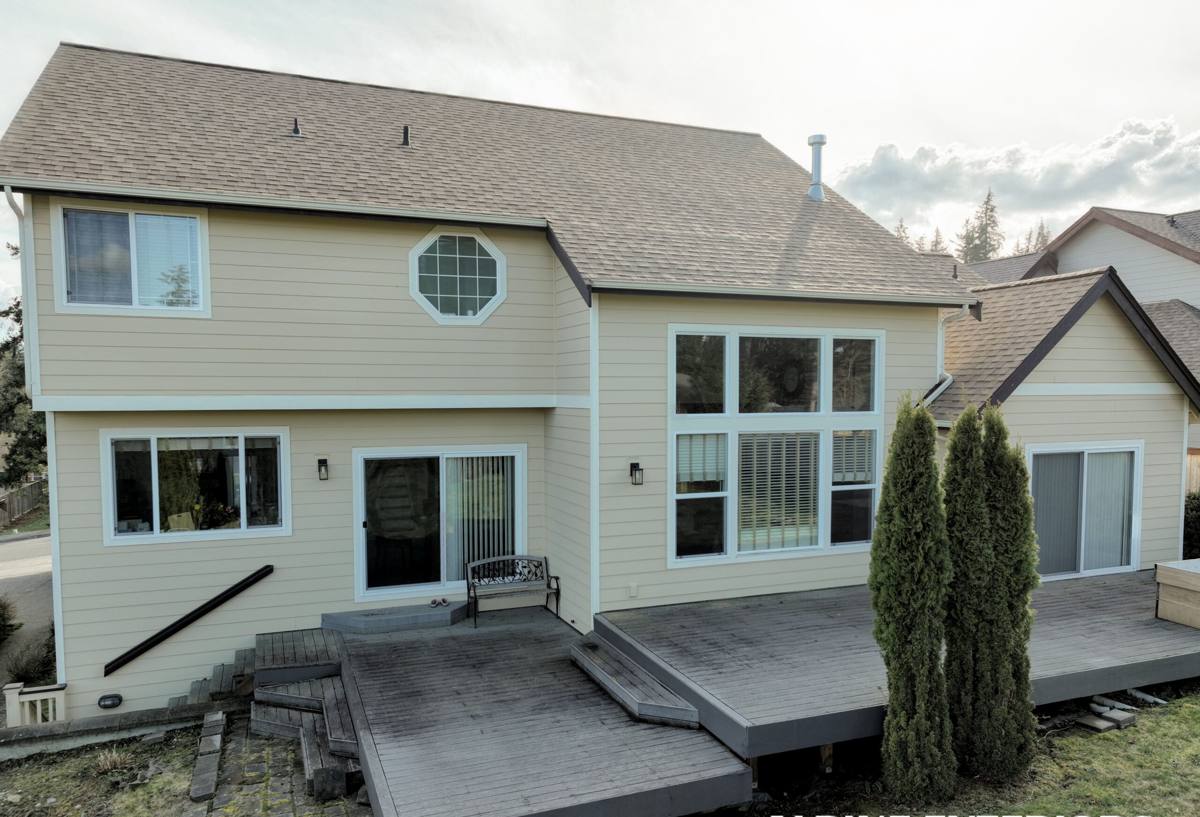
What the Marine Climate Does to Windows Over Time
Salt Air
Airborne salt accelerates corrosion on exposed fasteners, hinges, balance hardware, and aluminum cladding. It also breaks down some sealants and finishes faster than the manufacturer's published lifespan would suggest, since those numbers are usually tested for average conditions, not coastal ones.
Driving Rain
Rain that comes in sideways off the water puts real pressure on the flashing and drainage details around a window, not just the glass and frame. A window can be a good product and still leak if the sill pan, head flashing, and water-resistive barrier underneath it weren't integrated correctly during installation. Most leaks we find in older homes trace back to installation shortcuts, not a bad window.
The Long Moss Season
Whatcom County's extended damp stretch means wood trim, sills, and jamb material stay wet longer after every rain event than they would in a drier climate. That extra dwell time is what lets rot and moss get established in the first place — it's less about how much rain falls and more about how slowly things dry between storms.
Signs Your Puget Home's Windows Are Ready for Replacement
Not every issue means full replacement — some are fixable with repair or better maintenance. But if you're seeing several of these together, it's worth having someone look:
- Fogging or a milky haze between the panes of double-pane glass (a failed seal, which can't be repaired, only replaced)
- Soft, spongy, or discolored wood at the sill, jamb, or exterior trim
- Noticeable drafts near the frame even when the window is fully latched
- Sashes that are hard to open, close, or lock, or that have visibly warped
- Gaps where caulking or sealant has pulled away from the frame
- Moss or persistent green growth building up on sills or in corners
- A heating bill that's crept up without an obvious explanation
- Paint that keeps failing in the same spot no matter how often it's redone
What a Correct Window Replacement Job Actually Involves
Swapping an old window for a new one is the easy part to picture. The part that actually determines whether the job holds up in this climate happens underneath the trim, where you won't see it once we're done.
A proper install includes tearing out the old unit carefully enough to inspect the framing underneath for hidden rot or past water damage before anything new goes in — covering up a problem instead of fixing it just guarantees a bigger repair later. It means installing a sill pan and integrating head and side flashing with the house's water-resistive barrier, so any water that does get past the window sheds outward instead of pooling. It means shimming and leveling the unit correctly so it operates smoothly and seals evenly for years, not just on install day. And it means treating air sealing (comfort, energy use) and water management (keeping the wall assembly dry) as two separate jobs that both need to be done right, not one general "caulk it and move on" step.
Trim and casing should also be matched to the rest of the house rather than treated as an afterthought — mismatched trim is one of the most common ways a replacement job ends up looking obviously bolted on.
Choosing Window Materials for This Climate
There's no single "best" window material — the right choice depends on the specific window's exposure, your maintenance preferences, and budget. Here's how the common options actually compare for a coastal, high-moisture climate like Puget's:
| Frame Material | Moisture & Salt Behavior | Maintenance | Typical Lifespan |
|---|---|---|---|
| Vinyl | Won't rot or corrode; performs consistently in salt air | Low — occasional cleaning | 20–30+ years |
| Fiberglass | Very stable in temperature swings and moisture; strong option near the water | Low | 25–35+ years |
| Wood (unclad) | Attractive, but most vulnerable to rot and moss in this climate without diligent upkeep | High — regular painting/sealing | Varies widely with maintenance |
| Wood, aluminum- or fiberglass-clad | Exterior cladding protects the wood from weather; interior keeps the wood look | Moderate | 20–30+ years |
| Aluminum | Prone to corrosion in salt air unless properly finished; conducts cold, which can cause condensation | Moderate | Varies with finish quality |
Glass Packages
For this climate, we generally recommend dual-pane glass with a Low-E coating and an argon or krypton gas fill — it cuts heat loss, reduces condensation risk on cold, wet days, and helps manage the low winter light angle. Beyond that, the specific glass package should match the window's orientation: a window that takes direct driving rain off the water may warrant different weatherstripping or drainage detailing than one on a sheltered elevation.
Our Process for Puget Window Replacement
- Assessment. We look at the actual condition of your existing windows and the framing around them, not just measure for new ones.
- Product selection. We walk through frame material and glass options based on that specific window's sun and rain exposure, plus your budget.
- Scheduling around weather. Given how much rain this area gets, we plan install timing to keep your home's walls protected during the swap.
- Careful tear-out. Old units come out cleanly so we can check the framing underneath before it's closed back up.
- Install and flash. Sill pans, flashing, and air/water sealing go in correctly the first time — this is the step that determines whether the job lasts.
- Trim and finish. Interior and exterior trim are matched to the house and finished properly.
- Walkthrough. We show you how everything operates and confirm it's sealing and locking as it should before we consider the job done.
What Affects the Cost of Window Replacement in Puget
We don't publish blanket per-window prices because the honest answer is "it depends" — but here are the factors that actually move the number, so you know what you're paying for:
| Factor | Why It Matters |
|---|---|
| Number and size of windows | More material, more labor hours |
| Frame material chosen | Vinyl, fiberglass, and clad-wood carry different material costs |
| Glass package | Low-E coatings and gas fills add cost but improve performance |
| Condition of the existing framing | Hidden rot found during tear-out means extra repair before the new window can go in |
| Trim and casing work | Matching existing trim profiles takes more time than standard trim |
| Access and height | Second-story or hard-to-reach windows take longer and may need extra equipment |
A ballpark for a straightforward, single window replacement typically lands in the low-to-mid thousands, with the total project cost scaling from there based on the factors above. We'll give you specifics once we've actually looked at your windows.
Why It Matters to Hire a Crew That Already Works in Puget
A window install that works fine in a dry, inland climate can underperform here if the crew isn't already thinking about salt exposure, driving rain angles, and how slowly things dry out in this area. A crew that regularly works Puget and the surrounding Bellingham area has already seen which elevations tend to take the brunt of weather off the water, which older construction methods in this area are prone to hidden rot, and what actually holds up over a full Whatcom County winter versus what looks fine on install day and fails in three years.
That familiarity also means fewer surprises during the job itself — knowing what's typical for homes in this area helps us set realistic expectations up front instead of discovering problems mid-project that could have been flagged during the initial assessment.
Get a Straightforward Estimate
If your windows in Puget are showing their age — drafts, fogged glass, sticking sashes, or moss creeping into the corners — it's worth getting a second set of eyes on them. We'll give you an honest read on what's actually going on, what it would take to fix it right, and a clear estimate with no pressure to commit on the spot. Use the form below to request a free estimate.