 Bellingham
 Decking in Silver Beach Has to Work Harder Than It Does Elsewhere
Silver Beach sits close enough to the water that decks here take on moisture in a way that inland Whatcom County properties simply don't deal with. Between the salt-laden air that drifts through greater Bellingham off Bellingham Bay, the driving rain that comes sideways off the water during fall and winter storms, and a moss season that can stretch nine months out of the year under the tree cover common to this neighborhood, a deck built to a generic spec doesn't hold up as long as one built for these specific conditions. We've seen plenty of decks in this part of town that looked fine on install day and started showing problems within two or three winters — not because the homeowner did anything wrong, but because the board, the fasteners, or the substructure underneath weren't matched to the environment.
Composite decking, done correctly, is one of the best answers to this climate. But "composite" isn't one product — it's a category with real differences in how boards handle standing moisture, shade, and salt-influenced air. Getting that selection right, and building the frame underneath it correctly, is the whole job.
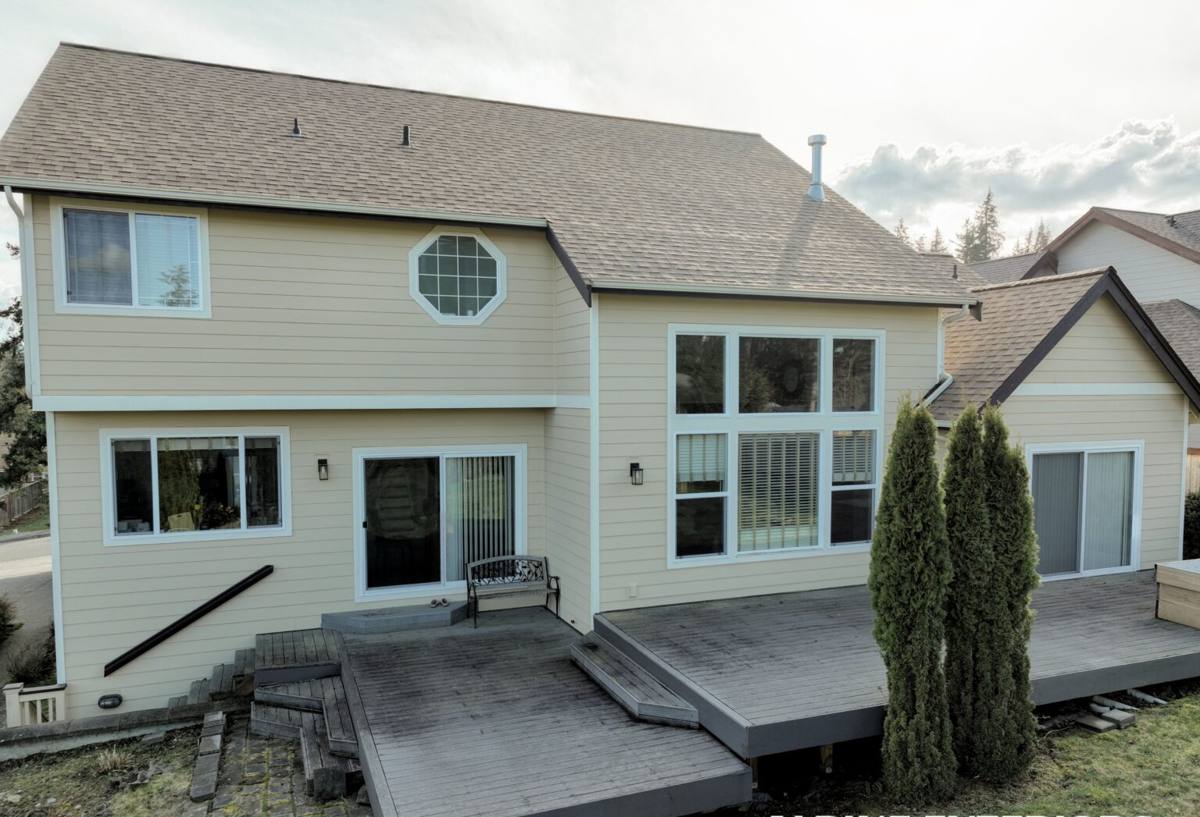
What Silver Beach Homes Actually Need From a Deck
Moisture management underneath the boards, not just on top
Most deck failures we're called out to inspect in this area aren't failures of the decking surface at all — they're failures of the substructure. Joists that were never wrapped or flashed, ledger boards without proper flashing where the deck meets the house, and framing set too close to grade all trap water against wood in a climate that rarely gets a long enough dry stretch to let anything fully dry out. Composite board on top of a poorly protected frame just hides the problem longer before it becomes expensive.
Airflow underneath the deck
Shaded, low-clearance decks near mature trees and water are where we see moss and algae establish fastest, and that includes the underside of the deck, not just the walking surface. Proper joist spacing, deck height off grade, and skirting choices that don't seal off airflow entirely all matter more here than they would on an open, sunny lot.
Hardware that won't corrode faster than the deck around it
Salt-influenced air accelerates corrosion on standard fasteners and connectors. A deck can have excellent boards and still fail early at the hardware level if the screws, joist hangers, and structural connectors weren't rated for a coastal-adjacent environment.
Composite vs. Other Decking Materials for This Climate
Homeowners in Silver Beach usually come to us comparing composite against pressure-treated wood or cedar, and occasionally against PVC. Here's how they actually compare for a property in this kind of environment:
| Material | Moisture & Moss Resistance | Maintenance | Typical Lifespan Here |
|---|---|---|---|
| Pressure-treated wood | Absorbs water, swells, hosts moss and algae in shade | Annual cleaning, periodic sealing or staining | 10-15 years before major boards need replacing |
| Cedar | Naturally rot-resistant but still absorbs moisture over time | Regular oiling/sealing to maintain color and protection | 15-20 years with consistent upkeep |
| Uncapped composite | Better than wood but the exposed core can still take on moisture at cut ends and fastener holes | Periodic cleaning; more prone to surface mildew in shade | 15-20 years |
| Capped composite | Best moisture and moss resistance of the group; shell resists staining and water intrusion | Occasional washing, no sealing or staining | 25-30 years, often carrying a longer manufacturer warranty |
| PVC | Fully waterproof but can look and feel less like natural wood; performs well in wet shade | Low; occasional cleaning | 25-30+ years |
Our standard recommendation for Silver Beach properties is capped composite. The cap layer is what actually resists the moss and mildew staining that shaded, moisture-heavy lots produce, and it holds up to driving rain without the cut-end vulnerability that uncapped boards have. We'll walk through specific brand and board options during your estimate based on your lot's sun exposure and your budget — there isn't one right board for every yard, but there is a right category for this climate.
How We Build a Composite Deck for a Silver Beach Property
- Site and structure assessment. We look at drainage, grade, shade patterns, tree proximity, and the condition of any existing structure before we talk product.
- Framing and ledger work. Proper ledger flashing at the house connection, joist protection tape or wrap on all structural lumber, and hardware rated for a coastal-adjacent, high-moisture environment.
- Board selection. We narrow choices to capped composite lines suited to shaded, wet conditions, and walk you through color and grain options that hide the inevitable pollen, needle debris, and moss spores that settle on any deck surface near trees and water.
- Fastener and clip installation. Hidden fastener systems where the product supports it, corrosion-resistant screws where face-fastening is required.
- Airflow and clearance check. We confirm the finished deck height and skirting plan won't trap moisture underneath.
- Railing and final detailing. Railing hardware and post connections get the same corrosion-resistant treatment as the deck framing.
- Walkthrough. We go over basic care with you before we consider the job finished — what to clean, what not to use, and what a normal maintenance year looks like.
Living With Moss and Rain: What Ongoing Care Actually Looks Like
Even the best composite board benefits from a little seasonal attention in a climate like this. The good news is that it's genuinely low-effort compared to wood — no staining, no sealing — but a few habits go a long way toward keeping a Silver Beach deck looking good for its full warranty life.
- Sweep or rinse off fallen leaves and needles before they sit wet against the board surface for weeks at a time
- Clean moss or algae spots with a soft-bristle brush and a composite-safe cleaner rather than a pressure washer set too aggressively, which can damage the cap layer
- Keep gutters and downspouts near the deck clear so runoff isn't dumping directly onto or under the deck surface
- Trim back overhanging branches where possible to reduce shade and debris load, which cuts down on moss regrowth
- Check railing posts and stair connections once a year for any loosening, since freeze-thaw cycles and constant moisture can work fasteners loose over time
- Avoid oil-based deck products or wood-specific sealers on composite boards — they aren't designed for it and can void warranty coverage
Permits and Working Near the Water
Deck projects in Bellingham and Whatcom County typically require a permit, and properties close to the water can carry additional review depending on setback and shoreline rules for the specific parcel. We handle the permitting conversation as part of the estimate process rather than leaving it for you to sort out, and we'll flag early if your lot looks like it needs additional city or county sign-off before we can schedule work. We'd rather tell you that up front than surprise you with a delay mid-project.
What Drives the Cost of a Composite Deck Here
| Factor | Why It Matters in Silver Beach |
|---|---|
| Board tier (uncapped vs. capped composite vs. PVC) | Higher-tier capped boards cost more up front but resist the moss and moisture issues that drive early repair costs |
| Substructure condition | Homes with existing decks often need framing and ledger repair before new boards go down, especially if past moisture damage went unaddressed |
| Deck height and grading | Low-clearance decks near grade often need extra site prep to get adequate airflow underneath |
| Railing system | Composite or metal railing systems built for wet climates cost more than basic wood rail but avoid the repainting cycle wood requires |
| Access and site conditions | Waterside lots, slopes, and mature landscaping can affect equipment access and labor time |
We give real, itemized numbers during the estimate rather than a rough per-square-foot guess, because the substructure condition and board tier swing the total more than almost anything else.
Why It Matters That We Already Work in Silver Beach
A crew that's built decks throughout Bellingham and Whatcom County knows which board lines actually resist moss in shaded, water-adjacent yards versus which ones just advertise it. We know what a ledger connection needs to look like on the older homes common to this neighborhood, and we know not to skip joist protection just because it's not visible once the boards go down. That local, repeated experience is the difference between a deck that needs attention again in five years and one that quietly does its job for two or three decades.
If you're planning a new composite deck or replacing one that hasn't held up to a few Whatcom County winters, we're happy to come take a look, walk the site with you, and put together a straightforward, no-pressure estimate — use the form below to get started.