 Bellingham
 Why Sudden Valley Asks More of a Siding Job Than a Typical Bellingham Lot
Sudden Valley sits along Lake Whatcom, tucked into second-growth forest that shades most homes for a good part of the day. That combination — a large body of water, dense tree cover, and Whatcom County's marine-influenced weather — creates a siding environment that's tougher than what you'll find on an open, sun-exposed lot closer to downtown Bellingham. Homes here dry out slower after a storm, hold humidity longer under the canopy, and see moss and algae start earlier in the season and hang on later. Any siding material that's merely "good enough" for a typical Pacific Northwest home can still struggle here.
This page is specifically about fiber cement siding for Sudden Valley properties — what the local conditions demand, what a correctly done installation looks like, and how our process is built around this neighborhood rather than a generic checklist.
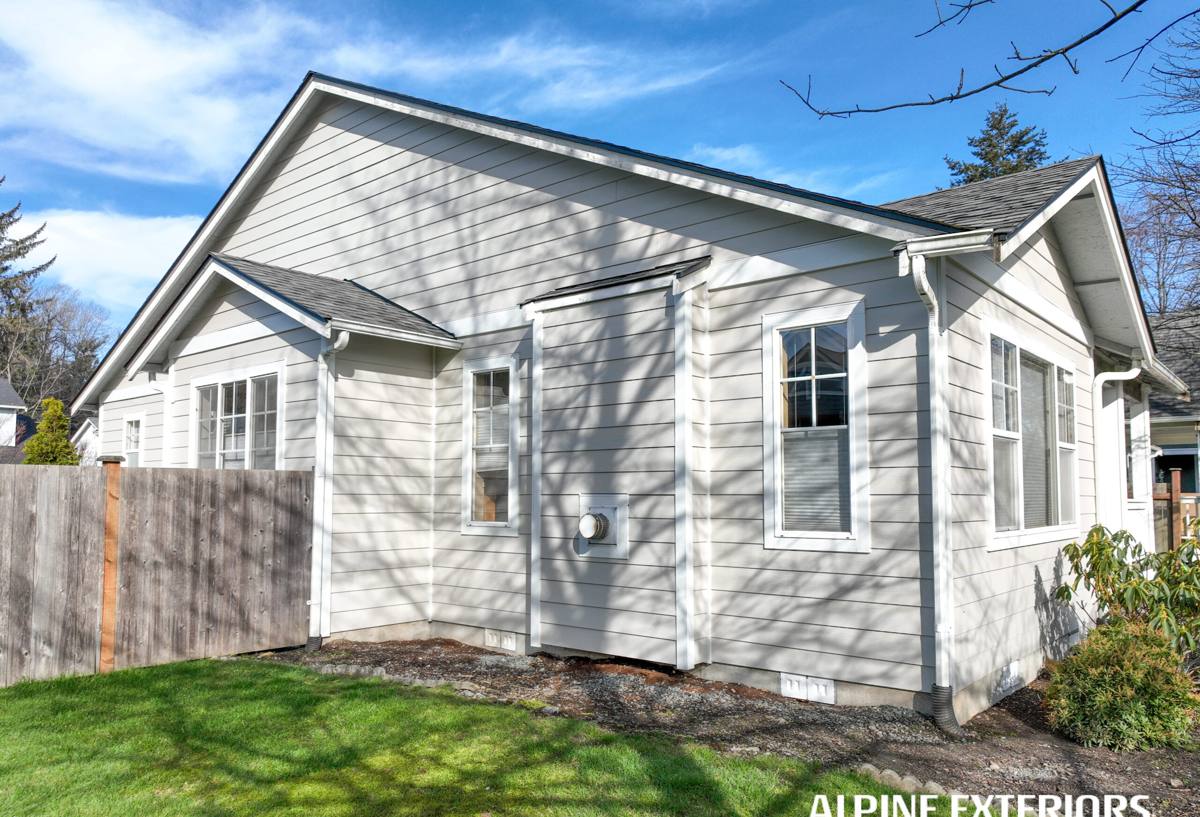
What the Lake Whatcom Setting Actually Does to a House
Shade and Moisture That Won't Let Go
Whatcom County's broader climate already means driving rain, long wet stretches, and a moss season that runs much of the year. Sudden Valley adds its own layer on top of that: homes wrapped in trees and sitting close to the lake stay damp long after the rain has stopped elsewhere. Morning fog off the water, filtered sun through the canopy, and reduced airflow between properties all slow down drying time on north- and lake-facing walls in particular.
Moss, Algae, and Organic Buildup
Where siding stays damp and shaded, moss and algae get a foothold faster — not just on roofs, but on lower wall sections, trim, and anywhere debris collects. Left alone, that buildup holds moisture against the wall surface around the clock, which is exactly the condition that breaks down siding that isn't dimensionally stable or properly finished.
Debris and Physical Wear
Forested lots mean needles, leaves, and branches landing on roofs and against walls year-round. That debris traps moisture in corners, behind trim, and at the bottom courses of siding — areas that need to shed water cleanly, not collect it.
Why We Install Only James Hardie Fiber Cement Here
We standardized on James Hardie fiber cement siding for every home we work on, and in a setting like Sudden Valley that decision matters even more than usual. Fiber cement is dimensionally stable — it doesn't swell, cup, or warp the way wood-based products can when they spend extended periods damp. It's also non-combustible, which is a real consideration for a heavily wooded, semi-rural community where wildfire exposure is a legitimate concern for homeowners.
Hardie's factory-applied ColorPlus finish is baked on and backed by its own finish warranty, rather than relying on a field-applied paint job to hold up against constant damp and shade. That matters here specifically: a coating that's marginal in a sunny, dry location will show its weaknesses much faster on a shaded Sudden Valley wall that rarely gets a full day to dry out.
The Right Product Line for This Climate
Hardie engineers its siding in different formulations for different climate zones — a version built for hot, humid regions is not the same formulation recommended for the Pacific Northwest. We install the HZ5 product line, which is engineered for climates like ours: freeze-thaw cycles, sustained moisture, and cooler temperatures. Using the correct climate-engineered formulation is not a cosmetic detail — it affects how the board itself performs over decades of exposure.
What a Correct Fiber Cement Installation Actually Involves
Fiber cement siding is only as good as the installation behind it. In a shaded, moisture-heavy setting like Sudden Valley, the details that get rushed on a lower-stakes job are exactly the details that cause problems within a few years.
| Installation Detail | Why It Matters More Here |
|---|---|
| Correct gap spacing at joints and trim | Fiber cement needs room to move seasonally; tight joints trap moisture and crack caulking faster in a damp environment |
| Proper flashing at windows, doors, and roof lines | Extended wet periods mean any flashing gap gets tested repeatedly, not occasionally |
| Rain screen or drainage gap behind siding | Lets moisture that does get behind the cladding drain and dry instead of sitting against the wall sheathing |
| Fastener type and placement per manufacturer spec | Wrong fasteners or blind-nailing errors lead to splitting and water entry points over time |
| Sealed and painted cut edges | An unsealed cut edge is the fastest path for moisture into the board itself, especially near ground level or shaded corners |
None of this is exotic — it's simply following Hardie's installation instructions completely rather than partially. Skipping steps rarely shows up as a problem in year one. It shows up in year five or six, usually as a callback nobody wants.
Our Process for a Sudden Valley Siding Project
- On-site assessment: We look at existing siding condition, moisture staining, shading patterns on each elevation, and any trim or flashing already showing wear.
- Removal and sheathing check: Old siding comes off and we inspect the sheathing underneath for hidden moisture damage before anything new goes up — this is where problems from a prior siding job usually surface.
- Weather barrier and drainage plane: A proper moisture barrier and drainage gap go in before any cladding, giving the wall assembly a way to dry if moisture does get behind the siding.
- Flashing at every penetration: Windows, doors, hose bibs, and roof intersections all get flashed correctly rather than caulked over as a shortcut.
- Hardie installation to spec: Correct fasteners, gapping, and cut-edge sealing throughout, using the HZ5 climate-engineered product.
- Trim, caulking, and final detailing: Clean lines at corners and openings, with attention to areas that will stay shaded and slow to dry.
- Walkthrough and cleanup: We review the finished job with the homeowner and clear debris from the site, including material that could otherwise sit against the new siding.
What Affects the Cost of Fiber Cement Siding in Sudden Valley
Every home is priced individually, but a few factors consistently move the number for homes in this neighborhood specifically.
| Cost Factor | Why It Applies Here |
|---|---|
| Hidden moisture damage found at tear-off | Shaded, damp lots are more likely to reveal sheathing or framing repair once old siding comes off |
| Access and staging on forested or sloped lots | Tree cover, narrower driveways, and terrain common in this area can affect scaffolding and material staging |
| Home size and number of stories | More wall area and height directly affect material and labor |
| Trim complexity and architectural detail | Homes with more corners, dormers, or trim work take longer to flash and finish correctly |
| Color and finish selection | ColorPlus factory finishes vary slightly in price by color and panel type |
We give a broad range up front and a firm number after seeing the actual house — not a phone estimate, since the details above genuinely change the scope.
Living With Fiber Cement in a Moss-Prone Lake Setting
Fiber cement is low-maintenance compared to wood siding, but "low-maintenance" doesn't mean "no maintenance," especially under tree cover next to a lake. A little routine attention keeps it looking right for the long haul.
- Rinse siding periodically to clear moss, pollen, and organic debris before it builds up, especially on shaded north- and lake-facing walls
- Keep gutters clear so overflow doesn't run down the siding face repeatedly
- Trim back branches and vegetation that hold moisture against exterior walls
- Check caulking at trim and penetrations every year or two and have gaps resealed before they widen
- Address any impact damage (branches, equipment) promptly rather than letting a cracked area sit exposed
Why Hiring a Crew That Already Works Sudden Valley Matters
Sudden Valley is a private community with its own homeowners association and its own access patterns — narrower private roads, gated entry points, and architectural guidelines that a contractor unfamiliar with the neighborhood may not anticipate. A crew that's already worked here knows how to plan staging and scheduling around that, rather than figuring it out on the fly on your project.
Just as important is understanding the microclimate itself. A contractor used to installing siding on open, sunny lots elsewhere in Whatcom County can still do competent general work, but decisions about drainage details, drying time between steps, and where moss and moisture problems tend to originate are sharper when a crew has actually seen how Sudden Valley homes age under these specific conditions.
If you're considering fiber cement siding for a Sudden Valley home, we're happy to take a look and walk you through what your specific house needs — no pressure, no obligation. Use the form below to request a free estimate.