 Bellingham
 Windows Built for the Sunnyland Climate
Sunnyland sits close enough to Bellingham Bay that the air itself works against your windows year-round. Salt-laden moisture off the water corrodes aluminum frames and hardware faster than most homeowners expect, driving rain off the Sound tests every seal and sightline during fall and winter storms, and the long, shaded moss season that Whatcom County is known for keeps north-facing sills and trim damp for months at a stretch. None of that is dramatic on its own, but stacked up year after year, it's exactly the kind of slow wear that turns a perfectly good-looking window into a drafty, foggy, hard-to-operate one.
Energy-efficient windows done right aren't just about a lower heating bill, though that matters in a climate where the furnace runs a good part of the year. They're about keeping water out of your wall framing, keeping condensation off your glass, and keeping the window itself from failing at the seals before its time. That's a different job in Sunnyland than it is in a dry inland climate, and it changes what "correct installation" actually looks like.
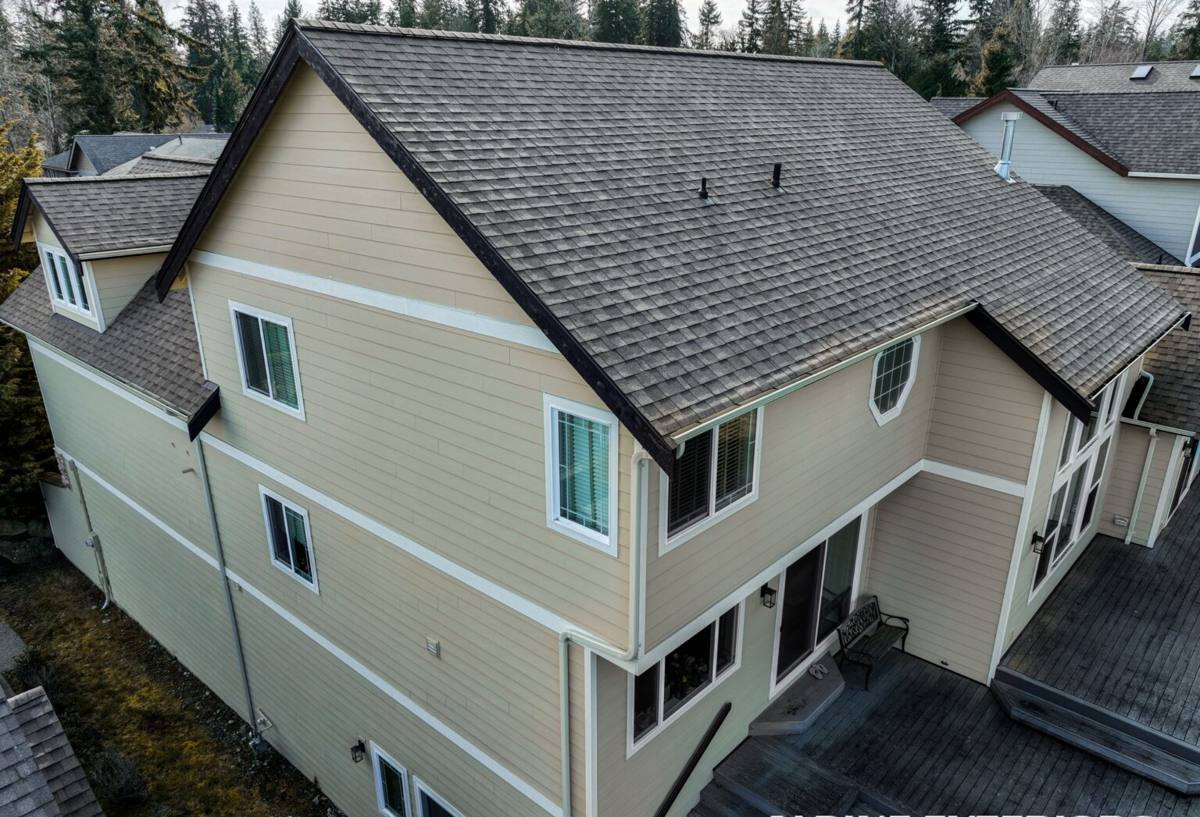
What "Energy-Efficient" Really Means Here
Glazing and Ratings
Most new windows sold today are dual-pane with a low-E coating and an inert gas fill between the panes. That combination is the baseline for energy performance almost everywhere in western Washington. What varies is the specific U-factor (how much heat escapes) and the Solar Heat Gain Coefficient (how much solar warmth gets through). In a climate with as little direct winter sun as Bellingham gets, we generally weigh U-factor a bit more heavily than solar gain — you're trying to hold heat in more than you're trying to keep it out.
Frame Material
The frame matters as much as the glass, arguably more so given the moisture load Sunnyland homes deal with. Vinyl frames resist corrosion and don't need repainting, which is a real advantage against salt air. Fiberglass costs more up front but holds its shape and seal integrity longer under repeated wet-dry cycling. Aluminum conducts heat and cold directly through the frame and is the material most vulnerable to salt-air corrosion over time — we don't recommend it for this area unless it's a thermally broken commercial-grade product, and even then we'll walk you through the trade-offs honestly rather than just push what's easiest to install.
Condensation Resistance
A window rated for a dry climate can still fog or weep condensation in a consistently damp one. Look for a Condensation Resistance (CR) rating, not just U-factor, when comparing options — it's a better predictor of how a window will actually perform through a Bellingham winter.
Common Window Problems We See Around Sunnyland
Sunnyland has a good mix of older bungalows and mid-century homes alongside newer construction, and the window issues we run into track pretty closely with age and orientation:
- Single-pane or early dual-pane windows original to older homes, now well past their useful life
- Aluminum-frame windows from past upgrades that are pitted or corroding from salt exposure
- Fogged or "blown" seals between panes — a sign the gas fill has escaped and the insulating value is gone
- Soft or rotting sills and jambs on north- and west-facing walls that stay damp longest
- Moss and dark staining building up on wood trim and sills that don't get much sun or airflow
- Windows that stick, won't latch fully, or let a draft through even when "closed"
Any one of these is a nuisance. Several at once, especially rot at the sill, usually means the window opening itself needs attention, not just the sash.
What a Correct Installation Actually Involves
It Starts Before the New Window Arrives
The window unit itself is only part of the job. The rough opening has to be checked for rot, the old flashing and sealant removed, and the sheathing and framing behind it inspected — this is often where we find the real damage on older Sunnyland homes, hidden behind trim that looked fine from the outside.
Flashing and Moisture Management
Given how much wind-driven rain this area gets, the flashing details around a window matter more than the window brand. That means a proper sill pan to direct any water that gets past the window back outside, correctly lapped house wrap or building paper, and flashing tape at the jambs and head sealed in the right order — bottom to top, so water sheds down and out rather than getting trapped behind the siding.
Sealing and Insulation
Low-expansion foam or backer rod and sealant around the frame closes air gaps without bowing the frame out of square. Exterior caulking has to be a product rated for our wet climate and reapplied on the schedule the manufacturer specifies — this is a maintenance item, not a one-time task, and we'll tell you honestly what upkeep to expect rather than imply it's install-and-forget.
Interior and Exterior Finish
Trim gets reinstalled or replaced, gaps get caulked, and the opening gets a final check for square operation and a tight, even reveal. A window that looks good but doesn't latch flush or seals unevenly will leak air and eventually water, no matter how good the glass is.
Comparing Frame Materials for a Damp, Salty Climate
| Material | Moisture & Salt-Air Resistance | Maintenance | Typical Lifespan | Best Fit |
|---|---|---|---|---|
| Vinyl | Strong — won't corrode or rot | Low; occasional cleaning | 20–30+ years | Most homes; best value for the climate |
| Fiberglass | Very strong; stable in wet-dry cycling | Low | 30+ years | Homes prioritizing longevity over upfront cost |
| Wood-clad | Good if maintained; vulnerable if seal fails | Higher; needs periodic sealing/paint | 20–30 years with upkeep | Homes wanting a traditional wood interior look |
| Aluminum | Weak against salt air unless thermally broken | Moderate; watch for pitting/corrosion | 15–25 years, often less near the bay | Generally not our recommendation for this area |
Cost varies by size, glazing package, and how many windows are done at once, so we won't quote a number here that doesn't mean anything until we've seen your home — but as a general rule, fiberglass and higher-end vinyl run more up front than budget vinyl or wood-clad, and that difference is usually paid back over time in fewer callbacks and less maintenance in a climate like ours.
Our Process, Start to Finish
- Walkthrough and assessment — we look at every window from both sides, check for rot at sills and jambs, and note orientation, since north- and west-facing openings usually need the most attention here
- Honest recommendation — we tell you which windows actually need replacing now versus which can wait, and which frame material fits your home and budget
- Written estimate — clear scope, materials, and timeline, no vague allowances
- Removal and inspection — old windows come out carefully so we can see the condition of the framing before anything new goes in
- Flashing, install, and seal — done in the sequence that actually keeps water out, not just what's fastest
- Finish work and walkthrough — trim, caulking, and a final check that every window opens, closes, and latches correctly
- Cleanup — old windows and debris hauled off, work area left as clean as we found it
Signs It's Time to Look at Your Windows
- Condensation or fogging between the panes of an existing dual-pane window
- Noticeable drafts near the frame even with the window fully latched
- Windows that are difficult to open, close, or lock
- Soft wood, dark staining, or moss buildup at the sill or lower frame
- Rooms near windows that feel noticeably colder than the rest of the house
- A heating bill that's climbed without any other explanation
One or two of these isn't necessarily urgent. Several together, especially rot or persistent moisture, is worth having looked at before it spreads into the surrounding wall.
Why Local Experience in Sunnyland Actually Matters
A crew that regularly works in this part of Bellingham already knows which orientations take the worst of the driving rain, how fast moss builds up on shaded trim in this specific microclimate, and what condition to expect behind the siding on homes of a certain age in this neighborhood. That's not something you can fully substitute with a general checklist — it comes from having pulled trim off enough Sunnyland homes to know what's usually back there. It also means we're not guessing at permitting or code requirements for the City of Bellingham and Whatcom County; we handle that as a normal part of the job, not an afterthought.
If you're weighing whether your windows need attention, or you already know they do and want a straight answer on what's involved, we're happy to take a look. There's a free, no-pressure estimate form below — we'll tell you honestly what we see, what we'd recommend, and why.