 Bellingham
 Metal Roofing in Sunnyland: Built for This Exact Climate
Sunnyland sits close enough to Bellingham Bay that salt air is a real factor in how a roof ages, and far enough into the trees that moss and shade are a year-round conversation. Add Whatcom County's long wet season — steady drizzle from fall through spring, with the occasional driving rain off the Sound — and you've got a roofing environment that punishes shortcuts. Asphalt shingles do fine in a lot of places. In Sunnyland, a well-installed metal roof does better, longer, with less maintenance in between.
This page is specifically about standing seam and exposed-fastener metal roofing for homes in the Sunnyland neighborhood — what the climate demands, what a correct installation actually involves, and why the crew you hire matters as much as the material you choose.
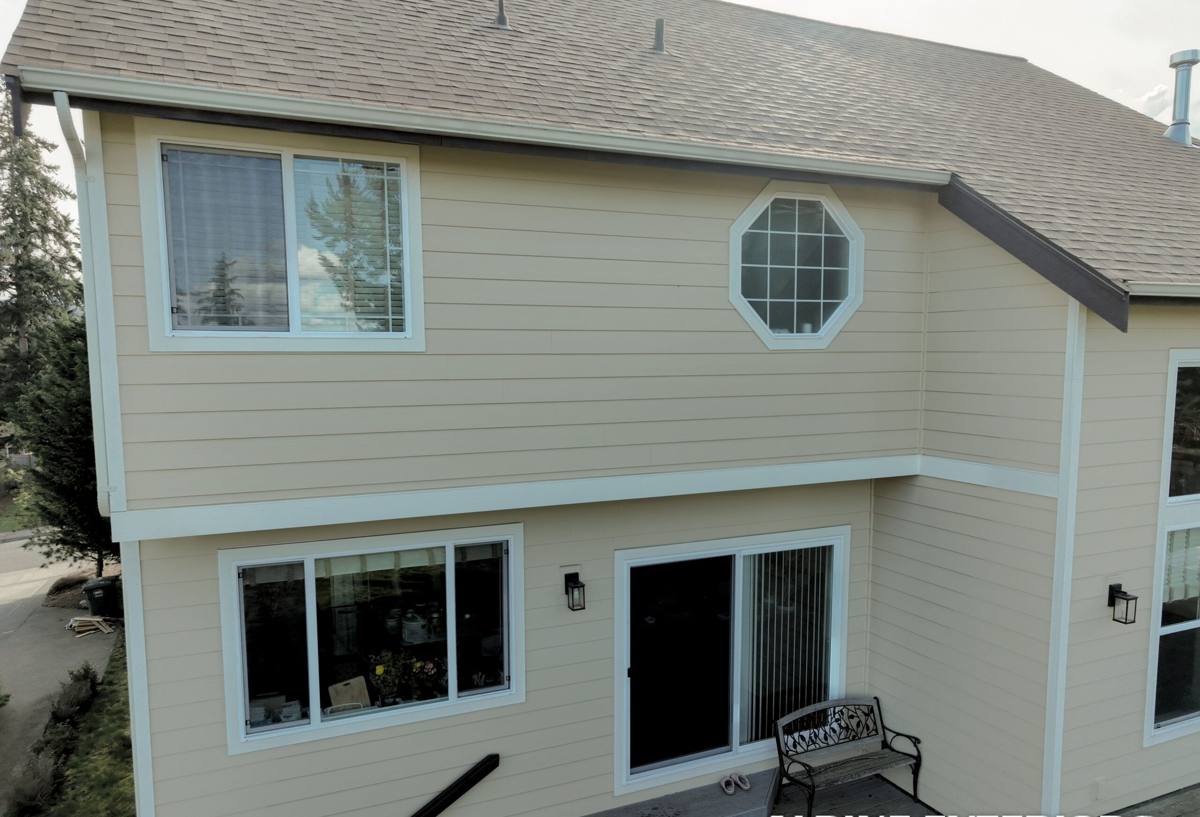
What Sunnyland's Climate Actually Does to a Roof
Salt Air and Corrosion
Sunnyland's proximity to the bay means airborne salt is a slow, constant presence on every exterior surface, including the roof. Bare or poorly coated metal, cheap fasteners, and mismatched flashing all corrode faster here than they would twenty miles inland. It's not dramatic — you won't see it happen — but over years it shows up as rust streaks at fastener heads, pitting at cut edges, and galvanic corrosion where the wrong metals touch each other.
Driving Rain and Wind-Driven Water
Bellingham doesn't get hurricane-force wind, but it does get sustained wet weather with gusts that push rain sideways, especially in fall and winter storms. That matters at every seam, valley, and penetration on a metal roof. A panel system with weak seam engineering or under-built flashing details will eventually let water find its way under the metal, even without a single dramatic storm — it just takes persistent wind-driven moisture and time.
Moss, Shade, and Debris
A lot of Sunnyland's tree cover is a genuine asset for the neighborhood, but it means more roofs sitting in partial shade for a good chunk of the day, which is exactly what moss wants. Moss holds moisture against a roof surface, and on organic roofing materials that moisture leads to slow decay. Metal roofing doesn't feed moss the way shingles or wood shakes can, and its smooth, sloped surface sheds spores and debris far more effectively — one of the practical reasons homeowners in shaded, wet neighborhoods like this one move toward metal in the first place.
Why Metal Roofing Fits Sunnyland Specifically
- Moss resistance: a hard, smooth metal surface gives moss and lichen far less to grip compared to shingles or shakes, which matters under Sunnyland's tree canopy.
- Water shedding: steeper effective slope performance and continuous panel runs move driving rain off the roof fast, rather than letting it sit at shingle laps.
- Longevity against the wet cycle: Whatcom County's roofs go through repeated wet-dry cycles most of the year; correctly coated metal doesn't absorb water or swell the way some organic materials do.
- Lower long-term maintenance: fewer moss treatments, fewer granule-loss concerns, and a longer service life between major roof work.
None of that makes metal roofing the automatic right answer for every house. Roof pitch, existing structure, budget, and the look you want for the home all factor in. Part of an honest estimate is telling you plainly if metal isn't the best fit for your particular roof.
What a Correct Metal Roof Installation Involves
Deck and Structure First
Metal roofing only performs as well as what's underneath it. Before any panel goes down, the deck needs to be sound — no soft spots, no hidden rot from a prior leak, proper ventilation so moisture doesn't get trapped between the deck and the panels. Skipping this step is the single most common reason a metal roof underperforms its warranty.
Underlayment Matters More Here Than People Think
In a climate with Bellingham's rainfall totals, the underlayment is a real line of defense, not a formality. A synthetic, high-temp underlayment rated for metal roofing protects the deck during construction and acts as a backup barrier if wind-driven rain or ice ever gets past a seam. Self-adhered membrane at eaves, valleys, and penetrations adds protection exactly where water pressure concentrates during a storm.
Panel Selection and Seams
Standing seam panels, with their concealed fasteners and mechanically or hydraulically locked seams, generally handle Sunnyland's wind-driven rain better than exposed-fastener panel systems, though exposed-fastener metal has its place on garages, outbuildings, and budget-conscious projects. The seam type and panel gauge should match the roof's pitch, span, and exposure — not just whatever's cheapest to order that week.
Flashing, Valleys, and Penetrations
Almost every roof leak traces back to a flashing detail, not the field of the roof itself. Valleys, chimney surrounds, vent penetrations, and wall transitions all need custom-fabricated flashing sized and lapped correctly for metal — not adapted shingle flashing pressed into service. This is where installer experience shows up most directly.
Fasteners and Metal Compatibility
Given the salt air, fastener choice isn't a minor detail. Stainless or coated fasteners rated for coastal exposure, matched to the panel metal to avoid galvanic reaction between dissimilar metals, are standard practice on any Sunnyland roof we install — not an upgrade option.
Metal Roofing Options: A Practical Comparison
| System | Best For | Maintenance | Typical Lifespan |
|---|---|---|---|
| Standing seam (concealed fastener) | Primary residence roofs, higher wind/rain exposure | Low — periodic gutter/valley clearing | 40-70 years with proper install |
| Exposed-fastener panel | Garages, shops, budget-conscious projects | Moderate — fastener washers age and need eventual re-check | 25-40 years, fastener-dependent |
| Metal shingle/shake profile | Homeowners wanting a traditional look with metal performance | Low to moderate, depending on profile | 30-50 years |
Cost varies with panel profile, metal type (steel vs. aluminum), roof complexity, and access. As a broad range, homeowners in this area typically see metal roofing land somewhere above asphalt shingle replacement and below premium slate or tile — an exact number only makes sense after we've actually measured your roof and looked at its condition.
Our Process for a Sunnyland Metal Roof
- On-site assessment: we walk the roof, check the deck and ventilation, and look at how the specific site — tree cover, exposure to prevailing wind and rain, existing drainage — should influence the system we recommend.
- Written scope and options: panel type, gauge, color, and underlayment spelled out plainly, with the reasoning behind each recommendation, not just a single take-it-or-leave-it quote.
- Tear-off or overlay decision: we'll tell you honestly whether your existing roof can be built over or needs to come off first — this depends on deck condition and local code, not on what's easiest for us.
- Installation: deck repair as needed, underlayment, panel installation, custom flashing at every valley and penetration, and fastener systems matched to Sunnyland's coastal exposure.
- Final walkthrough: we go over the finished roof with you, explain what maintenance (if any) it actually needs, and make sure you know what the warranty covers.
What to Ask Before You Sign With Any Roofing Crew
- Are you licensed and insured to work in Washington State, and can you provide proof?
- Who fabricates your flashing — is it custom-cut on site or generic stock pieces?
- What fastener and underlayment specs do you use for coastal, high-moisture sites?
- Does your crew do the installation, or is the work subcontracted out?
- What does your workmanship warranty cover, separate from the manufacturer's material warranty?
Why a Crew That Already Works Sunnyland Matters
Roofing crews that work across a wide region tend to treat every job the same way, applying a generic spec regardless of site. A crew that regularly works Bellingham's near-water neighborhoods already knows to spec coastal-rated fasteners without being asked, already accounts for shade and moss exposure when recommending panel finishes, and has seen firsthand how Whatcom County's wet season stresses a roof over multiple seasons — not just how it looks on installation day. That local pattern recognition is hard to substitute with a generic install checklist.
It also matters for accountability. A crew based in and around Bellingham is going to be here next year and the year after if a flashing detail needs a look or a warranty question comes up — not a phone number from a company that came through once for a storm-chasing job and moved on.
Maintenance: What a Metal Roof Actually Needs
One of the honest selling points of metal roofing is how little upkeep it demands compared to shingles, but "low maintenance" isn't "no maintenance," especially under Sunnyland's tree cover.
- Clear needles, leaves, and debris from valleys and gutters at least twice a year, more often under heavy tree cover.
- Rinse off accumulated pollen, dust, and organic buildup in spring to discourage moss and algae from getting a foothold.
- Have flashing and sealant points checked periodically, particularly after major windstorms.
- Trim overhanging branches that keep sections of the roof shaded and damp longer than the rest.
Done right, that's the extent of it — no annual re-coating, no granule loss to track, no recurring moss treatments the way asphalt shingle roofs in shaded Whatcom County lots often need.
Ready to Talk About Your Roof?
If you're in Sunnyland and thinking about a metal roof — whether you're dealing with moss buildup, an aging shingle roof, or you just want something that holds up to the salt air and rain without constant upkeep — we're glad to come take a look. The estimate is free, there's no pressure, and we'll give you a straight answer about whether metal roofing is the right call for your specific house. Use the form below to get started.