 Bellingham
 Roof Repair Built for York's Climate, Not a National Average
Homes in the York neighborhood face a specific combination of weather that a lot of roofing companies don't design around. You're close enough to the water that salt-laden air works its way into fasteners and flashing over time, the rain here isn't just frequent — it's often driven sideways by wind off the bay, and the shaded, moisture-heavy conditions common in this part of Bellingham keep moss and moss spores active for most of the year. A roof repair that would hold up fine in a drier inland climate can fail within a couple of seasons here if it's not done with these conditions specifically in mind.
That's the difference between a repair that lasts and one you'll be calling about again next winter. We're not guessing at what York roofs need — it's the same set of problems we see repeatedly on homes in this area, and it shapes how we inspect, diagnose, and repair every roof we touch here.
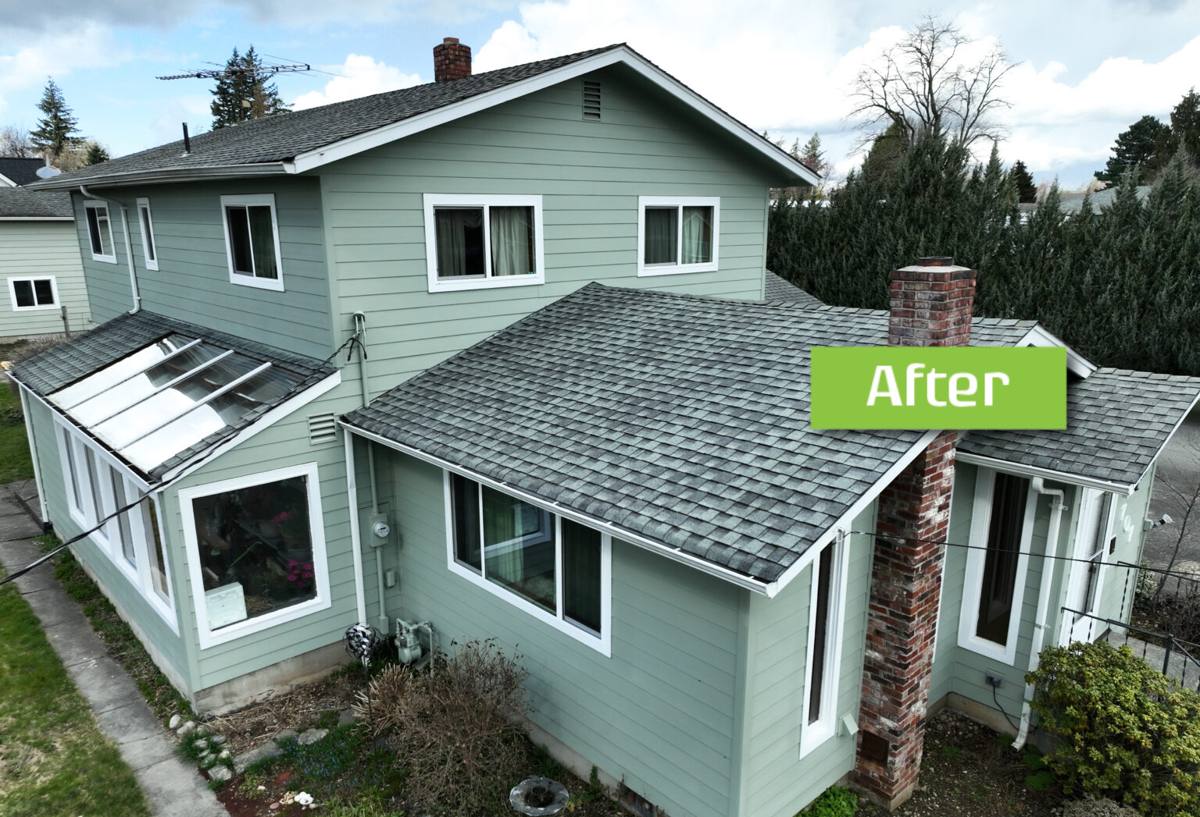
Common Roof Problems We See on York Homes
Moss and Organic Growth
Whatcom County's moss season runs long — often eight months or more depending on the year — and York's tree cover and proximity to moisture make it a prime spot for growth. Moss itself doesn't just sit on top of shingles; it holds water against the roofing surface, lifts shingle edges as it grows, and works its root-like structures into the granule layer. Left alone, it accelerates granule loss and opens the door to leaks at seams and edges long before the shingles are actually worn out.
Flashing and Valley Leaks
Most leaks we're called out for aren't failed shingles — they're failed flashing. Step flashing at wall intersections, valley metal, and pipe boots take the brunt of driving rain because wind-blown water hits them from angles the roof wasn't necessarily detailed for decades ago. Older or improperly installed flashing is one of the most common repair calls in this neighborhood.
Wind and Storm Damage
Winter storms off the water can lift shingle tabs, crack ridge caps, and loosen fasteners without causing an obvious, dramatic failure. The damage is often subtle — a lifted corner, a missing nail — until it's let sit through a few more storms and turns into a soft spot or an active leak.
Fastener and Metal Corrosion
Salt air accelerates corrosion on exposed metal — nail heads, flashing seams, gutter fasteners. Standard fasteners that would last decades further inland can start rusting and losing their grip years earlier here, which is part of why material choice on a repair matters as much as the workmanship.
What a Correct Roof Repair Actually Involves
A proper repair isn't just patching the spot where water is currently getting in. Water travels before it shows up as a stain or a drip, so the visible damage and the actual entry point are often in different places. A correct repair process includes:
- Tracing the leak path from the interior evidence back to the actual point of entry, not just the nearest visible damage
- Checking flashing, valleys, and penetrations near the leak — not just the shingles directly above it
- Assessing moss coverage and organic buildup as part of the diagnosis, since trapped moisture is often the real driver of a leak
- Removing and replacing damaged decking if water has been sitting long enough to cause rot, not just covering it over
- Matching shingle type, color, and profile as closely as possible so the repair doesn't stand out or create a mismatched wear pattern
- Re-sealing and re-fastening surrounding material that was disturbed during the repair, not just the failed section itself
Skipping any of these steps is how a "repair" turns into a callback six months later. It's also how a $300 fix turns into a $3,000 one if rotted decking gets covered instead of replaced.
Repair vs. Replace: How We Make the Call
Not every roof problem needs a full replacement, and not every leak can be responsibly patched. We look at the age, extent of damage, and underlying deck condition before recommending either path.
| Factor | Favors Repair | Favors Replacement |
|---|---|---|
| Roof age | Under 15–18 years | Approaching or past expected shingle lifespan |
| Extent of damage | Isolated to one section or penetration | Multiple leak points or widespread granule loss |
| Decking condition | Solid, no rot found on inspection | Soft spots or rot found in more than one area |
| Moss/organic buildup | Light to moderate, treatable | Heavy, long-term buildup with granule damage underneath |
| Flashing condition | Localized failure | Corroded or failing throughout |
We'll always tell you honestly which side of that table your roof falls on. If a repair is the right call, that's what we'll recommend — we don't push replacements on roofs that don't need them.
Our Repair Process for York Homes
1. Inspection
We start with a full roof inspection, not just a look at the spot you're worried about. That includes checking valleys, flashing, penetrations, and moss coverage across the whole roof, since one visible leak is often a sign of broader wear.
2. Diagnosis and Honest Explanation
We'll walk you through what we found, what's actually causing the problem, and what it'll take to fix it — in plain terms, not jargon. If there's a decking or structural concern, we'll show you, not just tell you.
3. Written Scope and Estimate
You get a clear scope of work and a straightforward estimate before anything starts. No surprise add-ons once the tarp comes off.
4. The Repair
We remove and replace damaged materials, address the actual moisture source, and match materials to blend with the surrounding roof as closely as possible.
5. Cleanup and Walkthrough
Site cleanup, a final check of the work, and a chance for you to ask questions before we consider the job done.
Materials That Hold Up in This Climate
For repairs, matching the existing roofing material is usually the priority — a repair that doesn't blend in is a repair that looks like a repair. Where we have flexibility, we favor corrosion-resistant fasteners and flashing given the salt air exposure common in York and other neighborhoods near Bellingham Bay, and underlayment and sealants rated for sustained wet exposure rather than occasional rain. These aren't upgrades for the sake of upselling — they're the baseline we consider necessary for a repair to actually last through a normal Whatcom County winter.
We're selective about using shortcuts like heavy sealant patches or surface-only fixes on flashing issues. They can look fine for a season, but in a climate with this much sustained moisture, they tend to fail again quickly — and at that point you're paying for the same repair twice.
Roof Maintenance Checklist for York Homeowners
Between repairs, a little seasonal attention goes a long way in this climate. Homeowners in York can extend the life of a roof repair — and catch small problems before they become expensive ones — by keeping an eye on:
- Moss growth along the north-facing or shaded sections of the roof, especially by mid-fall
- Gutters and downspouts clogged with needles, leaves, or moss debris
- Visible granules collecting in gutters or at downspout outlets
- Lifted, cracked, or missing shingles after windstorms
- Interior ceiling stains, even faint ones, especially after heavy rain
- Flashing around chimneys, vents, and skylights for gaps or rust
- Sagging or soft-looking spots on the roof plane
None of these need to be an emergency call — but they're all worth a quick look by someone who knows what they're looking at before the next storm cycle rolls through.
Why a Crew That Already Works York Matters
Roofing problems here aren't generic. A crew that mostly works dry, inland roofs doesn't have the same instinct for where moss traps moisture on a shaded York roofline, or how driving rain off the water finds its way through flashing that would be fine in a calmer climate. Working regularly in this neighborhood and across Bellingham means we're not learning the local failure points on your roof — we already know where to look first, which saves time on the inspection and reduces the chance of missing a secondary problem while fixing the obvious one.
It also means we're realistic about timing. Roof repair work depends on dry weather windows, and knowing the rhythm of the local forecast — not just checking an app the morning of — helps us schedule work when it'll actually hold up rather than getting rushed into a wet roof.
Get a Straightforward Estimate
If you've noticed moss buildup, a stain on a ceiling, or storm damage after a recent windstorm, it's worth having it looked at before the next round of rain makes it worse. We offer free, no-pressure estimates for roof repair work in York and throughout the Bellingham area — just fill out the form below and we'll take a look.