 Bellingham
 Window Installation Built for York's Corner of Bellingham
York is one of Bellingham's older, established neighborhoods, and that shows in the windows we get called out to look at. A lot of the housing stock here was built long before modern window flashing standards existed, which means many homes are still running on original wood sashes, tired aluminum-frame replacements from a few decades back, or a mix-and-match set of windows installed at different times by different people. None of that is unusual for a neighborhood this age, but it does mean window installation in York is rarely a simple "swap the glass and go" job.
Whatcom County's marine climate is the other half of the equation. Salt-tinged air off the bay, wind-driven rain that comes in sideways more often than straight down, and a moss season that seems to stretch longer every year all put steady pressure on window openings. A window that would hold up fine in a drier inland climate can fail here in a fraction of the time if it wasn't installed with this weather in mind. Our approach to window installation in York starts from that reality, not from a generic install checklist written for a different climate.
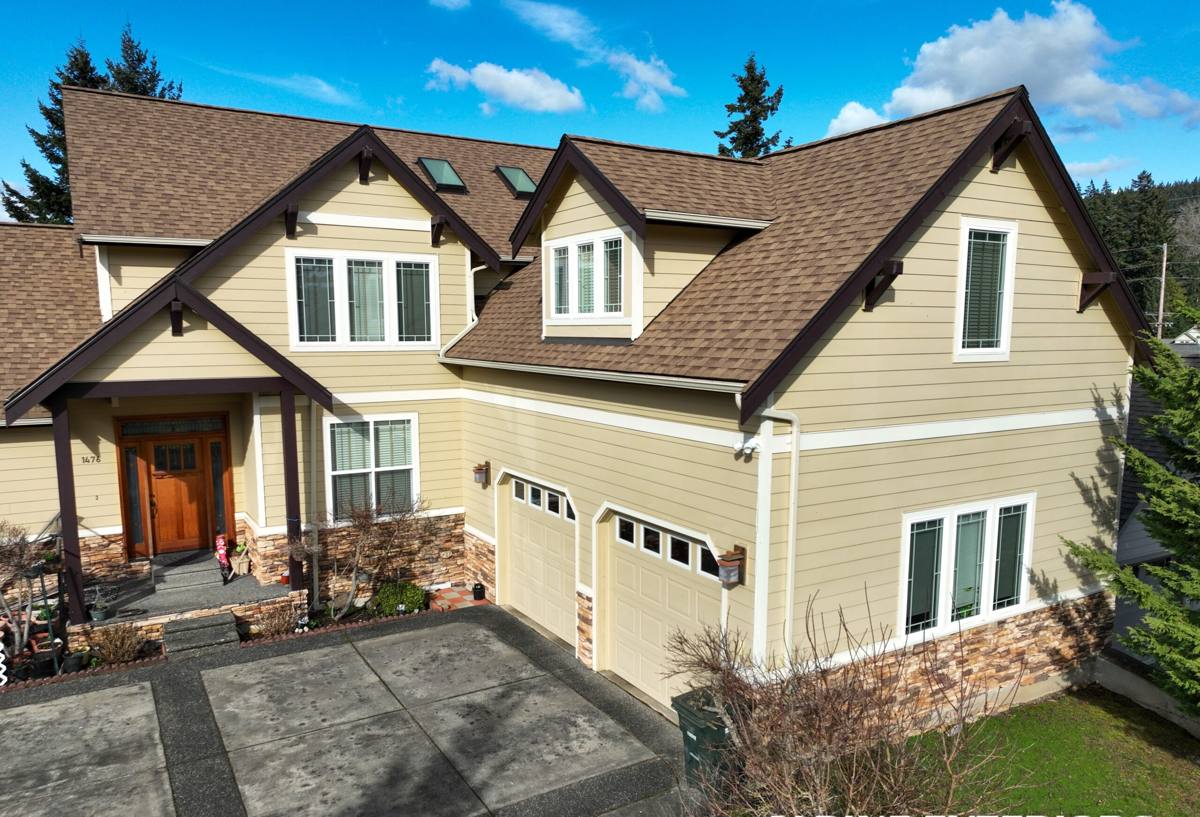
What Bellingham's Climate Does to a Window Opening
Water is the enemy of every window installation, and Bellingham gives water a lot of chances to find a way in. Wind-driven rain gets pushed up and under trim and flashing that would keep out a straight-down rainstorm. Persistent damp air feeds moss and algae growth on siding, trim, and window sills, and that growth holds moisture against wood longer than dry debris would. Salt-laden air moving inland off the water accelerates corrosion on lower-grade metal hardware, fasteners, and some aluminum frames.
None of this happens overnight. It shows up as small problems that get worse: a soft spot at the bottom corner of a sill, a slightly foggy double-pane unit, trim paint that keeps failing in the same spot no matter how often it's repainted. Those small problems are usually a sign that water has already gotten past the window's original seal or flashing and is working on the wood or framing behind it. Catching that early is a lot cheaper than waiting for it to become a full window and sill rebuild.
Why Older York Homes Are Especially Exposed
Older wood-sash windows were built for their era, not for 2026 weather patterns or 100 years of settling. Original flashing details — if they exist at all — are often minimal by today's standards. Combine that with decades of paint layers, shifting framing, and prior repairs of varying quality, and you get openings that are more vulnerable to wind-driven rain than a home built even 20 years ago. This isn't a knock on the original builders; it's just a gap that a proper modern installation needs to close.
What a Correct Window Installation Actually Involves
Installing a window correctly is mostly about what happens before the window itself ever goes into the opening. The visible parts — trim, caulk lines, a clean fit — matter, but they're not what keeps water out for the next 20 years. That work happens in layers most homeowners never see once the job is done.
- Sill pan flashing — a sloped, waterproof pan at the bottom of the rough opening that directs any water that gets past the window back outside instead of into the wall cavity.
- Proper flashing sequencing — flashing tape and building paper layered so water always sheds downward and outward, never trapped behind a layer above it.
- Correct integration with existing siding or house wrap — the new flashing has to tie into whatever weather barrier is already on the wall, not just sit on top of it.
- Shimming and leveling — a window that's out of square puts uneven stress on the frame and seals, which shortens its service life regardless of how good the window itself is.
- Insulation around the frame — gaps packed with the right low-expansion material, not stuffed with whatever's on hand, to avoid bowing the frame.
- Exterior sealant as the last line of defense, not the first — caulk should be backup, not the only thing keeping water out.
Skip or rush any one of these steps and the window can look perfect for a year or two before the underlying problem shows up as rot, mold, or a soft spot in the siding.
Signs Your York-Area Windows Need Attention
Most homeowners don't think about their windows until something is obviously wrong, but there are earlier warning signs worth checking for, especially heading into another wet Whatcom County winter.
- Fogging or moisture between panes on double- or triple-pane units, which means the seal has failed
- Soft, spongy, or discolored wood at the sill or bottom corners of the frame
- Moss or algae growth on the sill or trim that keeps coming back within weeks of cleaning
- Visible daylight or a noticeable draft around the sash when the window is closed
- Paint that blisters or peels repeatedly in the same spot on the trim or sill
- Windows that are difficult to open, close, or lock due to swelling or warping
- A musty smell near the window that doesn't go away with cleaning
Any one of these on its own might be minor. Two or three together, especially on the same window, usually means water has been getting past the seal for a while.
Choosing a Window for a York-Area Home
There's no single "best" window material — the right choice depends on the home's age, exposure, and how much upkeep the homeowner wants to take on. Here's how the common options stack up for this climate specifically.
| Frame Material | Moisture Performance Here | Maintenance | Typical Fit |
|---|---|---|---|
| Vinyl | Good — won't rot, handles damp climate well | Low | Most homes, especially where budget matters |
| Fiberglass | Very good — dimensionally stable in temperature and moisture swings | Low | Homes wanting long service life, willing to pay more upfront |
| Wood (clad exterior) | Good on the exterior face, but interior wood still needs care | Moderate to high | Older or historic-style homes wanting to keep a wood look |
| Aluminum | Poor thermal performance, prone to condensation in our damp climate | Moderate | Rarely our recommendation for residential replacement here |
For a lot of York homes, especially ones with an older or craftsman-influenced look, a wood-clad or vinyl window with a profile that matches the home's existing trim lines gives the best balance of appearance, performance, and long-term maintenance. We'll talk through the trade-offs honestly rather than push whatever happens to be in stock.
Double-Pane vs. Triple-Pane
Triple-pane windows offer better insulation and sound dampening, but they cost more, weigh more, and aren't always necessary depending on the window's orientation and the room behind it. For most homes in this climate, a quality double-pane window with a good low-E coating and proper installation performs well. Triple-pane makes more sense on north-facing walls, rooms with heating challenges, or homes right along a windier exposure.
Our Window Installation Process
- On-site assessment — we look at the existing window, the opening, the siding condition, and any signs of past water intrusion before recommending anything.
- Honest product recommendation — based on your home's exposure, budget, and how it looks from the street, not a one-size-fits-all pitch.
- Careful removal — the old window and surrounding trim come out without damaging siding or framing that doesn't need to be replaced.
- Opening inspection and repair — any rot, soft framing, or old flashing failures get addressed before the new window goes in. Installing a good window into a compromised opening just hides the problem.
- Flashing and sill pan installation — done in the correct sequence for our climate, tied into the existing weather barrier.
- Window installation, leveling, and insulation — set square, shimmed properly, insulated without over-packing.
- Exterior and interior trim, sealant, and cleanup — finished to match the home, with sealant as the final layer rather than the main defense.
- Final walkthrough — we check operation, seals, and appearance with you before calling it done.
Why a Crew That Already Works in York Matters
There's a real difference between a crew seeing a neighborhood for the first time and one that's already worked on homes a few streets over. In York, that means knowing what era of home tends to have what kind of framing behind the siding, recognizing common past-repair shortcuts before they become a surprise mid-job, and understanding how the local exposure to wind and rain differs even block to block. It also means we're not guessing at how a new window's trim profile will look against the older siding styles common in this part of Bellingham.
Familiarity with Bellingham's permitting process for window replacement also keeps a project from stalling out. Requirements can depend on whether the work changes the rough opening size, whether the home is in a designated historic or design-review area, and a few other local factors — something a crew that regularly works in Whatcom County will already have a handle on.
Cost Factors for Window Installation in York
We won't quote a number without seeing the job, but these are the main factors that move the price up or down for window installation in this area.
| Factor | Effect on Cost |
|---|---|
| Number of windows replaced at once | Per-window cost usually drops with more windows done in one visit |
| Frame material chosen | Vinyl is typically the most affordable; fiberglass and wood-clad cost more |
| Condition of the existing opening | Rot or framing repair adds labor and material beyond the window itself |
| Window size and configuration | Larger units, bays, or custom shapes cost more than standard sizes |
| Trim and siding match | Matching older or custom trim profiles can add finish work |
| Access and building height | Second-story or hard-to-reach windows take more time and equipment |
The honest range for a single standard window replacement, done correctly with proper flashing, typically runs from a modest few hundred dollars into the low thousands depending on the factors above — larger or more complex projects go higher. We'll walk through the specifics for your home rather than throw out a number that doesn't mean anything until we've actually looked at the job.
Get a Straight Answer on Your Windows
If you're dealing with foggy glass, a soft sill, drafts, or just windows that are past their useful life, it's worth having someone look at them before another wet Whatcom County winter puts more stress on the openings. We're happy to come take a look at your York-area home, tell you honestly what we see, and put together a free, no-pressure estimate using the form below.