 Bellingham
 Why Birchwood Roofs Take a Different Kind of Beating
Birchwood sits close enough to Bellingham Bay that salt-laden air is a constant, low-grade stressor on every exposed metal component of a roof — nail heads, flashing, vent caps. Add in Whatcom County's long wet season, where rain doesn't just fall straight down but gets pushed sideways and uphill by wind off the water, and you have a climate that punishes shortcuts. Then there's moss. Shaded lots, mature tree cover, and moisture that never fully dries out between storms give moss and algae months at a time to establish themselves on north-facing slopes and anywhere shingles stay damp longer than they should.
None of this means asphalt shingles are the wrong choice for this neighborhood — they remain one of the most cost-effective, proven roofing systems available, and most Birchwood homes are built with rooflines that suit them well. It means the installation details matter more here than they would in a drier climate. A roof that would hold up fine in eastern Washington can fail early in Whatcom County if it's missing the underlayment, flashing, or ventilation details this climate actually requires.
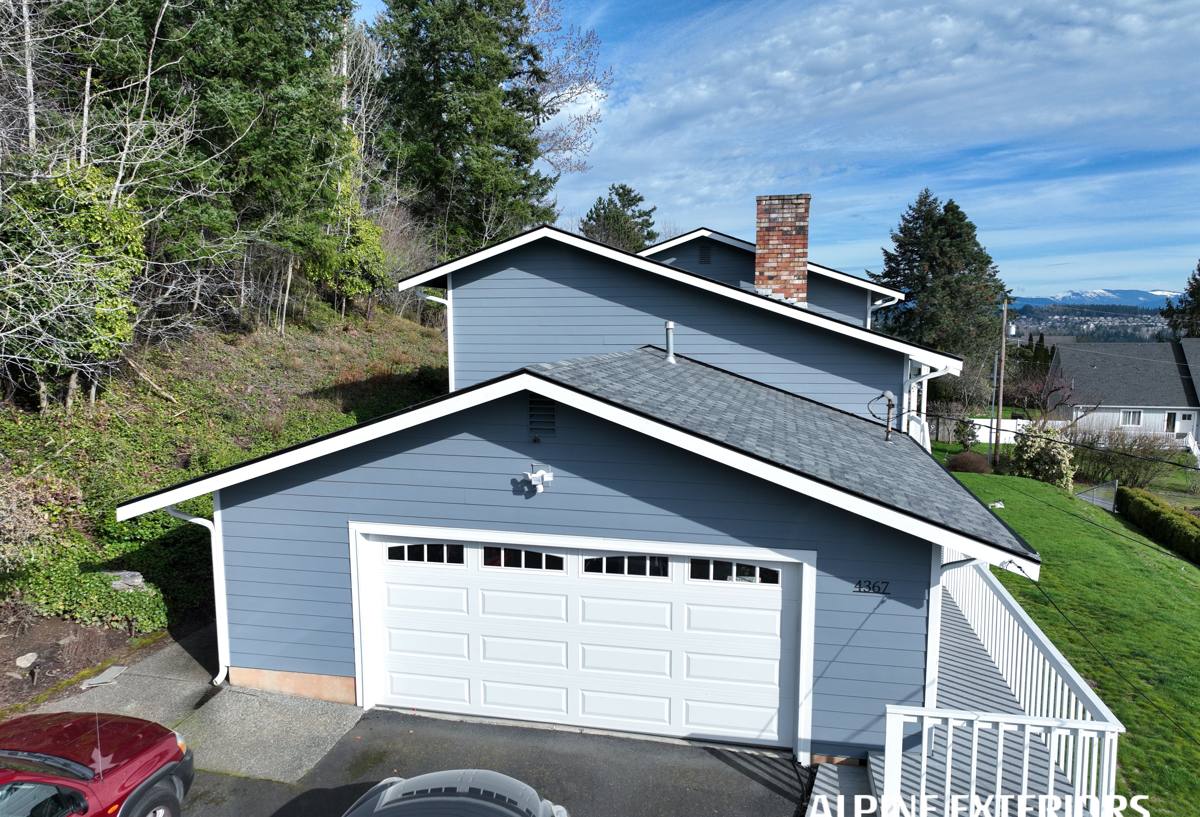
What "Correct" Asphalt Shingle Roofing Actually Means Here
Underlayment and Water Management
In a marine climate, the underlayment does more work than people expect. Wind-driven rain can push water uphill under the shingle tabs, especially at eaves, valleys, and low-slope transitions. That's why we use a self-adhered, waterproof membrane at eaves and in valleys — not just standard felt — even though Bellingham doesn't see the ice-dam problems that membrane was originally designed for. Here, it's about wind and volume, not freeze-thaw.
Flashing Details
Most of the leaks we get called out to inspect on older Birchwood roofs trace back to flashing, not the shingles themselves — step flashing at sidewalls, counter-flashing at chimneys, and valley metal that was caulked instead of properly lapped. Caulk is a maintenance item, not a waterproofing strategy. It dries out, cracks, and needs to be redone; correctly lapped and integrated flashing doesn't rely on a sealant staying intact for twenty years.
Fastening
Nail placement matters more in a windy, coastal-adjacent area. Nails set too high on the shingle, or set with a pneumatic gun at the wrong pressure, miss the reinforced nailing strip and leave shingles vulnerable to wind lift during the storms that roll through the county each winter. We fasten to the manufacturer's specification, not just "close enough."
Choosing the Right Shingle for This Climate
Not every asphalt shingle product is built the same way, and the right choice depends on budget, roof exposure, and how much of the tree canopy overhangs the house. Here's how the common options compare for a home in a wet, moss-prone, salt-air environment like Birchwood.
| Shingle Type | Typical Lifespan | Best Suited For | Trade-offs |
|---|---|---|---|
| 3-tab | 15–20 years | Budget-conscious projects, rental properties | Lower wind resistance, less dimensional look, shorter warranty |
| Architectural / laminate | 25–30 years | Most Birchwood homes; the current standard | Higher upfront cost than 3-tab, still needs correct underlayment to perform |
| Algae-resistant (AR) laminate | 25–30 years | Shaded, north-facing, or tree-covered roof sections | Slight cost premium; doesn't eliminate need for moss maintenance, just slows regrowth |
| Impact-rated (Class 4) | 25–30+ years | Homes wanting stronger wind and debris resistance | Higher material cost; benefit is durability, not a different install method |
For most Birchwood homes, we recommend algae-resistant architectural shingles as the baseline — the upgrade over standard architectural shingles is modest, and the payoff on a shaded lot is real.
Moss and Algae: Prevention Beats Removal
Once moss gets a foothold on a shingle roof, it holds moisture against the surface and works its way under tab edges, which shortens the life of the roof well beyond what the moss itself looks like it's doing. The better approach is prevention built into the installation, not annual scraping:
- Zinc or copper strips installed near the ridge let rain carry trace metal ions down the roof slope, which inhibits new moss and algae growth over time
- Algae-resistant granules (copper-infused) on the shingle itself slow the black streaking common on north-facing, shaded sections
- Keeping valleys, gutters, and any low-slope areas clear so water doesn't sit and give moss a place to start
- Trimming back overhanging branches where practical, since constant shade and falling debris are what let moss establish in the first place
One thing we won't recommend is pressure washing an asphalt shingle roof. It strips the protective granules that shield the asphalt from UV and weather, which trades a short-term clean look for real, permanent damage. If moss is already established, manual removal with the right technique and a follow-up treatment is the safer path.
Ventilation: The Part Nobody Sees, But Every Roof Needs
A shingle roof isn't just the layer you see from the street — it's part of a system that includes how air moves through the attic underneath it. Balanced intake at the soffits and exhaust at the ridge keeps the attic close to outdoor temperature and humidity, which does two things in this climate specifically: it prevents trapped moisture from condensing on the underside of the roof deck during long wet stretches, and it keeps shingles from aging prematurely from heat buildup in the summer months. A lot of older Birchwood homes have had insulation added over the years without a matching ventilation upgrade, which leaves the attic more humid than it should be. We check this on every roof, not just the ones with an obvious problem.
Our Asphalt Shingle Roofing Process
- Inspection and estimate — we look at the existing roof, decking condition, ventilation, and any trouble spots before quoting anything
- Tear-off — full removal of old shingles and underlayment rather than a layover, so we can actually see the deck
- Deck inspection and repair — any soft, rotted, or delaminated sheathing gets replaced before anything new goes down
- Underlayment and flashing — waterproof membrane at eaves and valleys, synthetic underlayment across the field, new step and counter-flashing where needed
- Shingle installation — installed to manufacturer nailing and exposure specifications, not shortcut for speed
- Ventilation check — intake and exhaust balanced or upgraded as part of the job, not treated as an afterthought
- Cleanup — magnetic sweep for stray nails, debris hauled off, property left the way we found it
- Final walkthrough — we go over the finished roof with you before calling the job done
Signs a Birchwood Roof Needs Attention Now
Most shingle roof failures don't happen suddenly — they show warning signs for months or years first. Worth checking for:
- Granules collecting in gutters or at the base of downspouts
- Shingles that are curling, cupping, or lifting at the edges
- Visible moss growth on north-facing or shaded slopes
- Daylight visible through the roof deck from inside the attic
- Dark streaking that doesn't wash off with light rain
- Shingles missing or displaced after a windstorm
- Soft or spongy spots underfoot when walking the roof
Any one of these is worth a look before it turns into an interior leak or deck repair.
What Affects the Cost of a Shingle Roof in This Area
| Factor | Why It Matters |
|---|---|
| Roof pitch and complexity | Steeper roofs and multiple valleys or dormers take longer to tear off and install correctly |
| Number of existing layers | Homes with a layover from a previous re-roof require extra tear-off time and disposal |
| Decking condition | Rotted or delaminated sheathing found during tear-off adds material and labor |
| Access and lot layout | Tree cover, tight driveways, and steep lots common in this neighborhood can affect staging and disposal |
| Ventilation upgrades | Adding or correcting soffit and ridge ventilation is worth the modest added cost long-term |
| Flashing complexity | Chimneys, skylights, and multiple sidewalls each add detail work beyond a plain gable roof |
We give a firm, itemized estimate after inspecting the actual roof — not a phone-quote based on square footage alone, since the factors above can shift the price more than the shingle brand does.
Why Hiring a Crew That Already Works Birchwood Matters
A roofing crew that regularly works this part of Bellingham already knows how to sequence a job around the wet season, what typical roof pitches and home ages look like in the neighborhood, and how Whatcom County permitting and inspection works for a re-roof. That familiarity shows up in small but real ways — scheduling tear-off days around forecasted dry windows, knowing which underlayment details actually hold up to this specific climate rather than a generic install, and standing behind the work because we're not driving in from out of the area. It also means accountability: if something needs a follow-up visit, we're local and we come back.
If you're weighing a repair against a full replacement, or just want an honest read on how much life is left in your current roof, we're happy to take a look. Reach out for a free, no-pressure estimate using the form below.