 Bellingham
 Barkley's Climate Puts Real Demands on Siding
Homes in Barkley sit close enough to Bellingham Bay and the broader Puget Sound airshed that salt-laden air is a constant, low-grade factor in how exterior materials age. Add Whatcom County's long wet season, driving rain that comes in sideways off frequent windstorms, and the shaded, damp conditions that let moss and algae get a foothold on north- and west-facing walls for much of the year, and you have a climate that is genuinely hard on siding. It's not dramatic weather in the way a hurricane zone is dramatic — it's persistent. Materials that hold up fine in a drier climate often show their weaknesses here after a few wet winters: swelling seams, soft spots at the bottom courses, streaking, and moss creeping up from grade level.
This page is about one thing: what it takes to do fiber cement siding correctly on a Barkley home, given that climate, and why the details of the install matter as much as the material itself.
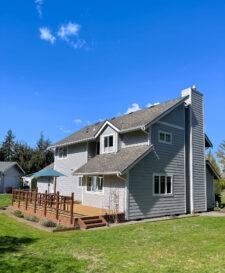
Why We Only Install James Hardie Fiber Cement
We install James Hardie products exclusively — not LP SmartSide, not vinyl, not cedar, not other fiber cement brands like Allura or Cemplank. That's a deliberate standard, not a sales preference. Fiber cement as a category resists moisture, insects, and fire better than wood-based sidings, and it doesn't develop the chalking, fading, or brittleness that vinyl can show after years of UV and salt exposure. Within fiber cement, we've standardized on Hardie because of the factory-applied ColorPlus finish, the HardieZone engineering built specifically for climates like ours, and a warranty structure that has held up in practice across the many installs we've done in this region.
We're not going to pretend every other product is unusable — plenty of homes around the country wear other sidings without issue. But for what Barkley's climate does to a wall over 20-plus years, we've made our call, and we stand behind it.
What HZ5 Means for This Region
James Hardie engineers its siding by climate zone, and the Pacific Northwest falls into the HZ5 category — formulated for high moisture exposure and freeze-thaw cycling rather than desert heat or hurricane-belt humidity. That distinction matters more than most homeowners realize: the same product line sold in Arizona is not the same formulation sold in Whatcom County. HZ5 boards are engineered to manage moisture absorption and dimensional movement under exactly the wet, cool conditions Barkley sees most of the year.
What a Correct Fiber Cement Install Actually Involves
Fiber cement siding fails when it's installed wrong far more often than it fails because the material itself gave out. In a climate that drives rain sideways into wall assemblies, the installation details are what keep water out of places it shouldn't be.
- Proper weather-resistive barrier and rainscreen or drainage gap behind the siding, so any moisture that gets past the cladding can drain and dry instead of sitting against the sheathing
- Correct flashing at every window, door, and horizontal trim transition — the single most common source of hidden rot we find on older siding jobs
- Minimum clearance from grade, decks, and roof lines per Hardie's published specs, so splash-back and standing water don't wick into the bottom courses
- Fastener placement and type matched to Hardie's engineering guidelines, not generic siding nails
- Factory-cut and factory-primed edges used wherever possible, with any field cuts properly sealed, since exposed raw edges are where moisture intrusion starts
- Caulking only where Hardie's install guide calls for it — over-caulking traps moisture just as often as under-caulking lets it in
Skip any one of these and you can end up with a product rated for decades failing in a fraction of that time — and the failure usually shows up behind the siding, not on the surface, which is why so many moisture problems go unnoticed until a wall is opened up.
Material Comparison for Barkley's Conditions
Homeowners comparing options often start with price, but the more useful comparison is how each material actually behaves under salt air, sustained rain, and moss pressure over time.
| Material | Salt Air / Moisture Behavior | Moss & Algae Resistance | Maintenance Burden |
|---|---|---|---|
| James Hardie Fiber Cement | Engineered for high-moisture climates; does not rot or swell | Factory finish resists staining; surface cleans without damaging substrate | Low — periodic rinsing, repaint not required for decades |
| Vinyl Siding | Doesn't absorb water, but seams and panels can warp with temperature swings | Moss and algae adhere readily to textured vinyl | Low-moderate — prone to cracking/fading over time near coastal air |
| Cedar / Primed Spruce | Absorbs moisture; prone to swelling, cupping, rot at joints | Moss and mildew take hold quickly in shaded, damp areas | High — regular sealing, repainting, and rot repair |
| LP SmartSide (engineered wood) | Better than raw wood, but still wood-based and moisture-sensitive at cut edges | Moderate; treated but still organic substrate | Moderate — edge sealing and inspection needed |
This isn't a knock on every other product's engineering — it's a reflection of what actually holds up under Barkley's specific combination of salt exposure, rainfall totals, and shaded moss conditions year after year.
Color and Finish Choices That Work Here
James Hardie's ColorPlus finish is baked on in a factory setting under controlled conditions, which gives it more consistent adhesion and UV resistance than field-applied paint. That matters in a climate where a lot of a home's exterior spends months in shade and damp air — field-painted surfaces are more prone to uneven wear in those conditions. ColorPlus also comes with a finish warranty separate from the substrate warranty, so the color performance is backed the same way the board itself is.
For Barkley specifically, we tend to steer homeowners away from very light, flat colors on north-facing walls that get the least direct sun, since any siding material will show algae streaking faster there — a matte, mid-tone finish hides that far longer between cleanings, regardless of which color family you choose.
How the Job Runs on a Barkley Property
Every Barkley property is different, but the sequence we follow doesn't change: a full walk-around assessment of existing siding and trim condition, moisture and rot inspection at typical failure points before any tear-off begins, removal of the old material, repair of any compromised sheathing found underneath, installation of the weather-resistive barrier and drainage gap, then the Hardie panels, trim, and ColorPlus-matched caulking and touch-up.
We check local permit requirements before work starts, and if a property is in a neighborhood with architectural guidelines, we confirm color and material approval fits within them before ordering material — that's a conversation worth having early, not after boards are on the truck.
Living With Fiber Cement Through Moss Season
Even the best siding material benefits from basic upkeep in a climate this wet. Fiber cement doesn't rot the way wood does, so the maintenance here is mostly about appearance and keeping the drainage details working as designed.
- Rinse shaded, moss-prone walls once or twice a year with a garden hose and soft brush — avoid high-pressure washing directly at seams and edges
- Keep gutters clear so overflow doesn't run down the wall face and feed moss growth at the top courses
- Trim back landscaping and tree cover that keeps siding in constant shade and damp air
- Inspect caulking at window and door trim annually; recaulk only where it's actually failed, not as routine maintenance
- Watch for any staining or streaking at the bottom courses near grade, which can signal a drainage or clearance issue worth checking
Why a Crew That Already Works Barkley Matters
A siding crew that only occasionally works this far north misses things a Bellingham-based crew catches automatically: how much clearance to leave given typical rainfall totals here, which wall orientations need extra attention to moss and algae, and how the salt air off the bay changes fastener and finish choices compared to an inland job. That local pattern recognition comes from repetition, not from reading a spec sheet once.
It also means someone is nearby if a question comes up after the job is done — not a call center, not a crew that finished the install and moved on to a different region entirely.
If you're weighing a siding replacement or repair in Barkley, we're glad to walk the property, look at what's actually going on with your current siding, and give you a straightforward, no-pressure estimate for doing it right with James Hardie fiber cement. Fill out the form below to get started.