 Bellingham
 Composite Decking Built for York's Weather, Not Around It
York sits close enough to Bellingham Bay that salt-laden air is a fact of life, and like the rest of Whatcom County, the neighborhood goes months at a stretch under low clouds and steady rain. That combination is hard on any outdoor structure, but it's especially hard on decks, which sit horizontal, catch standing water, and take the brunt of both salt exposure and moss growth. A composite deck installed correctly for this climate can outlast several generations of wood decking with a fraction of the upkeep. Installed poorly, it can trap moisture just as badly as a rotting wood deck ever did, just with different symptoms.
This page is about what a composite deck actually needs to hold up in York specifically — not a generic rundown of composite decking as a product.
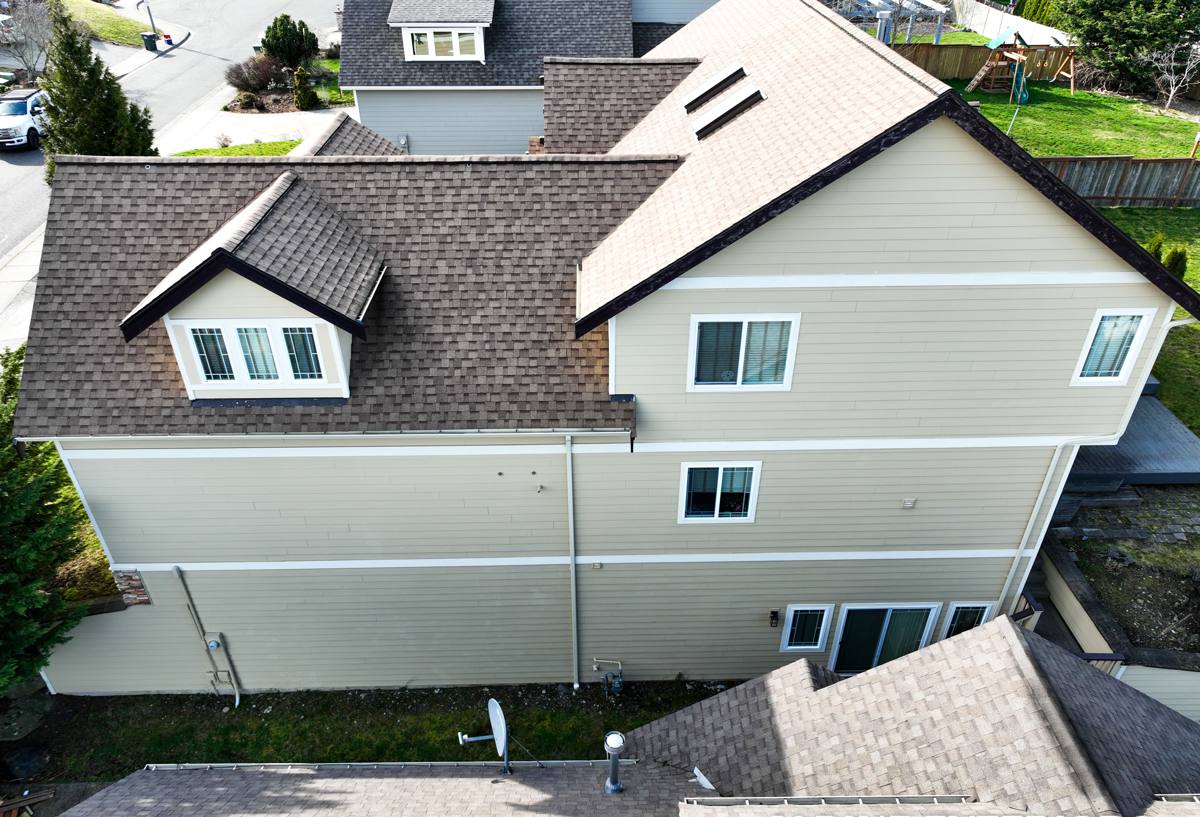
What Bellingham's Climate Actually Does to a Deck
Salt Air and Fasteners
Homes near the water deal with airborne salt that accelerates corrosion on anything metal — screw heads, joist hangers, railing brackets. Over years, corroded fasteners are one of the more common reasons a deck that "looks fine" on top is actually failing underneath. Composite boards don't care about salt air, but the hardware holding them down absolutely does.
Standing Water and Moss
Whatcom County's long wet season means any horizontal surface with poor drainage stays damp for weeks at a time. Moss and algae take hold readily in that environment, and once established they hold moisture against the deck surface, making boards slicker and, on wood decks, accelerating rot. Composite doesn't rot, but moss and grime still build up on it if the deck doesn't shed water and get some airflow underneath.
Freeze-Thaw Cycles
York doesn't see deep winters, but it does get occasional cold snaps with freezing temperatures right after or during wet stretches. Water that's trapped in a joist, a fastener hole, or behind poorly sealed trim can freeze, expand, and work connections loose over a few cycles — a slow failure that shows up as squeaks and soft spots years later.
Why Composite Fits Homes in This Neighborhood
Composite decking's main advantage in a climate like this is that the board itself doesn't absorb water the way wood does, doesn't need annual staining or sealing, and won't splinter or rot from repeated wetting. For homeowners in York who want a deck they can actually use without a spring maintenance ritual, that's the practical appeal. It's also why composite has become a common request for both new decks and wood-deck replacements in this part of Bellingham.
The trade-off is that composite depends more heavily on correct installation than wood does. Wood decking is somewhat forgiving of minor framing mistakes because it can dry out. Composite boards sit on the frame indefinitely, so if the substructure doesn't drain and ventilate properly, moisture gets trapped underneath the deck instead of in it — which causes its own problems with the framing, ledger board, and house connection.
What a Correct Composite Deck Installation Involves
Framing and Drainage First
Before a single composite board goes down, the framing needs to be pitched slightly away from the house, the ledger board needs proper flashing where it meets the wall, and there needs to be enough clearance underneath for air to move. This is the part of the job that's invisible once the deck is finished — and it's also the part that determines whether the deck is dry in ten years or has a rot problem in the framing hidden under perfectly good-looking composite boards.
Fastening and Board Layout
Composite boards expand and contract with temperature more than most homeowners expect, and gaps need to be set correctly at installation to account for that movement through the year. Fasteners should be corrosion-resistant hardware rated for the coastal exposure York sees, not standard interior-grade screws that will streak or fail early in salt air.
Railings, Fascia, and Finish Details
Railing posts need solid blocking below the deck surface, not just a screwed-on bracket, since these take real lateral load and are one of the first things inspectors and buyers check. Fascia boards and picture-frame trim should be installed with drainage gaps behind them so water doesn't get trapped between the trim and the frame — a small detail that's easy to skip and a common source of hidden moisture problems on the coast.
Composite vs. Other Decking Materials in a Salt-Air, Wet Climate
| Material | Moisture Behavior | Upkeep | Typical Lifespan Here |
|---|---|---|---|
| Composite decking | Doesn't absorb or rot; surface can hold moss/algae if not cleaned | Occasional wash; no staining or sealing | 25-30+ years with correct installation |
| Pressure-treated wood | Absorbs water; prone to cupping, splintering, and rot at fasteners | Annual cleaning and re-sealing/staining | 10-15 years before major repairs |
| Cedar | Naturally rot-resistant but still absorbs moisture; grays and softens over time | Regular sealing to preserve color and resist decay | 12-18 years |
| PVC/vinyl decking | Fully moisture-proof, similar to composite | Very low; wash only | Comparable to composite, often higher upfront cost |
We install composite as our standard recommendation for York homeowners who want low upkeep, but we'll walk through wood options honestly too — some homeowners have a specific look in mind or a tighter budget, and that's a legitimate reason to choose wood as long as the maintenance commitment is clear going in.
What Affects the Cost of a Composite Deck in York
| Factor | Why It Moves the Price |
|---|---|
| Deck size and shape | More linear footage of framing, fascia, and railing; complex shapes add cutting and waste |
| Height off grade | Elevated decks need stronger footings, posts, and often stairs and additional railing |
| Existing structure condition | Tear-off and disposal of an old wood deck, or repair of a rotted ledger, adds labor before the new deck starts |
| Composite tier | Board lines vary in color options, warranty length, and cap-stock quality |
| Railing style | Composite or metal railing systems cost more than basic wood but need less upkeep |
| Site access | Tight side yards or sloped lots common in York can add labor time for material handling |
We don't quote decks off a square-footage rule of thumb without seeing the site — a flat, easy-access backyard and a sloped lot with a tear-off involved are genuinely different jobs, and we'd rather give an honest number after a walkthrough than a low estimate that changes later.
How the Job Works, Start to Finish
- On-site visit to assess the existing deck or bare area, drainage, ledger condition, and access.
- Written estimate covering framing, decking material, railing, and any tear-off or disposal.
- Permit pulled where required — most elevated decks and any structural ledger work need one in Bellingham.
- Demo of the old structure, if applicable, with framing inspected for hidden rot before rebuilding.
- Framing installed with proper pitch, ledger flashing, and joist protection tape before decking goes down.
- Composite boards, fascia, and railings installed with corrosion-resistant fasteners and correct expansion gaps.
- Final walkthrough with the homeowner covering care and what to expect through the first wet season.
Living With a Composite Deck Through Moss Season
Composite decking cuts maintenance dramatically compared to wood, but "no maintenance" isn't quite accurate in a climate that grows moss on shaded roofs, siding, and pathways for months at a time. A little seasonal attention keeps a composite deck looking and performing the way it should:
- Sweep debris off the deck regularly in fall — trapped leaves hold moisture against the boards and feed moss growth
- Wash the surface once or twice a year with a mild soap and soft-bristle brush; avoid harsh pressure-washing that can damage the cap layer
- Check that gaps between boards stay clear so water keeps draining through instead of pooling
- Look underneath the deck occasionally for any signs of standing water or blocked drainage in the framing
- Inspect railing posts and stair connections yearly for looseness, especially after a hard freeze
- Trim back overhanging vegetation that keeps the deck shaded and damp longer than it needs to be
Why a Crew That Already Works in York Matters
A lot of what makes a composite deck last in this specific area comes down to details that aren't on the product spec sheet: how much pitch to build into the framing for Whatcom County's rain totals, which fastener grades actually hold up to salt air near the bay, and how to flash a ledger board correctly against the kind of siding common on York homes. A crew that installs decks across Bellingham regularly runs into these same conditions job after job, which means fewer surprises and fewer callbacks for problems that should have been caught during framing.
It also means someone who understands the neighborhood's mix of older homes and newer builds, and can adapt the plan — tear-off versus build-new, permit requirements, access constraints — to the actual property in front of them rather than a one-size-fits-all approach.
If you're weighing a new composite deck or a replacement for an aging wood deck in York, we're happy to take a look and give you a straightforward, no-pressure estimate. There's a form below to get that started.