 Bellingham
 Siding Replacement Built for Barkley's Climate
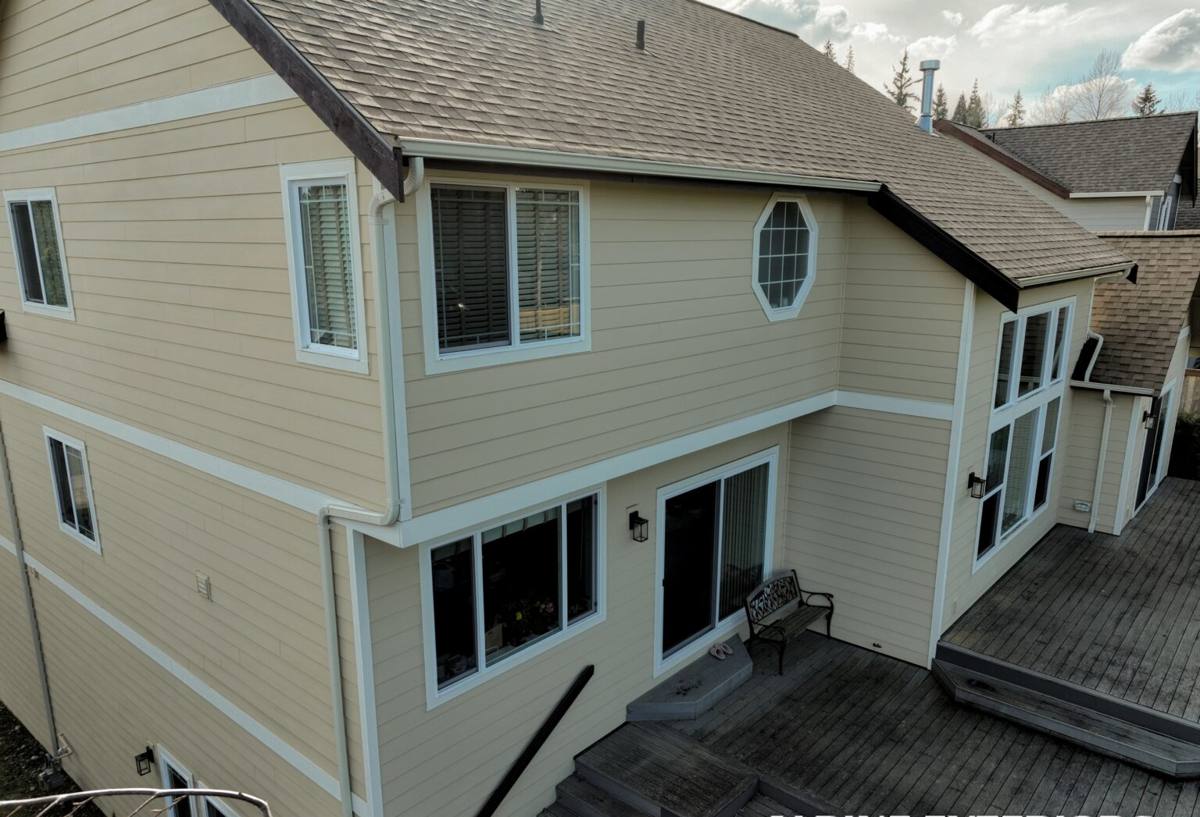
Barkley homes sit close enough to the water and the hills around Bellingham that they take a specific kind of weather beating: salt-laden air rolling in off Bellingham Bay, driving rain that comes in sideways more often than straight down, and a moss season that can stretch nearly nine months out of the year. Siding in this neighborhood doesn't fail because it's old — it fails because it was never matched to these conditions in the first place. When we replace siding in Barkley, we're not just swapping old boards for new ones. We're correcting the mismatch between the product, the installation, and what Whatcom County weather actually does to a house year-round.
This page covers what Barkley homeowners specifically need to know before replacing siding: what the climate does to different materials, what a correct replacement job involves from tear-off to final caulk line, and why hiring a crew that already works this neighborhood matters more than most homeowners realize.
What Bellingham's Climate Actually Does to Siding
Salt Air and Metal Fasteners
Proximity to Bellingham Bay means a steady low-level exposure to salt-carrying moisture, even well inland from the water. Salt air accelerates corrosion on fasteners, flashing, and any exposed metal trim. Over years, corroding fasteners can loosen siding panels, create rust streaking down the face of a wall, and open tiny gaps where moisture works its way behind the cladding. Material choice and fastener choice both matter here — a product and hardware system engineered for coastal-adjacent conditions holds up; one that isn't shows premature wear.
Driving Rain and Wall Assembly
Bellingham doesn't just get a lot of rain — a good share of it arrives wind-driven, hitting walls at an angle instead of running straight down and off the roof. That means water finds its way into laps, seams, corners, and penetrations (hose bibs, light fixtures, vents) far more aggressively than in a calm-rain climate. A siding system's real test isn't how it looks on a dry day — it's whether the water management behind the panels (weather-resistive barrier, flashing, proper laps, drainage gaps) is doing its job during a January storm coming off the Sound.
Moss, Algae, and Prolonged Dampness
Shaded sides of Barkley homes — especially north- and east-facing walls under mature trees — stay damp for extended stretches during the fall through spring moss season. Any siding material that absorbs moisture or holds it against the substrate is going to feed moss and algae growth, and that growth traps even more moisture against the wall. This is less about appearance and more about what's happening underneath: sustained dampness is what leads to rot, delamination, and paint failure over time.
Why Product Choice Matters More in Barkley Than It Would Elsewhere
Every siding material handles these three stressors — salt air, driving rain, and prolonged dampness — differently. A product that performs fine in a drier inland climate can struggle here. This is the core reason we standardized on James Hardie fiber cement and don't install vinyl, LP SmartSide, cedar, primed spruce, Cemplank, or Allura on any home we work on, Barkley included.
| Material | Behavior in Salt Air / Driving Rain / Moss Season |
|---|---|
| Vinyl siding | Doesn't rot, but expands/contracts with temperature swings, can crack in impact, and seams/laps are a common water entry point in wind-driven rain |
| Cedar / wood siding | Handsome, but absorbs moisture readily; in a prolonged-dampness climate it needs disciplined refinishing to avoid rot, cupping, and moss colonization |
| Primed spruce / engineered wood (LP SmartSide) | Wood-based core is moisture-sensitive at cut edges and panel joints; correct installation and diligent caulk/paint maintenance are non-negotiable |
| Fiber cement without a factory finish (Cemplank, Allura, unfinished Hardie) | Solid substrate, but a job-site paint finish is only as good as the application and the maintenance schedule that follows |
| James Hardie with ColorPlus factory finish | Non-combustible, engineered moisture resistance, factory-baked finish resists fading and moss adhesion far longer than field-applied paint |
None of these materials are junk — vinyl, cedar, and engineered wood all have real, defensible uses. But we've made a professional call: for the specific stress this region puts on a wall assembly, we only put our name behind James Hardie.
Why We Install Only James Hardie
Hardie's fiber cement is non-combustible, dimensionally stable, and doesn't feed the rot cycle that wood-based products can fall into once moisture gets behind them. The ColorPlus factory finish is baked on under controlled conditions rather than applied on a scaffold in variable weather — that matters directly in a climate where a job-site paint job has to cure between rain systems. Hardie's HZ5 product line is engineered for the exact kind of freeze-thaw and moisture cycling the Pacific Northwest delivers, and the color retention holds up against the UV and salt exposure Barkley homes see year-round. Add a strong transferable warranty and a track record of decades-long performance when installed to spec, and it's the product we're willing to stand behind on every job — including the fine detail work a replacement in this neighborhood demands.
What a Correct Siding Replacement Involves
Replacing siding on a Barkley home is not a cosmetic swap — it's a rebuild of the wall's water management system, with new cladding as the visible last step. A correct job includes:
- Full tear-off and substrate inspection — removing old siding to check sheathing, framing, and window/door flashing for rot or prior water damage before anything new goes up.
- Repair of any compromised sheathing or framing — no siding product, however good, fixes rot that's sealed up behind it.
- New weather-resistive barrier — installed with correct laps and integrated with flashing at every penetration, since this layer does the real work during driving rain.
- Proper flashing at windows, doors, and trim — the most common failure point in any siding job, and the detail that separates a durable install from a five-year problem.
- Correct fastener selection and placement — corrosion-resistant fasteners driven to Hardie's specification, not generic nails or overdriven fasteners that crack the board.
- Rainscreen or drainage gap where appropriate — giving incidental moisture a way out instead of trapping it against the wall.
- James Hardie panel or lap installation to manufacturer spec, including proper clearances at grade, decks, and roof lines.
- Sealed and caulked transitions at corners, trim, and penetrations, using products rated for the exposure.
- Final inspection walk-through with the homeowner before the job is called done.
Our Process on a Barkley Job
1. On-Site Assessment
We start with a walk-around of the home, looking at sun exposure, tree cover, drainage patterns, and any visible signs of past moisture problems — cupped boards, peeling paint, soft spots near grade, staining under windows. This tells us as much about the job as the siding's age does.
2. Honest Scope and Estimate
We give you a clear, itemized estimate that separates tear-off, substrate repair (if needed), materials, and installation labor, so you know exactly what you're paying for and why.
3. Scheduling Around Weather
Given how much rain this region gets, we sequence tear-off and installation in stretches of workable weather so your home isn't left exposed longer than necessary. Open wall time is minimized by design, not left to chance.
4. Installation to Spec
Every fastener, lap, and flashing detail follows James Hardie's published installation requirements — this is also what keeps the manufacturer's warranty intact, since improper installation is the most common reason warranty claims get denied.
5. Final Walkthrough
We walk the finished job with you, point out what was done and why, and make sure you're clear on any care and maintenance going forward.
What to Ask Before Hiring Anyone for Siding Work in Barkley
- Do you carry current liability insurance and workers' compensation coverage in Washington State?
- Are you a manufacturer-recognized installer, and does your installation preserve the full material warranty?
- Will you inspect and repair sheathing/framing if it's found damaged, or just cover it up?
- What's your plan for flashing at windows, doors, and roof lines specifically?
- Can you explain, in plain terms, why you recommend the product you're proposing for this specific house?
- Do you have a written, itemized estimate rather than a single lump-sum number?
A crew that already works Barkley regularly has seen how this neighborhood's exposure, tree cover, and drainage patterns play out over years, not just on install day. That local pattern recognition is worth more than a generic bid — it's the difference between a job that looks right at handoff and one that still looks right five winters later.
Maintenance After Replacement
James Hardie siding is low-maintenance, not no-maintenance. In Barkley specifically, that means:
- Rinsing shaded, moss-prone walls once or twice a year to keep organic growth from establishing
- Keeping gutters clear so overflow doesn't run down the face of the siding
- Trimming back vegetation that keeps a wall section shaded and damp
- Periodically checking caulk lines at trim and penetrations for cracking or gaps
- Watching for any staining near grade that could indicate a drainage issue, not a siding issue
None of this is heavy upkeep, but skipping it is how even a good installation loses its edge early in a climate this wet.
Cost Factors for a Barkley Siding Replacement
| Factor | Why It Affects Cost |
|---|---|
| Home size and wall complexity | More corners, dormers, and trim details mean more cutting, flashing, and labor time |
| Substrate condition | Rot or damage found during tear-off adds repair scope before new siding can go on |
| Existing siding type | Some materials (like certain older claddings) are more labor-intensive to remove than others |
| Product line and profile | Hardie's various lap widths, panel styles, and trim options carry different material costs |
| Access and site conditions | Slopes, tight lot lines, and limited staging area can affect labor time |
We don't quote off square footage alone — the on-site assessment is what turns these factors into an accurate number for your home.
If your Barkley home's siding is showing its age — or you just want an honest read on whether repair or full replacement makes more sense — we're happy to walk the property with you. Reach out for a free, no-pressure estimate; there's a form below to get started.