 Bellingham
 Why Blaine Roofs Wear Differently Than Roofs Inland
Blaine sits right on the water at the northern edge of Whatcom County, wedged between Semiahmoo Bay, Drayton Harbor, and the open reach of the Strait of Georgia. That location is what makes the town beautiful, and it's also what shortens the working life of an average roof. Salt-laden air off the water accelerates corrosion on fasteners, flashing, and any exposed metal. Wind-driven rain doesn't just fall straight down here — it gets pushed sideways under shingle tabs and around penetrations that would stay dry in a calmer climate. And the long stretch of grey, damp months between fall and spring gives moss, moose, and algae months at a time to get established on north-facing slopes and anywhere tree cover keeps a roof from drying out.
None of that means a roof in Blaine is doomed to fail early. It means the roof has to be built and installed with those specific stresses in mind, using materials and details that are chosen for a marine climate rather than a generic install done the same way it would be done sixty miles inland.
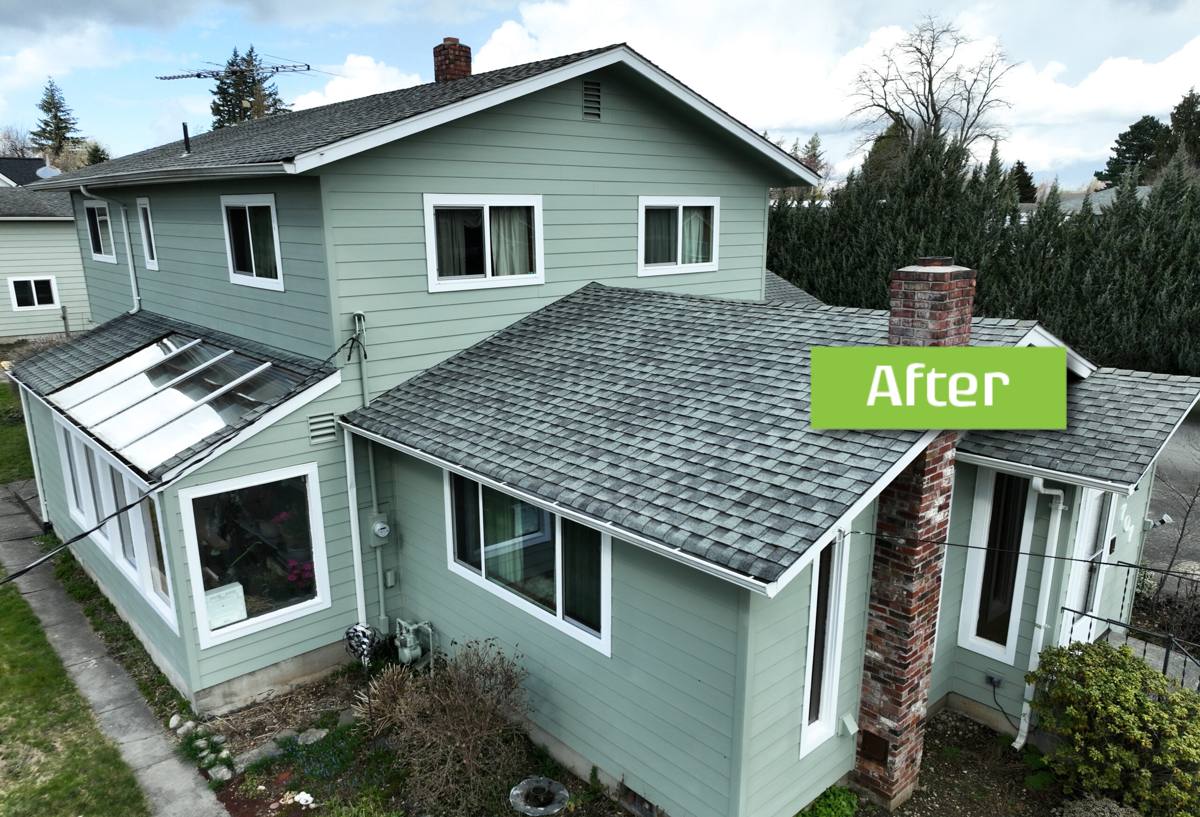
Signs a Blaine Roof Needs Replacement, Not Another Repair
Homeowners often ask us to patch a leak, and sometimes a patch really is the right call. But repeated repairs on an aging roof usually mean the underlying materials have reached the end of their service life, and every patch is just buying a little more time before the next leak shows up somewhere else. A few signs that point toward full replacement rather than another spot repair:
- Granule loss heavy enough that you can see bare, shiny patches on shingles, or granules collecting in gutters
- Shingles that are curling, cupping, or cracking, especially on south- and west-facing slopes that take the most sun and wind
- Soft or spongy decking felt underfoot, or daylight visible through the roof deck from the attic
- Moss or algae that keeps returning within a season or two of cleaning, even after treatment
- Flashing around chimneys, vents, or valleys that's rusted, lifted, or was never properly stepped and counter-flashed to begin with
- A roof that's 20+ years old (for asphalt composition) and has already had multiple repairs
If a roof is only showing one or two isolated issues and the rest of the field is sound, repair is usually the honest recommendation. We'll tell you that directly rather than pushing a full tear-off you don't need yet.
What a Correct Roof Replacement Actually Involves
A roof replacement is more than swapping old shingles for new ones. In a climate like Blaine's, the components most homeowners never see — underlayment, ventilation, and flashing — matter as much as the shingle itself, because they're what keeps wind-driven rain and condensation from finding a way in over the next two decades.
Underlayment and Water Protection
We install synthetic or felt underlayment rated for the exposure, with self-adhering ice-and-water barrier at eaves, valleys, and around every penetration — the places where wind-driven rain is most likely to get pushed backward under the shingle course. This is the layer that protects the deck if wind or age ever compromises the shingle field above it, and it's not a spot where corners should get cut.
Ventilation
A roof that can't breathe traps moisture in the attic, which shows up as premature deck rot, mold, and shortened shingle life from the underside. We check intake at the soffits and exhaust at the ridge and make sure they're balanced, not just present. This matters even more in a marine climate where relative humidity is high most of the year.
Flashing and Edge Metal
Chimneys, skylights, sidewalls, and valleys fail more often at the flashing than at the shingle field. We use properly stepped and counter-flashed details, and on a coastal property we favor corrosion-resistant metals over standard galvanized where budget allows, since salt air is hard on plain steel over time.
Choosing a Roofing Material for Salt Air and Moss
There's no single "best" roofing material for every home — it depends on the roof's exposure, the home's structure, and your budget. What we can do is lay out the honest trade-offs for a coastal Whatcom County property so you're choosing with real information rather than a sales pitch.
| Material | Moss/Moisture Behavior | Salt Air Durability | Maintenance | Typical Lifespan |
|---|---|---|---|---|
| Asphalt composition shingle (architectural) | Good with proper ventilation and copper/zinc strips; needs periodic cleaning | Good — most fasteners and flashing are protected or coated | Low to moderate — occasional moss treatment | 25-30 years |
| Standing seam metal | Excellent — moss struggles to hold on a smooth, steep metal surface | Very good with marine-grade coatings and stainless fasteners; standard galvanized needs care | Low | 40-50+ years |
| Synthetic/composite shake or slate | Very good — doesn't absorb moisture like wood | Good | Low | 30-50 years |
| Cedar shake | Fair — natural wood absorbs moisture and is more prone to moss without diligent upkeep | Fair — needs regular treatment near salt air | High — regular cleaning and treatment required | 20-30 years with upkeep |
For most Blaine homes we recommend a quality architectural asphalt shingle as the practical middle ground — good performance for the cost, wide color selection, and a strong warranty structure from major manufacturers. Where a home has a lot of tree cover or a steep, shaded north slope that stays damp most of the year, metal is worth a serious look because moss simply has less to grip onto. We're straightforward about why we steer clients away from unsealed cedar shake in this environment: it's not that the material is bad, it's that the maintenance commitment near salt air and persistent moisture is significant, and most owners underestimate it going in.
Our Roof Replacement Process
1. Inspection and Written Estimate
We walk the roof and the attic, not just look from the ground. That means checking deck condition, ventilation, flashing details, and any signs of past leaks before we write up a scope of work. You get a written estimate that spells out materials, underlayment, and flashing details — not just a single bottom-line number.
2. Tear-Off and Deck Inspection
Full tear-off to the deck lets us actually see what's underneath rather than layering new shingles over hidden rot. Any soft or damaged decking gets identified and priced as a clear add before we proceed, never buried in the invoice after the fact.
3. Installation
Underlayment, ice-and-water membrane, flashing, and the roofing material go on in that order, following manufacturer specifications for the fastening pattern and exposure — details that matter for both wind performance and warranty coverage.
4. Cleanup and Walkthrough
We run a magnetic sweep for stray nails, haul away the old material, and walk the finished roof with you so you know what was done and what to expect going forward.
Living With a New Roof: Moss and Long-Term Care
A correctly installed roof in Blaine will still face moss pressure every winter — that's just the reality of the local climate, not a sign something was done wrong. A little ongoing attention keeps a good roof performing for its full lifespan:
- Keep gutters clear so water isn't sitting against the eave line during heavy fall and winter rain
- Trim back overhanging branches to cut down on shade and debris buildup on north-facing slopes
- Have moss and algae growth treated before it thickens into a mat that holds moisture against the shingle
- Schedule a walk-through inspection every couple of years, especially after a hard windstorm off the water
- Address small flashing or sealant issues promptly rather than waiting for a leak to show up inside
What Drives the Cost of a Blaine Roof Replacement
Every roof is different, so we don't quote a number until we've actually seen yours — but a few factors consistently move the price up or down:
- Roof size and the number of planes, valleys, and penetrations to flash
- Pitch and accessibility, which affect labor and safety setup
- Whether deck repair or replacement is needed once the old roofing comes off
- Material choice, from standard architectural shingle up through metal or composite systems
- Ventilation upgrades needed to bring an older attic up to current performance
We'd rather walk you through these factors on your actual roof than offer a broad range that doesn't mean much until we've inspected the property.
Why a Crew That Already Works in Blaine Matters
Roofing crews who mostly work drier, inland areas sometimes underestimate what a coastal Whatcom County roof needs — lighter underlayment, standard fasteners instead of corrosion-resistant ones, or ventilation specs that work fine sixty miles from the water but fall short on a home taking direct salt spray and wind off Semiahmoo Bay or Drayton Harbor. Working Bellingham and the surrounding Whatcom County coastline regularly means we've seen how roofs here actually age — where moss takes hold first, which details fail under driving rain, and which materials hold up over a full winter of exposure rather than just looking good on installation day. That local pattern recognition is worth as much as any spec sheet.
If your roof is showing its age or you're just planning ahead, we're happy to take a look and give you a straight, no-pressure assessment of where things stand. Use the form below to request a free estimate for your Blaine home.