 Bellingham
 Why Board & Batten Suits Birch Bay Homes
Board and batten has become one of the most requested siding styles for homes along Birch Bay, and it's easy to see why. The vertical lines read as clean and modern on newer builds, but the profile is old enough — barns and coastal cottages have used it for generations — that it also looks right at home on a beachside cabin or a remodeled ranch. It gives a house real texture and shadow line without the busier look of shakes or the flatness of plain lap siding.
But style is only half the decision. Birch Bay sits right on the water, and homes here take a different kind of weathering than houses ten miles inland in Bellingham. Any siding job here has to be judged first on how it will hold up to wind, salt, and moisture — and only second on how it looks. Board and batten done right can do both. Board and batten done wrong, with the wrong material or the wrong details, tends to show its problems fast in this environment.
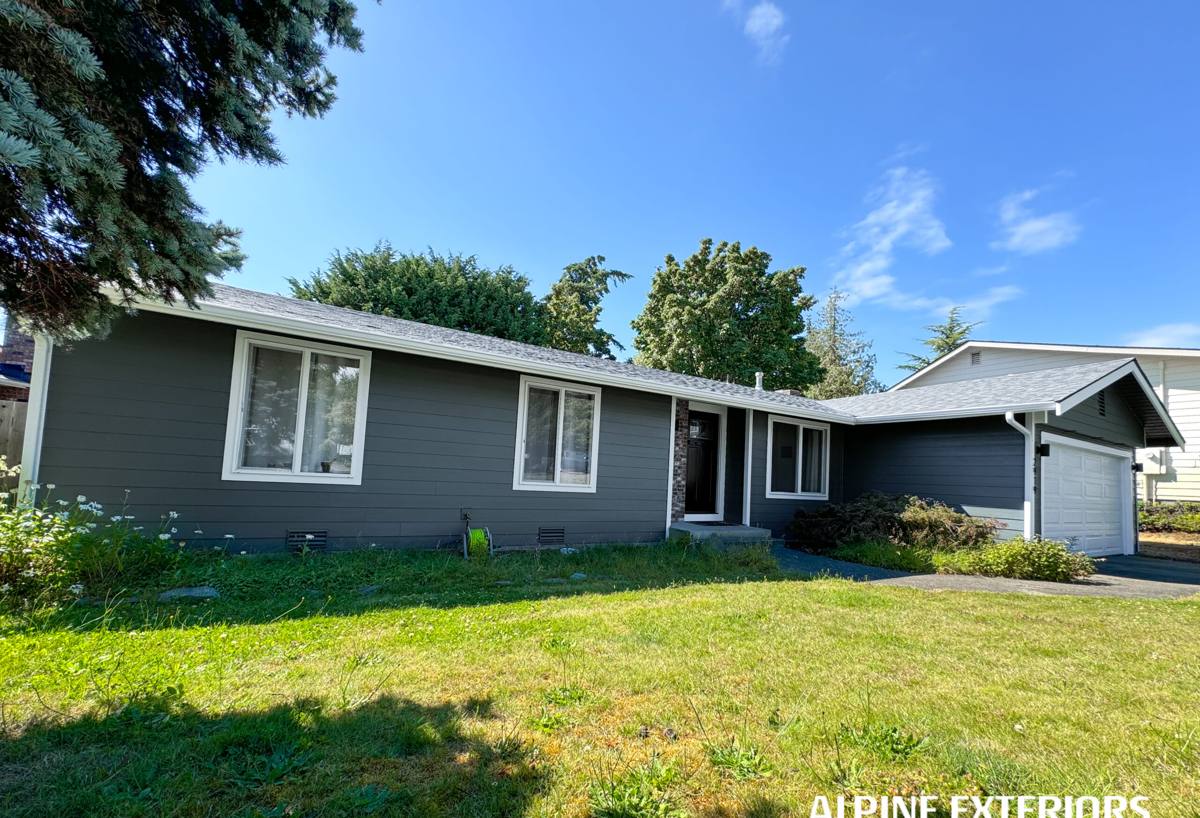
What Salt Air, Driving Rain, and Moss Season Do to Siding Here
Birch Bay's location on open water means wind-driven rain hits the exterior of a home harder and more often than it does a few miles inland. That matters more for board and batten than for standard lap siding, because the vertical battens create dozens of extra seams and butt joints running straight down the wall — every one of them a potential path for water if it isn't detailed correctly. A lap siding wall relies mostly on overlap to shed water; a board and batten wall relies on the quality of the installation underneath it.
Salt air is the second factor. Airborne salt from the bay settles on exterior surfaces and accelerates corrosion on fasteners, flashing, and any metal trim that isn't rated for a marine-adjacent environment. It also breaks down finishes that aren't formulated to resist it, which is part of why we're picky about factory finish quality on any siding we put on a home this close to the water.
Then there's moss. Whatcom County's long, wet stretch from fall through spring gives moss and algae months of ideal growing conditions, especially on north-facing walls, shaded elevations, and anywhere siding stays damp longer than it should. Moss holds moisture against the wall surface, and over years that constant dampness is harder on paint, caulking, and the substrate underneath than any single storm. Board and batten's extra trim and joint lines give moss more edges and grooves to establish itself in if the material and install aren't up to it.
Why We Install Board & Batten Only in James Hardie Fiber Cement
We install one siding system, on every home we work on, including board and batten: James Hardie fiber cement. That's not a marketing preference — it's a standard we hold because of what this exact climate does to alternatives.
Fiber cement is non-combustible and dimensionally stable, meaning it doesn't swell, cup, or split the way wood-based products can when they take on repeated moisture cycles. Hardie's ColorPlus factory finish is baked on under controlled conditions and backed by its own finish warranty, which matters a great deal in a spot where salt air and UV exposure both work against paint film over time. Hardie also engineers regional product lines — including HardieZone HZ10 formulations — specifically for wetter, more humid climates like ours, rather than selling one generic product nationwide.
We get asked from time to time about installing board and batten in cedar, primed spruce, LP SmartSide, or vinyl panel systems instead, usually because a homeowner liked the look or the price on one of those elsewhere. We don't install them, and we're upfront about why: each one carries a real trade-off — ongoing repainting, engineered-wood moisture sensitivity, or a vinyl panel look that reads differently than true board and batten shadow lines — that we don't think holds up well against a Birch Bay winter. We'd rather turn down that work than install something we don't expect to perform here.
What "Correct" Board & Batten Detailing Looks Like
James Hardie's board and batten systems are engineered as a complete assembly, not just boards nailed to a wall. That includes a rainscreen drainage gap behind the siding, correctly sized battens over vertical joints, factory-primed cut edges everywhere a saw touches the material, and fastening patterns matched to Hardie's own installation instructions rather than generic best-guess spacing. Skipping any one of these steps is exactly how a board and batten wall ends up with trapped moisture, streaking, or early paint failure — regardless of which brand of material sits on the wall.
What a Correct Installation Involves
Furring Strips and a Real Drainage Plane
Board and batten should never go straight against the weather-resistive barrier with no gap. We install it over furring strips or an approved rainscreen product that creates space for incidental moisture to drain and for the wall to dry out between rain events — which, in Birch Bay, can mean between storms just hours apart. This gap is one of the biggest differences between a board and batten job that lasts and one that traps water against the sheathing.
Fastening and Batten Spacing
Panels and battens both need to be fastened per Hardie's specifications — correct fastener type, correct penetration into framing, correct spacing along the field and at edges. Battens set too far apart or fastened inconsistently can flex in high wind, which opens gaps at the joints exactly where wind-driven rain is trying to get in.
Flashing, Trim, and Sealant Details
Every window, door, corner, and horizontal transition needs flashing detailed to shed water outward and downward, not into the wall assembly. Sealant has a role at specific joints, but it's a backup, not the primary defense — a wall that depends on caulk to stay dry is a wall that will eventually leak once that caulk ages, and in this climate that clock runs faster than most homeowners expect.
Board & Batten Material Options for Birch Bay Homes
Homeowners comparing quotes often see very different materials all being sold under the same "board and batten" label. Here's how the common options actually compare in a coastal Whatcom County setting:
| Material | Salt Air / Coastal Wind Performance | Moisture & Moss Behavior | Long-Term Maintenance |
|---|---|---|---|
| James Hardie fiber cement | Engineered for wet, coastal climates; factory finish resists salt-driven fading | Non-combustible, dimensionally stable, doesn't absorb and swell like wood | Occasional rinse and caulk checks; no repainting cycle with ColorPlus finish |
| Cedar boards and battens | Natural look, but finish degrades faster under salt exposure and constant wetting | Absorbs moisture readily; prone to moss and mildew without diligent upkeep | Regular refinishing or staining, more frequent than most owners plan for |
| Engineered wood (LP-style) | Wood-based core is sensitive to prolonged moisture exposure at cut edges and joints | Requires strict edge-sealing and flashing discipline to avoid swelling | Manufacturer-specified maintenance schedule to preserve warranty coverage |
| Vinyl board & batten panels | Can become brittle and crack in wind gusts common to open-water lots | Won't rot, but seams and panel joints still allow moisture and grime behind panels | Low upkeep, but color fades and profile reads as less authentic over time |
Our Process, Start to Finish
On-Site Assessment
We start by walking the exterior with you, looking at wall orientation relative to the water and prevailing wind, existing moisture or moss patterns, and the condition of the sheathing underneath the current siding. Birch Bay lots vary — some are tucked back from the water with more tree cover, others sit exposed on the open bluff or waterfront — and that difference changes how we detail the drainage plane and flashing.
Installation
We install the furring or rainscreen system, then the Hardie panels and battens, following manufacturer fastening and spacing specifications at every course, corner, and opening. Cut edges get factory-matched touch-up sealer where required so no raw fiber cement is left exposed to weather.
Final Walkthrough
Before we call the job finished, we walk the exterior again to check joint lines, trim, and flashing details, and go over basic care with you so you know what normal weathering looks like versus something worth a call.
Keeping Board & Batten Siding Looking Right in a Coastal Climate
Fiber cement is low-maintenance, not no-maintenance. A few simple habits go a long way toward protecting the investment in a salt-air, high-rain environment like Birch Bay:
- Rinse the exterior with a garden hose once or twice a year to clear salt residue, especially on water-facing walls
- Keep gutters and downspouts clear so runoff doesn't sheet down the siding face
- Trim back landscaping and tree limbs to keep airflow moving across shaded or north-facing walls where moss takes hold first
- Inspect caulk joints at trim and openings annually and have any cracked or shrinking sealant replaced promptly
- Address moss or algae growth early with a gentle wash rather than letting it establish and hold moisture against the wall
- Maintain a few inches of clearance between the bottom of the siding and soil, mulch, or hardscaping
Why Local Experience in Birch Bay Matters
A crew that mostly works inland can install board and batten correctly on paper and still miss the details that matter here. Knowing how much harder wind-driven rain hits a bluff-facing wall than a sheltered one, which elevations in Birch Bay tend to hold moss longest through the winter, and how salt exposure changes fastener and flashing choices isn't something you learn from a spec sheet — it's something you learn by working this specific coastline season after season.
That local pattern recognition shows up in small decisions during the job: where we add extra attention to a drainage detail, which corners get reinforced flashing, how we sequence work around the wetter months. None of those show up as a line item on a quote, but they're a big part of why a board and batten wall either holds up through a decade of Birch Bay winters or starts showing trouble in year three.
If you're weighing board and batten for a home in Birch Bay, we're glad to walk the exterior with you and give you a straight answer on what it would take to do the job right — no pressure, no obligation. Use the form below to request a free estimate.