 Bellingham
 Why Birch Bay Decks Wear Differently Than Inland Decks
A deck built two miles inland in Bellingham and a deck built along the water in Birch Bay are not aging the same way, even if they were built in the same year with the same lumber. Proximity to the water changes everything about how a deck breaks down. Salt-laden air corrodes exposed metal faster than it would inland — nail heads, screw shanks, joist hangers, and railing hardware all take the hit first, often years before the wood itself looks like a problem. At the same time, wind off the bay drives rain sideways into places a deck was never designed to shed water from, like the point where the deck ledger meets the house, or the underside of railings and stair stringers.
Layer on Whatcom County's long, wet, low-sun winters and you get an ideal environment for moss and algae to take hold on any deck surface that stays shaded or doesn't dry out between rains. Moss doesn't just look bad — it holds moisture directly against the wood surface for weeks at a time, which is exactly the condition that leads to soft, punky boards and hidden rot underneath. A deck repair strategy that works fine in a drier part of the state often falls short here, because it doesn't account for corrosion, wind-driven moisture, and sustained dampness all working on the structure at once.
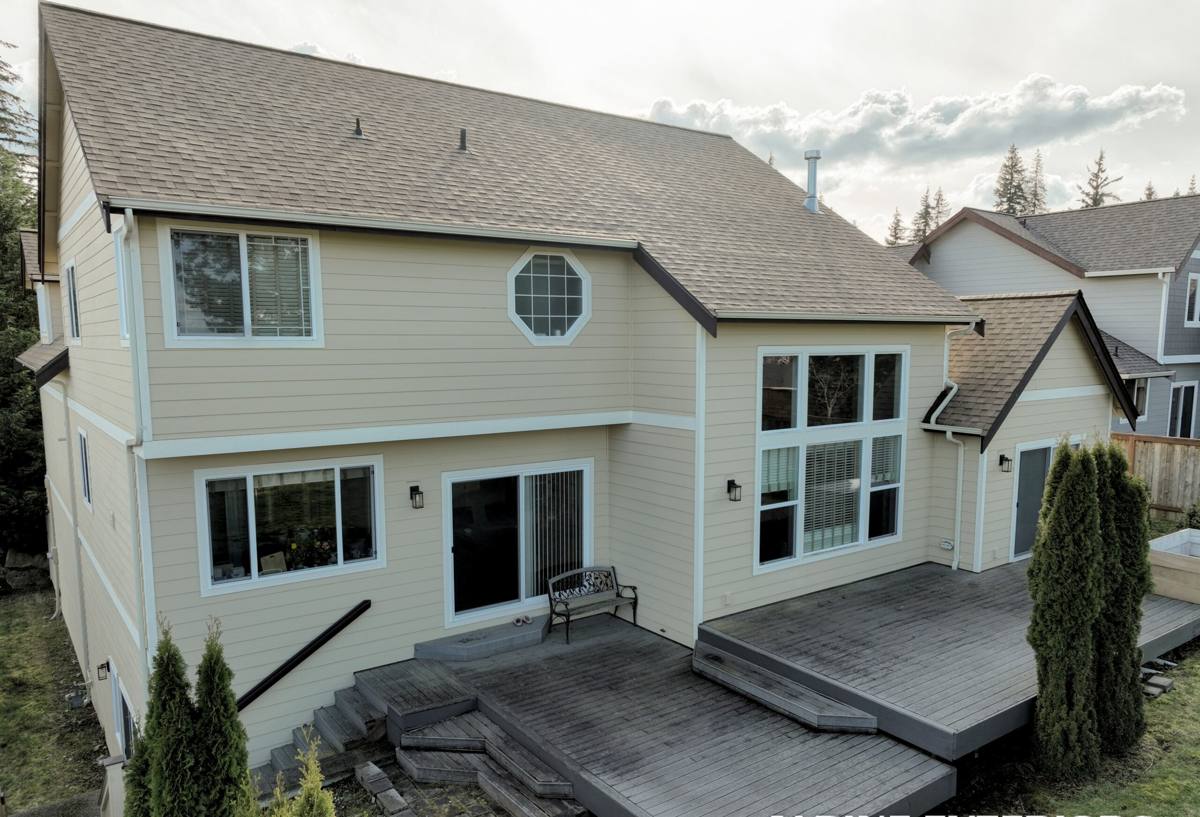
Early Warning Signs a Birch Bay Deck Needs Attention
Most deck failures don't happen suddenly — they show warning signs for months or years before anyone gets hurt or a board gives way. Homeowners near the water should walk their deck a couple of times a year and check for the following:
- Boards that feel soft, spongy, or flex more than they used to underfoot
- Rust streaks bleeding out from nail or screw heads, or hardware that looks flaky or pitted
- Any gap, dark staining, or movement where the deck framing meets the house wall
- Persistent green or black moss and algae buildup, especially on shaded or north-facing boards
- Railings or posts that wiggle more than a firm push should allow
- Water that pools on the surface instead of draining off between the boards
- Cracking, splitting, or separation at stair stringers or the stair-to-deck connection
None of these on their own mean the whole deck needs to be torn out. But each one is a sign that something underneath the surface deserves a closer look before it's ignored through another wet season.
What's Actually Failing: Common Problems We See in This Environment
Ledger Board and Flashing
The ledger board — the piece that bolts the deck directly to the house — is the single most safety-critical part of most decks, and it's also the part most exposed to wind-driven rain in a bay-front setting. When flashing behind the ledger is missing, damaged, or was never installed correctly, water gets trapped between the deck and the house framing. This is often invisible from the top of the deck and only shows up once the wood is already soft.
Fasteners and Hardware
Standard galvanized fasteners hold up fine in a lot of the country, but in a salt-air environment they can corrode well ahead of schedule. Once a fastener starts to fail, it stops doing its job of holding framing members together even if nothing looks obviously wrong from a few feet away.
Decking Boards
Boards that stay wet and shaded — under overhangs, near shrubs, or on the north side of a structure — are the first to show rot, cupping, or moss growth. These are usually the boards that need replacing first, even when the rest of the deck surface still looks presentable.
Substructure and Framing
Joists, beams, and posts are harder to inspect because they're underneath the deck surface, but they're also where the real structural risk lives. A deck can look fine on top and still have compromised framing underneath if water has been getting in at the ledger, at post bases, or through gaps in the decking above.
Repair or Replace? How to Think About It
Not every deck problem calls for a full rebuild, and not every deck problem should be patched over. The right call usually comes down to how much of the structure is affected versus how much is cosmetic.
| Factor | Leans Toward Repair | Leans Toward Replacement |
|---|---|---|
| Framing and posts | Solid, no soft spots when probed | Widespread soft or rotted framing members |
| Ledger board condition | Sound, properly flashed | Rot, missing flashing, or improper original attachment |
| Decking surface | A handful of boards affected | Most boards cupped, splintering, or moss-stained |
| Fasteners and hardware | Isolated corrosion | Widespread rust and failing connectors |
| Deck age and design | Structure is sound and code-acceptable | Old design lacks proper flashing, hangers, or bracing by modern standards |
A straight, honest inspection is what tells you which column you're actually in — not a guess based on how the deck looks from the yard.
What a Correct Repair Actually Involves
A repair that's done right starts underneath the deck, not on top of it. That means checking the ledger connection and flashing, probing framing members for soft spots, and confirming that posts are still bearing weight the way they should before a single new board goes down. Replacing decking on top of compromised framing hides a problem instead of fixing it — it just buys a few years before the same issue resurfaces, often worse.
Once the structure is confirmed sound (or repaired where it isn't), a proper repair also means:
- Corrosion-resistant fasteners and hardware appropriate for a coastal environment, not whatever is cheapest at the yard
- Correct flashing at the ledger board so wind-driven rain can't get behind the deck-to-house connection again
- Joist hangers and structural connectors matched to code requirements, not just toe-nailed framing
- Proper spacing and fastening on replacement boards so water sheds instead of pooling
Cosmetic fixes have their place for boards that are genuinely just weathered, not failing. But when the underlying cause is moisture intrusion or corroded hardware, a cosmetic-only fix is a short-term patch, not a repair.
Decking Materials Near the Bay: Honest Trade-offs
Wood
Pressure-treated and cedar decking are still solid, proven choices, and they're often the right call when matching an existing deck or working within a tighter budget. The trade-off is maintenance — wood near the water needs more regular cleaning, moss removal, and periodic sealing to keep performing well, since it's more sensitive to the moisture cycling this climate produces.
Composite and PVC Decking
Composite and PVC boards resist moss, rot, and moisture absorption better than wood, which makes them attractive for a bay-front deck. Our professional standard is to still use corrosion-resistant fasteners and proper structural framing underneath composite decking — the board material doesn't fix a bad ledger connection or undersized framing, and composite systems are less forgiving of installation shortcuts because gaps and fastening tolerances matter more to how the product performs and how its warranty holds up over time.
Neither material is automatically the "right" answer — it depends on the homeowner's maintenance appetite, budget, and how the existing structure is holding up.
Our Repair Process
- Inspection first. We check framing, the ledger connection, hardware condition, and the decking surface before recommending anything — not after.
- Straight assessment. We tell you what's structural, what's cosmetic, and what can reasonably wait, in plain terms.
- Written scope. You know what's being repaired, what materials and fasteners are going in, and why, before work starts.
- The repair itself. Structural work first, then decking, railings, and stairs as needed.
- Cleanup and walkthrough. We haul away old material and walk the finished repair with you.
Keeping a Repaired Deck Healthy Through Moss Season
A good repair doesn't mean a homeowner never has to think about the deck again — this climate doesn't allow for that. A few habits go a long way toward protecting the work and stretching the life of the deck:
- Sweep or brush off moss and debris regularly, especially on shaded sections, before it has time to embed itself
- Keep gutters and downspouts directing water away from the deck structure, not onto it
- Trim back vegetation that's keeping sections of the deck shaded and damp longer than necessary
- Reseal wood decking on a regular schedule rather than waiting until it's visibly gray and dry
- Do a quick visual check each fall and spring for the early warning signs listed above
Why Local Experience in Birch Bay Matters
Deck repair advice that's written for a dry, inland climate doesn't translate well to a property sitting right on the water in Whatcom County. A crew that already works in Birch Bay knows to check flashing and fasteners first, not last, because that's where problems actually start here. That same familiarity also means fewer surprises during the job — we've seen how salt air, wind-driven rain, and a long moss season play out on decks in this specific setting, and we plan the repair around that reality instead of a generic checklist.
If you're noticing soft boards, rust streaks, moss buildup, or a deck that just doesn't feel as solid as it used to, we're glad to take a look. We offer free, no-pressure estimates — use the form below to get started, and we'll give you a straight read on what your deck actually needs.