 Bellingham
 Why Birch Bay Siding Takes a Different Kind of Beating
Birch Bay sits right on the water, and that location is exactly why siding here wears differently than siding ten miles inland in Bellingham. Homes along the bay face a steady mix of salt-laden air, wind-driven rain coming straight off the Strait of Georgia, and long stretches of gray, damp weather that keep exterior walls wet far longer than homes in drier parts of Whatcom County. Add in the moss and algae that thrive in our shaded, north-facing exposures, and you've got a climate that actively works against whatever is on the outside of your house.
Siding repair in Birch Bay isn't just about patching a cracked board. It's about understanding why that board cracked, failed, or delaminated in the first place, and fixing the actual cause so the same spot doesn't fail again in two years. That's the approach we bring to every repair call in this area.
What Salt Air and Coastal Moisture Actually Do to Siding
Salt air is corrosive to metal fasteners, flashing, and trim components, and it accelerates the breakdown of finishes that aren't formulated to handle it. Combined with the near-constant moisture cycle of a Pacific Northwest coastal winter, a few specific failure patterns show up again and again on Birch Bay homes:
- Fastener corrosion causing boards to loosen, creak, or pull away from the wall
- Caulk failure at joints and trim, letting water track behind the siding
- Paint and finish breakdown from repeated wet-dry cycling and salt exposure
- Moss and algae staining on shaded, north- and west-facing walls that hold moisture longer
- Warping, swelling, or soft spots in moisture-sensitive materials like untreated wood or older composite products
- Wind-driven rain intrusion at butt joints, corners, and around windows and doors
Most of these start small and hidden. By the time a homeowner notices a visible problem — a stain, a gap, a soft spot when you press on it — there's a good chance moisture has already been working behind the siding for a while.
Why This Matters More for Vacation and Weekend Homes
A lot of Birch Bay properties are part-time residences or vacation homes. When nobody's walking the exterior every week, small issues go unnoticed for months. A loose piece of trim or a failed caulk joint that would get caught quickly on a full-time residence can sit through an entire wet season on a property that's only checked on periodically. If that describes your situation, a periodic exterior check — even just a walk-around a few times a year — catches problems while they're still cheap to fix.
Repair or Replace: How We Make That Call
Not every damaged section needs to come off the wall. Our first step on any repair call is figuring out whether the damage is isolated or a symptom of something bigger happening behind the siding. That distinction changes the whole scope of the job.
| Situation | Typical Approach | Why |
|---|---|---|
| Isolated impact damage (one or two boards) | Cut out and replace affected boards | Localized damage with no sign of moisture spreading behind adjacent siding |
| Failed caulk or open joints, siding intact | Re-seal and re-flash as needed | Catching it before water has tracked behind the wall assembly |
| Soft, spongy, or delaminating boards over a wider area | Remove siding, inspect sheathing and house wrap, replace as needed | Usually a sign moisture has been getting behind the siding for some time |
| Widespread moss/algae staining with sound siding underneath | Clean, treat, and address the moisture source (shade, drainage, gutters) | Cosmetic issue, but ignoring the moisture source lets it come right back |
| Aging original siding nearing the end of its service life | Discuss full or partial replacement | Repeated patch repairs stop making financial sense past a certain point |
We won't recommend tearing off siding that's structurally sound just because it's stained or older. We also won't patch over a moisture problem that's going to resurface in a wall six months later. The goal is an honest read on what's actually happening, then the repair scope that matches it.
What a Correct Siding Repair Actually Involves
A repair that lasts starts before anyone touches a piece of siding. Here's what we go through on a typical Birch Bay repair job:
1. Inspection and Moisture Check
We look at the damaged area and everything around it — not just the obvious problem spot. On coastal homes, we're specifically checking corners, butt joints, penetrations (hose bibs, vents, light fixtures), and anywhere flashing directs water. Where we suspect moisture has gotten behind the siding, we check the condition of the material underneath before deciding on scope.
2. Identifying the Cause, Not Just the Symptom
A cracked board might be impact damage — or it might be a sign that fasteners were driven wrong and the board's been fighting moisture-driven movement for years. We note what actually caused the failure so the repair addresses it, rather than just replacing the visible piece and leaving the underlying issue in place.
3. Matching Materials and Finish
Patchwork siding repair is easy to spot when the replacement material or color doesn't match. We work to match board profile, reveal, and finish as closely as possible so a repair blends in rather than standing out as an obvious patch.
4. Proper Flashing and Sealing
Given how much wind-driven rain this stretch of coastline sees, correct flashing at joints, corners, and penetrations matters more here than it would on a sheltered inland lot. We don't rely on caulk alone to keep water out — caulk is a backup layer, not the primary defense.
5. Fastening Appropriate to a Coastal Environment
Corrosion-resistant fasteners matter on a property this close to salt water. Standard fasteners that would hold up fine inland can corrode faster here, which is one of the most common root causes we find behind loose or failing siding near the bay.
6. Final Cleanup and Walkthrough
We clean up debris, walk the repair with the homeowner, and point out anything else we noticed during the job that's worth keeping an eye on — even if it's not part of the current repair.
Where James Hardie Repairs Differ From Other Materials
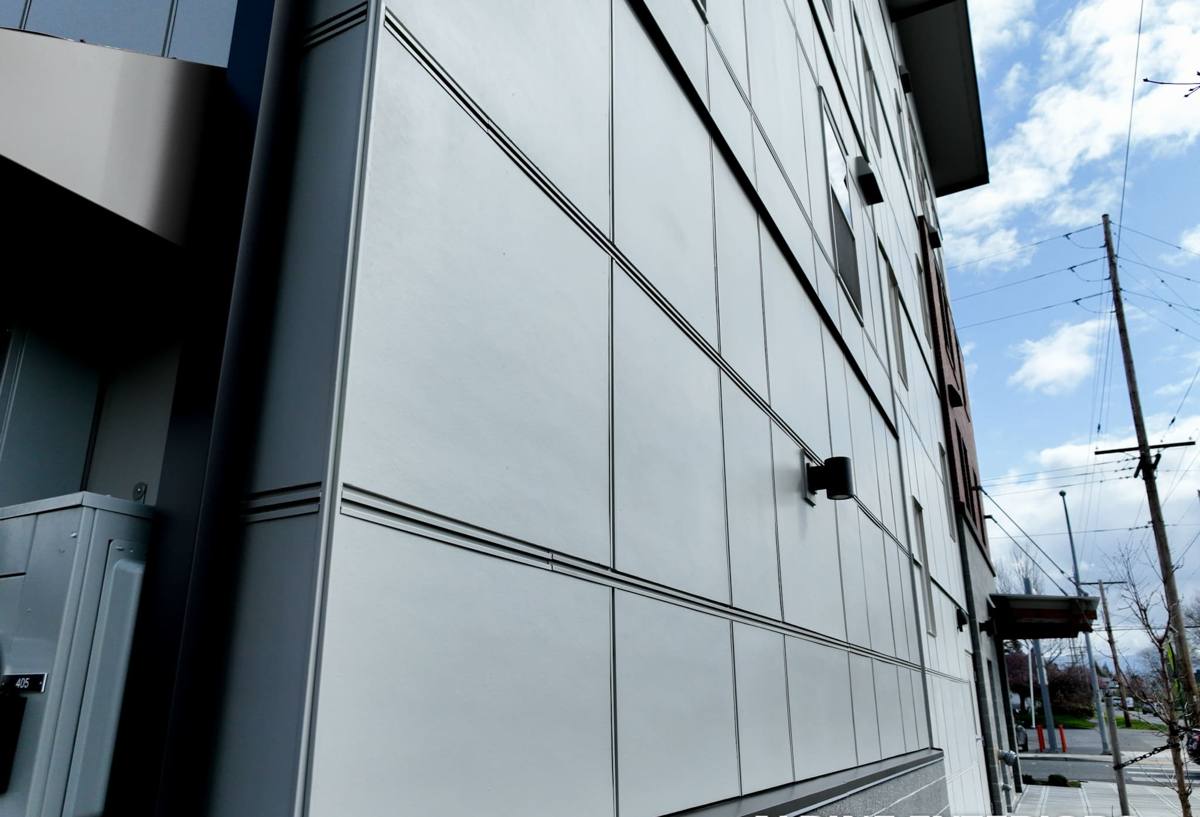
We install and repair James Hardie fiber cement siding, and that focus shapes how we approach repairs. Hardie's ColorPlus factory finish is engineered to hold color and resist the fading and moisture damage that plague field-applied paint, which matters a lot in a salt-air environment where finishes take extra abuse. When we're replacing damaged Hardie boards, we can match profile and color far more precisely than is possible with wood or composite sidings that have weathered unevenly over the years.
Hardie's HZ5 product line is engineered specifically for climates like ours — freeze-thaw cycling, sustained moisture exposure, and coastal conditions. If your Birch Bay home already has Hardie siding, repairs are usually straightforward: cut out the damaged section, tie in new material, refinish the seam. If you're dealing with an aging wood, vinyl, or older composite siding that keeps needing repairs, that's often the point where we'll have an honest conversation about whether continued patching still makes sense versus replacing the affected sections — or the whole elevation — with fiber cement built for this exact environment.
Signs You Should Get Birch Bay Siding Checked
- Visible cracks, gaps, or warping in any siding boards
- Soft spots when you press on the siding with your hand
- Peeling, bubbling, or fading paint concentrated on one side of the house
- Persistent moss or algae growth that keeps returning after cleaning
- Water stains or discoloration on interior walls near exterior corners
- Loose, rattling, or visibly separated boards, especially after a windstorm
- Rust streaking near fasteners or trim
- Musty smell near exterior walls, particularly in closets or rooms on the windward side
If you're seeing more than one of these, it's worth having someone look before the next wet season adds to the damage.
Why a Crew That Already Works Birch Bay Matters
Repair work on a coastal property benefits from familiarity with how that specific environment behaves. A crew that regularly works Birch Bay and the surrounding Whatcom County coastline already knows which elevations take the worst of the wind-driven rain, how fast moss reestablishes on shaded walls here, and what fastening and flashing choices actually hold up against sustained salt exposure — versus a generic repair approach that might work fine forty miles inland but underperforms right on the water.
There's also a practical side to it: local scheduling means faster response after a storm event, and familiarity with the area means less time spent figuring out material matches and more time actually fixing the problem.
What to Expect From an Estimate
A repair estimate should start with an actual look at the damage — not a guess over the phone. We assess the affected area, check for signs the problem extends beyond what's visible, and give you a clear picture of scope before any work starts: what's isolated repair, what (if anything) needs closer inspection once we open up a section, and roughly what that means for cost. You shouldn't be surprised partway through a repair job by a much bigger scope than you were told.
If you're dealing with damaged, aging, or failing siding on a Birch Bay home, we're happy to take a look and give you a straightforward, no-pressure assessment of what's going on and what it would take to fix it right. There's a form below to request a free estimate.