 Bellingham
 James Hardie Siding for Blaine's Salt Air and Storm-Driven Climate
Blaine sits about as exposed as a Whatcom County town gets — close enough to Semiahmoo Bay and Drayton Harbor that salt-laden air reaches most homes in town, not just the ones with waterfront views, and positioned to take the full force of Pacific storm systems coming ashore near the Canadian border. That combination of salt air, driving rain, and a moss season that barely lets up makes Blaine one of the tougher places in the county to keep exterior siding performing the way it's supposed to. We work Blaine regularly as part of our Whatcom County service area, and this page is specifically about one thing: installing James Hardie fiber cement siding correctly on Blaine homes, and what that actually takes.
We install James Hardie siding exclusively. We don't offer vinyl, LP SmartSide, Cemplank, Allura, primed spruce, or cedar as alternatives, and that's not a marketing position — it's a professional standard built from watching how different siding materials actually hold up in a climate like Blaine's. This page covers what that climate does to a house, what the Hardie product system actually includes, what correct installation looks like, and how our process runs from first walk-through to finished job.
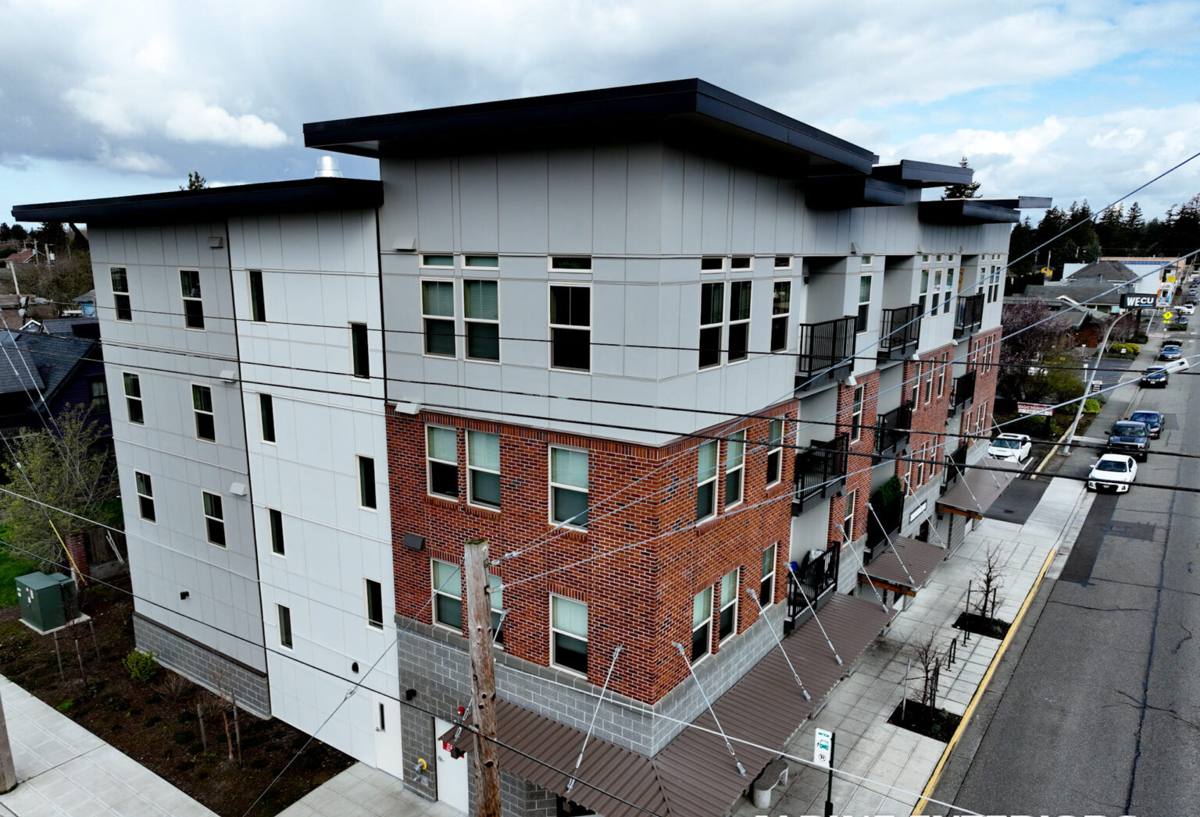
Why Blaine's Climate Is Hard on Exterior Siding
Salt Air Off the Water
Airborne salt from Semiahmoo Bay and Drayton Harbor settles on exterior surfaces continuously in Blaine, not just during storms. Over time, salt accelerates corrosion on fasteners, flashing, and any exposed metal trim, and it breaks down lower-quality paints and coatings faster than a dry inland climate would. Siding materials and hardware that would hold up fine forty miles inland can show wear noticeably sooner this close to the water, which is exactly why fastener choice and finish quality matter more in Blaine than in most of the rest of the county.
Driving, Wind-Driven Rain
Storms coming off the water in Blaine rarely fall straight down. Wind pushes rain sideways into wall assemblies, window and door flashing, and the joints where trim meets siding, which puts more moisture pressure on those details than the same rainfall total would in a calm climate. This is precisely the kind of load that exposes weak flashing laps, unsealed joints, and gaps a rushed installation would leave behind — and it's a bigger factor in Blaine's exposed position than in more sheltered parts of Whatcom County.
A Moss Season That Doesn't Really End
Mild temperatures paired with near-constant moisture give moss and mildew a long growing window in Blaine, often running most of the year on shaded or north-facing walls. Any siding material with surface porosity becomes a growth surface over time, and the walls that stay damp longest — behind trees, on the shaded sides of a house — show it first. It's a slow, cosmetic problem until it isn't, which is part of why moisture management behind the siding matters as much as the surface finish.
Why We Install Only James Hardie Fiber Cement
We didn't start out installing one product exclusively. That changed after enough tear-offs and service calls in coastal, high-moisture Whatcom County towns showed a consistent pattern: some materials held up to this climate, and some quietly didn't, even when they looked fine from the curb for the first several years.
- Non-combustible core: Fiber cement doesn't feed a fire the way wood-based siding products can, which carries real weight for both home safety and insurance considerations.
- Factory-applied ColorPlus finish: The color is baked on under controlled factory conditions instead of brushed on at the job site, so it resists fading, chalking, and moisture exposure longer than field-applied paint.
- Climate-engineered HZ formulation: Hardie's HZ5 product line is engineered for regions with sustained moisture and freeze-thaw cycling — a solid match for coastal Whatcom County conditions.
- Dimensional stability: Fiber cement doesn't swell, cup, or warp the way engineered wood siding can after repeated wetting off the water.
- Strong transferable warranty: Hardie backs its products with one of the stronger warranty structures in the industry, provided the installation follows their published spec.
Vinyl, engineered wood, and other fiber cement brands each have a place in the broader market, and plenty of homeowners are satisfied with them elsewhere. But in a town where salt air and wind-driven rain are near-constant conditions rather than occasional weather events, we made the call to stand fully behind one system rather than offer a cheaper option that quietly shifts maintenance risk onto the homeowner a few years down the line.
The James Hardie Product System: Lines, Profiles, and Finishes
"James Hardie siding" isn't a single product — it's a system of profiles and trim designed to work together, and choosing the right combination for a Blaine home depends on the house's style, exposure, and the homeowner's preference on look.
| Product Line | What It Is | Where It Fits Best |
|---|---|---|
| HardiePlank lap siding | Horizontal boards in smooth or cedarmill texture, the most common Hardie profile | Traditional and craftsman-style homes; the default choice for most Blaine houses |
| HardiePanel vertical siding | Large-format vertical panels, often paired with battens | Board-and-batten or modern-farmhouse looks, and accent walls or gables |
| HardieShingle siding | Staggered or straight-edge panels that mimic individual shingles | Cottage or coastal-style homes wanting a shingle look without the maintenance of cedar shakes |
| HardieTrim boards | Fiber cement trim for corners, window and door surrounds, and fascia | Finishing every siding job — trim takes as much weather exposure as the field siding |
Within those lines, ColorPlus finishes come in a range of factory colors, and the smooth and cedarmill textures give homeowners a choice between a clean modern look and a more traditional wood-grain appearance — the performance is identical either way, since the difference is purely surface texture. We help homeowners weigh these choices against the house's existing architecture and against what actually reads well on a shaded, moisture-prone Blaine lot rather than just what looks good in a sample chip under showroom lighting.
What a Correct James Hardie Installation Involves in Blaine
Hardie siding performs the way the manufacturer's warranty and testing assume only when it's installed to spec, and in a coastal town like Blaine, skipping the less-visible details is where problems actually start. None of the following is optional on our jobs:
- Rain screen drainage gap: A small cavity behind the siding lets any moisture that gets past the exterior surface drain and evaporate instead of sitting against the wall sheathing.
- Correct fastener type and spacing: Hardie specifies both fastener spacing and corrosion-resistant fastener types for a reason — loose spacing or the wrong fastener is one of the more common causes of early siding failure we find on tear-offs.
- Properly lapped house wrap and flashing: Every seam, corner, and penetration needs to shed water downward and outward, which matters more on walls that catch wind-driven rain directly off the bay.
- Sealed butt joints and trim transitions: Open or poorly sealed joints are where salt-laden moisture finds its way behind the siding first.
- Kickout flashing at roof-wall intersections: Without it, water running down a roof valley gets directed straight into the wall assembly instead of away from it — a small detail that causes outsized damage when missed.
- Proper clearance above grade, decks, and roof lines: Hardie's spec requires minimum clearances to keep the bottom edge of the siding from sitting in standing moisture.
None of this is exotic or optional-grade work — it's the manufacturer's own published installation requirements, followed consistently on every wall rather than shortcut on the parts of the job that are hardest to inspect once it's finished.
Our Process From Estimate to Finished Siding
A siding project on a Blaine home generally moves through the same sequence, though the specifics shift depending on what we find once the old siding comes off.
- Walk-through and assessment: We look at the existing siding, trim, window flashing, and any visible moisture damage, and talk through profile and color options that fit the house.
- Written estimate: A clear scope and price based on what we can see, with an honest note on anything that might change once the walls are opened up.
- Tear-off and substrate check: Removing the old siding is also when we find out what's actually going on behind it — soft sheathing, old moisture staining, or flashing that was never installed correctly.
- Substrate repair as needed: Any compromised sheathing or framing gets addressed before new siding goes on top of it; installing over a bad substrate just hides the problem.
- House wrap, flashing, and rain screen installation: The moisture-management layer goes in first and gets inspected before any siding is hung.
- Hardie siding, trim, and finish installation: Installed to manufacturer spec on fastener type, spacing, and joint treatment.
- Final walkthrough: We go over the finished job with the homeowner and address any punch-list items before calling it done.
Being upfront about what tear-off might reveal matters in Blaine specifically, because homes that have gone a long time with an underperforming siding material are more likely to have moisture issues behind the wall than the same-age home in a drier part of the county.
Cost Factors for a Blaine James Hardie Project
| Factor | Why It Matters | Blaine-Specific Consideration |
|---|---|---|
| Home size and wall complexity | More square footage and more corners, dormers, and trim details mean more labor and material | Standard across the county, not unique to Blaine |
| Tear-off vs. new construction | Removing old siding and disposing of it adds time compared to new-build installation | Older Blaine homes near the water more often show hidden moisture damage requiring repair |
| Substrate condition | Soft or water-damaged sheathing needs to be replaced before new siding goes on | More common on walls that have taken years of direct salt air and driving rain |
| Product line and profile | HardiePanel, HardieShingle, and certain trim details cost differently than standard lap siding | Homeowner preference and architectural style drive this more than climate does |
| Fastener and flashing detail | Corrosion-resistant hardware and full flashing integration take more time to install correctly | Non-negotiable on a Blaine job given the salt exposure |
These are the drivers, not a quote — every Blaine property sits at a slightly different distance from the water and under different tree cover, and two houses on the same street can need very different scopes once the old siding actually comes off. That's why we walk every property in person before putting a real number on the job, rather than pricing off photos or a phone description.
Signs Your Blaine Home's Siding Needs Attention
- Moss or dark staining that returns quickly after cleaning, especially on shaded or north-facing walls
- Soft or spongy siding, particularly low on the wall or around window and door trim
- Rust staining or visibly corroded fasteners and trim, more common this close to the water
- Peeling paint or a chalky, faded finish that doesn't respond to washing
- Visible gaps, cracked caulking, or separated joints between siding panels and trim
- Warping, bowing, or cupping in existing wood-based or engineered wood siding
Any one of these on its own isn't necessarily an emergency, but they're worth a professional look sooner rather than later in a climate that doesn't give moisture problems much time to stay small.
Why Hiring a Crew That Already Works Blaine Matters
A contractor who works Blaine regularly, rather than passing through occasionally, has actually seen how salt air, driving rain, and moss behave on real houses in this specific location over a full year of weather — not just how a product performs on a manufacturer's spec sheet. That experience shapes practical decisions on install day: where extra flashing attention pays off, which walls stay wet longest, and which fastener and clearance details are worth the additional time so a homeowner isn't dealing with a callback after the next storm off the bay. Blaine's exposed, near-border coastal position isn't the same as more sheltered inland towns in Whatcom County, and a crew that knows that difference builds accordingly instead of applying a one-size-fits-all approach.
Get a Free, No-Pressure Estimate
If your Blaine home needs new siding or you're planning ahead for a project, we're glad to take a look and give you a straightforward assessment of what your house actually needs. Use the form below to schedule a free estimate — no pressure, no upsell script.