 Bellingham
 Metal Roofing Built for Blaine's Coastal Climate
Blaine sits at the northern edge of Whatcom County, close enough to Semiahmoo Bay and Drayton Harbor that salt air is a daily fact of life for most homes in town, not just the ones with a water view. A roof here takes on three things at once: salt-laden air working on any exposed metal, rain that gets driven sideways and forced upward under laps and trim during storms off the water, and a moss season that runs long on shaded or north-facing planes. Metal roofing handles all three better than most materials when it's specified and installed correctly — but "metal roofing" covers a wide range of systems, and the difference between a correct install and a rushed one shows up faster in Blaine than it would in a drier, more sheltered town.
This page covers what a Blaine home actually needs from a metal roof, what separates a system built to last from one that corrodes or leaks early, and how we run a metal roofing job from the first inspection to final cleanup.
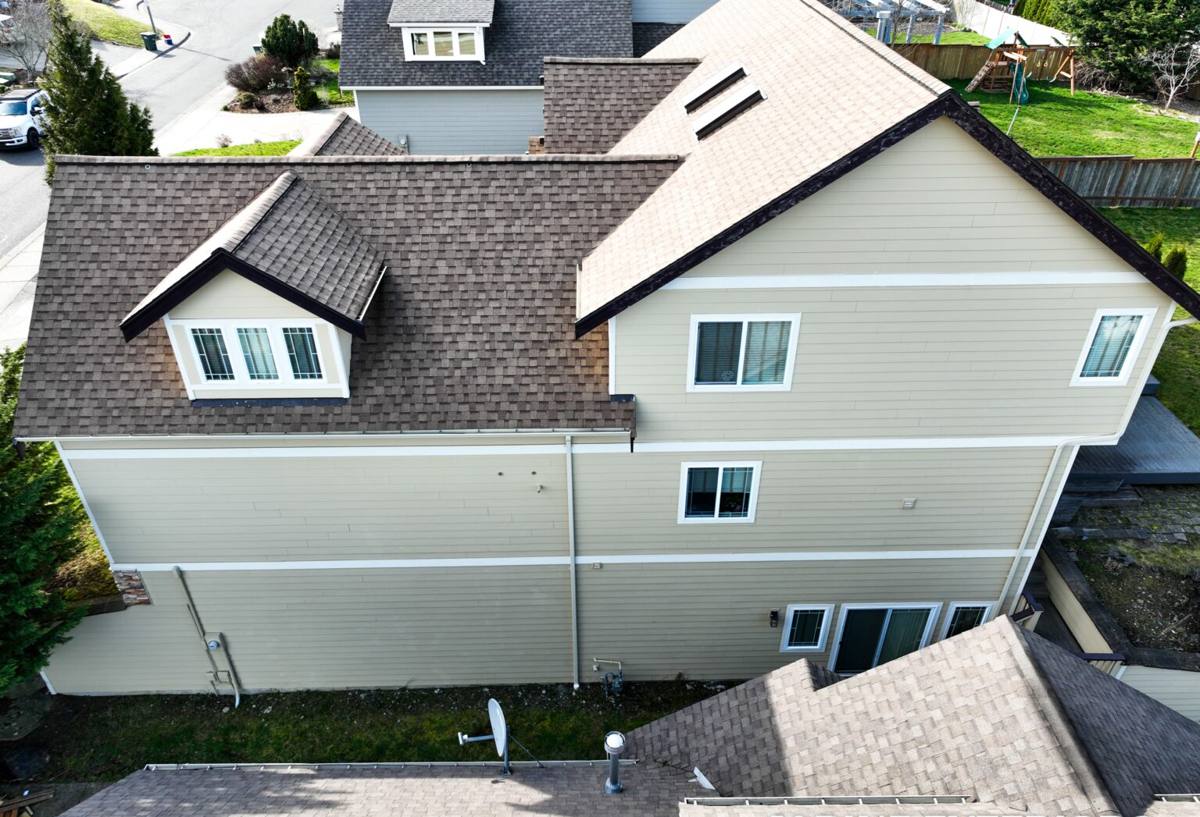
Why Metal Roofing Makes Sense in Blaine
Metal roofing has a real, practical fit for this part of Whatcom County. It sheds moss and standing water far better than a textured shingle surface, it's non-combustible, it holds up to wind uplift better than most alternatives when the fastening and panel spec are right for the site, and a well-built system can outlast two or three asphalt shingle roofs over its service life. None of that means metal is automatically the right choice for every home or budget — it costs more upfront than asphalt, and it demands more precision in the install to actually deliver on that longer lifespan. The tradeoff tends to make the most sense for homeowners planning to stay in the house long-term, for roofs with heavy shade or moss history, and for exposed lots that take the brunt of wind off open water.
What Blaine's Weather Actually Demands From a Metal Roof
Salt Air and Galvanic Corrosion
Salt-laden air accelerates corrosion on metal roofing the same way it does on any other exposed hardware, but metal roofs have an additional risk that asphalt roofs don't: galvanic corrosion between dissimilar metals in direct contact. Steel panels fastened with the wrong grade of screw, or aluminum flashing installed against a copper gutter system, can set up a slow electrochemical reaction that eats away at the less noble metal over years. In a salt-air environment, that reaction runs faster than it would inland. A correct install uses fasteners, flashing, and trim that are metallurgically compatible with the panel material, not just whatever hardware happens to be on the truck.
Wind-Driven Rain and Panel Laps
Storms coming off the water in Blaine don't just fall straight down — wind pushes rain sideways and forces it up under panel laps, ridge caps, and trim edges that would shed water fine on a calm day. Metal roofing depends on correct lap direction, minimum roof pitch for the panel type, and properly sealed seams to keep that wind-driven water out. A panel system installed at too shallow a pitch for its profile, or lapped against the prevailing wind direction, can leak in exactly the kind of weather Blaine gets regularly, even though the same roof would perform fine somewhere calmer.
A Long Moss Season
Metal sheds moss more readily than asphalt shingles because it doesn't give moss spores the porous surface they need to take hold directly on the panel. But moss and organic debris still build up in valleys, around penetrations, and in gutters, and a debris dam in those spots holds moisture against the roof edge and fascia long after the panel field itself has dried. Keeping those areas clear, and detailing them correctly during install, matters as much as the panel choice itself.
Standing Seam vs. Exposed Fastener: Which Fits This Climate
The two most common metal roofing systems handle Blaine's conditions differently, and the difference is worth understanding before comparing bids.
| System | How It's Fastened | Fit for Blaine Conditions |
|---|---|---|
| Standing Seam | Concealed clips under raised seams; no exposed screws through the panel face | Best long-term fit — no exposed fasteners for salt air to work on, and panels can expand and contract with temperature swings without stressing a fastener |
| Exposed Fastener (Ag Panel) | Screws driven through the panel face into the deck or purlins, each with a rubber washer | Lower upfront cost, but washers degrade under UV and salt exposure over time and need periodic inspection or replacement to stay watertight |
Exposed fastener panels aren't a bad product — they're common for a reason and can perform well for years. But in a salt-air, wind-driven-rain environment like Blaine's, the maintenance burden falls on the homeowner to keep an eye on washer condition over the life of the roof. Standing seam removes that maintenance point almost entirely, which is why it's usually the stronger fit for a primary residence here, especially on exposed lots close to the water.
What a Correct Metal Roof Install Involves
Deck Inspection and Underlayment
A metal roof is only as good as what's underneath it. That means inspecting the deck for rot or soft spots before anything new goes down, and installing a high-temperature synthetic or self-adhered underlayment rated for use under metal panels. Ice-and-water shield membrane at eaves and valleys adds a second line of defense exactly where wind-driven rain is most likely to find a way in.
Panel and Fastener Compatibility
Every piece of metal on the roof — panels, clips, screws, flashing, and trim — needs to be compatible with every other piece it touches. Mixing metals without accounting for galvanic reaction is one of the most common mistakes on a rushed metal roofing job, and it's the kind of error that doesn't show up as a problem until years later, when it's already done its damage.
Flashing at Valleys, Penetrations, and Walls
Just like with any roofing material, most leaks on a metal roof start at the details, not the open panel field. Valleys, chimney and vent penetrations, and wall transitions need flashing that's built into the system and properly lapped with the panels, not caulked on afterward as a fix for a detail that wasn't planned for.
Fastening for Expansion and Contraction
Metal panels expand and contract with temperature swings more than most roofing materials, and the fastening system has to allow for that movement rather than fighting it. On standing seam roofs, that means clips spaced and installed to manufacturer specification so the panel can move without stressing a fastener point or oil-canning the panel surface over time.
Cost Factors Worth Understanding
Metal roofing bids can vary widely, and the difference usually comes down to real scope rather than one contractor padding the number.
| Factor | What It Affects |
|---|---|
| Standing seam vs. exposed fastener | Upfront cost versus long-term maintenance and exposed fastener risk |
| Panel gauge and coating quality | Resistance to denting, fading, and salt-air corrosion over the roof's life |
| Underlayment grade | How well the roof resists wind-driven rain getting under panel laps |
| Metal compatibility across the system | Whether galvanic corrosion becomes a slow, hidden problem down the road |
| Flashing and trim scope | How thoroughly valleys, penetrations, and wall intersections are addressed |
| Roof pitch and access | Labor time, staging, and safety requirements on the job |
Ask any contractor to itemize these components in a written bid rather than handing over a single lump-sum number. It's the only way to compare two estimates that may be scoping the same roof very differently.
How Our Process Works
- In-person inspection: We walk the roof and attic ourselves and document the actual condition, rather than estimating from a photo or a satellite image.
- Written estimate: You get an itemized bid covering underlayment, panel system, fastener and flashing compatibility, and cleanup — not a vague single-line number.
- Scheduling around weather: We build reasonable flexibility into the timeline, since wet-season delays are a normal part of working in this part of Whatcom County.
- Deck prep and underlayment: Any deck damage we find gets repaired before underlayment goes down, and underlayment goes down before a single panel is set.
- Panel installation and flashing: Panels, clips, fasteners, and flashing go on as one compatible system, with extra attention at valleys, penetrations, and wall transitions.
- Final walkthrough and cleanup: We review the finished roof with you in person and do a full site sweep before calling the job done.
Why Hiring a Crew That Already Works in Blaine Matters
A crew that regularly works metal roofs in and around Blaine has already seen how salt air off Semiahmoo Bay and Drayton Harbor works on underspecified fasteners and mismatched metals, and which roof orientations hold moss and debris longest through the wet months. That's practical experience that shows up in dozens of small decisions over the course of a job — decisions a crew unfamiliar with this stretch of coastline might not think to make at all.
It also matters after the job is finished. A workmanship warranty is only as good as the company standing behind it years later, and a contractor with an ongoing, established presence in the area is one you can actually reach if a question comes up, rather than a name that's moved on.
A Practical Checklist Before You Choose a Metal Roofing Contractor
- Do they specify panel type, gauge, and coating in the written estimate, not just "metal roofing"?
- Do they confirm metal compatibility across panels, fasteners, and flashing before ordering material?
- Is flashing work at valleys, penetrations, and walls explicitly written into the bid?
- Do they carry current WA contractor licensing, liability insurance, and workers' compensation?
- Can they point to recent, real metal roofing work in or near Blaine?
- Does the bid clearly separate the manufacturer's material warranty from the contractor's own workmanship warranty?
Signs Your Blaine Metal Roof May Need Attention
Metal roofs give warning signs before they fail, and catching them early is often the difference between a minor repair and a much bigger one.
- Rust spots or discoloration around exposed fasteners, screw heads, or panel edges
- Loose or missing screws on exposed fastener panels, especially after a windy stretch
- Moss or debris buildup collecting in valleys or against roof-to-wall transitions
- Panel oil-canning or visible waviness that wasn't there when the roof was new
- Water staining on interior ceilings or in the attic, particularly near flashing details
If any of this sounds familiar, it's worth having the roof looked at before the next stretch of heavy weather rather than waiting for a leak to force the decision.
If you'd like an honest, no-pressure look at your Blaine roof and a written estimate you can compare against anything else you've received, we're glad to come take a look. Use the form below to request a free estimate.