 Bellingham
 Board & Batten Siding for Ferndale Homes
Ferndale sits close enough to Bellingham Bay and the Strait of Georgia that salt-laden air is a real factor in how exterior materials age here, and it sits squarely in the same wet, moss-prone corner of Whatcom County as the rest of the region. Board and batten siding — with its bold vertical lines and deep shadow reveals — is one of the most requested looks for farmhouse, craftsman, and modern builds in this area. Done correctly, it's also one of the more demanding sidings to install well, because every vertical joint and every batten strip is a potential path for water to find its way behind the wall. This page covers what board and batten siding needs to hold up in Ferndale specifically, what a correct installation actually involves, and how our process is built around this area's climate rather than a generic national spec sheet.
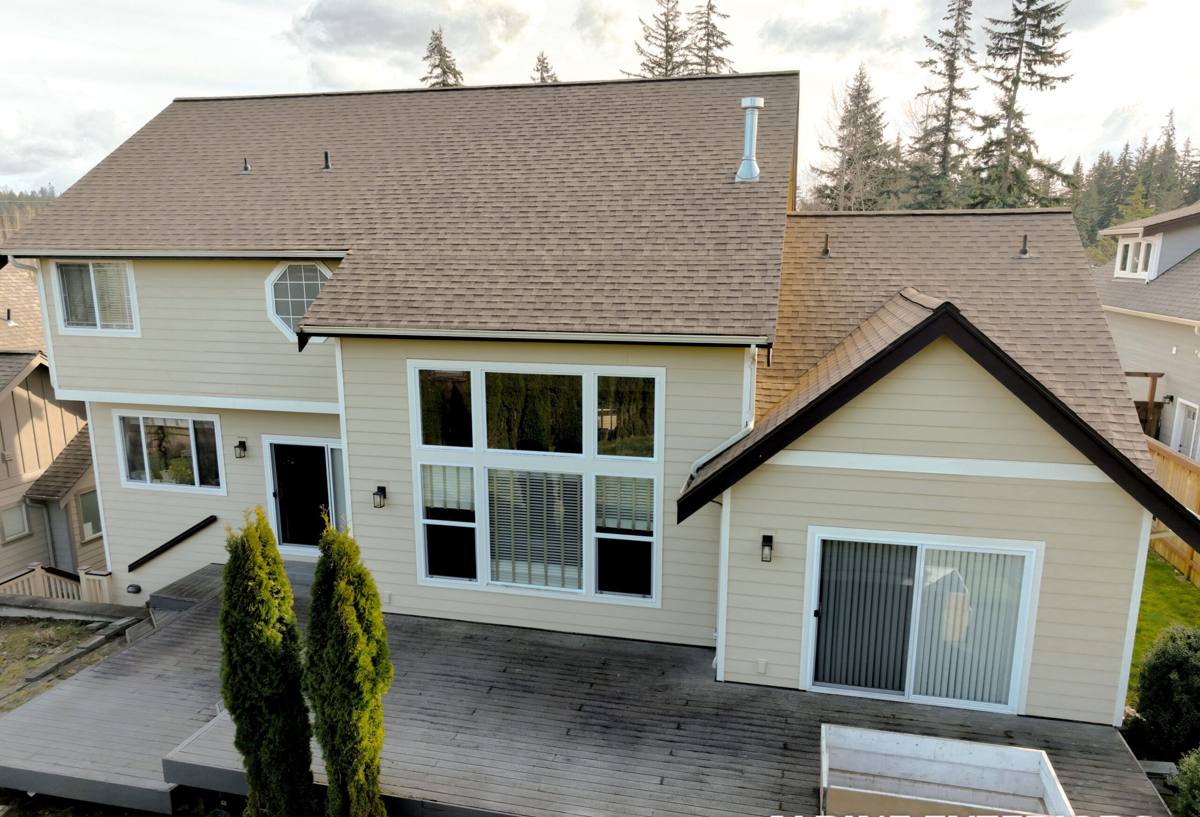
What Board & Batten Siding Actually Is
Board and batten is a siding pattern, not a single product. It's built from wide, flat vertical panels (the "boards") with narrower strips (the "battens") installed over the seams between them. The result is a rhythmic, shadow-lined vertical facade that reads very differently from horizontal lap siding, and it's often used to accent gables, entries, or an entire elevation for a farmhouse or modern-craftsman look.
How We Build It
We install this pattern using James Hardie fiber cement — typically HardiePanel vertical siding for the field boards, paired with HardieTrim boards used as the battens. Both are factory-engineered fiber cement, not solid wood or an engineered wood substrate, which matters a great deal in a climate where wood-based battens and boards are the first thing to swell, cup, and rot at the fastener lines.
Why the Pattern Is Riskier Than Lap Siding
Every vertical seam under a batten is a potential water path, and there are more seams per square foot in a board and batten wall than in a horizontal lap wall of the same size. The battens themselves create small ledges and shadow lines where wind-driven rain can collect. None of this is a reason to avoid the look — it just means the installation details matter more here than they do on a simpler profile.
What Ferndale's Climate Demands From This Siding
Salt Air and Fastener Corrosion
Proximity to Bellingham Bay and the open water of the Strait of Georgia means homes in and around Ferndale see more airborne salt than siding manufacturers assume in their baseline specs. Salt air accelerates corrosion in exposed fasteners, uncoated trim edges, and any metal flashing that isn't rated for a marine-influenced environment. On a board and batten wall, where battens are typically face-nailed or blind-nailed through additional layers, fastener selection and coverage matter even more than usual.
Driving Rain
Storms coming off the water bring rain sideways, not straight down, and a vertical siding pattern with dozens of batten seams gives that wind-driven rain plenty of surfaces to test. A wall assembly that isn't built to shed and drain that water — rather than simply block it — will eventually let moisture behind the cladding, where it's slow to dry and easy to miss until it's already damaged sheathing or framing.
Moss and Algae Season
Whatcom County's long, wet, low-light stretch of the year is ideal for moss, algae, and mildew growth, especially on north-facing walls, shaded elevations, and anywhere tree canopy blocks sun and airflow. Board and batten's deep shadow lines and batten ledges create more of those shaded, slow-drying micro-surfaces than a flat lap profile does, which is exactly why the coating and the ventilation behind the siding both matter here.
What a Correct Board & Batten Installation Involves
A board and batten wall that's going to hold up through Ferndale winters isn't just panels and trim nailed to the house. The details underneath and around the visible siding are what determine whether the wall stays dry for the next thirty years or starts showing problems in five.
- A drainage gap (rainscreen) behind the siding so any moisture that gets past the cladding has somewhere to go besides the sheathing
- Correctly lapped and sealed weather-resistive barrier under the entire assembly, with proper window and door flashing integration
- Batten spacing and fastening that follows James Hardie's engineering specs for panel width, not a look-first approach that skips structural nailing requirements
- Corrosion-resistant fasteners appropriate for a marine-influenced, high-moisture climate
- Factory-applied ColorPlus finish on both panels and battens, so cut edges and joints are the only places needing field touch-up
- Proper clearance at grade, decks, and roof lines so the bottom of the siding isn't sitting in standing water or snow load
- Sealed and back-primed cut ends at every seam, corner, and penetration
Skip any one of these and the siding can still look right on installation day. The problems that show up later — staining at battens, soft trim, moss colonies that keep coming back no matter how often they're cleaned off — usually trace back to one of these steps being shortcut.
Board & Batten Options: What Changes the Job
| Factor | What It Affects | Why It Matters in Ferndale |
|---|---|---|
| Panel vs. individual board layout | Number of seams, labor time | Fewer seams means fewer places for driving rain to test |
| Batten spacing/width | Look, fastening pattern | Wider reveals mean more shadow and more shaded, slow-drying surface |
| Elevation exposure (sun vs. shade) | Coating longevity, moss growth | North and tree-shaded walls need the drainage plane done right, not just a good coating |
| Existing wall condition | Whether a full tear-off or overclad is appropriate | Rot behind old siding is common on wet, older Whatcom County homes and has to be addressed before any new siding goes on |
| Trim and corner detailing | Water shedding at transitions | Poorly detailed outside corners are a common point of water intrusion in wind-driven rain |
Our Process for Ferndale Board & Batten Projects
We start with an on-site look at the specific walls being resided, not a phone estimate, because exposure, existing sheathing condition, and drainage details vary house to house even within the same neighborhood. From there:
- Inspection of existing siding, sheathing, and flashing, including any areas already showing moss, staining, or soft spots
- A written scope covering tear-off or overclad, drainage plane approach, flashing details, and the specific James Hardie products being used
- Proper installation of the weather-resistive barrier, flashing, and rainscreen gap before a single panel goes up
- Panel and batten installation to manufacturer fastening specs, with attention to corners, penetrations, and grade clearance
- Final detailing: caulking, touch-up coating on cut edges, and a walk-through of the finished work
We don't treat the visible siding as the whole job. The parts nobody sees again once the battens go up are the parts that determine whether this holds up through another decade of Whatcom County winters.
Cost Factors to Expect
Board and batten in James Hardie fiber cement typically costs more than standard lap siding of the same square footage, mainly due to the added labor of installing and detailing battens over every seam. Exact pricing depends on wall condition, how much of the home is getting the board and batten treatment versus a complementary lap or shingle profile elsewhere, and how much existing damage (if any) needs to be addressed before new siding goes on. We give straightforward, itemized estimates rather than a single vague number, so homeowners can see what's driving the cost.
Why Hiring a Crew That Already Works in Ferndale Matters
A contractor who only occasionally works this far north in Whatcom County may not have a feel for how much salt exposure, driving rain, and shaded moss growth actually affect an installation here versus a drier inland job. A crew that regularly works Ferndale and the surrounding area knows which elevations tend to need extra attention to drainage detailing, understands local permitting expectations, and has already seen what happens when board and batten is installed without the moisture management this climate requires. That familiarity shows up in fewer callbacks and a siding job that's built for the conditions it actually has to survive, not a generic national average.
Get a Straightforward Estimate
If you're considering board and batten siding for a home in Ferndale, we're happy to walk the exterior with you, point out anything we see with the existing siding or trim, and put together a clear, no-pressure estimate built around your home's actual exposure and condition. Use the form below to get started.