 Bellingham
 Decking in Sunnyland Takes More Than a Nice Board
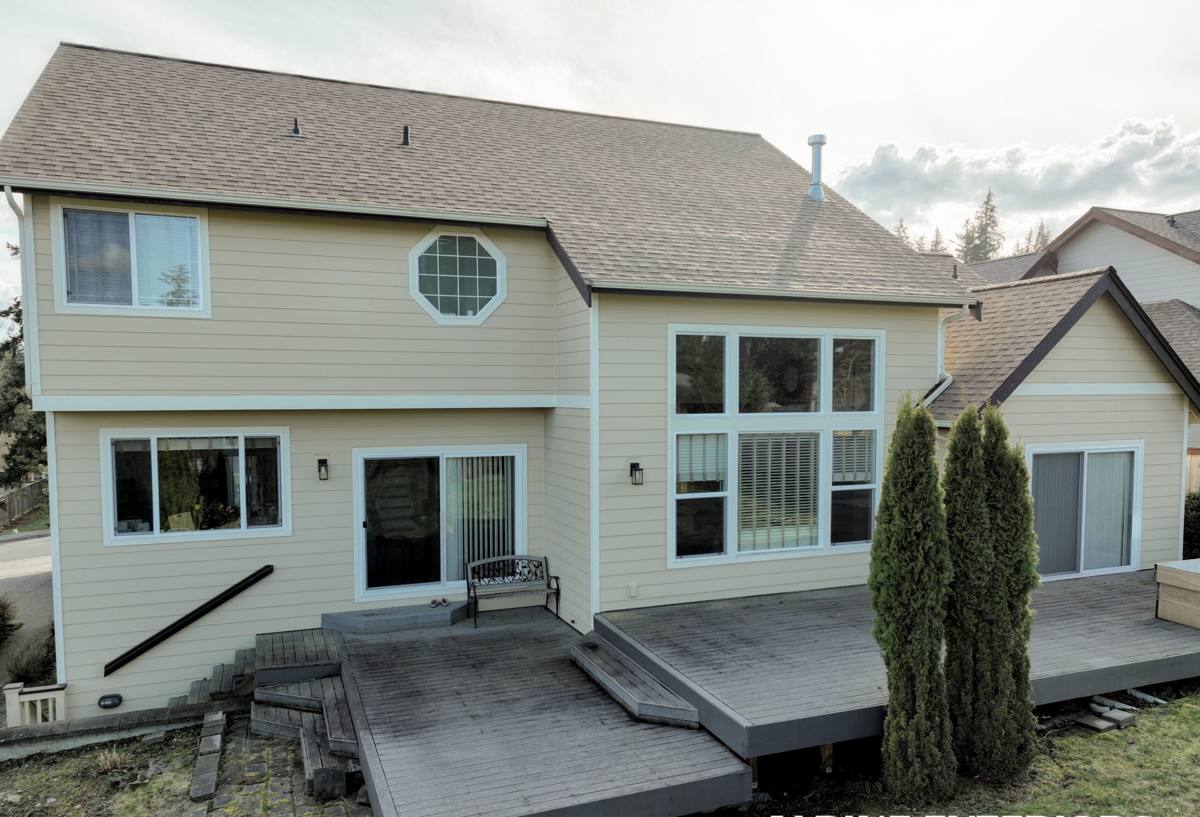
Sunnyland sits close enough to Bellingham Bay that salt-laden air is a daily fact of life, not an occasional nuisance. Add in the region's long stretch of driving rain from fall through spring, plus a moss season that can run half the year under the tree cover common in this neighborhood, and you've got a set of conditions that will find every weakness in a poorly built deck within a few seasons. We've worked on enough homes in this part of Whatcom County to know that "composite decking" isn't a single product decision — it's a system, and the system has to be built for exactly this climate, not a generic one.
This page is about one thing: composite decking done right for Sunnyland homes. Not a national overview of decking materials, not a sales pitch for a specific brand — an honest look at what your deck actually needs here, what correct installation looks like, and why the details matter more in this neighborhood than they would somewhere drier.
What Bellingham's Climate Actually Does to a Deck
Salt Air
Homes closer to the water deal with airborne salt that settles on every exterior surface, including decking. Salt itself doesn't rot composite boards the way it can corrode metal, but it accelerates the breakdown of cheap fasteners, hidden clips, and railing hardware if those components aren't rated for coastal exposure. A deck that looks fine on the surface can have fasteners quietly corroding underneath within a few years if the wrong hardware was used.
Driving Rain
Whatcom County rain rarely falls straight down — wind-driven rain gets under railings, behind fascia boards, and into any gap that wasn't sealed or flashed correctly. On a deck, that means water finds its way to the framing and ledger board attachment points. If those areas weren't flashed properly at install, you get slow, hidden rot in the structure long before the composite decking on top shows any sign of a problem.
Moss Season
Between the rainfall and the tree canopy common around Sunnyland, moss and algae have a long window to establish themselves on any deck surface that stays damp and shaded. Composite boards resist rot, but the surface texture of some products holds moisture and organic debris more than others, which affects how much moss growth you'll actually see and how easy it is to clean off.
None of these are exotic problems — they're just the normal conditions of building outdoor structures in this part of Washington. A deck built without them in mind will still look fine on installation day. The difference shows up two, five, and ten years later.
Why Composite Decking Fits Sunnyland Homes
Composite decking is a strong match for this climate for a few concrete reasons, not because it's the trendy option:
- It doesn't absorb water the way wood does, so it isn't feeding rot from the inside the way a wood board can once the finish wears through.
- It doesn't need annual staining or sealing, which matters when the rainy season leaves a narrow dry window to do that kind of maintenance anyway.
- Modern capped composite resists splintering and graying, so it holds up visually under UV exposure and damp shade alike.
- It won't cup, crown, or warp the way lower-grade or improperly dried wood can when it cycles between wet winters and dry summer stretches.
That said, composite decking is not maintenance-free, and it is not immune to the effects of a bad installation. The material only performs as well as the structure underneath it and the details around fasteners, spacing, and drainage. That's where most of the real difference between a deck that lasts and one that doesn't actually comes from.
What a Correct Composite Deck Installation Involves
Framing and Substructure
The frame underneath a composite deck still needs to be built to the same structural standards as any deck — proper joist spacing (often tighter than what's used under wood, depending on the composite product's span rating), pressure-treated or otherwise rated lumber, and solid ledger attachment with correct flashing where the deck meets the house. This is the part homeowners rarely see and the part that determines whether the deck is sound in fifteen years.
Drainage and Airflow Underneath
A deck that traps moisture underneath — because it sits low to grade, lacks ventilation, or was built without any slope for water to run off — will stay damp longer after every rain event. In a climate with as much rainfall as Bellingham gets, that damp underside is exactly where moss, mildew, and eventually structural rot get a foothold. Proper grading, gaps, and in some cases raised framing all factor into keeping air moving under the deck.
Fasteners and Hardware
Given the salt air near the bay, we use fasteners, joist hangers, and hidden clip systems rated for coastal or marine-grade exposure, not standard interior-grade hardware. This is a small cost difference at install and a significant difference in how the deck holds up over time.
Board Spacing and Direction
Composite boards expand and contract with temperature more than wood does, so gapping has to be set correctly at install — too tight and boards can buckle, too loose and it looks sloppy and collects more debris. Board direction and layout also affect how well water sheds off the surface, which matters more here than in a drier climate.
Composite Decking Options and What Drives Cost
Not every composite product is built the same way, and the differences matter for a wet, shaded property like the ones common in Sunnyland. Here's a general comparison to help set expectations — exact pricing depends on your deck's size, structure, and access.
| Factor | Standard Capped Composite | Premium/PVC-Based Composite |
|---|---|---|
| Moisture resistance | Good — capped shell resists absorption | Excellent — fully synthetic core, no wood fiber to hold moisture |
| Moss/algae resistance | Good with routine cleaning | Better on lower-texture surface options |
| Fade resistance | Solid, varies by brand and color | Typically stronger UV and fade performance |
| Upfront cost | Moderate | Higher |
| Typical warranty | 25–30 years, prorated | Often 25–50 years, less proration |
Beyond the board itself, the biggest cost factors on a real Sunnyland project are usually the condition of the existing structure (tear-off and reframing versus building new), how the deck ties into the house, railing style and material, and site access for equipment and material delivery on lots with mature trees or tighter yards.
Our Process, From Estimate to Finished Deck
- On-site assessment: We look at existing structure (if replacing a deck), grade, drainage, tree cover, and how close the property sits to salt air exposure, since that affects hardware recommendations.
- Honest scope and estimate: We walk through material options and what's actually needed structurally — no upselling a bigger job than the property requires.
- Framing and structural work: Ledger flashing, joist layout, and hardware are addressed first, since this is the part that determines longevity.
- Composite installation: Boards, fasteners, and spacing are set according to manufacturer specs adapted for our climate, not generic guidelines.
- Final walkthrough: We go over basic care so the deck stays looking good through its first moss season and beyond.
Caring for a Composite Deck Through Moss Season
Composite decking cuts down maintenance significantly compared to wood, but "low maintenance" isn't "no maintenance," especially with the amount of shade and rainfall parts of Sunnyland get. A simple seasonal routine keeps a well-built deck looking the way it should:
- Sweep off leaves, needles, and organic debris regularly — this is the main food source for moss and algae growth.
- Rinse the deck surface periodically during the wettest months rather than letting debris sit and compost in place.
- Use a soft-bristle brush and a composite-safe cleaner for any moss or algae spots rather than a pressure washer on high setting, which can damage the board surface over time.
- Keep gutters and downspouts near the deck clear so runoff isn't dumping extra water directly onto or under the decking.
- Check railing posts and fastener points once a year for any early sign of movement or corrosion, particularly on properties closer to the water.
Why Hiring a Crew That Already Works in Sunnyland Matters
A lot of deck problems we get called to fix didn't come from bad composite material — they came from installation details that would have worked fine in a drier, less coastal climate but weren't right for this one. Ledger flashing that wasn't sealed for driving rain. Standard hardware that wasn't rated for salt air. Framing that didn't allow enough airflow underneath in a shaded, damp yard. These aren't dramatic failures on day one; they're slow problems that show up years later, after the labor and material cost has already been spent.
Working regularly in Sunnyland and the surrounding Bellingham neighborhoods means we're not guessing at how this climate behaves — we're building to it every time. That's the difference between a deck that needs attention in year three and one that's still solid in year twenty.
If you're planning a new composite deck or replacing an aging one in Sunnyland, we're happy to take a look at your property and give you a straightforward, no-pressure estimate. Use the form below to get started.