 Bellingham
 Why Metal Roofing Makes Sense for Cordata Homes
Cordata sits in north Bellingham, close enough to the water that salt-laden air is a real factor in how exterior materials age, and far enough inland that it still gets the full brunt of Whatcom County's wet season every year. That combination is hard on roofing. Asphalt shingles granulate and shed grit faster in this kind of moisture cycle, and they give moss a foothold almost every winter. A correctly installed metal roof handles that combination better than most other roofing types, but "correctly installed" is doing a lot of work in that sentence. Metal roofing rewards good workmanship and punishes shortcuts more visibly than shingles do, because there's no forgiving layer of granules to hide a bad seam or a poorly flashed penetration.
This page is about metal roofing specifically for Cordata homes — what the local climate demands, what a correct installation actually involves, and how we approach the work when a homeowner calls us for this specific job in this specific part of Bellingham.
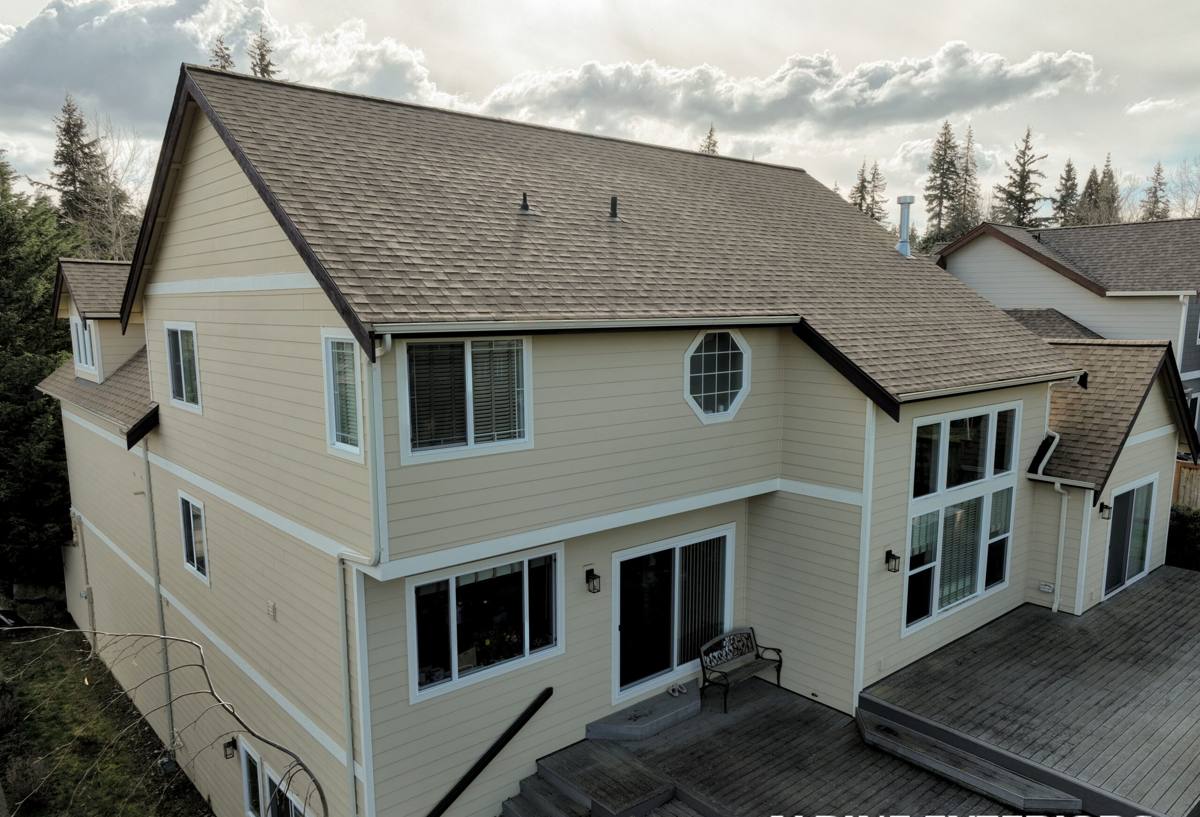
What Bellingham's Climate Actually Does to a Roof
Salt Air and Corrosion
Bellingham Bay and the greater Salish Sea push a steady trickle of salt-laden moisture inland. It's not as aggressive as a direct oceanfront property, but it's enough over ten or fifteen years to accelerate corrosion on unprotected steel, cheap fasteners, and mismatched metals. Homes further from the water still see some of this effect carried by wind and fog, which is why fastener and panel material selection matters even for a neighborhood that isn't right on the shoreline.
Driving Rain
Whatcom County doesn't just get a lot of rain — it gets wind-driven rain, especially during fall and winter storm systems moving in off the Strait of Georgia. Wind-driven rain finds its way under poorly lapped panels, through under-flashed valleys, and around penetrations that weren't sealed with the right detail. A metal roof's weather resistance is only as good as its flashing and underlayment, not just the panels themselves.
Moss and Algae Season
Bellingham's moss season runs long — realistically most of the year in shaded, north-facing, or tree-covered sections of a roof. Metal sheds moss far better than asphalt because there's no rough surface for spores to grip, but valleys, low-slope sections, and areas that stay shaded under mature trees still need to be detailed and maintained with that in mind.
What a Correct Metal Roof Installation Involves
A lot of the difference between a metal roof that performs for forty-plus years and one that leaks within five comes down to details most homeowners never see once the panels are on. This is the part of the job that separates a properly executed roof from one that just looks right from the street.
Underlayment
Metal roofs need a synthetic or high-temp underlayment rated for the panel type and local moisture exposure — not a leftover roll of felt from an asphalt job. In a climate like ours, the underlayment is your backup plan every time wind pushes rain past the panel seams, so it isn't optional.
Fasteners and Flashing
Fasteners and flashing should match the panel metal to avoid galvanic corrosion — mixing metals (for example, the wrong fastener alloy against aluminum panels) sets up a slow electrochemical reaction that eats away at the metal from the point of contact outward. This is one of the most common shortcuts we see on jobs we're asked to fix, and it's completely avoidable with the right hardware.
Ventilation
Metal roofs need proper attic or roof-deck ventilation to manage condensation, especially in our climate where indoor and outdoor temperature and humidity swing a lot through the seasons. Without it, moisture can condense on the underside of the panels and cause problems that have nothing to do with the roof's exterior weatherproofing.
Valleys, Penetrations, and Transitions
Every valley, chimney, vent pipe, and roof-to-wall transition is a place where water wants to get in. These details take real time to do right, and they're the first thing we check when a homeowner calls us about a leak on a metal roof someone else installed.
Choosing the Right Metal Roofing System
Not every metal roofing system is the right fit for every home, and the right choice depends on roof pitch, budget, and how the home is used. Here's how the main options compare for a typical Cordata home.
| System | Best For | Trade-Offs |
|---|---|---|
| Standing Seam | Most Cordata homes; concealed fasteners, cleanest look, best long-term weathertightness | Higher upfront cost; requires experienced installers for consistent seams |
| Exposed-Fastener Panel | Budget-conscious projects, outbuildings, shops | Fasteners eventually need re-torquing or replacement as gaskets age; more failure points in driving rain |
| Metal Shingles/Shakes | Homeowners who want a traditional look with metal's durability | More seams and laps than standing seam; installation quality matters even more |
For most primary residences in this area, we steer homeowners toward standing seam because concealed fasteners remove one of the most common long-term failure points in a climate that sees this much wind-driven rain. Exposed-fastener panels have their place, particularly on secondary structures, but we're upfront that they carry more maintenance over the life of the roof.
Steel, Aluminum, or Something Else
Material choice affects both corrosion resistance and cost. Steel panels with a quality factory coating hold up well and cost less than aluminum, but they rely on that coating staying intact — any bare scratch is a place rust can start, which matters more this close to the water than it would inland. Aluminum doesn't rust because it doesn't contain iron, which makes it a strong choice for homes with more direct salt exposure, though it costs more and dents more easily than steel. We'll walk through both options honestly rather than pushing whichever one has the better margin.
Our Process for Cordata Metal Roofing Projects
Every metal roof job follows the same core process, whether it's a full replacement or a new install on an addition:
- On-site inspection of the existing roof deck, ventilation, and any moisture or moss damage before we quote anything
- A written estimate that spells out panel type, underlayment, flashing details, and fastener hardware — not just a bottom-line number
- Deck repair or replacement where rot or soft spots are found, done before any new roofing goes on
- Installation of underlayment rated for our moisture exposure, followed by panels, trim, and flashing to manufacturer spec
- Careful detailing of valleys, penetrations, and roof-to-wall transitions, since these are where most leaks actually start
- Final walkthrough with the homeowner covering what was done, what to expect long-term, and basic maintenance guidance
Cost Factors for a Cordata Metal Roof
Every roof is different, but the main cost drivers are consistent. Roof size and pitch set the baseline labor and material need. Panel system (standing seam versus exposed-fastener) and material (steel versus aluminum) move the price meaningfully. Roof complexity — the number of valleys, dormers, and penetrations — adds labor time because those are the detail-heavy parts of the job. Deck condition matters too; if we find rot or damage once the old roofing is off, that's addressed before new roofing goes on, and it's the one variable that's genuinely hard to know until the roof is opened up.
As a broad range, most single-family metal roof installations in this area land somewhere between $12,000 and $25,000 or more, depending on those factors. We won't know your real number until we've actually looked at your roof, but we'll never surprise you with a number that doesn't match what we quoted in writing.
Maintenance: What a Metal Roof Actually Needs
One of the real advantages of metal roofing in this climate is how little maintenance it needs compared to asphalt. That said, "little" isn't "none." We recommend a visual check once or twice a year, particularly after the fall storm season, to clear debris from valleys, check for any moss establishing in shaded low-slope sections, and confirm fasteners and sealant at penetrations are still sound. None of this requires a full re-roof crew — it's the kind of maintenance a homeowner can largely do themselves once shown what to look for, or have checked quickly during a routine gutter cleaning.
Why Local Experience in Cordata Matters
A crew that regularly works this part of Bellingham knows how the wind actually behaves against a roof here, how long moss season really runs on a shaded north slope, and what fastener and flashing choices hold up against this specific mix of salt air and driving rain — not a generic climate zone from a manufacturer's install guide. That local knowledge shows up in decisions a homeowner never sees directly: which underlayment gets specified, how valleys get detailed, which metals get paired together. It's also why we're straightforward about trade-offs instead of steering every homeowner toward the same product regardless of their roof or budget.
If you're weighing a metal roof for your Cordata home, we're happy to take a look and walk you through what your roof specifically needs — no pressure, no obligation. Fill out the form below and we'll set up a free estimate.