 Bellingham
 Why Silver Beach Roofs Take a Different Kind of Beating
Silver Beach sits close enough to the water that homes here deal with a combination of stresses most inland Whatcom County properties don't see in the same intensity: salt-tinged air, rain that comes in sideways during winter storms, and heavy tree shade that keeps moss active for most of the year. None of these problems are unique to this neighborhood on their own, but together they shorten the life of a roof that wasn't built with them in mind. A roof replacement here isn't just "put new shingles on" — it's choosing materials and details that hold up to this specific combination.
Salt Air and Metal Fatigue
Airborne salt accelerates corrosion on anything metal — nail heads, flashing edges, drip edge, valley metal, even the fasteners holding shingles down. On a home a few miles inland, standard galvanized fasteners might last the life of the roof without issue. Closer to the water, that same hardware can start showing rust streaks well before the shingles themselves are due for replacement. It's a small detail that gets skipped by crews who don't work this area regularly, and it's one of the first things we account for in material selection.
Driving Rain and Wind-Driven Water
Storms coming off the water don't always fall straight down — wind pushes rain sideways, up under shingle tabs, and around flashing details that would be fine in calmer conditions. A roofing system built for a sheltered, inland lot can perform noticeably worse here even if it's installed correctly to spec, simply because the spec wasn't written with wind-driven water in mind. Underlayment choice, fastening pattern, and flashing overlap all matter more in a neighborhood exposed like this one.
A Moss Season That Doesn't Really End
Mature tree cover keeps large sections of many Silver Beach roofs shaded and damp well after the rest of Bellingham has dried out. That combination of shade and moisture keeps moss growing across a much longer stretch of the year than you'd see on a roof in full sun. Moss isn't just cosmetic — it holds water against the shingle surface, works its way under tabs, and gradually lifts the granules that protect the shingle mat underneath. Left alone through a few wet seasons, it turns a 25-year shingle into a 15-year shingle.
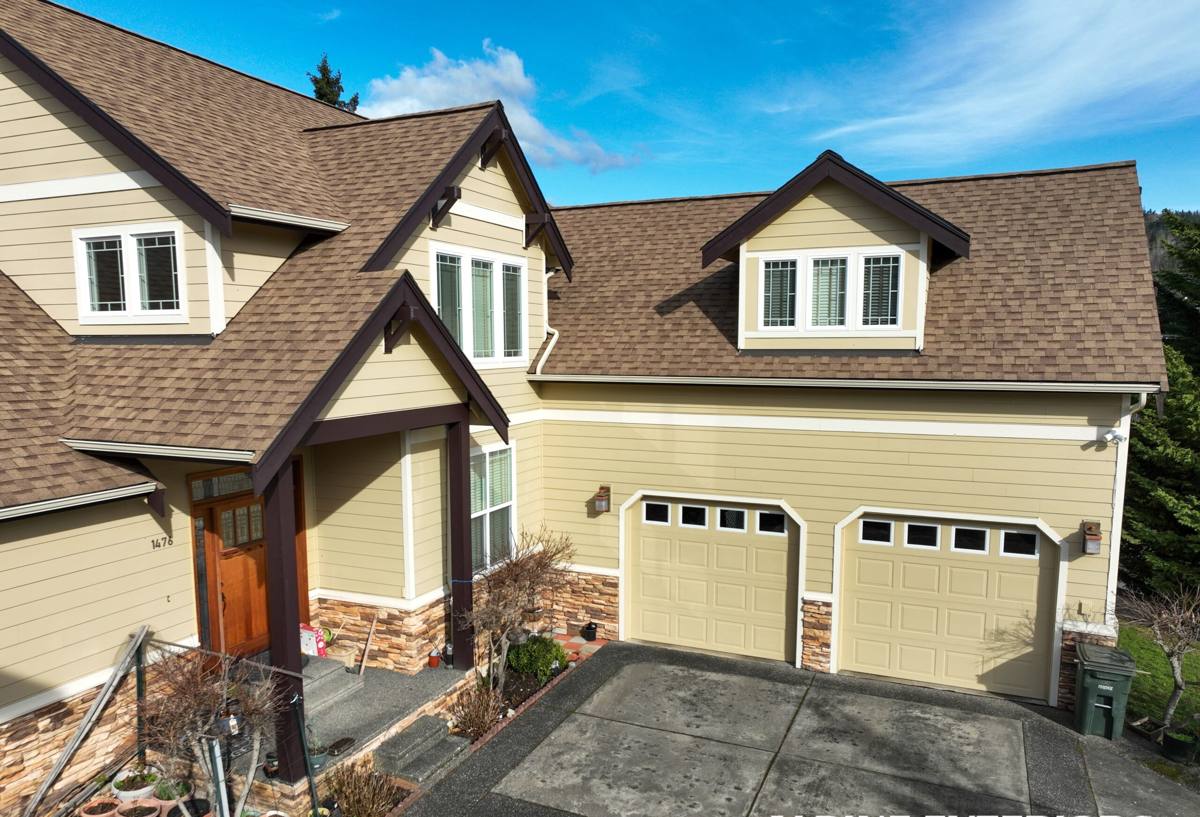
Signs Your Roof Has Reached the End of Its Service Life
Not every roof problem means a full replacement — plenty of issues around here are legitimate repairs. But there's a point where patching stops being cost-effective and a full tear-off is the honest recommendation. Signs worth taking seriously include:
- Granule buildup collecting in gutters or at downspout outlets, especially after a storm
- Shingles that are cupping, curling at the edges, or visibly bald in patches
- Moss established across multiple slopes rather than just isolated shaded spots
- Soft or spongy spots when walking the roof, suggesting deck damage underneath
- Daylight visible through the roof deck from inside the attic
- Repeated leaks in different spots each season rather than one recurring trouble area
- Flashing around chimneys, vents, or valleys that's rusted, lifted, or missing sealant
- A roof that's already 20+ years old and has had more than one round of patch repairs
If you're seeing two or more of these, it's worth getting an honest inspection before committing to another round of patchwork.
What a Correct Roof Replacement Actually Involves
A roof replacement done right is more than swapping old shingles for new ones. For a Silver Beach home, three parts of the job matter more than they would on a sheltered, inland lot.
Full Tear-Off and Deck Inspection
We don't install new roofing over old layers, and we don't recommend it to anyone in a climate like this one. A full tear-off lets us actually see the deck — check for soft spots, rot from long-term moss or moisture intrusion, and any damage hidden under the old shingles. Any compromised sheathing gets replaced before anything new goes down. Skipping this step to save time just means paying for it later, usually as a leak.
Underlayment and Flashing Built for Driving Rain
Given the wind-driven rain this area sees, we use synthetic or self-adhering underlayment in vulnerable areas — valleys, eaves, and around penetrations — rather than relying solely on standard felt. Flashing gets sized and lapped with extra attention at chimneys, skylights, and wall intersections, since these are the spots where wind-blown water finds its way in first.
Ventilation Sized for the Moisture Load
A roof that's shaded and damp for much of the year needs attic ventilation that can actually keep pace with that moisture. Undersized or blocked ventilation traps humid air against the underside of the deck, which speeds up rot and gives moss and mold an easier foothold from below as well as above. We check intake and exhaust balance as part of every replacement, not just as an afterthought.
Matching the Roofing Material to This Microclimate
There's no single "best" roofing material for every home — it depends on your budget, your roof's exposure, and how much maintenance you want to take on. Here's how the common options compare for a home dealing with salt air, driving rain, and heavy moss pressure:
| Material | Moss/Moisture Resistance | Salt Air Durability | Maintenance Needs | Typical Lifespan |
|---|---|---|---|---|
| Architectural asphalt shingle | Good, especially with algae-resistant granules | Good with corrosion-resistant fasteners and flashing | Periodic moss treatment and gutter clearing | 25-30 years |
| Standing seam metal | Excellent — sheds moisture, little for moss to grip | Very good with the right coating and fastener spec | Low — occasional inspection of seams and fasteners | 40-50+ years |
| Cedar shake | Requires diligent upkeep — moisture and shade accelerate decay | Moderate — needs regular treatment near salt air | High — regular cleaning, treatment, and spot repair | 20-30 years with upkeep |
| Synthetic/composite shingle | Good, resists moisture absorption well | Good, minimal corrosion-prone components | Low to moderate | 30-50 years |
We're honest about cedar shake specifically: it can look great, but in a shaded, damp, salt-exposed spot it asks for more upkeep than most homeowners want to commit to, and skipping that upkeep shortens its life fast. That's not a knock on the material — it's a maintenance-and-moisture-exposure tradeoff worth knowing before you choose it for this location.
How We Handle a Silver Beach Roof Replacement, Start to Finish
- On-site inspection of the current roof, deck, ventilation, and any problem areas, with a written estimate — no pressure to decide on the spot
- Material walkthrough where we go over the tradeoffs above based on your roof's specific exposure and your budget
- Permitting handled on our end before work begins
- Full tear-off and deck inspection, with any damaged sheathing replaced and documented
- Installation of underlayment, flashing, ventilation components, and the chosen roofing material to manufacturer spec
- Final walkthrough with you, plus full site cleanup and magnetic sweep for stray fasteners
- Warranty paperwork provided in writing, covering both material and workmanship
Keeping Moss and Moisture From Shortening Your Next Roof's Life
A correctly installed roof still benefits from some basic upkeep in a neighborhood like this one. A few habits go a long way:
- Zinc or copper strips near the ridge, which release trace metals that discourage moss regrowth as rain washes over them
- Gutter cleaning on a more frequent schedule than an open, sun-exposed lot would need, since tree debris builds up faster in shaded areas
- Trimming back branches that overhang the roof to reduce shade and debris buildup
- A yearly visual check for moss returning in shaded valleys or north-facing slopes, so it can be treated before it spreads
None of this replaces a properly built roof, but it does stretch the life of one.
Why Hiring a Crew That Already Works This Neighborhood Matters
A lot of roofing problems in Silver Beach aren't caused by bad shingles — they're caused by a roof spec that was written for a different climate. A crew that mostly works drier, more sheltered parts of Whatcom County may not think twice about fastener grade, underlayment placement, or ventilation sizing, because it rarely matters where they usually work. Around here, it matters every time. Working this neighborhood regularly means we already know which slopes catch the worst wind-driven rain, which spots hold onto moss longest, and which flashing details actually need the extra attention. That's the difference between a roof that looks right on installation day and one that's still performing well a decade in.
If your roof is showing its age or you just want an honest read on where it stands, we're happy to take a look. Reach out for a free, no-pressure estimate using the form below.