 Bellingham
 Siding Repair Built for Cordata's Weather, Not Just Its Curb Appeal
Cordata sits on Bellingham's north side, close enough to the water and the open weather systems that roll in off the Salish Sea that its homes take a specific kind of beating year after year. Salt-tinged air, driving rain that comes in sideways more often than straight down, and a moss season that can stretch from early fall through late spring all work on exterior siding in ways that a generic repair job won't fully address. A patch that looks fine in July can fail by the following February if it wasn't built for what Whatcom County actually throws at a house.
We repair siding across Bellingham, but Cordata's mix of housing stock — a blend of older single-family homes and newer construction from the past two decades — means we see a fairly consistent pattern of problems. Understanding that pattern is most of what separates a repair that lasts from one that's really just a cosmetic fix.
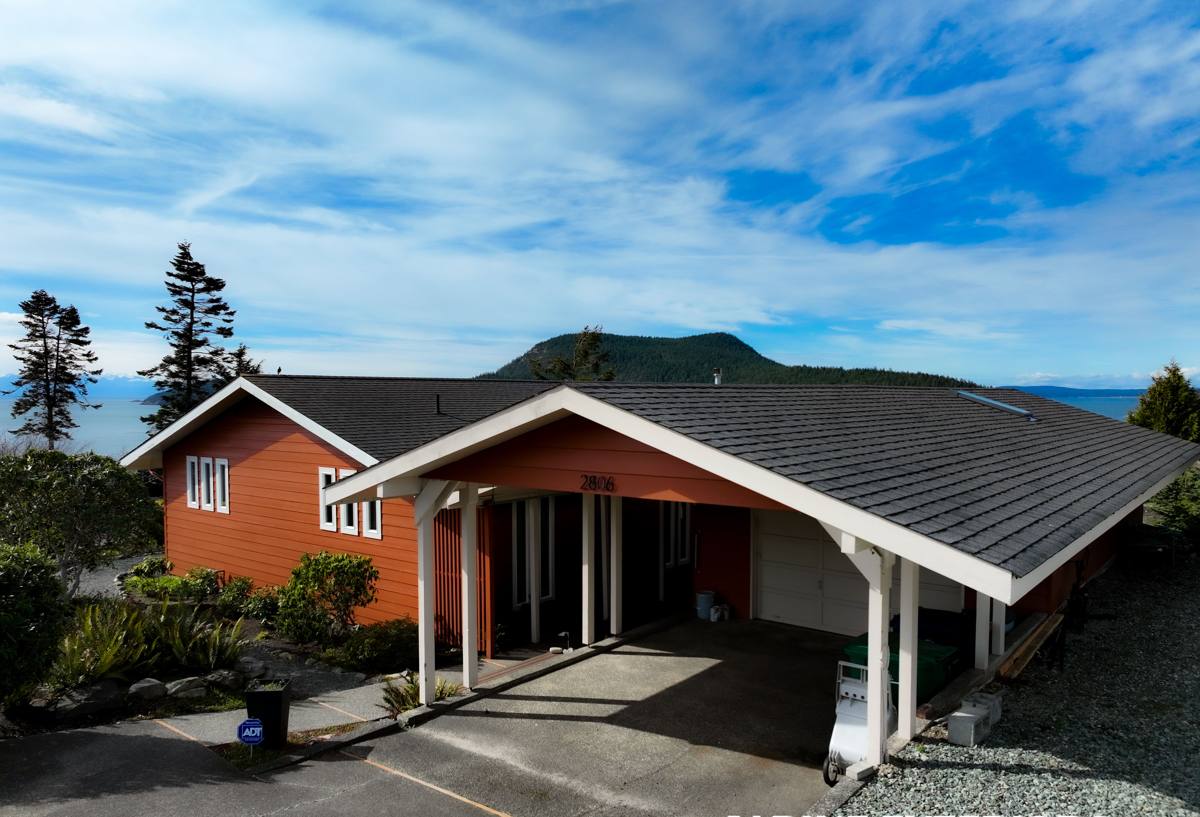
Why Cordata Siding Takes a Beating
Salt Air and Slow Corrosion
Proximity to Bellingham Bay means the air here carries more salt than an inland town would. Salt-laden moisture accelerates corrosion on fasteners, flashing, and any exposed metal trim, and it can gradually break down the surface finish on siding materials that weren't engineered to resist it. Over years, that shows up as fastener bleed, chalky or fading paint film, and soft spots where trim meets siding.
Driving Rain and Wind-Driven Moisture
Bellingham doesn't just get rain — it gets rain pushed sideways by wind coming off open water and low terrain. That matters more than people expect, because siding systems are engineered assuming water mostly runs down a wall, not gets forced sideways or upward under laps and around penetrations. Wind-driven rain finds every gap in flashing, every under-caulked seam, and every place where siding wasn't lapped correctly, and it pushes water where gravity alone never would.
A Long Moss and Algae Season
Whatcom County's wet season runs long, and shaded, north-facing walls in Cordata — especially where mature trees or neighboring structures block sun and airflow — stay damp for weeks at a stretch. That's exactly the environment moss and algae need. Left alone, moss holds moisture directly against the siding surface, which accelerates rot in wood-based products and can stain and etch even durable materials if it's never cleaned off.
Signs Your Cordata Home Needs Siding Repair
Most siding problems don't announce themselves with a hole in the wall. They show up as smaller signals that are easy to write off as cosmetic until they aren't. Walk your exterior and look for these:
- Soft, spongy, or crumbling spots when you press on the siding, especially near the bottom courses and around windows
- Visible moss or dark green-black staining that keeps coming back after cleaning
- Paint that's peeling, bubbling, or chalking well before you'd expect a repaint
- Cracked, warped, or separated boards, particularly on walls that face prevailing wind and rain
- Gaps or failed caulk at trim, corners, and window and door casings
- Rust streaks below nail heads or metal flashing
- Interior clues — musty smells, peeling interior paint, or soft drywall on an exterior wall — that point to moisture getting in behind the siding
- Visible daylight or drafts at siding seams from inside an attic or crawlspace
Any one of these on its own might be minor. Several together, especially on the same wall, usually means water has been getting behind the siding for a while and the damage is more than skin deep.
What a Correct Siding Repair Job Actually Involves
A siding repair that's done right isn't just about matching the outside surface. The real work happens underneath.
Diagnosis Before Demolition
Before we remove anything, we identify why the damage happened — a failed flashing detail, a caulk joint that dried out and cracked, a drainage plane that was never properly lapped, or straightforward age and weather exposure. Repairing the surface without fixing the cause just buys a few more years before the same spot fails again.
Checking What's Behind the Siding
Once boards are pulled, we look at the sheathing, house wrap or building paper, and framing underneath. If moisture has been getting in, there's often some degree of sheathing damage or hidden rot that needs to be addressed before new siding goes back up. Covering over compromised sheathing with new siding is a common shortcut that just hides a bigger problem.
Correcting Water Management, Not Just Replacing Boards
This is where a lot of cheap repairs fall short. Proper repair work means restoring correct flashing at windows, doors, and penetrations; re-establishing correct lap and overlap distances; and using the right fasteners and sealants for the material and exposure. A new board installed over an old, faulty flashing detail will fail again — usually faster than the original did.
Matching Material and Finish
Whenever possible, we match existing siding profile, reveal, and color so a repair blends in rather than standing out as an obvious patch. With James Hardie's factory-applied ColorPlus finish, matching is far more consistent than trying to field-match a repainted or weathered board, since the color comes from the factory rather than a paint can mixed on site.
Common Repair Scenarios We See in Cordata
| Problem | Likely Cause | What Correct Repair Looks Like |
|---|---|---|
| Soft or rotted lower boards | Splash-back moisture, poor grade clearance, or long-term moss cover | Remove and replace affected boards and sheathing, correct clearance where possible, reseal properly |
| Cracked caulk and gapping trim | Sun and rain cycling, original caulk reaching end of service life | Remove old sealant fully, use a flexible exterior-grade sealant rated for PNW exposure |
| Recurring moss and staining | Shaded, north-facing walls with limited airflow | Clean surface correctly, address any trapped moisture, discuss trimming or airflow if trees are the cause |
| Rust streaking at fasteners | Salt air corrosion on standard fasteners | Replace with corrosion-resistant fasteners rated for coastal exposure |
| Water stains on interior walls | Failed flashing at a window, door, or penetration | Full diagnostic of the flashing detail, not just a surface patch |
Repair or Replace? How We Help You Decide
Not every problem calls for a full re-side, and not every repair is worth doing if the underlying siding is near the end of its life. We walk homeowners through this honestly rather than defaulting to the bigger job.
| Factor | Leans Toward Repair | Leans Toward Replacement |
|---|---|---|
| Extent of damage | Isolated to one or two walls or sections | Widespread across most of the home's elevations |
| Underlying material condition | Sheathing and framing are sound where inspected | Recurring rot found at multiple points |
| Age of existing siding | Well within expected service life | Already near or past the material's typical lifespan |
| Match availability | Profile and color can be matched or blended | Discontinued product or heavily weathered mismatch |
| Root cause | A specific, fixable detail (flashing, caulk, one failed board) | A systemic issue — wrong product for the climate, chronic moisture intrusion |
If a home has recurring failures in the same areas, or if the existing siding was never well suited to Bellingham's wet, salt-air climate to begin with, we'll say so directly rather than patching something that's likely to fail again.
Our Repair Process, Start to Finish
- On-site assessment — we inspect the affected area and surrounding walls, since damage in one spot often points to a related issue nearby
- Honest diagnosis — we explain what caused the damage and what it will take to fix it correctly, including if a repair isn't the right call
- Clear scope and estimate — no vague line items; you know what's being replaced and why before work starts
- Careful removal — pulling affected material without unnecessarily disturbing sound siding around it
- Correcting the cause — flashing, sealant, or drainage details are fixed, not just covered
- Reinstallation to spec — proper fastening, lap distances, and clearances, matched to the existing siding wherever possible
- Final walkthrough — we review the completed repair with you before considering the job done
Why We Repair With James Hardie
We install and repair with James Hardie fiber cement exclusively — we don't work with vinyl, LP SmartSide, Cemplank, Allura, or primed wood siding. That's a deliberate standard, not a limitation of what we're capable of installing. Fiber cement is non-combustible, holds up to wind-driven rain far better than materials prone to warping or delaminating, and Hardie's HZ5 product line is specifically engineered for climates like ours — freeze-thaw cycles, sustained moisture, and salt-air exposure included.
For repair work specifically, this matters in a practical way: ColorPlus factory-finished boards give us a much better chance of matching existing siding without a visible seam, and Hardie's transferable warranty structure means a correctly executed repair doesn't create a gap in coverage for the homeowner. Patching a house with a mismatched material or a different manufacturer's product can complicate both appearance and warranty standing down the road.
What Correct Installation Requires — Repair or New
Fiber cement is more installation-sensitive than some materials give it credit for. Fastener placement, joint treatment, clearance from grade and hard surfaces, and caulking at penetrations all have to be done to manufacturer spec for the material to perform the way it's designed to. A repair that skips these details can look right for a season and still fail early — which is exactly why we treat every repair with the same install standards as a full re-side.
Why a Crew That Already Works Cordata Matters
A contractor who repairs siding across Whatcom County regularly has already seen how Cordata's specific mix of exposure — salt air, wind-driven rain, and long shaded moss seasons — plays out on real homes. That translates into faster, more accurate diagnosis: recognizing a flashing failure pattern common to a certain era of construction, knowing which wall orientations in this area tend to hold moisture longest, and not treating every job as a first-time guess. Local, hands-on repair experience in this specific climate is worth more than a generic national playbook.
What to Expect: Timeline and Investment
Every repair is different, so we won't quote a number without seeing the damage, but a few general factors drive both timeline and cost: how much material needs replacing, whether hidden sheathing or framing damage is found once boards come off, how much flashing or trim work is involved, and how closely the existing siding needs to be matched. Small, isolated repairs are often a single-day job. Repairs involving multiple walls, hidden moisture damage, or extensive flashing correction take longer and cost more — which is exactly why an honest on-site assessment matters more than a phone estimate.
Get an Honest Look at Your Cordata Siding
If you're seeing soft spots, recurring moss, cracked caulk, or any sign that water is getting where it shouldn't, it's worth having it looked at before another wet season adds to the damage. We'll give you a straight answer on what's actually going on and what it will take to fix it right. Reach out for a free, no-pressure estimate using the form below.