 Bellingham
 Siding Replacement for Cordata Homes
Cordata sits in north Bellingham, close enough to Bellingham Bay and the Salish Sea that homes here deal with a climate signature familiar to most of Whatcom County: long stretches of driving rain, a moss season that can run from October through May, and a steady dose of salt-laced marine air. None of that is dramatic on any given day. It's the cumulative effect, year after year, that wears siding down — and it's why siding that looks fine from the curb can be hiding real problems underneath.
This page is about one thing: replacing siding on homes in Cordata, done right, with a product built for this climate. Not a general overview of siding everywhere — the specific job of tearing off failing siding and installing a system that will actually hold up here.
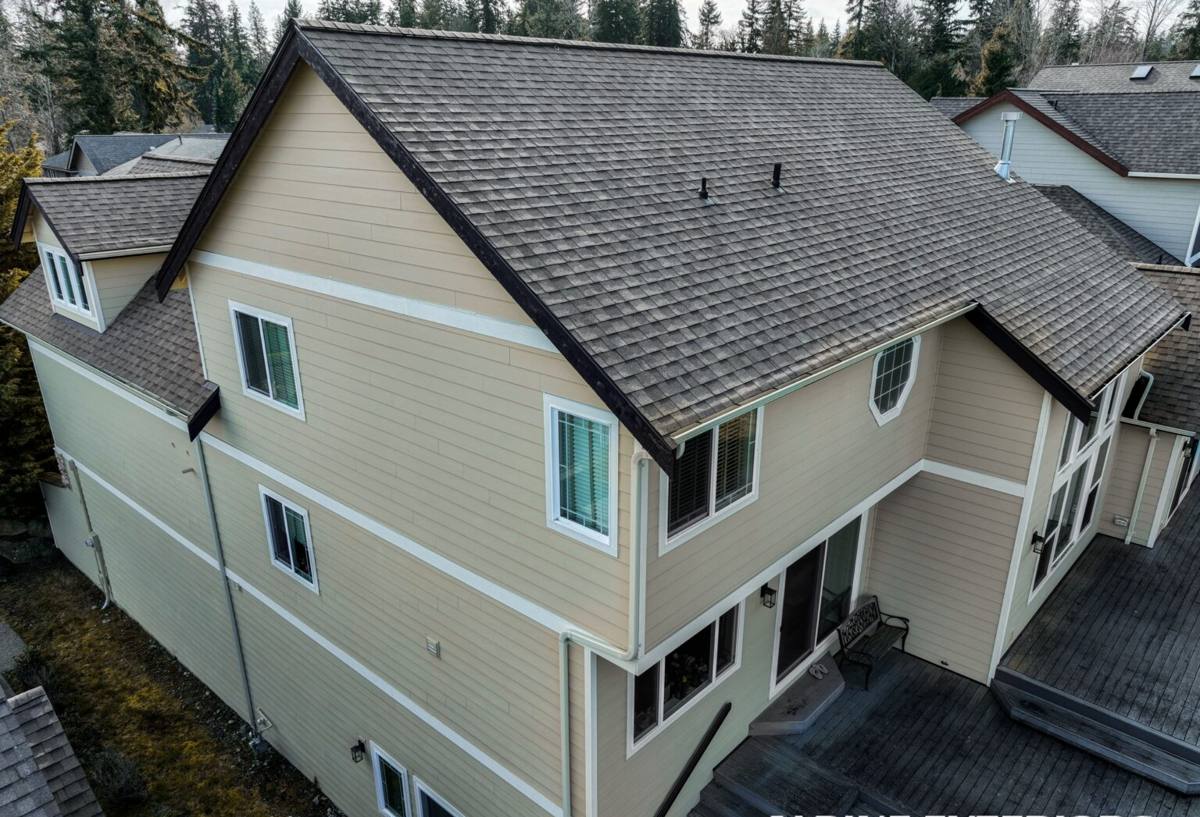
What Bellingham's Climate Does to Siding Over Time
Cordata isn't waterfront, but it's close enough to the bay that airborne salt still reaches homes here, especially on west- and southwest-facing walls that catch weather coming off the water. Combine that with Whatcom County's rainfall pattern — frequent, prolonged, low-intensity rain rather than short heavy storms — and you get siding that stays damp far more often than it stays dry.
Add tree cover, which is common in and around Cordata's residential streets, and you get shaded, slow-drying wall sections. That's the recipe for moss and algae growth, and it's also the recipe for wood rot, paint failure, and delamination in siding products that aren't built to shed moisture aggressively.
- Salt air corrosion: accelerates the breakdown of fasteners, trim, and unprotected wood fiber over years of exposure.
- Extended moss season: moss and algae hold moisture directly against the siding surface, which is worse for wood-based products than simple rainfall.
- Driving rain: wind-driven moisture finds gaps in flashing, caulking, and butt joints that dry climates never test.
- Freeze-thaw cycling: less severe than inland climates, but Whatcom County still gets enough of it to widen small cracks into bigger ones over a few winters.
Signs a Cordata Home Needs Siding Replacement, Not Just Repair
Homeowners often call us for a patch job and find out the siding has failed more broadly than the visible damage suggests. Here's how to tell the difference before you decide.
Signs pointing to full replacement
- Soft or spongy spots when you press on the siding, especially near the bottom courses and around window trim
- Visible warping, bowing, or buckling across multiple panels or boards
- Paint that won't hold no matter how often it's redone — a sign moisture is moving through the material, not just sitting on top of it
- Persistent moss or algae staining that returns within a season or two of cleaning
- Gaps opening at seams, corners, or butt joints that weren't there a few years ago
- Visible rot at the bottom edge of siding boards or around window and door casings
When repair is a reasonable option
Isolated damage — a single cracked panel from an impact, a small area of caulk failure caught early — can sometimes be repaired without a full tear-off. The distinction matters because repairing widespread moisture damage just delays a replacement that's already necessary, and you end up paying for both.
What a Correct Siding Replacement Actually Involves
A siding replacement is more than swapping old boards for new ones. In a climate like Cordata's, what happens underneath the visible siding matters as much as the siding itself.
Tear-off and inspection
Full removal of the old siding down to the sheathing, with an inspection for rot, soft spots, or prior water intrusion that needs to be addressed before anything new goes up. Covering over hidden damage is the single most common way a siding job fails early.
Water-resistive barrier
A properly lapped and sealed weather-resistive barrier goes over the sheathing before any siding. This is the layer that manages the water that inevitably gets past the siding surface during driving rain — it needs to shed water downward and out, not trap it.
Flashing at every penetration
Windows, doors, hose bibs, light fixtures, and any other wall penetration need proper flashing integrated with the water-resistive barrier. This is where the majority of hidden leaks originate, and it's the detail that's easiest to shortcut and hardest to inspect once the siding is up.
Correct fastening and clearances
Fiber cement siding has specific fastening patterns, nail spacing, and clearance requirements — from grade, from roof lines, from decks and patios — that are engineered into the manufacturer's installation instructions. Following them isn't optional if you want the warranty to mean anything.
Trim, caulking, and paint system
The finish details determine how well the whole system resists Whatcom County's rain over time. Factory-finished trim and siding reduce the number of field-painted joints, which is where most long-term caulk failures start.
Comparing Siding Materials for a Cordata Climate
Homeowners in Cordata typically call us about one of three situations: aging cedar or wood siding, T1-11 panel siding original to an older build, or vinyl or engineered wood siding that's failing sooner than expected. Here's how the common options actually compare for this climate.
| Material | Moisture Performance Here | Maintenance | Typical Lifespan (this climate) |
|---|---|---|---|
| James Hardie fiber cement | Non-combustible, engineered moisture and freeze-thaw resistance, factory ColorPlus finish | Low — occasional wash, no repainting for many years with ColorPlus | 30+ years with correct install |
| Cedar / wood siding | Absorbs moisture readily; prone to rot and moss in shaded, damp areas | High — regular repainting, sealing, and moss treatment | 15–25 years, often less in shaded exposures |
| Vinyl siding | Sheds surface water but seams and J-channels can trap moisture behind the panel | Low surface maintenance, but hidden moisture issues go unnoticed | 20–30 years, but hides problems rather than resisting them |
| LP SmartSide / engineered wood | Wood-fiber core is moisture-sensitive at cut edges and seams if not sealed correctly | Moderate — edge sealing and caulk maintenance is critical | Highly dependent on installation quality |
We install James Hardie fiber cement exclusively. It's not the only siding on the market, and we're not going to pretend the others don't have their advocates — but after years of tear-offs on homes exactly like the ones in Cordata, Hardie's combination of moisture engineering, non-combustible composition, and factory finish is what we're willing to put our name behind.
Why We Install James Hardie and Nothing Else
James Hardie's HZ5 product line is engineered specifically for climates like the Pacific Northwest — freeze-thaw cycling, sustained moisture exposure, and the kind of prolonged damp conditions that Whatcom County sees for much of the year. The fiber cement composition doesn't absorb water the way wood does, and it doesn't provide fuel for moss and algae the way untreated wood fiber can.
The ColorPlus factory finish matters more here than in drier climates. Field-applied paint is only as good as the caulk joints and prep work around it, and in a climate with this much rain, those joints are exactly where failures start. A factory-baked finish with a real limited warranty removes a lot of that risk.
We've made a standard out of this because we've seen what happens on the other side of it — homeowners with wood or engineered-wood siding calling us five to ten years after installation with rot they didn't know was there. Fiber cement doesn't eliminate maintenance entirely, but it removes the moisture-absorption problem that drives most of the siding failures we see in this area.
Our Process for a Cordata Siding Replacement
- On-site assessment: we walk the exterior, check for soft spots, look at flashing details, and identify which walls are taking the most weather exposure.
- Written estimate: a clear scope covering tear-off, sheathing repair if needed, water-resistive barrier, flashing, siding, trim, and finish.
- Tear-off and inspection: old siding comes off, sheathing is inspected and repaired where needed before anything new is installed.
- Weather barrier and flashing: installed to manufacturer specification, with particular attention to window, door, and penetration details.
- Hardie installation: fastened, spaced, and finished according to James Hardie's published installation requirements, which is what keeps the warranty valid.
- Final walkthrough: we go over the finished exterior with you before calling the job done.
Why It Matters to Hire a Crew That Already Works This Area
Siding installation isn't uniform across climates, and it isn't even uniform across Whatcom County. A crew that mostly works drier inland regions may not think twice about caulk-dependent details that are fine there but marginal in a climate with Cordata's rainfall and humidity. A crew that regularly works North Bellingham neighborhoods knows which wall orientations take the worst weather, where moss tends to establish first, and how to detail flashing so it performs through an actual Whatcom County winter, not just a dry-season inspection.
Permitting and code requirements can also vary by jurisdiction, and getting that wrong costs time. Working locally, consistently, means fewer surprises on both fronts.
What to Ask Before You Hire Anyone for a Siding Replacement
- Do they carry current liability insurance and, if applicable, workers' comp coverage?
- Will they put the full scope of work — tear-off, barrier, flashing, siding, trim — in writing?
- Are they a certified or experienced installer of the specific siding product they're proposing?
- Do they inspect and repair sheathing before installing new siding, or just cover over what's there?
- Can they explain their flashing details around windows and doors specifically?
- What does the manufacturer's warranty actually require for it to stay valid, and will their installation meet it?
Get a Free Estimate for Your Cordata Home
If your siding is showing moss that keeps coming back, paint that won't hold, or soft spots you can feel when you press on it, it's worth getting a straight answer about what's going on underneath. We'll walk your home's exterior, tell you honestly what we see, and put together a no-pressure estimate for a James Hardie siding replacement built for what Cordata's climate actually throws at a house. Use the form below to get started.