 Bellingham
 Why Decks in Columbia Wear Out Faster Than the Warranty Suggests
Most deck materials are rated and marketed based on average national conditions. Columbia, like the rest of Bellingham and Whatcom County, doesn't have average conditions. The combination of salt-laden marine air off the Sound, long stretches of driving rain in the fall and winter, and a moss season that can run six months or more puts real stress on a deck that a warranty label never accounts for.
Salt air doesn't just affect homes right on the waterfront. It travels, and over years it accelerates corrosion in deck hardware — joist hangers, screws, bolted connections — even on properties set back from the water. Once fasteners start to rust and weaken, the deck's structural integrity is compromised long before the decking boards themselves look bad on the surface. That's part of why a deck can look "fine" from a distance while the framing underneath is already failing.
Driving rain is the other half of the problem. Wind-driven rain finds its way into the smallest gaps — around the ledger board where the deck attaches to the house, along fastener heads, at butt joints in the decking. Water that gets trapped and can't dry out between storms is what causes rot, not water that simply falls and runs off. In a climate where dry stretches are short, moisture management matters more than it does almost anywhere else in the country.
Then there's moss. Bellingham's mild, wet winters are ideal moss-growing conditions, and a deck surface holds moisture longer than a roof or siding does simply because it's horizontal. Moss on decking isn't just a slip hazard — it holds water against the wood or composite surface and, on wood decks especially, feeds the kind of slow rot that's hard to spot until a board gives way underfoot.
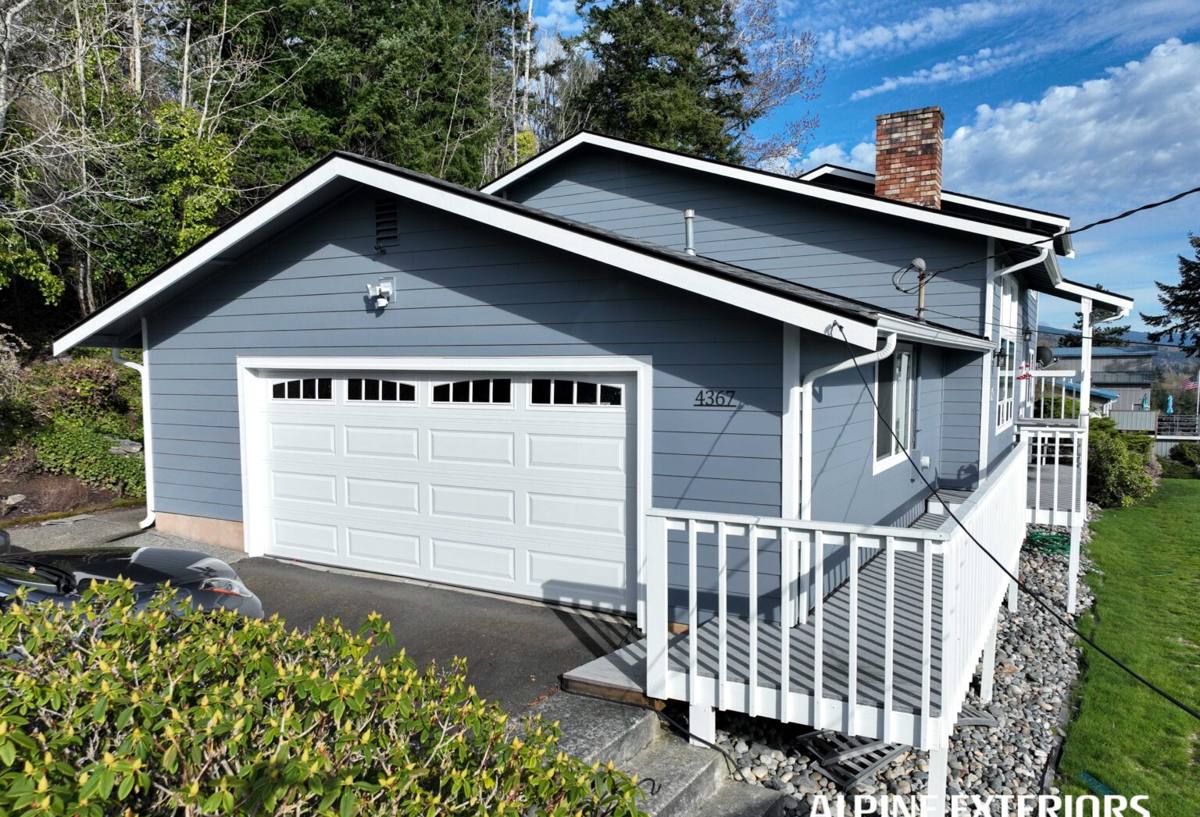
Repair or Replace? Signs a Columbia Deck Has Reached the End
Not every tired-looking deck needs full replacement. Boards can sometimes be swapped, railings tightened, and finishes refreshed. But there's a point where patching individual boards is just delaying a bigger, more expensive problem — and in a wet climate, that point often arrives sooner than homeowners expect. Signs it's time to talk about replacement rather than repair:
- Soft or spongy spots in the decking, especially near the house or in shaded areas that stay damp longer
- Rust staining or crumbling wood around fastener heads and joist hangers
- A ledger board connection that looks separated, gapped, or has visible water staining on the siding above or below it
- Persistent moss or algae that returns within weeks of cleaning, even after treatment
- Railings or posts that flex or wobble when pushed — often a sign the post base or footing has failed, not just the visible wood
- A deck more than 15-20 years old that's never had its structural connections inspected
If more than one or two of these apply, or if the issue is in the framing rather than just the surface boards, replacement is usually the more honest recommendation — both for safety and for long-term cost. A deck that's rebuilt piecemeal, board by board, over several years often ends up costing more than a single, correctly sequenced replacement.
What Actually Goes Into a Correct Deck Replacement
A deck replacement is a structural project, not a cosmetic one, even though the finished surface is what everyone sees. Doing it right in this climate means paying close attention to the parts that will be hidden again once the job is done.
Structure First: Ledger, Footings, and Framing
The ledger board — where the deck ties into the house — is the single most common failure point on Pacific Northwest decks, because it sits right where wall and deck meet and where wind-driven rain concentrates. A correct replacement includes proper flashing at this connection, not just fasteners and caulk, so water is directed away from the house rather than trapped against it. Footings get checked for depth, size, and condition, since a footing that was undersized or has shifted will undermine everything built on top of it, no matter how good the decking material is. Framing lumber, joist spacing, and hardware all get sized to current code and to the actual loads the deck will see — not just matched to what was there before.
Decking, Railing, and Fasteners
Once the structure is right, the visible parts follow: decking boards, railing systems, stairs, and fastening methods. Hidden fastener systems, corrosion-resistant hardware rated for coastal exposure, and railing attachments that won't loosen under seasonal wood movement all make a meaningful difference in how the deck performs over its first five to ten winters, not just how it looks on day one.
Choosing a Decking Material for Bellingham's Climate
There's no single "best" decking material — there's a best fit for the homeowner's budget, maintenance tolerance, and how the deck gets used. Here's how the common options actually perform in a marine, moss-prone climate like Whatcom County's, based on how they behave over time rather than how they're marketed:
| Material | Upfront Cost | Maintenance | Moisture & Moss Behavior |
|---|---|---|---|
| Pressure-treated wood | Lowest | Annual cleaning and periodic sealing | Prone to moss and surface checking if not maintained; rot resistance depends on upkeep |
| Cedar | Moderate | Regular sealing to maintain color and resistance | Naturally more rot-resistant than treated wood but still needs airflow and cleaning to prevent moss buildup |
| Composite decking | Higher | Occasional washing, no sealing or staining | Resists rot, but can still grow surface moss or algae in shaded, damp spots without cleaning |
| PVC/capped polymer | Highest | Minimal — periodic rinsing | Best moisture resistance of the group; still benefits from cleaning in persistently shaded areas |
We don't push one material over another as a rule. What we do push is honesty about trade-offs: wood costs less up front but demands consistent upkeep to hold up in this climate, while composite and PVC cost more initially but reduce the annual maintenance burden significantly. For a shaded, tree-covered lot — common in older Columbia yards — that maintenance difference is often the deciding factor, since shade means slower drying time and more moss pressure regardless of material.
Permits and Whatcom County Code
Deck replacement in Bellingham typically requires a permit, particularly when the structure is being rebuilt rather than simply resurfaced, or when the deck is attached to the house and elevated. Requirements can depend on the deck's height, size, and proximity to property lines. We handle the permitting process as part of the job — pulling the right permit, building to current code for footings, ledger attachment, guardrail height, and stair geometry, and scheduling inspections — so homeowners aren't left navigating city requirements on their own or discovering a code issue after the deck is already built.
Our Deck Replacement Process, Start to Finish
We keep the process straightforward because deck replacement is disruptive enough without added confusion:
- On-site assessment. We inspect the existing deck's framing, footings, and ledger connection — not just the surface boards — to understand what's actually driving the need for replacement.
- Honest scope and material discussion. We walk through material options and trade-offs based on the site's sun exposure, tree cover, and how the deck gets used, and put together a clear, written estimate.
- Permitting. We prepare and submit the permit application and design details required for the project.
- Demolition and disposal. The old deck comes out, including footings or framing that don't meet current standards, with the site kept as clean and safe as possible throughout.
- Rebuild. Footings, framing, flashing, decking, and railing go in to code, with attention to the details — ledger flashing, hardware selection, fastener placement — that determine how the deck holds up over the next several winters.
- Final walkthrough. We review the finished deck together, cover basic care for the specific material installed, and make sure everything meets inspection and your expectations before calling the job done.
Living With Your New Deck: A Whatcom County Maintenance Checklist
Even the right material and a correctly built structure benefit from a small amount of seasonal attention in this climate. A short list of habits goes a long way toward getting the full lifespan out of a deck replacement:
- Sweep leaves and debris off the surface regularly in fall, especially in shaded corners where moisture lingers
- Clean moss and algae as soon as it appears rather than waiting for it to spread — early removal is far easier than established growth
- Check that drainage gaps between boards stay clear so water can pass through instead of pooling
- Inspect the ledger board area once a year for staining, gaps, or soft wood on the siding above it
- Reseal or re-stain wood decking on the schedule recommended for the specific product, not just when it looks faded
- Trim back overhanging branches and vegetation to improve airflow and sun exposure on shaded decks
Why Hiring a Crew That Already Works in Columbia Matters
A deck built to a generic national standard can still fail in a marine, moss-heavy climate if the details that matter locally — ledger flashing, hardware corrosion resistance, footing depth for our soil and drainage conditions, moss-conscious material selection — aren't treated as priorities. Crews who work regularly in Columbia and the rest of Bellingham already know which failure points show up again and again in this specific climate, because we've opened up enough old decks to see exactly where the water gets in. That local pattern recognition is the difference between a deck that's built to pass inspection once and one that's built to actually hold up through Whatcom County winters for the next few decades.
If your current deck is showing soft spots, rust staining, persistent moss, or you're simply planning ahead before a problem shows up, we're happy to take a look. Reach out for a free, no-pressure estimate using the form below — we'll walk the deck with you, explain what we find in plain terms, and give you a straightforward recommendation, whether that's repair or full replacement.