 Bellingham
 Deck Repair Built for Edgemoor's Waterfront Climate
Edgemoor sits close to Bellingham Bay, on wooded, elevated lots that give homes shade, privacy, and a view — and also give decks a rough ride. Salt-laden air off the water, heavy tree canopy that keeps wood damp, and the long gray stretch of Whatcom County's rainy season all work against an outdoor structure that's supposed to hold your family's weight. We've repaired decks throughout this neighborhood long enough to know that a deck problem here rarely announces itself the way it would in a drier climate. It shows up as a soft spot underfoot, a rust bleed around a fastener, or a slick green patch that wasn't there last spring.
This page is about deck repair specifically — not new deck construction — and specifically for the conditions Edgemoor homes deal with. If you're noticing movement, staining, or decay on an existing deck, this is what we look for, what we fix, and how we decide whether repair is even the right call.
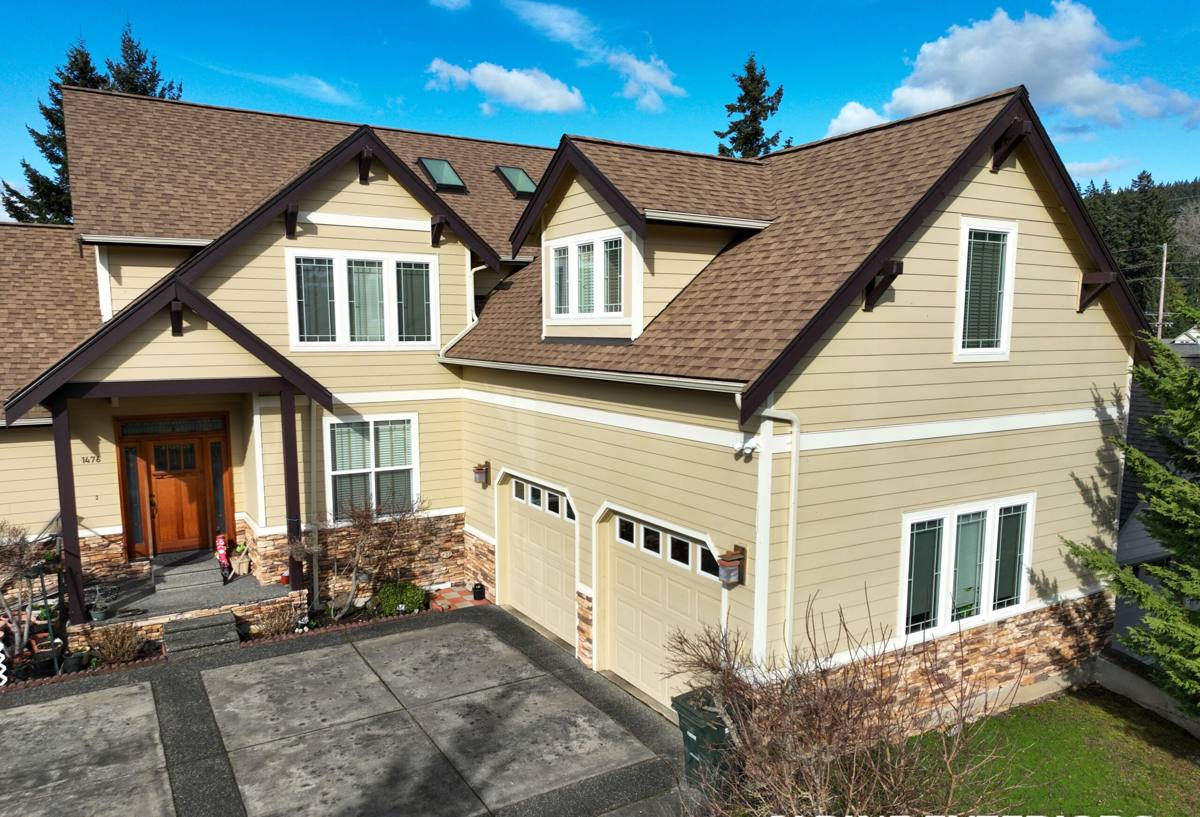
What Edgemoor's Setting Does to a Deck
Salt Air and Metal Fasteners
Proximity to Bellingham Bay means airborne salt settles on everything, including deck hardware. Standard fasteners and connectors corrode faster near the water than they do a few miles inland. Once a fastener starts rusting, it loses grip strength long before the rust is visible from above — the failure often starts at the joist hanger or the bolt head buried under decking boards, not at the surface you can see.
Shade, Moss, and Trapped Moisture
The mature tree cover that makes Edgemoor lots so pleasant also blocks the sun that would otherwise dry a deck out between rain events. Moss and algae take hold on boards that stay damp for days at a time, and moss does more than make a deck slippery — its root structure holds moisture directly against the wood surface, accelerating rot in exactly the spots that already dry slowest.
Driving Rain and Water Intrusion
Whatcom County's rain doesn't just fall straight down — wind off the water pushes it sideways into ledger boards, stair stringers, and any spot where a deck meets the house. That's where we find the most serious structural damage: not on the open field of decking boards, but at the connection points where water gets driven into a joint and has nowhere to go.
Signs Your Deck Needs Repair
Most decks give warning signs well before anything becomes dangerous. The trouble is that homeowners often chalk these up to normal aging rather than a sign of active water damage. Here's what we ask about — and check for — on every Edgemoor repair call:
- Boards that feel spongy, bouncy, or noticeably softer underfoot than they used to
- Persistent green or black staining that comes back within weeks of cleaning
- Rust streaks bleeding out from screw heads, bolts, or metal connectors
- Visible gaps or movement where the deck framing meets the house (the ledger board)
- Railings or posts that wiggle more than they should when you lean on them
- Stair stringers with cracking, splitting, or soft spots near ground contact
- A musty smell coming from underneath the deck
- Standing water that doesn't drain within a few hours after rain stops
Any one of these on its own might be minor. Several together, especially near the ledger board or stairs, usually mean water has been getting into the structure for a while.
What a Correct Deck Repair Involves
A deck repair that's done right starts below the decking boards, not on top of them. Replacing a few obviously rotten boards without checking what's underneath is the single most common shortcut we see — and the reason "repaired" decks in this climate so often fail again within a year or two.
Structural Inspection First
Before we touch a board, we check the ledger board connection to the house, the condition of the joists and beams, post bases where they meet concrete or ground, and every load-bearing connector. In a shaded, damp neighborhood like Edgemoor, hidden rot at these points is more common than surface damage suggests.
Matching the Fix to the Damage
Not every soft board needs a full deck rebuild, and not every deck with surface moss needs new lumber. We separate cosmetic issues (staining, algae, weathered finish) from structural ones (soft framing, corroded hardware, failing ledger attachment) and price the work accordingly — you shouldn't pay for a structural rebuild when the real problem is a cleaning and resealing job, and you shouldn't settle for a cosmetic fix when the framing underneath is compromised.
Hardware Upgrades Where It Matters
If we're opening up a section of decking, we don't put the same grade of fastener back in a coastal-exposure spot. Corrosion-resistant, coated fasteners and connectors cost more upfront but hold up far better against the salt air Edgemoor gets off the bay.
Repair or Replace? How We Make the Call
Homeowners often ask us this before we've even looked at the deck: is this worth repairing, or should I just plan to replace it? The honest answer depends on where the damage is, not how old the deck looks. A twenty-year-old deck with sound framing and worn boards is a great repair candidate. A five-year-old deck with rot at the ledger board is a different conversation.
| Factor | Points Toward Repair | Points Toward Replacement |
|---|---|---|
| Framing condition | Joists and beams solid, dry, no soft spots | Widespread soft or rotted framing |
| Ledger board | Sound attachment, no gaps or moisture | Rot or separation at the house connection |
| Decking boards | Isolated soft or split boards | Most boards cupping, splintering, or soft |
| Age of structure | Under 15 years, built to a reasonable standard | Original construction quality was poor |
| Hardware | Localized corrosion at a few connectors | Rust throughout most fasteners and hangers |
| Footings/posts | Stable, no heaving or rot at ground contact | Settling, heaving, or rotted post bases |
We'll walk you through exactly where your deck falls on that list before we recommend anything — there's no reason to sell a homeowner a full replacement when a targeted repair will genuinely hold up in this climate.
Our Deck Repair Process
- On-site assessment. We inspect the full deck — framing, connections, decking, railings, and stairs — not just the spot you called about, since problems in this climate rarely stay isolated.
- Written scope and estimate. You get a clear picture of what's structural versus cosmetic, and pricing for each, before any work starts.
- Demo of damaged material only. We remove what's actually compromised rather than defaulting to a full tear-off, unless the inspection shows that's genuinely necessary.
- Framing and hardware repair. Rotted joists, beams, or posts get replaced; corroded fasteners get swapped for coastal-grade hardware.
- Decking and railing repair or replacement. Matched as closely as possible to existing material, or upgraded if you'd rather move to a lower-maintenance product.
- Final check and cleanup. We confirm the deck is solid underfoot at every point we touched, not just the section that was originally reported as a problem.
Materials: What Holds Up Here, and What Doesn't
Edgemoor's combination of shade, salt air, and rain narrows down what we recommend for repairs, especially for framing and fasteners.
Pressure-Treated Lumber
Still a solid, cost-effective choice for framing repairs when installed with the right coated fasteners and kept ventilated underneath. It's not immune to rot, but properly treated lumber paired with good drainage detailing performs well even in a wet, shaded lot.
Composite and PVC Decking Boards
For the walking surface itself, composite or PVC boards resist moisture absorption and won't develop the soft, punky texture that rotting wood does. The trade-off is upfront cost and the fact that composite still needs periodic cleaning — moss and algae will grow on any surface that stays shaded and damp, composite included, just without the rot risk underneath.
Fasteners and Connectors
This is where we don't cut corners on a coastal-adjacent repair. Standard galvanized hardware corrodes noticeably faster with salt air exposure than stainless or high-grade coated alternatives. On repair work, we treat fastener choice as a structural decision, not a cosmetic one — it's the difference between a repair that lasts five years and one that lasts fifteen.
After the Repair: Keeping It That Way
A repair is only as good as the maintenance that follows it, especially in a shaded, damp neighborhood. We walk every customer through a simple upkeep routine so the work we did isn't undone by next year's moss season.
- Sweep debris and standing leaves off the deck surface regularly, especially in fall
- Clean visible moss or algae with an appropriate deck cleaner before it spreads
- Check and reseal or re-stain wood decking on the manufacturer's recommended schedule, typically every one to three years in this climate
- Keep gutters and downspouts clear so roof runoff isn't dumping extra water onto or near the deck
- Trim back overhanging branches where practical to let more light and air reach the deck surface
- Do a quick check of railings and stair rails for looseness each spring
A Note on Permits
Depending on scope, structural deck repair work in Bellingham and unincorporated Whatcom County can require a permit, particularly when framing, footings, or the ledger board connection are involved. We handle that conversation as part of the estimate so there are no surprises partway through the job.
Why Hire a Crew That Already Works Edgemoor
A lot of general contractors can swap out a rotten deck board. Fewer have spent real time on decks in a neighborhood with Edgemoor's specific mix of salt exposure, shade, and rain. That familiarity matters in practical ways: we know to check ledger boards more carefully on shaded, bay-facing lots, we know which fastener grades actually hold up here versus a drier inland site, and we're not guessing at how fast moss regrows on a given lot's exposure.
We're a local siding and exterior contractor, and deck repair is part of keeping the outside of your home functioning as a system — the same water and moisture issues that affect siding and trim often show up on an adjacent deck too. That's part of why we look at the whole structure during an inspection rather than just the board you called about.
Get an Estimate for Your Edgemoor Deck
If your deck has soft spots, rust stains, persistent moss, or just doesn't feel as solid as it used to, it's worth having someone look at it before those issues reach the framing. We offer free, no-pressure estimates for deck repair in Edgemoor and the surrounding Bellingham area — fill out the form below and we'll take a look.