 Bellingham
 Board & Batten in a Neighborhood Built on Character
Fairhaven's mix of historic storefronts, older homes, and newer infill has a strong visual identity, and board and batten siding fits it well. The vertical lines read as craftsman, farmhouse, or modern depending on the trim and color choices around it, which is part of why we get so many board and batten calls from this part of Bellingham. But the look only holds up if what's underneath it is built for the weather Fairhaven actually gets, not the weather a spec sheet assumes.
This page covers what board and batten siding needs to hold up in Fairhaven specifically — the exposure, the install details that matter most, and how we handle the job from estimate to finish.
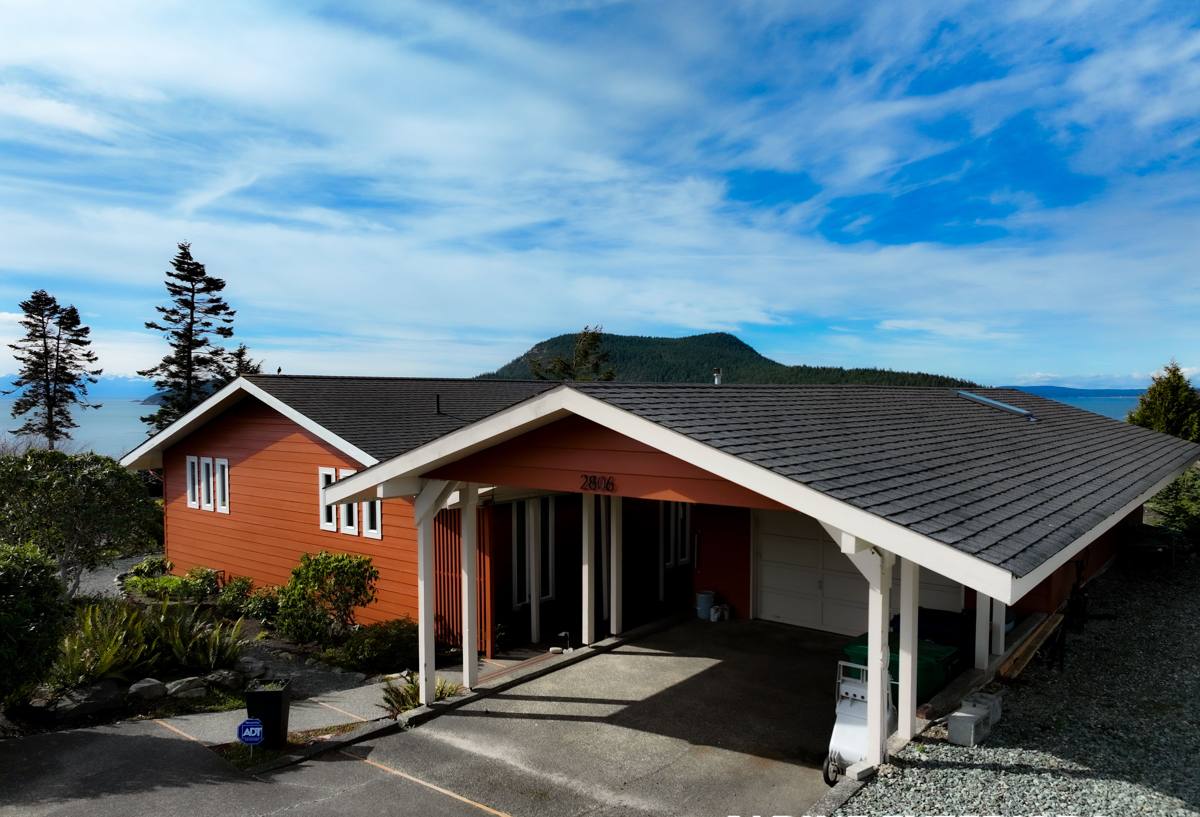
What Fairhaven's Climate Actually Does to Siding
Fairhaven sits close to Bellingham Bay, which means homes here deal with a combination of stresses that inland Whatcom County properties see less of:
- Salt air: proximity to the water accelerates corrosion on exposed metal fasteners, flashing, and trim if they aren't rated and installed correctly.
- Driving rain: wind off the water pushes rain sideways into wall assemblies, not just straight down, which stresses horizontal joints and any seam that wasn't flashed with that direction of water travel in mind.
- Long moss season: shaded, north-facing, and tree-covered walls in this area stay damp for extended stretches of the fall and winter, and moss and algae take hold anywhere moisture lingers against a porous or poorly sealed surface.
Board and batten is a vertical siding style, and vertical siding has more seams and more batten-to-panel joints per square foot than a horizontal lap profile. Every one of those seams is a place water can get behind the cladding if it isn't detailed correctly. In a climate that combines salt exposure with sideways-driven rain, that detailing isn't optional — it's the difference between a wall that looks good for twenty years and one that's rotting behind the battens in five.
The Board & Batten System We Install
We install James Hardie fiber cement exclusively, and for board and batten that means either the Artisan Board & Batten collection or a HardiePanel vertical siding system finished out with batten strips, depending on the look the homeowner wants and the wall's exposure. Both are engineered fiber cement, not wood, vinyl, or a wood composite, which matters a great deal in a damp, salt-air environment:
- Fiber cement doesn't absorb and swell the way wood-based battens can, so the panel-to-batten reveal stays consistent instead of gapping or cupping over time.
- It's non-combustible, which matters anywhere in Western Washington given wildfire smoke seasons, and it doesn't feed moss or algae growth the way untreated wood substrates can.
- James Hardie's ColorPlus factory finish is baked on and warranted against fading and flaking, so a Fairhaven home isn't relying on a field-applied paint job to hold up against salt air and UV.
- Hardie's HZ5 product formulation, used throughout the Pacific Northwest, is engineered specifically for wet, freeze-thaw climates rather than a one-size-fits-all national spec.
We don't install LP SmartSide, vinyl, Cemplank, Allura, or unfinished cedar or spruce board and batten. Each of those has a place in the market, but none of them combine non-combustibility, dimensional stability, and a factory-cured finish the way Hardie does, and that combination is what we're willing to put our name behind on a Fairhaven wall.
Why the Batten Detail Matters More Than the Panel
Homeowners tend to focus on the panel color and batten spacing, but the technical risk in board and batten siding lives at the batten fastening and the panel seams behind it. A batten nailed straight through into a butt joint without proper backing, or spaced too tight against the panel edge, becomes a wick for water instead of a decorative line. This is a detail that separates a correctly built board and batten wall from one that fails early, and it's not something you can evaluate from a finished photo.
What a Correct Installation Involves
Water Management Behind the Cladding
Board and batten siding is a rainscreen cladding, not a waterproofing layer by itself. A correct install starts with a weather-resistive barrier, properly lapped and taped, with drainage space behind the panels so any water that does get past the cladding can drain and dry instead of sitting against the sheathing. Given Fairhaven's driving rain, we pay particular attention to this drainage plane on west- and south-facing walls that take the brunt of storms off the water.
Flashing at Every Transition
Windows, doors, roof-to-wall intersections, and the base of the wall all need step flashing, head flashing, or kick-out flashing sized and lapped correctly — installed so water sheds outward at every transition rather than tracking behind the cladding. This is the single most common place we find prior water damage when we're re-siding a home in this area.
Fastening and Gapping
Panels and battens need the fastener type, spacing, and embedment specified in James Hardie's installation guide, with expansion gaps at panel ends and corners so the material isn't fighting itself as temperature and moisture levels shift through the year. Undersized gaps or the wrong fastener are a slow-motion failure — fine for a year or two, then a problem right around the time a homeowner has stopped thinking about their siding.
Corrosion-Resistant Hardware
Given the salt air in Fairhaven, we use fasteners and flashing rated for coastal exposure. Standard interior-grade hardware corrodes faster this close to the bay, and a rusting fastener head eventually stains the siding and loses its grip.
Board & Batten Compared to Other Siding Styles for This Area
| Factor | Board & Batten (Hardie) | Horizontal Lap (Hardie) | Vinyl or Wood Board & Batten |
|---|---|---|---|
| Water shedding in driving rain | Good, if flashed and gapped correctly at every seam | Naturally sheds water down each overlap | Depends heavily on substrate; wood absorbs, vinyl can flex and gap |
| Salt air / coastal durability | High, with corrosion-resistant hardware | High, same material system | Vinyl can chalk and become brittle; wood needs ongoing sealing |
| Moss and algae resistance | Strong on ColorPlus finish; still needs airflow and periodic cleaning | Same | Wood is far more susceptible without regular treatment |
| Look | Crisp vertical lines, farmhouse or craftsman feel | Traditional, widely used on older Fairhaven homes | Can mimic the look but reads differently up close |
| Long-term cost | Higher upfront, low maintenance, factory-warranted finish | Similar to board and batten in Hardie | Lower upfront, higher repaint/repair cost over time |
Board and batten isn't inherently better or worse than lap siding — it's a style decision. What matters for Fairhaven homes is that whichever profile is chosen, it's built in fiber cement with the water management details that this climate demands.
How We Handle a Board & Batten Project in Fairhaven
- On-site assessment: we walk the exterior, check existing water damage or rot at windows, corners, and the base of walls, and assess sun/shade exposure that affects moss risk.
- Scope and product selection: we recommend Artisan or standard HardiePanel board and batten based on the look you want and the wall's exposure, and walk through ColorPlus color options.
- Prep and repair: any rot, damaged sheathing, or failed flashing found during tear-off gets repaired before new siding goes on — we don't cover up a problem behind new material.
- Weather barrier and drainage plane installation: installed and inspected before any cladding goes up.
- Flashing at every penetration and transition, installed to shed water outward per Hardie's specifications.
- Panel and batten installation with correct fastening, spacing, and expansion gaps.
- Final walkthrough with the homeowner before we consider the job done.
Living With Board & Batten in Fairhaven's Climate
A correctly installed Hardie board and batten system is genuinely low maintenance, but "low maintenance" doesn't mean "no attention." In this climate we recommend:
- Rinsing the exterior once or twice a year, with extra attention to shaded or tree-covered walls where moss gets a foothold fastest.
- Keeping gutters clear so overflow isn't running down the wall face during Fairhaven's wetter months.
- Trimming back vegetation that keeps a wall section shaded and damp longer than the rest of the house.
- A visual check of caulking at trim and window edges every couple of years — caulk is a maintenance item even when the siding itself isn't.
None of this is heavy work, but skipping it in a salt-air, high-moss environment is how a well-built wall starts looking tired well before the material itself is actually failing.
Why Hiring a Crew That Already Works Fairhaven Matters
Board and batten installation quality is hard for a homeowner to judge from a bid or a sample board — the parts that determine whether it lasts are the ones you can't see once the job is finished. A crew that already works this stretch of Bellingham has a working knowledge of which walls take the worst of the wind off the bay, where moss tends to build up fastest, and how to detail flashing for driving rain rather than a generic textbook install. That's not something a contractor coming from a drier, inland market necessarily accounts for by default.
We install James Hardie exclusively, which means every board and batten job we bid is being evaluated against the same product standard — you're comparing our installation approach, not trying to weigh one siding brand against another mid-estimate.
Questions Worth Asking Any Contractor Bidding Board & Batten Work Here
- What flashing details do you use at window heads and the base of the wall, specifically for driving rain off the water?
- What fastener and hardware spec do you use given the salt air this close to the bay?
- Do you install a drainage plane behind the panels, and how is it detailed?
- What's your plan if you find rot or damaged sheathing once the old siding comes off?
- Can you show me the manufacturer's installation instructions you're building to?
Get a Free Estimate
If you're considering board and batten siding for a home in Fairhaven, we're glad to take a look and walk you through what a correct installation looks like for your specific walls, exposure, and budget. There's no pressure and no obligation — just a straight assessment from a crew that installs this system, and only this system, throughout Bellingham and Whatcom County. Fill out the form below to schedule a free estimate.