 Bellingham
 Decks in Fairhaven Have to Work Harder Than the Picture Suggests
Fairhaven sits right up against Bellingham Bay, on wooded, often sloped ground, which is exactly why a deck out here does more work than a deck built inland. A well-built deck in this neighborhood has to shrug off salt-laden air coming off the water, shed driving rain instead of trapping it, and resist the moss and algae that thrive in Whatcom County's long, damp shoulder seasons. None of that is exotic engineering — it's mostly about picking the right materials, detailing the framing correctly, and not cutting corners that don't show up as problems until year three or four.
This page is about custom decks specifically for Fairhaven properties: what the local climate and terrain actually demand, what a correctly built deck looks like underneath the surface, and how we approach a project here from first conversation to final walkthrough.
What Fairhaven's Climate and Terrain Demand From a Deck
Salt Air and Corrosion
Proximity to the bay means airborne salt settles on everything outdoors, including deck hardware. Standard zinc-coated fasteners and connectors can start showing rust and pitting well before a deck's wood or composite decking shows any wear. In a marine-influenced neighborhood like Fairhaven, the hardware — not just the decking — needs to be chosen for the environment, or the fasteners become the weak point in an otherwise sound structure.
Driving Rain and Drainage
Bellingham gets a lot of its rain sideways, driven by wind off the Strait. That matters for decks because it pushes water into places a straight-down rain never would: under ledger boards, into end-grain cuts, behind poorly flashed rim joists. A deck that looks fine in a light drizzle can still be taking on water at every unprotected seam during a real Pacific Northwest storm.
Moss, Shade, and Mature Tree Cover
Many Fairhaven lots have mature evergreens and a fair amount of shade, which is part of the neighborhood's character but also means decking surfaces stay damp longer after rain. That combination of moisture and shade is exactly what moss and algae need to take hold, and once established, they hold even more moisture against the decking, accelerating rot in wood and making composite surfaces slick and green if they're not cleaned.
Choosing a Decking Material for This Environment
There's no single "correct" decking material for Fairhaven — it depends on your budget, how much upkeep you want to do, and the look you're after. What matters is understanding how each option actually behaves in salt air, shade, and repeated wet-dry cycles, not just how it looks on day one.
| Material | Behavior in Salt Air & Moisture | Maintenance | Typical Lifespan |
|---|---|---|---|
| Pressure-treated fir/hem-fir | Handles moisture well if properly sealed; end cuts and fastener holes need re-treatment | Annual cleaning, re-sealing every 1-2 years | 15-20 years with upkeep |
| Western red cedar | Naturally rot- and insect-resistant; still needs protection from standing water and shade-driven mold | Cleaning and oil/sealer every 1-2 years | 15-25 years with upkeep |
| Capped composite decking | Doesn't absorb moisture into the core; resists mold and salt staining better than wood | Periodic washing; no sealing or staining | 25-30+ years |
| Tropical hardwoods | Very dense and naturally moisture-resistant, but installation is unforgiving and mistakes are costly | Occasional oiling to maintain color; low structural maintenance | 30+ years |
We won't push a homeowner toward composite or hardwood just because it's less maintenance for us down the road — cedar remains a great, honest choice for a lot of Fairhaven homes, especially where the goal is matching an existing house or staying closer to a traditional budget. The point of the table is to set expectations, not steer you toward the priciest option.
Framing and Substructure — Where Fairhaven Decks Actually Fail
Almost every deck failure we get called out to inspect in this area starts below the decking boards, not on top of them. The ledger board connection — where the deck attaches to the house — is the single most important detail on the whole structure. It needs proper flashing that directs water away from the house framing, not just caulk, which degrades and fails silently. Joists and beams need to either be rated for exposure or wrapped/capped so end grain and fastener penetrations aren't sitting exposed to driving rain year after year.
Footings matter too. Fairhaven's terrain includes plenty of sloped and uneven lots, and footings need to be sized and set to local frost depth and soil conditions, not just poured to a generic minimum. A deck can look perfectly level and solid for a couple of years even with undersized or poorly set footings — the settling and movement show up later, and by then it's a repair project instead of a build.
Railings, Fasteners, and Hardware for a Marine Environment
Guardrails on any deck more than 30 inches above grade are required by code, and in Fairhaven's climate the hardware holding that railing together deserves real attention. We use stainless steel or coated fasteners rated for coastal exposure at connection points, and we're careful about mixing metals — dissimilar metals in contact with each other, combined with salt air and moisture, can set off galvanic corrosion that eats away at a connection from the inside, long before it's visible from outside.
This is also where cutting corners is easiest to hide and most expensive to fix later, since railing hardware is structural, not decorative. A railing post connection that's failing doesn't usually announce itself — it just gets a little looser each year until someone leans on it.
Design Considerations for Fairhaven Lots
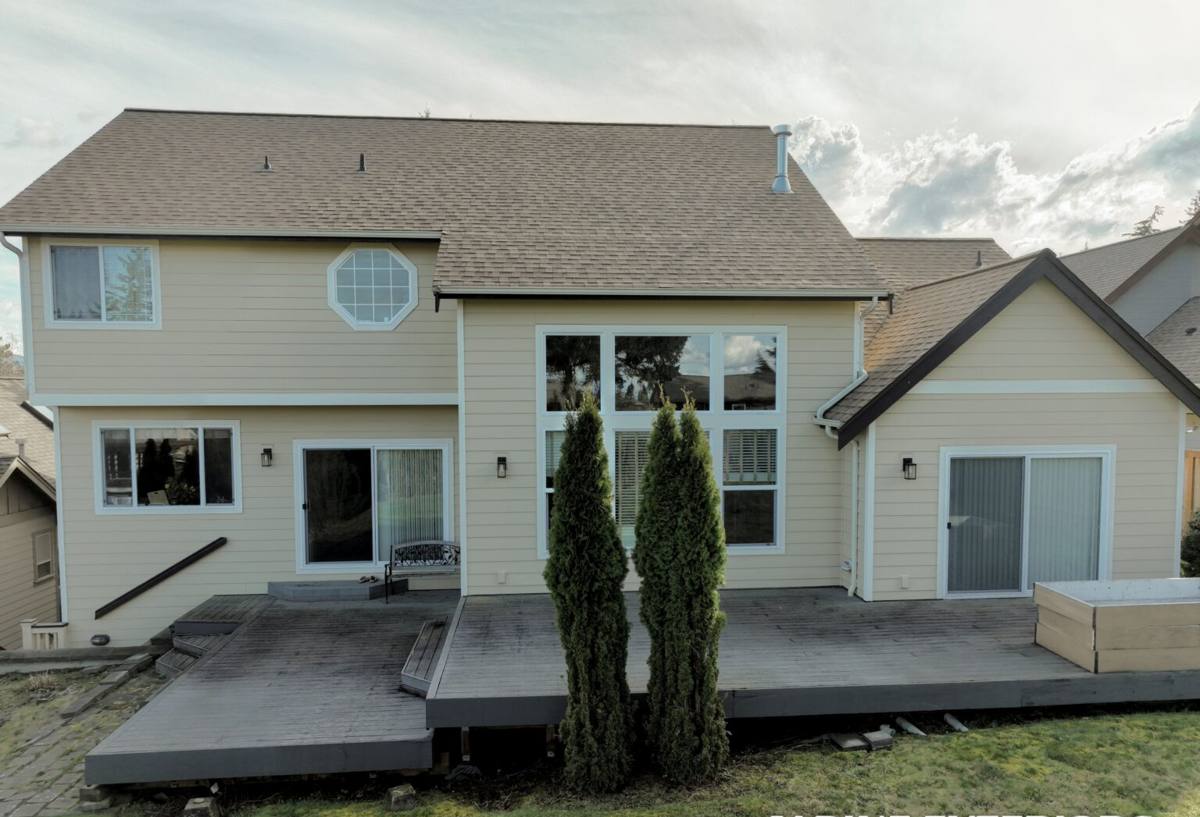
A lot of Fairhaven properties sit on sloped ground with tree cover and, in many cases, partial or full views toward the bay. That shapes what a custom deck needs to do structurally and visually. Multi-level decks are common here simply because the ground isn't flat, and stepping a deck down a slope can solve both a grading problem and open up a view that a single flat platform would block with railing.
Because Fairhaven includes a historic district with a distinct architectural character, we also think about how a deck reads against the house — matching rail styles, baluster spacing, and trim details to older homes rather than defaulting to a look that would suit a newer subdivision. None of that changes the structural requirements underneath, but it's part of getting a deck that actually looks like it belongs on the house.
Our Process for a Fairhaven Deck Project
1. On-Site Consultation and Design
We walk the property, look at grade, drainage, sun/shade exposure, and how the deck will connect to the house, then talk through material options and layout based on what you actually want to use the space for.
2. Permitting
Deck permitting in Bellingham and Whatcom County depends on the size, height, and structure of the project — we handle the permit application and inspections as part of the job so you're not navigating that process on your own.
3. Framing and Build
We build the substructure first — footings, ledger flashing, framing — since that's the part that determines whether the deck lasts fifteen years or thirty. Decking, railing, and finish work go on once the framing is inspected and solid.
4. Final Walkthrough
Before we consider the job done, we walk the finished deck with you, point out how to care for the specific materials used, and make sure everything meets code and your expectations.
Maintenance Checklist to Protect a Fairhaven Deck
Whatever material you choose, a little seasonal attention goes a long way in this climate. Here's what we recommend homeowners stay on top of:
- Sweep debris and needles off the deck regularly, especially under tree cover where they trap moisture
- Clean moss and algae off the surface at the first sign of green film, before it gets slick or embeds in the wood grain
- Check and re-seal wood decking on the schedule appropriate to the species, don't wait until it looks gray and dry
- Inspect railing posts and connections annually for looseness or rust staining around fasteners
- Keep gutters and downspouts near the deck clear so roof runoff isn't dumping extra water onto or under the structure
- Look underneath the deck once a year at the ledger flashing and joist ends for any signs of water intrusion
Why Hire a Crew That Already Works in Fairhaven
A deck built to a generic spec sheet can still fail in this neighborhood if it doesn't account for what Fairhaven actually throws at it — salt air, driving rain off the bay, shaded and sloped lots, and a long moss season. Crews who regularly work in this part of Bellingham already know which hardware holds up, how local soil and slope typically behave, and what Whatcom County permitting expects, so those aren't things being figured out for the first time on your project.
That local familiarity doesn't replace good fundamentals — proper flashing, correct footings, and honest material choices matter everywhere. But it does mean fewer surprises, because the climate and terrain here have already shaped how we frame, fasten, and finish every deck we build in this area.
If you're planning a custom deck in Fairhaven, we're happy to come take a look at your property and talk through options — no pressure, no obligation. Use the form below to request a free estimate.