 Bellingham
 Ferndale's Climate Puts Real Stress on Siding
Ferndale sits close enough to the water that homes here take on a different kind of weather than you'd find further inland in Whatcom County. Marine air carries salt that settles on exterior surfaces, driving rain off the water pushes moisture into every seam and joint it can find, and the long gray stretch from fall through spring keeps siding damp for weeks at a time. Add in the mature tree cover common on Ferndale lots, and you get shaded, slow-drying wall surfaces that are practically an invitation for moss and algae.
None of this is unusual for the Pacific Northwest, but it adds up faster than most homeowners expect. Siding that would show only cosmetic wear in a drier climate can develop real moisture problems here within a few seasons if it isn't installed correctly or maintained. Repairing siding in Ferndale isn't just about patching what's visible — it's about understanding why that spot failed in the first place and making sure the fix holds up under the same conditions that caused the damage.
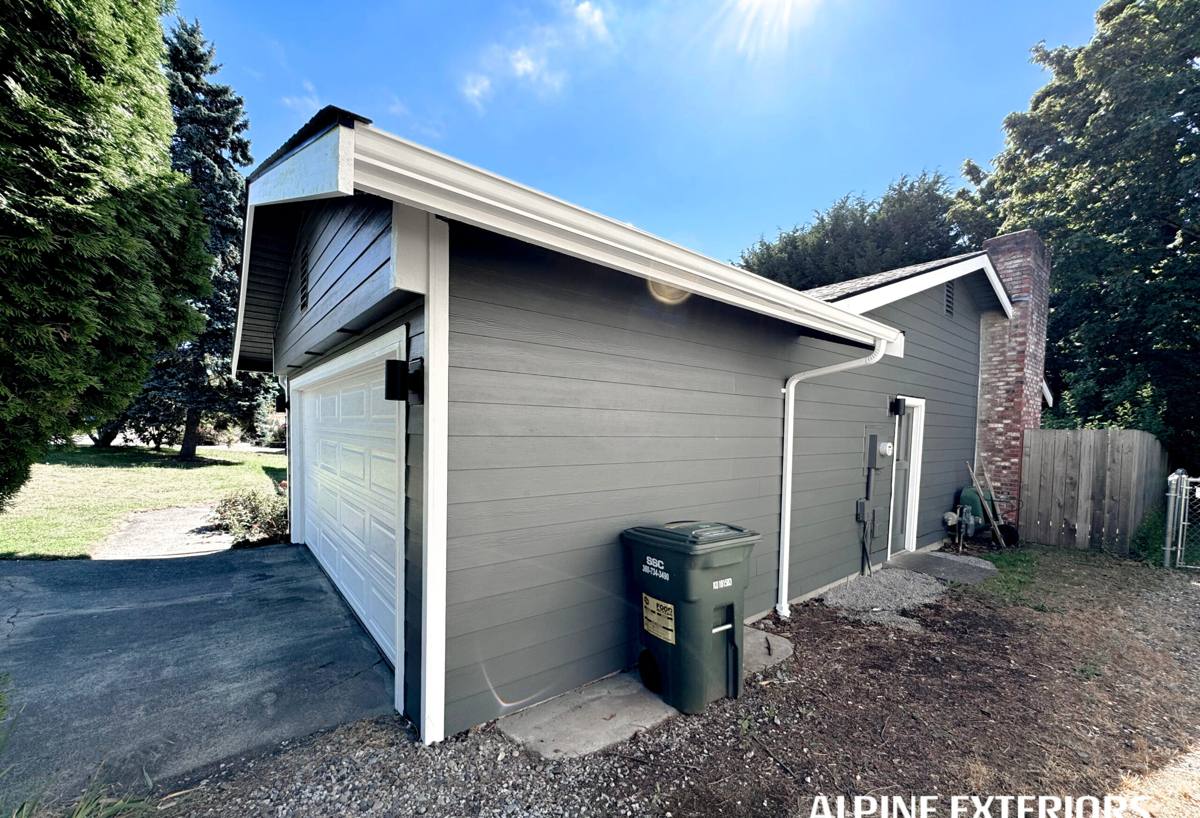
Common Signs Ferndale Homeowners Call Us For
Moisture and Rot Damage
Wood-based siding products — cedar, primed spruce, and engineered wood trim — are the most common source of repair calls we get in this area. Once water gets behind a panel or into a cut edge, it doesn't dry out quickly in our climate, and rot can spread well beyond the spot where it first shows up. Soft or spongy siding, dark staining, or paint that keeps failing in the same spot are all signs the damage goes deeper than the surface.
Cracked, Buckled, or Loose Panels
Repeated wet-dry cycles and temperature swings cause siding materials to expand and contract. Over years, that movement stresses fasteners, joints, and caulked seams. Panels that have pulled away from the wall, visible cracking, or siding that flexes when pressed are mechanical failures that let water in even if there's no rot yet.
Moss, Algae, and Persistent Staining
Shaded north- and west-facing walls in Ferndale often develop moss and green algae staining faster than sun-exposed sides of the same house. This isn't just cosmetic — moss holds moisture against the siding surface, which accelerates whatever damage is already starting underneath.
Signs worth a closer look include:
- Soft, spongy, or crumbling siding when pressed
- Dark staining or streaking that returns after cleaning
- Visible gaps, cracks, or buckling in panels or seams
- Moss or algae growth concentrated on shaded walls
- Peeling or bubbling paint in the same spots year after year
- Soft trim around windows, doors, or corner boards
- Musty smell near an exterior wall from inside the house
What a Proper Siding Repair Actually Involves
Diagnosing the Real Problem First
A repair that only addresses what's visible from the ground is a repair that fails again in a year or two. Before we replace anything, we check how far moisture has traveled — behind the siding, into the sheathing, and around flashing at windows, doors, and trim. Damaged siding is often a symptom of a water management problem, not the cause of it, and fixing the symptom without the cause just delays the next call.
Matching Materials and Finish
Patching one section of siding without a reasonable material and color match leaves an obvious scar on the house. Depending on the existing siding, that can mean sourcing a compatible profile, working with a factory finish system that allows for a proper color match, or — when damage is extensive enough — recommending a broader section replacement so the repair blends rather than stands out.
Flashing, House Wrap, and Water Management
Siding is only one layer of a wall's defense against water. Correct repair work means restoring proper flashing at penetrations, keeping house wrap or weather-resistive barrier intact and lapped correctly, and making sure water has a way to drain and dry rather than pooling behind the cladding. In a climate that gets as much driving rain as ours, skipping this step is how "repaired" siding ends up back on the schedule within a couple of years.
Repair or Replace? How We Help You Decide
Not every damaged section needs a full re-side, but not every problem is a good candidate for a spot repair either. We look at the extent of the damage, the age and condition of the surrounding siding, and how the existing material has held up to our climate before making a recommendation.
| Factor | Favors Repair | Favors Replacement |
|---|---|---|
| Extent of damage | Isolated to one or two sections | Spread across multiple walls |
| Age of existing siding | Relatively young, otherwise sound | Nearing or past expected service life |
| Underlying cause | Isolated flashing or fastener failure | Systemic moisture or installation issues |
| Material match | Close match available | Discontinued profile or faded finish |
| Original material | Fiber cement in good condition | Wood, vinyl, or aging composite showing wider wear |
When a repair is the right call, we'll say so — there's no reason to sell a full re-side to a homeowner who needs a targeted fix. When the damage points to a bigger underlying issue, we'll explain exactly what we found and why a broader repair or replacement makes more sense long-term.
Why We Repair — and Replace — With James Hardie Fiber Cement Only
We install exclusively James Hardie fiber cement siding, and that standard shapes how we approach repair work too. When we're patching an existing wood, vinyl, or composite siding system, we'll do the job right with compatible materials. But when a homeowner is dealing with recurring rot, chronic moisture problems, or siding that's failing broadly enough to warrant replacing full sections, we recommend James Hardie rather than reinstalling the same material that's already struggling in this climate.
Fiber cement doesn't rot, and it doesn't feed mold or fungal growth the way wood-based products can, which matters directly in a climate with Ferndale's moss season and moisture load. James Hardie's ColorPlus factory finish is baked on and warranted against fading and peeling, which holds up better than field-applied paint against years of driving rain and salt air. It's also non-combustible — a genuine advantage that has nothing to do with our climate specifically, but is worth mentioning as part of why we standardized on it. We won't tell you cedar or vinyl siding are bad products; they're just not what we choose to warranty our workmanship on, and we'd rather be straightforward about that than install something we don't believe holds up best here.
Our Ferndale Siding Repair Process
- On-site inspection. We look at the damaged area and check for signs the problem extends further than what's visible — moisture readings, soft spots, and flashing condition.
- Honest diagnosis. We explain what caused the damage, not just what it looks like, so you understand whether you're looking at a repair, a partial replacement, or something bigger.
- Clear scope and estimate. You get a straightforward explanation of the work involved and what it will cost before anything is torn off.
- Correct repair. We address the water management issue underneath, not just the visible siding, using materials that match or, where a broader replacement makes sense, James Hardie fiber cement.
- Cleanup and walkthrough. We review the completed work with you and point out anything worth keeping an eye on going forward.
Why Hiring a Crew That Already Works in Ferndale Matters
Siding repair looks different in a coastal Whatcom County climate than it does in drier parts of the state, and a crew that mostly works elsewhere doesn't always catch that. We know what moss-driven damage looks like on a shaded Ferndale wall versus what a flashing failure looks like after a hard driving rain, because we see both regularly in this area. That local pattern recognition is part of what separates a repair that actually solves the problem from one that just looks fixed until the next wet season.
There's also a practical side to it. A local crew can get to a Ferndale property without the drive eating into the job, follow up easily if something needs a second look, and knows which local suppliers stock the materials and finishes that match what's already on Whatcom County homes.
Keeping Your Siding in Good Shape After the Repair
A good repair should last, but a little maintenance goes a long way in this climate — especially with moss and algae pressure being what it is here.
- Rinse siding, especially shaded walls, once or twice a year to slow moss and algae buildup
- Keep gutters clear so overflow doesn't run down and pool against siding seams
- Trim back branches and shrubs that keep a wall section shaded and slow to dry
- Recaulk or reseal joints and trim as they age — don't wait for a gap to become a leak
- Walk the exterior once a year and check corners, bottom edges, and window trim for soft spots
- Address small issues promptly; in this climate, minor problems don't stay minor for long
If you're seeing moisture damage, cracked panels, or persistent moss staining on your Ferndale home, we're happy to take a look and give you a straightforward, no-pressure assessment of what's going on and what it would take to fix it. Fill out the form below to schedule a free estimate.