 Bellingham
 Deck Building for Happy Valley's Climate and Terrain
Happy Valley sits close enough to Bellingham Bay that salt-laden air is a real factor in how long a deck lasts, and the neighborhood's mix of older bungalows and updated homes means we see decks in every condition — from structurally sound platforms that just need a facelift to old wood-framed decks that are quietly rotting from the joists up. Whatcom County's climate is not gentle on outdoor structures. We get long stretches of driving rain in fall and winter, cool damp summers that never fully dry out shaded areas, and a moss season that can run eight months of the year on north-facing or tree-covered lots. A deck built without those realities in mind will look fine for two or three years and then start showing problems that are expensive to fix after the fact.
Building a deck that actually holds up here isn't about using fancier materials than anyone else — it's about respecting how water moves through a structure, where it collects, and what happens when it doesn't dry out fast enough. That's the whole job, and it's worth doing right the first time.
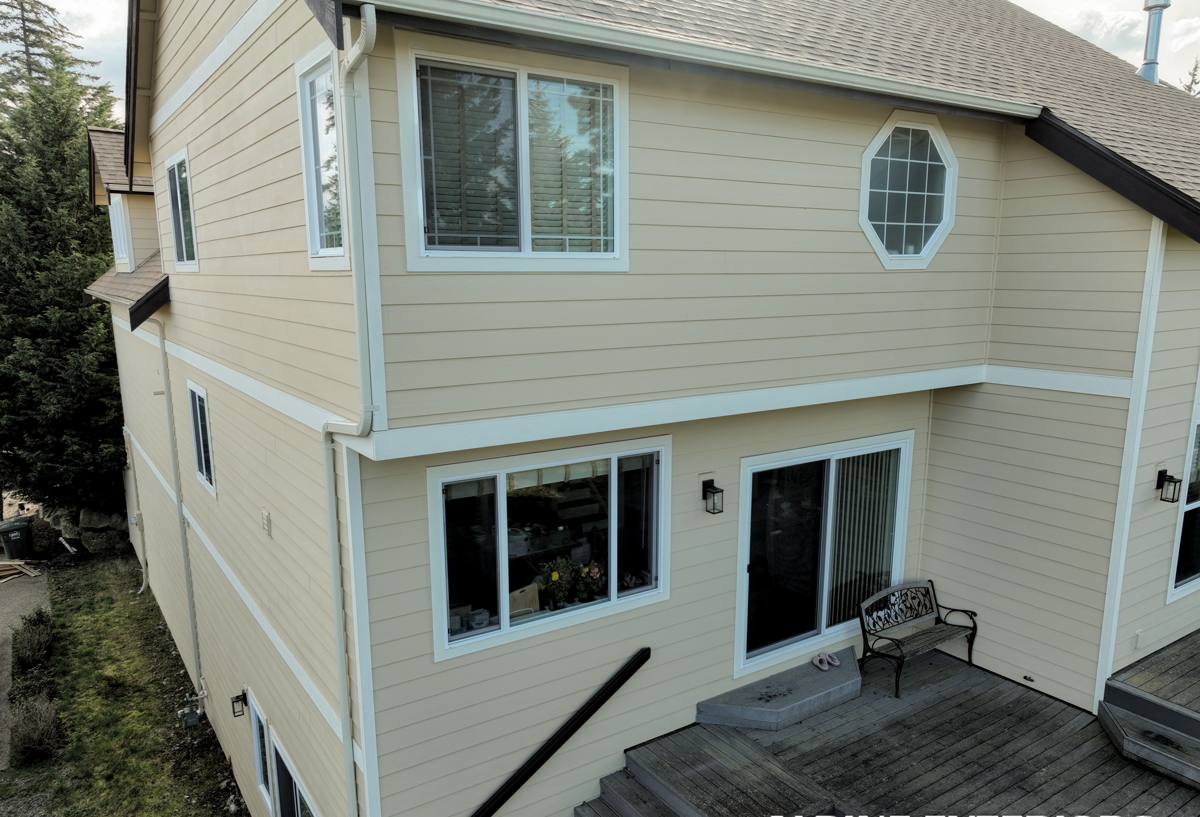
What Happy Valley Homes Need From a Deck
Most of the decks we work on in this part of Bellingham fall into a few common situations. Knowing which one you're in helps set expectations for the project.
Aging wood decks nearing the end of their life
Cedar and treated-lumber decks built 15-25 years ago are common in this neighborhood. Many are still structurally usable but have soft spots at ledger boards, stair stringers, or post bases where water has been sitting against wood for years. We check these areas first, because they're the ones that fail without warning.
Shaded or tree-covered lots with heavy moss and algae growth
Happy Valley has a good tree canopy in places, which is great for shade in summer and bad for deck boards that never get a chance to dry between rains. Moss and algae aren't just cosmetic — they hold moisture against the wood surface and make boards slick and dangerous underfoot.
Decks exposed to wind-driven rain and salt air
Being close to the bay means metal fasteners, hinges, and railing hardware corrode faster here than they would further inland. Cheaper fasteners can start staining and weakening within a few years.
New builds and additions
Some projects are simply new decks for homes that never had one, or a replacement for a small deck that's too small for how the family actually uses the outdoor space.
What a Correct Deck Build Actually Involves
A deck is a structure, not just a surface to walk on, and most of what determines whether it lasts 10 years or 30 years happens below the decking boards where you can't see it.
Ledger attachment and flashing
The ledger board — where the deck attaches to the house — is the single most common failure point on older decks in wet climates. It needs proper flashing that directs water away from the house framing, not just lag bolts through siding. This is also where a lot of hidden rot originates, because water gets trapped between the ledger and the house wall over years of exposure.
Footings and post bases
Whatcom County soil holds moisture, and posts set directly in or near standing water rot from the bottom up. Footings need to be set to the correct depth and posts need to sit on bases that keep end grain off the ground and away from pooling water.
Joist spacing and hardware
Tighter joist spacing than the bare minimum reduces bounce and extends the life of the decking material sitting on top. Structural hardware — joist hangers, hurricane ties, post caps — should be corrosion-resistant given the salt air exposure this close to the bay, not the cheapest galvanized option available.
Drainage and airflow underneath
A deck built low to the ground with poor airflow underneath will stay damp longer after every rain, which accelerates rot and encourages moss and mold. Grading the ground underneath to shed water, and leaving enough clearance for air to move, makes a measurable difference in how long the structure lasts.
Decking material selection
Whether you choose wood or composite, the surface material needs to be matched to how much shade and moisture exposure the deck actually gets — not just picked off a showroom sample.
Decking Material Options for This Climate
There's no single "best" decking material for every Happy Valley lot — it depends on sun exposure, budget, and how much upkeep you want to do. Here's how the common options actually compare under our conditions.
| Material | Moss/Algae Resistance | Maintenance | Typical Lifespan Here |
|---|---|---|---|
| Cedar | Moderate — needs regular cleaning and sealing in shaded areas | Annual cleaning, re-seal every 2-3 years | 15-20 years with upkeep |
| Pressure-treated pine | Lower — more prone to surface graying and moss in deep shade | Annual cleaning, re-seal every 1-2 years | 12-18 years with upkeep |
| Composite decking | High — resists moisture absorption, but surface film still needs washing | Occasional washing, no sealing | 25-30+ years |
| Tropical hardwoods | High density resists rot, but can still stain and grow surface algae in full shade | Periodic oiling for appearance | 25+ years |
We don't push one material over another as a rule — we talk through your lot's actual sun and shade pattern, your appetite for maintenance, and your budget, and make a recommendation based on that, not on what's easiest for us to install.
Why we're selective about fasteners and hardware
We use corrosion-resistant fasteners and hardware rated for coastal exposure as our standard, not an upsell. Standard galvanized hardware can start showing rust streaks and weakening within a handful of years this close to the bay — that's a maintenance burden and eventual safety issue we'd rather avoid from day one than have you deal with later.
Our Process for a Happy Valley Deck Project
- Site walk and assessment. We look at sun/shade exposure, existing drainage, soil conditions, and — for replacement projects — the condition of the ledger, framing, and posts on the existing structure.
- Design and material discussion. We talk through layout, railing style, stairs, and decking material options based on your budget and how you'll actually use the space.
- Permitting. Most deck projects in the City of Bellingham and unincorporated Whatcom County require a building permit, especially for decks above a certain height or attached to the house. We handle this so you don't have to navigate it yourself.
- Demolition (if replacing an existing deck). We check framing and posts as we go, and flag anything unexpected before proceeding rather than covering it up.
- Framing, footings, and flashing. This is the part that determines longevity — done carefully, with proper flashing at the ledger and correct footing depth.
- Decking, railing, and stairs. Installed per manufacturer spacing guidelines to allow for material expansion and proper drainage between boards.
- Final walkthrough. We go over the finished deck with you, including basic care and cleaning guidance specific to the material you chose.
Living With Your Deck: Moss and Rain Season Care
A well-built deck still needs some seasonal attention in this climate. A little bit of regular care goes a long way toward avoiding bigger problems.
- Sweep debris and fallen leaves off the deck regularly in fall — trapped organic matter holds moisture and feeds moss growth.
- Rinse or gently pressure-wash the surface once or twice a year to remove algae film before it gets slick and stains the wood or composite surface.
- Check stair treads and high-traffic areas for slickness heading into the wet season — this is where moss buildup becomes a safety issue first.
- Keep gutters and downspouts near the deck clear so runoff isn't dumping extra water directly onto or under the structure.
- Inspect railing posts and ledger flashing yearly for any signs of water staining or soft wood.
- Trim back overhanging branches where practical to improve airflow and sun exposure on shaded sections.
Why Hire a Crew That Already Works in Happy Valley
A deck built to a generic national standard isn't necessarily built for Whatcom County's rain totals, humidity, and salt air exposure. Crews who work regularly in this specific area already know which fastener grades hold up, which decking materials handle the shade patterns typical of Bellingham lots, and where water tends to collect on the kinds of sloped and wooded properties common around Happy Valley. That local pattern recognition matters — it's the difference between a deck that needs attention in year three and one that's still solid in year twenty.
It also matters for permitting and code compliance. Requirements can vary between City of Bellingham jurisdiction and unincorporated Whatcom County parcels, and a contractor who's pulled permits in this specific area knows what inspectors here are actually looking for.
Get a Straightforward Estimate
If you're weighing a deck replacement, a new build, or just want an honest read on whether your current deck's framing is still sound, we're glad to take a look. There's a free, no-pressure estimate form below — tell us a bit about your property and what you're picturing, and we'll follow up to talk through the details.