 Bellingham
 Fiber Cement Siding for Lynden Homes, From a Bellingham-Based Crew
Lynden sits a short drive north of Bellingham, out in the mix of open farmland and tree-lined residential lots that defines a lot of northern Whatcom County. It's close enough to the coast and far enough into the interior that it catches nearly every kind of weather this region throws at a house. Salt air, driving rain, and a long moss season all take their toll here, and siding that isn't chosen and installed with that in mind tends to show it early — fading, staining, soft spots, or seams that let water in long before the material was supposed to fail.
We're based in Bellingham and work throughout Whatcom County, and on siding specifically, we install one product: James Hardie fiber cement. This page is about that one job, done right, on a Lynden home — what the local climate actually does to a wall, what a correct fiber cement installation involves, and why we don't offer a menu of cheaper alternatives instead.
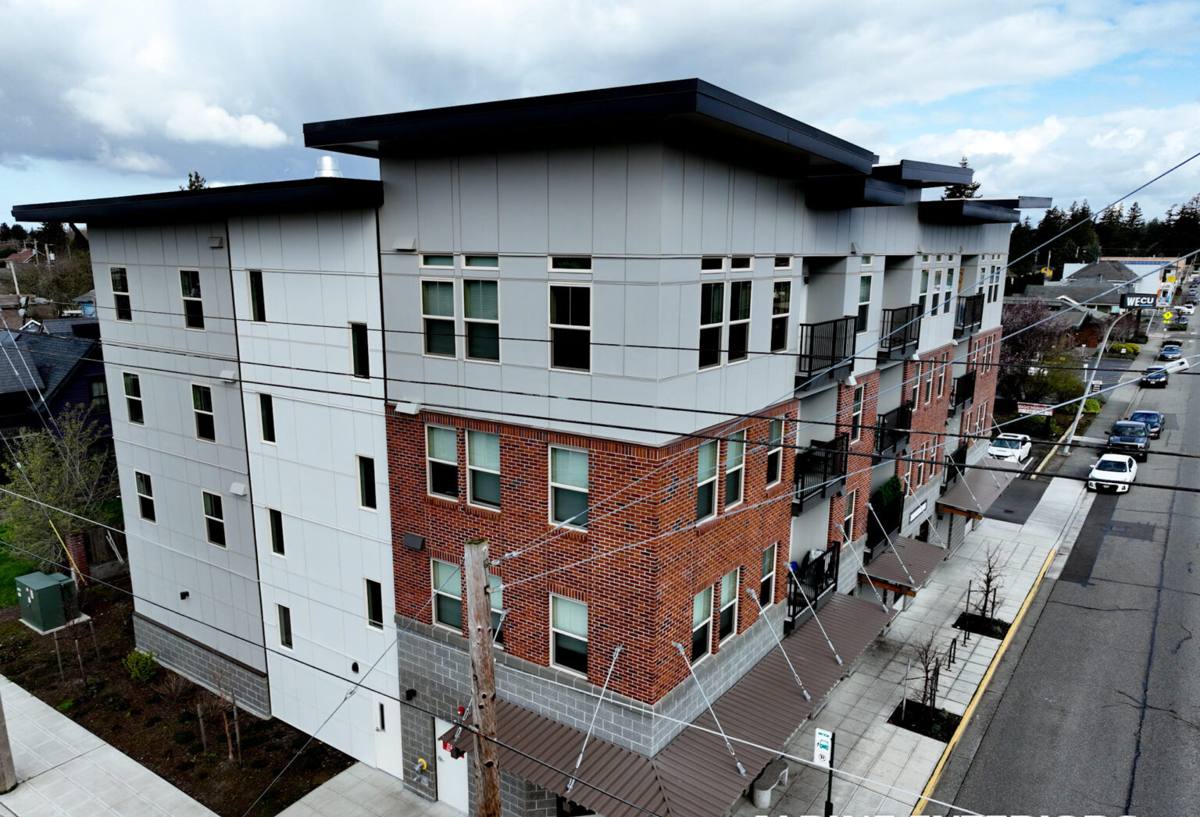
What Lynden's Climate Puts a Siding System Through
Salt Air, Even Away From the Water
Lynden isn't a waterfront town, but marine air off the Sound and the Strait moves inland across this whole part of the county, carrying salt with it. Over years, that salt exposure accelerates corrosion on fasteners, trim hardware, and lower-grade flashing. It's a slower process than at the immediate coastline, but it's real, and it means hardware and material choices shouldn't be made as if this were a dry, inland climate.
Driving Rain
Rain through fall and winter in this region rarely falls straight down. Wind pushes it sideways into wall assemblies, around window openings, and into any gap or seam that gives it a way in. That sideways load is the detail that separates siding that holds up for decades from siding that starts letting moisture behind the cladding within a few wet seasons — regardless of what the material itself is rated to withstand under ideal conditions.
A Long Moss Season
Mild temperatures, tree cover, and near-constant moisture add up to a moss and mildew season that can run close to year-round on shaded walls. Lynden's mix of open, sun-exposed farmland and tree-sheltered residential lots means this varies a lot from property to property — a wall facing an open field dries out fast after a storm, while a wall shaded by a tree line or a neighboring structure often stays damp for days. Siding that's porous or that holds moisture against the substrate becomes a growth surface over time, and once moss and mildew take hold, they hold moisture against the wall even longer, compounding the problem.
Why Fiber Cement Is the Right Material for This Climate
Fiber cement siding is made from cement, sand, and cellulose fiber, formed into planks or panels and cured into a dense, stable material. That composition is what makes it behave so differently from wood-based siding products in a climate like this one. It doesn't have a wood-strand or wood-veneer component that can wick moisture at a cut edge or a fastener hole. It doesn't swell, cup, or warp the way engineered wood and solid wood siding can after repeated wetting and drying cycles over a wet season. And because it isn't organic material, it doesn't feed mold, mildew, or rot the way wood-based products can once moisture gets past the surface.
None of that means fiber cement is maintenance-free — it still needs correct installation, proper caulking and paint maintenance at cut edges, and periodic cleaning to keep moss and mildew from building up on the surface. But it starts from a much more forgiving baseline in a climate defined by salt air, driving rain, and a long moss season than materials that are more moisture-sensitive by nature.
Why We Install Only James Hardie
Not all fiber cement is engineered the same way, and we've settled on James Hardie as the one brand we install after years of seeing how different products actually hold up on real Whatcom County homes.
- Climate-engineered HZ5 formulation: Hardie's HZ5 product line is built specifically for regions with heavy moisture exposure and freeze-thaw cycling, which describes Lynden and the rest of northern Whatcom County closely.
- Factory-applied ColorPlus finish: The color is baked on under controlled factory conditions rather than brushed on in the field, which holds adhesion and color far longer under sustained moisture and UV exposure than site-applied paint.
- Dimensional stability: Fiber cement doesn't expand and contract the way wood-based products do, which keeps joints, caulking, and paint lines intact longer.
- Non-combustible core: Fiber cement doesn't feed a fire the way wood-based siding can, which matters for both safety and insurance underwriting.
- A strong, transferable warranty: Hardie backs the product with one of the more robust warranty structures in the industry, provided installation follows their published specifications.
That last point is the one that trips up a lot of installations that aren't done by a crew that specializes in this product. The warranty is only as good as the installation behind it, and Hardie's spec is specific about fastener placement, clearances, and flashing details.
What We Won't Install, and Why
We don't install LP SmartSide, vinyl siding, Cemplank, Allura, primed spruce, or cedar. Each has a legitimate place in the market, and plenty of homeowners are satisfied with them elsewhere. Our decision is a professional one, not a claim that any of these products is defective — in a climate with this much sustained moisture and salt exposure, we'd rather fully stand behind one system than offer a cheaper option that quietly shifts long-term maintenance risk onto the homeowner.
| Product | Common Trade-Off in This Climate |
|---|---|
| Vinyl siding | Can warp or become brittle with temperature swings; panel seams give wind-driven rain an entry point behind the cladding |
| LP SmartSide / engineered wood | Wood-strand core is more moisture-sensitive at cut edges and fastener points than fiber cement |
| Primed spruce or cedar | Requires ongoing paint and moisture maintenance to avoid rot; a heavier long-term ownership cost than the upfront price suggests |
| Cemplank / Allura | Other fiber cement brands may not offer the same climate-specific HZ formulation or factory-finish warranty depth we've come to rely on |
What a Correct Fiber Cement Installation Involves
Fiber cement is only as good as the installation behind it. A rushed or generic install can leave a homeowner with the same moisture problems as a cheaper material, just at a higher price. Here's what we treat as non-negotiable on every job:
- Inspection and estimate: A real walk of the property — current siding condition, sun and shade exposure on each wall, and any visible signs of trapped moisture — before any number goes on paper.
- Tear-off and substrate check: Once old siding comes off, we check the sheathing underneath for rot or soft spots. Covering damaged sheathing with new siding just hides a problem that keeps getting worse behind the wall.
- Weather-resistive barrier and flashing: House wrap, window flashing, and every wall penetration get careful attention here, since most siding failures in this region trace back to water getting behind the cladding, not through it.
- Fastening and clearances to spec: Correct fastener type, spacing, and clearance above grade and roofline, following Hardie's published installation requirements rather than a generic approach.
- Joints, caulking, and finish: Properly sealed joints and butt seams so moisture doesn't have a path in at the seams, which is one of the more common places a poor installation fails first.
- Final walkthrough: We walk the finished job with the homeowner, cover basic care and maintenance, and confirm everything matches what was estimated.
Siding Profiles and Colors That Fit Lynden Properties
James Hardie's product line covers more than one look, and the right profile depends on the home. HardiePlank lap siding is the most common choice and works on nearly any style of house. HardiePanel, installed vertically with battens, suits the farmhouse and barn-style aesthetic that fits naturally with Lynden's rural surroundings. HardieTrim finishes out corners, window and door surrounds, and fascia in a material that matches the durability of the field siding instead of reverting to a wood trim that ages differently.
Color choice matters more here than in a drier climate. On open, sun-exposed lots, lighter colors show dust and pollen buildup, while darker colors take more direct UV exposure over the course of a summer. On shaded, tree-lined lots, lighter colors tend to show green algae and moss growth sooner than darker tones. ColorPlus finishes are available across a range of both, so the decision usually comes down to balancing the home's exposure with the look the homeowner wants, rather than one color being objectively right for the area.
What Affects the Cost of a Fiber Cement Siding Project
| Factor | Why It Matters |
|---|---|
| Home size and number of stories | More square footage and taller walls mean more material, labor, and staging/access requirements |
| Siding profile (lap vs. panel) | Vertical panel installs with battens generally involve more trim work than standard lap siding |
| Trim and detail complexity | Homes with more windows, dormers, and roofline transitions need more precise, time-consuming trim work |
| Tear-off vs. new construction | Removing and disposing of old siding adds labor and may reveal sheathing repairs |
| Substrate condition | Rot or moisture damage found during tear-off has to be repaired before new siding goes up |
| Color and finish selection | Standard ColorPlus colors versus custom or premium selections can shift material cost |
Exact numbers depend on the specific home, which is why we walk the property before giving a real estimate instead of quoting off a flat per-square-foot rate.
Signs Your Lynden Home's Siding Needs Attention
- Moss or dark staining that returns quickly after cleaning, especially on shaded or north-facing walls
- Soft or spongy siding, particularly low on the wall or around window and door trim
- Peeling paint or visible warping, most common on older wood-based or engineered wood siding
- Cracked, buckled, or missing panels after a windstorm
- Rust staining running down from fasteners or trim hardware
- Gaps or separation at seams, corners, or trim joints
- Siding older than 20-25 years with no documented replacement history
Why a Bellingham Crew That Works Lynden Regularly Matters
We're not driving in from out of the region to bid a job and move on. Working out of Bellingham means we're on Whatcom County job sites through every season, seeing firsthand how salt air, driving rain, and a long moss season actually behave on real houses over a full year, not just how a product performs on a spec sheet. That shapes practical decisions: which wall orientations on a Lynden property stay wet longest, where extra flashing attention pays off, and which install-day details are worth the extra time so a homeowner isn't dealing with a callback two winters later. It also means that if a warranty question or a maintenance question comes up years down the road, it's a call to a crew still working in the same county, not one that's moved on.
If your Lynden home needs new siding, or you're weighing James Hardie fiber cement against other materials, we're glad to take a look and give you a straightforward, no-pressure estimate. Reach out using the form below to get started.