 Bellingham
 Why Decks in Sehome Wear Out Faster Than the Brochure Says
Sehome sits close enough to Bellingham Bay that salt-laden air reaches the neighborhood on a regular basis, and it sits under enough mature tree canopy — fir, cedar, big-leaf maple — that shade and falling debris are a constant. Add Whatcom County's long wet season, where driving rain off the water can blow sideways under railings and against ledger boards, and you've got a climate that's genuinely tough on outdoor wood structures. Most decks in this area don't fail because the homeowner neglected them. They fail because they were built to a generic spec that didn't account for what a Sehome lot actually goes through every winter.
Moss is the most visible symptom, but it's rarely the real problem. Moss grows where moisture sits — on shaded boards, in ledger gaps, in end-grain that was never sealed. By the time the surface is green, there's a good chance moisture has already been working on the framing underneath for a season or two. A deck replacement done right in this neighborhood has to solve for drainage and airflow first, appearance second.
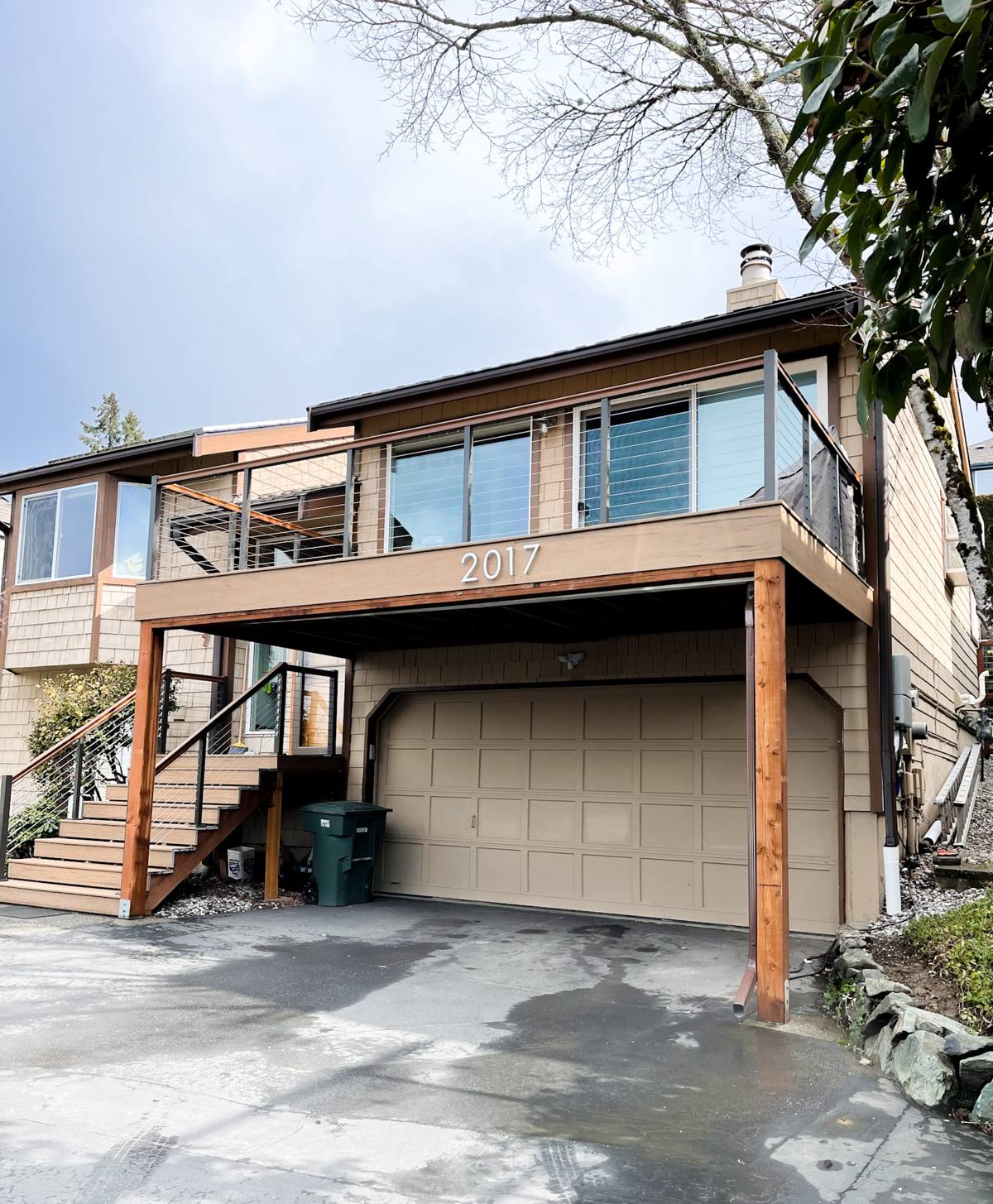
Repair or Replace? How to Tell
Not every tired-looking deck needs to come out. A lot of Sehome decks just need new boards, a fresh coat of finish, or a couple of replaced joists. But there are signs that mean the structure itself is compromised, and no amount of surface work fixes that safely.
- Soft or spongy spots when you walk the deck, especially near the house
- Rot or dark staining where the ledger board meets the siding
- Posts that wobble, or footings that have visibly shifted or heaved
- Rust streaks or crumbling around old fasteners and connectors
- A railing that flexes noticeably when you lean on it
- Persistent moss or fungus that comes back within weeks of cleaning
- A deck built before current code that lacks proper ledger flashing or joist hangers
If you're seeing two or more of these, it's usually more cost-effective in the long run to replace than to keep patching. Piecemeal repairs on a structurally tired deck tend to become a repeating expense.
What an Honest Deck Replacement Actually Involves
A deck is only as good as what's underneath the decking boards, and that's the part most homeowners never see once the project is finished. In our area, a correct replacement covers:
Structure and framing
Footings sized and set to reach stable soil, posts rated for the load and height, and joists spaced correctly for the decking material chosen. Whatcom County soils can hold water longer than people expect, especially on the sloped and partially wooded lots common around Sehome, so footing depth and drainage around them matter more here than they would on a flat, well-drained site.
Ledger attachment and flashing
This is the single most common failure point on older Northwest decks. The ledger board bolts to the house and carries a large share of the deck's weight, and it's also the spot where water most easily gets behind the siding if it isn't flashed correctly. A proper replacement uses code-compliant flashing that sheds water away from the house, not just a bead of caulk.
Fasteners and hardware
Coastal, damp climates are hard on metal. We use corrosion-resistant hardware rated for treated lumber contact, because standard fasteners can corrode faster than the wood around them fails — which quietly weakens the whole structure.
Guardrails and stairs
Height, spacing, and load requirements are set by code, not preference. A replacement is the right time to bring an older deck's railings and stairs up to current standard, especially if the home has stairs to grade or a walk-out basement level.
Permits
Most deck replacements in the City of Bellingham require a permit, particularly when framing or footings are involved. We handle that as part of the job rather than leaving it to the homeowner to sort out.
Choosing a Decking Material for a Shaded, Damp Lot
Material choice matters more here than in drier climates, because whatever you pick has to deal with shade, moisture, and moss pressure for years without turning into a maintenance chore. Here's how the common options actually compare for a typical Sehome lot:
| Material | Upfront Cost | How It Handles This Climate | Maintenance |
|---|---|---|---|
| Pressure-treated pine | Lowest | Holds up structurally but needs a sealed finish maintained regularly or it grays, cups, and holds moss | Annual cleaning, refinish every 2-3 years |
| Cedar | Mid-range | Naturally rot- and insect-resistant, good look, but still needs finish upkeep in shaded, damp spots | Cleaning and refinishing every 2-3 years |
| Composite | Higher | Doesn't absorb water or rot; some boards can still get slippery with algae/moss film in heavy shade if not cleaned | Periodic washing, no staining or sealing |
| Tropical hardwood | Highest | Very dense and rot-resistant, but installation is unforgiving and mistakes are costly to fix | Occasional oiling to maintain color |
We don't push one material on every job. A shaded, tree-covered lot with limited sun exposure is often a better fit for composite or well-finished cedar than for bare pressure-treated lumber, simply because those options tolerate the extra moisture with less upkeep. We'll walk you through the real trade-offs for your specific yard rather than defaulting to whatever's cheapest to install.
Our Deck Replacement Process
- On-site assessment. We check the framing, footings, ledger, and drainage — not just the visible boards — to confirm replacement is actually needed and to identify anything the original build got wrong.
- Design and material selection. We talk through material, layout, and railing options based on your home's exposure, shade, and budget, and provide a clear, itemized estimate.
- Permitting. We prepare and submit what's required for the City of Bellingham or Whatcom County, depending on your property.
- Tear-out. The old deck comes down carefully, with attention to the siding and ledger area so we're not creating new problems while removing old ones.
- Framing and flashing. New footings, posts, joists, and properly flashed ledger attachment — the structural work that determines how long the deck actually lasts.
- Decking, railings, and stairs. Installed to spec, with attention to fastener placement and drainage gaps between boards.
- Final walkthrough and inspection. We review the finished deck with you and coordinate any required city inspection before calling the job complete.
Building for Sehome's Terrain and Tree Cover
Sehome's mix of sloped lots and mature landscaping near Sehome Hill creates a couple of recurring challenges we plan for. Sloped yards often mean taller posts and more careful footing placement to keep the structure level and properly supported. Heavy tree cover means more organic debris — needles, leaves, maple seed pods — collecting in board gaps and around posts, which holds moisture and feeds moss growth if the deck isn't designed with enough airflow and drainage underneath.
We account for this with board spacing that allows debris to clear rather than trap it, drainage that directs water away from posts and footings, and, where it makes sense, decking materials that shrug off shade-driven moss better than bare softwood. None of this is exotic engineering — it's just designing for the actual conditions of the lot instead of a generic climate.
Maintenance Checklist to Get the Most Out of a New Deck
A well-built deck still needs some seasonal attention in this climate, especially through the wet months. A short annual routine keeps it looking good and prevents small issues from becoming structural ones:
- Sweep off leaves, needles, and seed debris regularly, especially from board gaps
- Rinse and lightly scrub for moss or algae before it takes hold, particularly in shaded corners
- Check the ledger area at the house for staining or gaps once a year
- Inspect railings and stair connections for looseness
- Reseal or restain wood decking on the schedule appropriate to that material
- Keep gutters and downspouts near the deck clear so runoff isn't draining onto it
Why Hire a Crew That Already Works in Sehome
Building codes, typical soil conditions, and the way rain and shade behave on a given lot vary block to block in Bellingham, and a crew that regularly works this neighborhood already knows what tends to go wrong here — which ledger details fail first, which yards need extra footing depth, which sides of a house catch the worst of the driving rain off the bay. That's the difference between a deck that's built to pass inspection and one that's built to actually hold up through a decade of Whatcom County winters. We'd rather spend a little more time getting the framing and flashing right the first time than have a homeowner calling us back in three years about a soft spot near the house.
If your deck is showing its age, or you're just not sure whether it needs repair or full replacement, we're happy to take a look and give you a straight answer. Use the form below to request a free, no-pressure estimate for your Sehome property.