 Bellingham
 Sehome's Siding Has a Harder Job Than Most People Realize
Sehome sits close enough to Bellingham Bay to catch salt-laden air on a regular basis, while also holding onto the moisture that settles into Whatcom County's tree-covered hillsides. That combination — salt exposure plus shade plus rain that can linger for days at a time — is a tough environment for exterior cladding. Siding here isn't just a cosmetic choice; it's a weather barrier that has to hold up to a specific, repeating cycle of wet-dry, wet-dry that runs most of the year.
A lot of the housing stock in and around Sehome includes older homes with add-on siding layers, garages and outbuildings sided with lower-grade materials, and newer infill construction where builders often specify the cheapest compliant product. That mix means a siding contractor working this neighborhood needs to know how to evaluate what's already on the wall, not just install something new over it.
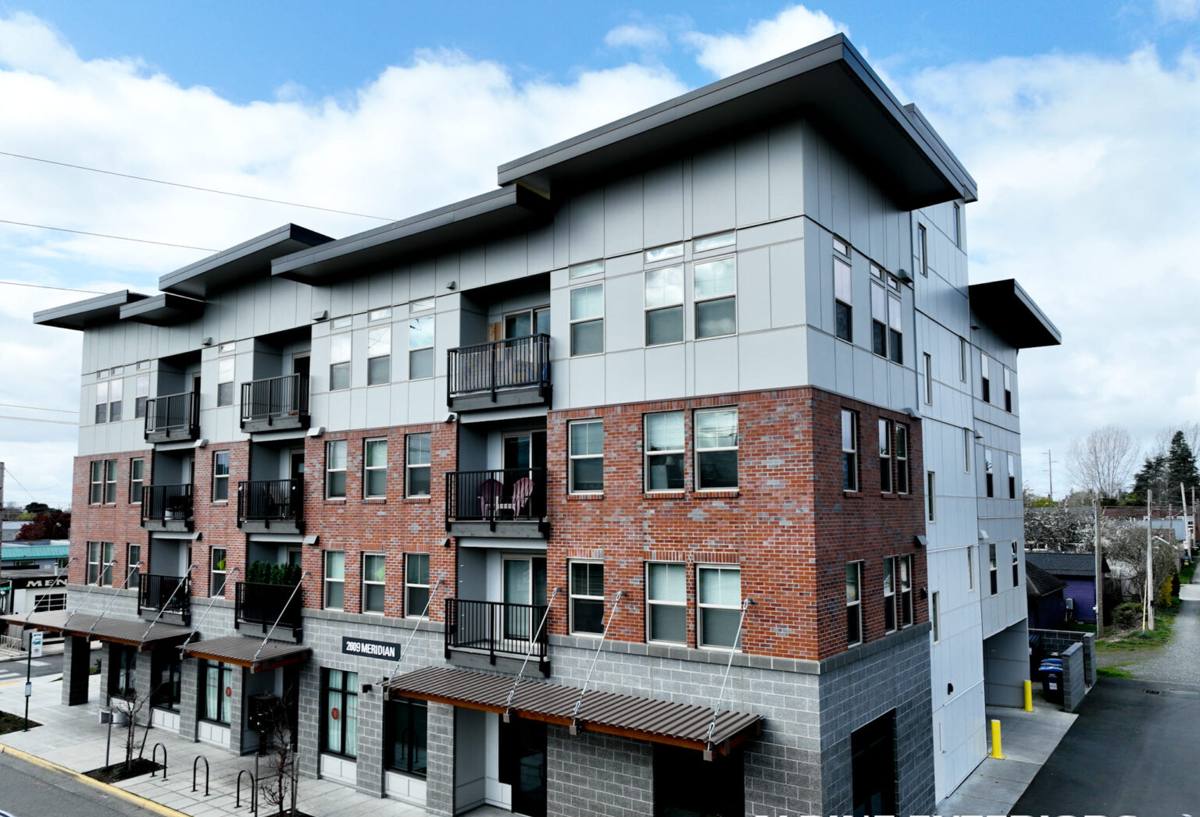
The Three Climate Stresses That Matter Most Here
Salt Air
Proximity to the bay means airborne salt settles on exterior surfaces even on days without direct rain. Over years, that salt exposure accelerates corrosion on fasteners, staples, and any exposed metal trim, and it can degrade paint films that weren't formulated to resist it. Siding material and finish both matter here — not just the color, but what the color is bonded to and how the fasteners underneath are protected.
Driving Rain
Storms moving in off the water tend to drive rain sideways into wall assemblies rather than straight down. That means lap joints, butt joints, and trim intersections take on water pressure that a purely vertical-rain climate wouldn't produce. If flashing details and caulking are done as an afterthought rather than a system, driving rain finds the gaps.
Moss Season
Whatcom County's long wet season, combined with tree cover common in Sehome's older lots, creates months of ideal conditions for moss and algae growth on north-facing and shaded walls. Moss holds moisture against the siding surface far longer than open exposure would, which is exactly the condition that rots wood-based products and delaminates poorly bonded engineered products.
Why This Company Installs Only James Hardie Fiber Cement
We made a deliberate decision to install one siding system — James Hardie fiber cement — rather than offering a menu of products at different price points. That's not a marketing angle; it's a standard we hold ourselves to because of what we've seen play out over time in exactly this kind of climate.
Fiber cement is non-combustible, dimensionally stable, and doesn't absorb and swell with moisture the way wood-based or wood-composite products can. James Hardie's factory-applied ColorPlus finish is baked on under controlled conditions, which gives it better adhesion and UV resistance than field-applied paint, and it comes with a real, transferable warranty backing both the substrate and the finish. Hardie also engineers specific product lines (their "HZ" designations) for different climate zones, which matters in a region that swings between marine humidity and dry summer stretches.
We don't install vinyl siding, LP SmartSide, Cemplank, Allura, or primed wood siding — not because those products have no legitimate use anywhere, but because after years of installation and repair work in this climate, we don't want our name on a product we can't stand behind for the long haul in Whatcom County conditions. Standardizing on one system also means our crews install it constantly, rather than switching between products and picking up bad habits from unfamiliar materials.
What a Correct Fiber Cement Installation Actually Involves
Substrate and Moisture Barrier Prep
Before any siding goes up, the wall needs a continuous weather-resistive barrier, properly lapped and taped at seams, with attention to every penetration — hose bibs, vents, light fixtures, and utility lines. Skipping or rushing this step is the single biggest cause of hidden moisture damage behind siding that looks fine from the curb.
Flashing at Every Transition
Window and door heads, deck ledgers, roof-to-wall intersections, and any horizontal trim need dedicated flashing, not just caulk. In a driving-rain climate like Sehome's, caulk is a secondary defense — flashing is what actually sheds water before it reaches a joint.
Correct Fastening and Clearances
Fiber cement has specific fastener spacing, penetration depth, and clearance requirements from grade, roofing, and other surfaces. Hardie's installation instructions specify minimum clearances precisely because tight clearances trap moisture and hold it against the bottom edge of the siding — a common failure point we see on homes where clearances were ignored to save a few inches.
Joint and Caulk Work
Butt joints, corners, and trim intersections should use a caulk rated for exterior movement and UV exposure, applied to manufacturer spec — not just enough to look sealed. Poor joint work is invisible until the first wet season exposes it as a stain or a soft spot.
Our Process, Start to Finish
- Walkthrough and assessment — we look at the existing siding, sheathing condition where accessible, trim, flashing, and any trouble spots like north-facing walls or areas under tree cover.
- Written estimate — scope, product line, color, and a clear breakdown of what's included, with no vague allowances.
- Tear-off and inspection — removing old siding lets us actually see the sheathing and barrier underneath before anything new goes up.
- Barrier and flashing installation — the part of the job that determines whether the siding lasts, done before a single piece of Hardie board is hung.
- Siding installation — to manufacturer spec on fastening, clearance, and joint treatment.
- Final walkthrough — trim, caulk lines, and touch-up review with the homeowner before we consider the job done.
Fiber Cement Compared to Other Common Siding Choices
| Material | Moisture Behavior in Wet Climates | Fire Resistance | Typical Finish Longevity |
|---|---|---|---|
| James Hardie Fiber Cement | Dimensionally stable, doesn't swell or rot | Non-combustible | Factory ColorPlus finish, long-rated warranty |
| Vinyl | Doesn't rot but can warp and gap, allowing water behind panels | Combustible, can melt or deform near heat sources | Field-applied color fades and cannot be refinished as cleanly |
| LP SmartSide / Wood Composite | Wood-based; more sensitive to sustained moisture and moss cover | Combustible | Depends on maintenance of protective coating |
| Primed Cedar/Spruce | Natural wood; requires diligent maintenance to resist rot in shaded, wet areas | Combustible | Needs repainting/resealing on a recurring schedule |
Maintenance Checklist for Sehome Homeowners
- Rinse siding surfaces, especially north- and shade-facing walls, once or twice a year to slow moss and algae buildup.
- Keep gutters clear so overflow doesn't run down the face of the siding during heavy rain.
- Trim back tree branches and shrubs that keep siding shaded and damp for extended periods.
- Inspect caulk lines at trim and joints annually and have any cracking or gaps addressed before the wet season sets in.
- Check the clearance at the bottom edge of siding near grade, decks, and patios to make sure mulch or soil hasn't built up against it over time.
- Watch for chalking, staining, or soft spots near flashing points — early signs are far cheaper to fix than deferred ones.
What Affects the Cost of a Fiber Cement Siding Job
| Factor | Why It Matters |
|---|---|
| Condition of existing sheathing | Rot or damage found during tear-off adds repair scope before new siding can go on |
| Home size and complexity | More corners, dormers, and trim detail increase labor time |
| Product line and profile | Lap, shingle, and panel styles carry different material and install costs |
| Accessibility | Hillside lots, tight side yards, and multi-story walls affect staging and labor |
| Trim and accessory scope | Fascia, soffit, and trim replacement alongside siding changes the total project size |
We give a full written estimate after an in-person walkthrough rather than a phone quote, because the condition behind the old siding is usually the biggest variable.
Why Local Experience in Sehome Specifically Matters
A crew that regularly works Bellingham and Whatcom County neighborhoods learns which walls in this kind of terrain take the worst of the driving rain, which shaded lots need extra attention to moss and moisture, and how salt air affects fasteners and finishes over a decade of exposure rather than a single season. That's the kind of pattern recognition that only comes from doing this work repeatedly in this specific climate, not from a general contractor's siding page.
If you're weighing a siding replacement or repair on a Sehome home, we're happy to come take a look, walk the exterior with you, and give you an honest read on what's actually going on with your walls — no pressure, no sales script. Reach out for a free estimate and we'll go from there.